The Lord of the Rings by J R R Tolkien

Last year I began re-reading The Fellowship of the Ring by J R R Tolkien and when I finished it I had to carry on with the other two books of the The Lord of the Rings trilogy. They were first published between 1954 and 1955. I first came across it at the library when I was a teenager. I loved it so much that I decided I needed to buy my own copy for myself and have since read the trilogy several times. The three books are The Fellowship of the Ring, The Two Towers and The Return of the King. Imagine my delight when I went to college and found that so many of the students on my course also loved the trilogy and I read it all again and could talk about it with the others.

What follows is not a review. It is some of my thoughts on reading this epic fantasy story about the quest undertaken by Frodo and the Fellowship of the Ring to destroy the One Ring of Power in the Mountain of Fire, Mount Doom in Mordor and thus prevent the Dark Lord, Sauron from conquering Middle-earth.

Re-reading The Lord of the Rings, I was delighted to find that it had lost none of the magic I found the first time. It is one of my all time favourite books and this time round I was struck by Tolkien’s world building and his powers of description of the characters and the locations, but most of all by Tolkien’s storytelling – superb. I read it slowly, taking my time over it, just a small section each day – letting the story soak into my mind.

The members of the Fellowship are Gandalf the Grey, a wizard; the hobbits Frodo, Merry, Pippin, and Sam; Gimli the Dwarf; Legolas the Elf; Boromir of Gondor; and a tall, mysterious stranger called Strider (later revealed as Aragorn, the heir of Isildur, an ancient King of Arnor and Gondor). And there’s a whole host of other characters.

Alongside my reading I also watched Peter Jackson’s three films, adaptations of the trilogy. When I watched these when they first came out I wasn’t surprised that they didn’t live up to my visualisation of the characters, except that Ian McKellen was just perfect as Gandalf, or of the locations, beautiful as the locations in the films are, Lothlorien is nowhere nearly as magical as I had imagined from reading the book. But the main difference I noticed this time is that the book is very descriptive, going into great detail about the routes of the journeys, of the places and of the characters, it is very long – The Fellowship of the Ring alone took me a month to read. Whereas the films are very much action movies with long and violent battle scenes, against the backdrop of the locations and the running time of each one is approximately three hours – with the extended versions being even longer.

So, inevitably there are changes from the books rearranging the sequence of events in places and cutting scenes – most notably for me the hobbits’ meeting with Tom Bombadil, one of my favourite episodes. Tom is a nature spirit and like the wizards he appears like a man. I loved that episode – when Tom rescued Merry and Pippin from Old Man Willow, the malevolent tree in the Old Forest that had grabbed them and enclosed them within the folds of his trunk. He lives in the Old Forest, near the Barrow-downs, with his wife Goldberry, ‘Daughter of the River’. Goldberry says he ‘He is the master of wood, water, and hill.‘ He has lived in Middle Earth from its earliest days and when Frodo asks him who he is he says

Eldest, that’s what I am. … Tom was here before the river and the trees; Tom remembers the first raindrop and the first acorn. He made paths before the Big People, and saw the little People arriving. He was here before the Kings and the graves and the Barrow-wights. When the Elves passed westward, Tom was here already, before the seas were bent. He knew the dark under the stars when it was fearless – before the Dark Lord came from Outside. (page 171)

Other characters and episodes that stand out for me are:

Frodo and Sam, two hobbits. I prefer to think of them both as they are in the books, rather than in the films, because the actors are totally different from how I first visualised the characters. Frodo was adopted by Bilbo Baggins, a distant relative and lived with him at Bag End as his heir and so he inherited Bag End and the One Ring. He and Bilbo shared the same birthday and the same party to celebrate Bilbo’s 111th birthday and Frodo’s coming of age birthday at the age of 33. On his 50th birthday Frodo left Bag End with Sam, his gardener, beginning his quest to destroy the One Ring. So, the depiction of the hobbits by the actors wasn’t right at all, they are far too young, and I had to remember that the films and the books are two separate creations (but it still rankles).

My favourite characters, in no particular order, are Gandalf the Grey, later known as Gandalf the White, especially his battle with the Balrog at the Bridge of Khazad-dûm, Strider/Aragorn, Gollum, all the Elves and the Ents.

This post is left over from last year when I stopped writing it just before I went into hospital and I have now finished it. I had intended it to be more detailed but it was not to be …
Two Novellas in Now and Forever by Ray Bradbury:#NovNov22

HarperVoyager| 25 June 2012| 240 page| e-book| 4*

Now and Forever is the first book by Ray Bradbury that I’ve read. It contains two novellas – Somewhere a Band is Playing, in which a young writer discovers that all is not as it seems in a nostalgic community, and Leviathan ’99, a retelling of Moby Dick set in space. Two very different stories, each one fascinating, and both with a long history, as Bradbury wrote each one over several decades. They contrast both in style and content. I enjoyed both, but Leviathan ’99 is my favourite.

In the first, Somewhere a Band is Playing, (102 pages) a reporter James Cardiff arrives in Summerton, a small town in the middle of Arizona, a town which seems perfect, a quiet peaceful place. He can hear in the air the quiet sound of a band playing. But the more he explores the more mysterious Summerton becomes. For one thing there are no children and no hospitals or doctors because no one gets ill and even stranger the graves in the cemetery are empty. The story has a nostalgic feel, a sense of melancholy and myth as James, under the guidance of a beautiful young woman, Nefertiti, discovers the truth about Summerton.

Bradbury’s introduction to Somewhere a Band is Playing explains that he begun writing a screenplay and short story about a small town somewhere in the desert and how he had kept encountering Katharine Hepburn either in person or on the screen and was attracted by the fact that she remained youthful throughout the years. Then in 1956 she had made the film Summertime and this had led him to put her at the centre of a story and so Somewhere a Band is Playing slowly evolved. Another element of the story came when he saw the film, The Wind and the Lion and was so taken with the score that he wrote a long poem based on the enchanting music. He then put these elements together to produce this novella, which he dedicated to Anne Hardin, who had encouraged his work and to Katharine Hepburn.

Leviathan ’99’ (101 pages) is dedicated to Herman Melville because after spending a year writing the screenplay for John Huston’s Moby Dick he’d fallen under the spell of Melville and his ‘leviathan whale’. Bradbury then wrote his first script of Leviathan ’99’, which was eventually produced by BBC Radio in London, then as a longer version as a play in 1972. Finally thirty years later he finished writing it as a novella as his ‘final effort to focus and revitalize what began as a radio dream.’

I haven’t read Moby Dick, but I enjoyed this story about spaceships instead of sailing ships, mad astronaut captains instead of seafaring captains and the blind white comet instead of the great white whale. It’s set in 2099 and begins as Ishmael, an astronaut joins the Cetus 7, the largest interstellar ship ever built. The spaceship is on a mission, travelling beyond the stars. His cubicle roommate is Quell, a seven feet tall, green spider who is a telepath. The captain is mad, obsessed with finding the comet, Leviathan, the largest comet in history that had blinded him thirty years earlier. As Quell described it ‘the universe set off a light-year of immensity of photographic flash. God blinked and bleached the captain to this colour of sleeplessness and terror.’

It is an incredible achievement transposing Melville’s 19th century epic into a hundred page novella set in the future.

Book Beginnings & The Friday 56: Whispers Under Ground by Ben Aaronovitch

Every Friday Book Beginnings on Friday is hosted by Gillion at Rose City Reader where you can share the first sentence (or so) of the book you are reading. You can also share from a book you want to highlight just because it caught your fancy.

Today I’m featuring one of the books I’m currently reading, Whispers Under Ground by Ben Aaronovitch, the third book in his Rivers of London series, police procedurals of a very different kind – urban fantasy, set in the real world of London, a mix of reality and the supernatural.

My Book Beginning

Back in the summer I’d made the mistake of telling my mother what I did for a living. Not the police bit, which of course she already knew about having been at my graduation from Hendon, but the stuff about me working for the branch of the Met that dealt with the supernatural.

Also every Friday there is The Friday 56, hosted by Freda at Freda’s Voice, where you grab a book and turn to page 56 (or 56% of an eBook), find one or more interesting sentences (no spoilers), and post them.

Page 56:

I was carrying my magic bowl with both hands and stepping carefully on the frost-slippery cobbles.

Ben Aaronovitch is an English author and screenwriter. He is the author of the Rivers of London series of novels. He worked as a scriptwriter for Doctor Who and Casualty before the inspiration for his own series of books struck him whilst working as a bookseller in Waterstones Covent Garden. His unique novels are the culmination of his experience of writing about the emergency services and the supernatural. 

The series is to be adapted for television, bringing together all nine of the novels, plus the accompanying short stories, novellas and graphic novels, for the screen. The TV adaptation will be co-produced by Pure Fiction Television, See-Saw Films and Aaronovitch’s own production company Unnecessary Logo.

Synopsis:

Peter Grant is learning magic fast. And it’s just as well – he’s already had run-ins with the deadly supernatural children of the Thames and a terrifying killer in Soho. Progression in the Police Force is less easy. Especially when you work in a department of two. A department that doesn’t even officially exist. A department that if you did describe it to most people would get you laughed at. And then there’s his love life. The last person he fell for ended up seriously dead. It wasn’t his fault, but still.

Now something horrible is happening in the labyrinth of tunnels that make up the tube system that honeycombs the ancient foundations of London. And delays on the Northern line is the very least of it. Time to call in the Met’s Economic and Specialist Crime Unit 9, aka ‘The Folly’. Time to call in PC Peter Grant, Britain’s Last Wizard.

What do you think? Would you read it?

Books Read in October 2021: Part One

I won’t be able to finish reading any more books this month, but it’s been a bumper month of reading, with a total of 8 books. Five of them are nonfiction (including one audiobook) which is probably the first time I’ve read more nonfiction than fiction during one month. But I’ve only written posts about 2 of them! I’ve definitely spent more time reading than writing this month.

These are books I’ve reviewed with links to my posts:

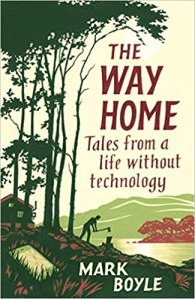
The Way Home: Tales from a life without technology by Mark Boyle 4* – This is not a ‘how to’ book, nor is it a guide to living without technology. It’s an account of what it was like for him, living in a wooden cabin he built on a smallholding in Ireland. He has no running water, no car, no electricity or any of the things it powers: the internet, phone, washing machine, radio or light bulb. He writes about the loneliness he experienced, the lack of contact with his parents and friends, and the damage to his relationships. The book follows the seasons of the year and is a collection of tales about his experiences and his observations about attempting to live a technology-free life.

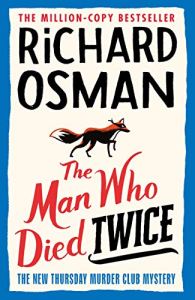
The Man Who Died Twice by Richard Osman 1* – light, easy to read crime fiction, this is a follow up to The Thursday Murder Club. Many people have written glowing reviews of this book, but Richard Osmond’s style of humour differs from mine, so I didn’t find it very funny. I don’t like being so negative about a book but I think the characters are rather stereotypical and the plot is over complicated and unconvincing. In addition it’s written in the present tense which usually irritates me – and it did.

And here are a few notes about 2 of the remaining 6 books with links to Amazon:

The Library of the Dead by T L Huchu 4* – I loved this fantasy novel, set in a future or alternative Edinburgh, with a wealth of dark secrets in its underground. Teenager Ropa, has dropped out of school to become a ghost talker and when a child goes missing in Edinburgh’s darkest streets, Ropa investigates his disappearance. It’s a dark story, but with flashes of humour to lighten the darkness, and is a mix of Zimbabwean and Scottish magic and culture. If you enjoy Ben Aaronvitch’s Rivers of London novels, you’d enjoy this book.

I Love the Bones of You by Christopher Eccleston 5* an audiobook read by actor, Christopher Eccleston, who has played many roles. He is probably my favourite Doctor Who and I especially loved his portrayal of Maurice Scott in the BBC drama The A Word. Maurice is an eccentric and lovable man who has an autistic grandson. I Love the Bones of you is not the usual celebrity autobiography that is just all about him and his work. This is a really vivid portrait of his relationship with his family and particularly with his father who had dementia at the end of his life. He talks about his lack of confidence in his acting ability together with his experiences with anorexia, depression and breakdowns and talks honestly about his struggles with mental health..

~~~

Part Two of Books Read in October 2021 will follow shortly.

Book Beginnings & The Friday 56: The Library of the Dead by T L Huchu

Every Friday Book Beginnings on Friday is hosted by Gillion at Rose City Reader where you can share the first sentence (or so) of the book you are reading. You can also share from a book you want to highlight just because it caught your fancy.

This week I’m featuring The Library of the Dead by T L Huchu, the first book in the Edinburgh Nights series. It’s fantasy, set in a future or alternative Edinburgh, with a wealth of dark secrets in its underground. Teenager Ropa, has dropped out of school to become a ghost talker and when a child goes missing in Edinburgh’s darkest streets, Ropa investigates his disappearance.

I’m really not supposed to be doing this, but a girl’s gotta get paid. So, here we go.

Also every Friday there is The Friday 56, hosted by Freda at Freda’s Voice. *Grab a book, any book. *Turn to Page 56 or 56% on your  ereader . If you have to improvise, that is okay. *Find a snippet, short and sweet, but no spoilers!

These are the rules:

  1. Grab a book, any book.
  2. Turn to page 56, or 56% on your eReader. If you have to improvise, that is okay.
  3. Find any sentence (or a few, just don’t spoil it) that grabs you.
  4. Post it.
  5. Add the URL to your post in the link on Freda’s most recent Friday 56 post.

Pages 55-56:

‘Please find Oliver quickly. You should see what they’ve done to his friend Mark. The two boys were together when they disappeared. Only one came back.’

‘Okay, I’ll poke my nose around. Sniff the wind. Try to figure out what’s going on,’ I say.

About the Author:

T. L. Huchu is a writer whose short-fiction has appeared in publications such as Lightspeed, Interzone, AfroSF and elsewhere. He is the winner of a Nommo Award for African SF/F, and has been shortlisted for the Caine Prize and the Grand Prix de L’Imaginaire. Between projects, he translates fiction from Shona into English and the reverse.

Books Read in August 2021

August was a busy month for me and it didn’t leave much time for reading or writing reviews! But I did read 5 books, and as both Framley Parsonage (684 pages) and Dead Tomorrow (663 pages) are very long books, it took me over half of August to read just those two!

  1. Framley Parsonage by Anthony Trollope 4* – see my review
  2. The Queen’s Spy by Clare Marchant 4*
  3. The Madness of Crowds by Douglas Murray 3*
  4. Dead Tomorrow by Peter James 3*
  5. Moon Over Soho by Ben Aaronovitch 4*

The only book I reviewed was Framley Parsonage. So, before I begin September’s books here are just a few brief thoughts on the other 4 books.

The Queen’s Spy by Clare Marchant – historical fiction with a dual timeline set in 1584 and 2021. I read this quickly drawn along by the plot and keen to know the links between the two main characters, Mathilde in the present day and Tom in the 16th century. I was more interested in Tom’s story. He is deaf and dumb, but he can lip read. He is an apothecary and also a spy, working for Sir Francis Walsingham, Elizabeth I’s spymaster, during the period leading up to the Babbington Plot. Mathilde has inherited a medieval mansion, Lutton Hall, and she is surprised to find that she has family there she had never heard of before. The two timelines interlink as Mathilde discovers the secrets hidden at Lutton Hall.

The Madness of Crowds: Gender, Race and Identity by Douglas Murray. Crowd behaviour fascinates me, so I hoped this book would cast some light on the subject – it certainly did. There are sections on sexuality, gender, technology and race, including a chapter on transgender, which I found the most enlightening. The synopsis describes how Murray “reveals the astonishing new culture wars playing out in our workplaces, universities, schools and homes in the names of social justice, identity politics and ‘intersectionality’.” Some of it I found shocking and infuriating.

Dead Tomorrow by Peter James – the 5th book in his Detective Superintendent Roy Grace series. Grace and his team investigate the deaths of three teenagers found by a dredger at the bottom of the English Channel, which leads them to a gang of human traffickers operating from Eastern Europe. Parallel with their investigation a desperate mother is fighting for her daughter’s life. One of the things I like about the Roy Grace series is the continuing story of Grace’s personal life. But what I find irritating is the way Peter James describes what all his characters are wearing and the details of all the little details of their surroundings. And this book in particular is far too long and drawn out.

Moon Over Soho by Ben Aaronovitch, the second Rivers of London novel. I loved the first book, Rivers of London. These are fast-paced police procedurals of a very different kind – urban fantasy, set in the real world of London, a mix of reality and the supernatural. You could probably read them as standalones, but I really think it’s best to read them in order to get the full background to what is going on and what has already happened to the main characters.

DC Peter Grant is assigned to work with Detective Chief Inspector Thomas Nightingale (who is the last wizard in England) as part of a special and secret branch of the Met, dealing with all things magical and supernatural. Moon Over Soho begins with the murder of Cyrus Wilkinson, a part-time jazz saxophonist, who had apparently dropped dead of a heart attack just after finishing a gig in a Soho jazz club. Peter can hear music coming from his corpse. What follows is a complicated story full of twists and turns, humour, and some gruesome and unusual murders.