The Murder on the Links by Agatha Christie: a Book Review

I’m taking part in the Agatha Christie Reading Challenge. I couldn’t wait until I’d got them all in the order she wrote them so I’ve been reading them as I come across them. Some of her earlier books have been hard to find, but on a recent trip to Barter Books in Alnwick I was able to fill in some of my gaps.

I’ve read 34 of her books before finding her third book,The Murder on the Links, originally published in 1923. This is the second book featuring Hercule Poirot.  There have been many editions published since then and my copy is a paperback, published in 1960 by Pan Books.

Agatha Christie had the idea for the book after reading newspaper reports of a murder in France, in which masked men had broken into a house, killed the owner and left his wife bound and gagged. From these facts she then invented her plot, setting the book in the fictional French town of Merlinville ( midway between Boulogne and Calais), at the Villa Genevieve, next to a golf course and overlooking the sea. The owner of the villa, Mr Renauld, a South American millionaire had written to Poirot asking for his help as he feared his life was in danger.

When Poirot and Hastings arrive they are too late to help him as the night before their arrival he was found dead, lying face down in an open grave, stabbed in the back. As they are in France, Inspector Japp does not appear, instead there is a young French detective, M. Giraud, who thinks very little of Poirot’s methods and disagrees with his findings. This is very much a mystery puzzle book, with many clues and several red herrings.

In her Autobiography, Agatha Christie describes how she was writing

… in the Sherlock Holmes tradition – eccentric detective, stooge assistant, with a Lestrange-type Scotland Yard detective, Inspector Japp – and I now added a ‘human foxhound’, Inspector Giraud, of the French police. Giraud despises Poirot as being old and passé. (page 290)

And it was then that she realised that she had made a mistake in starting with Poirot so old. She would have preferred to have abandoned him after her first three or four books and begun again with someone much younger, but she was stuck with him.

It is rather a melodramatic tale, but still enjoyable as Poirot unravels the mystery. An interesting subplot involves a love interest for Hastings, when he mets a young lady calling herself Cinderella. There is a hint at the end of the book that he will marry her and move to South America. Agatha Christie was stuck with Poirot, but she felt she could get rid of Hastings – she was getting rather tired of him. She didn’t write him out completely and he does reappear in later novels, visiting Poirot from his home in Argentina. I like Hastings, who in this book shares rooms with Poirot and is a ‘sort of private secretary to an MP.’

Her Autobiogaphy also reveals that Agatha Christie was not pleased with the jacket cover her publishers had designed as she felt it didn’t reflect the plot. In fact she was ‘really furious and it was agreed that in future she should see the jacket first and approve of it.’

She thought The Murder on the Links was ‘a moderately good example of its kind‘ and I liked it. My rating: 3/5.

Best new-to-me authors – January to March 2012

Kerrie at Mysteries in Paradise has started a new meme. The idea is to write a post about the best new-to-you crime fiction authors (or all) you’ve read so far this year, 2012. The books don’t necessarily need to be newly published. The meme will run at the end of June, September and December this year.

So far this year I’ve read 10 books by ‘new-to-me’ authors, but only 2 of those are crime fiction. They are:

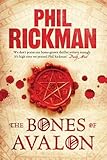
The Bones of Avalon by Phil Rickman, which I read it in January on my Kindle and didn’t have time to write about it. Phil Rickman is not a new author, of course. I had heard of him but had never read any of his books. He has written several books – 11 in the Merrily Watkins series, 6 other novels, including The Bones of Avalon, and a non-fiction book.

The Bones of Avalon set in 1560, is however, Rickman’s first historical crime fiction novel, a genre I particularly like. It has everything, mystery, murder,and witchcraft as Dr John Dee (one of my favourite historical characters – I really enjoyed Peter Ackroyd’s The House of Dr Dee) sets out to discover the whereabouts of King Arthur’s bones. His search takes him to Glastonbury and into danger. Phil Rickman writes on his websiteThis novel is actually the hardest thing I’ve ever done. I think he pulled it off very well and I hope to read some of his other books.

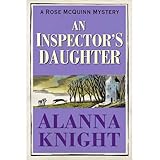
The second new-to-me crime fiction author is Alanna Knight, another well established writer whose work I haven’t come across before. There is a Kindle edition of The Inspector’s Daughter, but I found a copy in my local library.

I wrote a a Book Beginnings post about it and a short account of it earlier – see here. For more details of Alanna Knight’s many books see her website.

I rated both of these books 3.5/5 and both Alanna Knight and Phil Rickman are now on my list of authors to look out for.

The other ‘new-to-me’ authors are (with links to my posts) :

Books I read in March 2012

I read some good books in March, four of them are crime fiction, indicated below by *, and one is a memoir (Testament of Youth). The others are all fiction. (The links are to my posts on the books).

My Book of the Month has to be Pride and Prejudice and my Crime Fiction Book of the Month is a close call between the books rated 4/5, but on balance I think Peter Robinson’s Before the Poison comes out on top.


So far this month I’ve read 24 books, 22 of them fiction (12 of which are crime fiction), and  2 non-fiction. I’ve been making inroads into my TBR books, with 10 of the 24 books being books I’ve owned since before January 2012.

  1. The Labours of Hercules* by Agatha Christie 4/5
  2. Testament of Youth by Vera Brittain 4/5 (from TBR books)
  3. The Victorian Chaise-Longue by Marghanita Laski 3/5 (library book)
  4. The Messenger of Athens* by Anne Zouroudi 4/5 (Kindle from TBR bks)
  5. Before the Poison* by Peter Robinson 4/5 (library book)
  6. Pride and Prejudice by Jane Austen 5/5 (re-read)
  7. The Inspector’s Daughter* by Alanna Knight 3.5/5 (library book)
  8. The Parasites by Daphne du Maurier 3.5/5 (from TBR bks)
  9. Daphne by Justine Picardie 4/5 (from TBR bks)

Recent Reading

I’ve read some books recently and haven’t written about them – ‘real life’ keeps getting in the way! So here are a few brief notes on three of the books I’ve read this month:

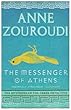
  • The Messenger of Athens by Anne Zouroudi 4/5 – the first in the Hermes Diaktoros, Greek detective series, set on a remote Greek island. Hermes investigates the death of a young woman. It’s great on location and characters, but a bit slow in parts. Each of the books in the series features one of the Seven Deadly Sins – in this one it is the sin of lust. I’ve read the third book in the series – The Doctor of Thessaly – and have the fifth one, The Whispers of Nemesis. I just need to find the second and fourth books to complete the series.
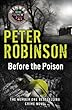
  • Before the Poison by Peter Robinson 4/5. This is a stand-alone book, about Chris Lowndes, a widower who has bought a house in the Yorkshire Dales. Sixty years earlier a man had died there and his wife Grace was convicted of his murder and hanged. Chris wants to discover whether she really was guilty. This is a convincing mystery, told alternating between the present day and the past. Another book well grounded in its locality and with great characterisation.
  • The Inspector’s Daughter by Alanna Knight 3.5/5 – the first in the Rose McQuinn Mystery series. Set in Edinburgh in 1895, Rose, recently returned from America’s Wild West, steps into the shoes of her father, DI Faro (another series of books features this detective). Her friend Alice ask her to investigate her husband’s strange behaviour as she is convinced he’s having an affair. Meanwhile there is also the mystery of the brutal murder of a servant girl to solve. Rose lives in an isolated house at the foot of Arthur’s Seat and is helped by a wild deerhound who appears just when she needs him. An interesting historical murder mystery, convincingly set in the late 19th century, when Edinburgh was developing and the Forth Railway Bridge had just been opened.
The Alphabet in Crime Fiction

Kerrie’s community meme – The Alphabet in Crime Fiction – is back for 2012 – for full details see her blog, which includes a schedule showing the date that the week’s page will be posted and the letter of the week. It begins on May 21, with, of course, the letter A. Could that be a post about Agatha Christie, or one of her books, I wonder?

The rules are that each Friday you write a blog post about crime fiction related to the letter of the week.

Your post MUST be related to either the first letter of a book’s title, the first letter of an author’s first name, or the first letter of the author’s surname, or even maybe a crime fiction “topic”. But above all, it has to be crime fiction. It is ok to skip a week.

I’ve signed up and will be posting each week where possible – some letters are always tricky!

The Labours of Hercules by Agatha Christie: a Book Review

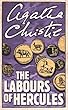
The Labours of Hercules is a collection of 12 short stories featuring Hercule Poirot, first published in 1947. Poirot is thinking of retiring, but before he does he wants to solve 12 more cases and not just any cases. These have to correspond to the Twelve Labours of Hercules, specially selected problems that personally appeal to him.

Most of the stories are quite easy to work out, but that doesn’t detract from the pleasure of reading them. And so that he can complete his twelve cases, Poirot does some uncharacteristic travelling around the world – he can’t rely solely on his ‘little grey cells.’

The labours of Hercules were set for the classical Greek hero by King Eurystheus of Tiryns as a penance. On completing them he was rewarded with immortality. On the face of it, Poirot and Hercules are vastly different, both in character and appearance and after immersing himself in classical lore, Poirot decides he is definitely superior, as he looks at himself in the mirror he thinks:

Here, then, was a modern Hercules – very distinct from that unpleasant sketch of a naked figure with bulging muscles, brandishing a club. Instead a small compact figure attired in correct urban wear with a moustache – such a moustache as Hercules never dreamed of cultivating – a moustache magnificent yet sophisticated.

Yet there was between this Hercule Poirot and the Hercules of Classical lore one point of resemblance. Both of them, undoubtedly, had been instrumental in ridding the world of certain pests … Each of them could be described as a benefactor to the Society he lived in … (page 14)

  •  The first case is my favourite of the twelve. It corresponds to killing the Nemean lion a frightful beast. It’s a mystery concerning the kidnapping of a Pekinese dog. At first Poirot is reluctant to take on the case, disapproving of such dogs – ‘bulging-eyed, overpampered pets of a rich woman.’ But there is one small detail that is unusual and he is curious. And as one of the characters tells him. ‘according to the legend, Pekinese were lions once. And they still have the hearts of lions.’
  • The Lernean Hydra was a monstrous snake with many heads. In the second case Poirot’s modern equivalent is malicious gossip, spreading rumours of murder, which he ‘kills’ by discovering who the real culprit was.
  • The Arcadian Deer – Poirot helps a young mechanic, who is ‘a simple young man with the outward appearance of a Greek god’  reminding him of a ‘shepherd in Arcady’ to find a beautiful young woman who has disappeared – the Arcadian deer.
  • Poirot’s equivalent of the fourth labour of Hercules in the Erymanthian Boar is to capture a violent murderer. Set high in the Swiss Alps, Poirot is in great danger as he contends with an infamous gang leader and in doing so he is uncharacteristically physically active!
  • In the Augean Stables Poirot gets involved in politics, averting a scandal using a force of nature, as Hercules used a torrential river to cleanse the stables belonging to King Augeas. Poirot’s equivalent is a sex scandal to divert attention from political chicanery.
  • The Stymphalean Birds – man-eating birds. In this case Poirot is in Herzoslovakia where Harold Waring is having a restful holiday when he meets a delightful English couple – an elderly woman and her pretty daughter. Also staying at the hotel are two other  women – who are not English and who seem to him to be ‘birds of ill omen’. Harold soon finds himself a victim and it is up to Poirot to chase away the ‘birds’ from their hiding place.
  • The Cretan Bull – in the legend Hercules captures the bull, which was possibly the father of the Minotaur. Diana Maberley appeals to Poirot for help after her fiancé breaks off their engagement as he fears he is going mad. The connection with the legendary story is very slight.
  • The Horses of Diomedes – the eighth labour of Hercules was to capture the wild horses that were fed on human flesh. Poirot’s equivalent are human beasts who supply drugs – ‘the person who deliberately profits from the degradation and misery of other people is a vampire preying on flesh and blood.’
  • The Girdle of Hyppolita was captured by Hercules after he had defeated the Amazons and either killed their Queen or had captured one of her generals. Poirot’s ‘Girdle’ is a Rubens masterpiece, stolen in broad daylight. Initially it doesn’t interest him very much, but it brought the case of the Missing Schoolgirl to his attention – and that interested him much more. She had apparently disappeared off a train, leaving a pair of shoes on the railway track.
  • The Flock of Geryon – in the legend Hercules kills the monster, Geryon, to gain control of the flock. Poirot, of course, doesn’t kill anyone. He meets Miss Carnaby (who is also in the first story, the Nemean Lion) who tells him how worried she is about her friend who she believes is being victimised by Dr Andersen, the leader of a religious sect, The Flock of the Shepherd.
  • The Apples of the Hesperides. There are several versions of this. The apples grew on a tree guarded by a dragon – Hercules either killed the dragon, or sent Atlas for the apples, in the meanwhile holding up the world on his own shoulders. Poirot’s apples are emeralds on a tree around which a dragon is coiled, on a missing Italian renaissance goblet. It seems that Poirot may have to go on a world tour to retrieve the goblet – to investigate locations in five different parts of the globe.
  • The Capture of Cerberus – a three-headed dog guarding the gates of Hades, or Hell. In Poirot’s final case Hell is a nightclub run by the Countess Vera Rossakoff, an old friend of Poirot’s. This nightclub is guarded by the ‘largest and ugliest and blackest dog’  Poirot has ever seen. Entrance to the club is only after throwing a ‘sop’ to Cerberus from a basket of dog biscuits. The police believe it’s the headquarters of a drug racket involving the fencing of stolen jewellery. Poirot can’t believe that Vera, for whom he has a soft spot, can be involved. I liked the ending of this story when Miss Lemon queries a bill for roses sent to the Countess. He responds:

‘There are moments,’ he said, ‘when one does not economise.’

Humming a little tune, he went out of the door. His step was light, almost sprightly. Miss Lemon stared after him. Her filing system was forgotten. All her feminine instincts were aroused.

‘Good gracious,’ she murmured. ‘I wonder … Really – at his age! … Surely not…’

I enjoyed this book both for the linking of Poirot’s cases with the Labours of Hercules and for the personal snippets of information about Poirot, scattered throughout the text.