Crime Fiction Alphabet: Letter Y

Kerrie’s Crime Fiction Alphabet has reached the letter Y – an easier letter to illustrate than last week’s letter X. My choice this week is …

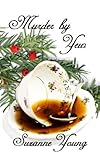
Murder by Yew by Suzanne Young. (The first book in the Edna Davies Mysteries series) I read this on Kindle.

Synopsis (Fantastic Fiction)

When her handyman dies of taxine poisoning, Edna Davies, amateur herbalist, becomes the prime suspect. Nearly certain that she hadn’t concocted a poisonous potion and desperate to save herself from arrest, Edna taps into strengths she never before realized she possessed. Shunned by the townsfolk, questioned by the police, and threatened by thieves, she follows the clues of a forty-year-old disappearance to capture a killer.
My View

Suzanne Young is an American author with a degree in English from Rhode Island University. She has worked as a writer, editor and computer programmer. She now writes fiction full time. For more information see her website

Murder by Yew is the first book by Suzanne Young that I have read. It’s an entertaining ‘cosy’ murder mystery, set in mainly in Rhode Island, a light and quick read. The story is told in the third person from Edna’s perspective. It’s clearly written, with well described locations. The dialogue is lively, apart from one section with reported dialogue which isn’t so convincing.

Edna and her husband, a retired doctor, have recently moved to Rhode Island and she is getting to know her neighbours. She employs Tom Greene to do jobs around the house and garden. The former owner of the house was a keen gardener and had left notebooks filled with comments on the plants in the garden, along with recipes for home-brews and potions and Edna is enjoying herself making some of them, such as chamomile tea with a touch of lemon balm. When Tom collapses and dies the police take samples of her tea mixes and suspect that he had been poisoned by the addition of yew to one of Edna’s tea blends.

Tom’s little grandson, Danny, who is deaf with a speech problem, holds the key to the mystery, but his mother won’t allow Edna to talk to him. Things go from bad to worse for Edna as people begin to shun her and then a storm hits Rhode Island. The cast of characters is well-drawn, with Edna as a most likeable amateur sleuth. She has to discover the motive for killing Tom – was it to do with his present day work,or did it lie further back in his past? Does the recent spate of robberies have a link to his murder and what is the significance of the presence of Edna’s housekeeper in a photo taken in Boston by Edna’s daughter? Edna proves most resourceful in sorting it all out and discovering the murderer’s identity. I had my suspicions about one character quite early on in the book – and I was right, so maybe it was just a bit predictable, which isn’t a bad thing!

Suzanne Young has written two more Edna Davies mysteriesMurder by Proxy and Murder by Mishap, both also available on Kindle and I’m looking forward to reading them.

  • Format: Kindle Edition
  • File Size: 348 KB
  • Print Length: 252 pages
  • Publisher: Mainly Murder Press; 1 edition (27 Nov 2009)
  • Sold by: Amazon Media EU S.à r.l.
  • Language: English
  • ASIN: B003P8P8G0
  • Source: I bought it
  • My Rating 3.5/5

R.I.P. VII wrap-up

R.I.P. VII, hosted by Carl, has come to its end – the time has just flown by.

I chose Peril the First – ‘˜Read four books, any length, that you feel fit (the very broad definitions) of R.I.P. literature. It could be King or Conan Doyle, Penny or Poe, Chandler or Collins, Lovecraft or Leroux’¦or anyone in between.’

Mystery.
Suspense.
Thriller.
Dark Fantasy.
Gothic.
Horror.
Supernatural.
Or anything sufficiently moody that shares a kinship with the above.

I completed the challenge as many of the books I read in September and October fitted into these categories. I read:

  1. Death of a Red Heroine by Qiu Xialong
  2. Dark Matter: a Ghost Story by Michelle Paver
  3. The Sixth Lamentation by William Brodrick
  4. Maigret and the Ghost by Georges Simenon
  5. The War of the Worlds by H G Wells
  6. The Four Last Things by Andrew  Taylor
  7. The Judgement of Strangers by Andrew Taylor
  8. Fear in the Sunlight by Nicola Upson
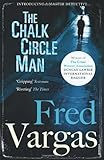
  9. The Chalk Circle Man by Fred Vargas
  10. The House of Silk by Anthony Horowitz
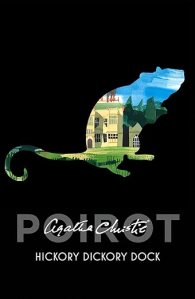
  11. Hickory Dickory Dock by Agatha Christie
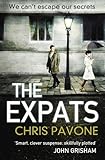
  12. The Expats by Chris Pavone

The ones that stand out as the scariest are The Four Last Things by Andrew Taylor and Dark Matter by Michelle Paver. Sometimes life gets in the way of blogging  so I haven’t had time to write about The War of the Worlds or The House of Silk, but those are good books too and I am aiming to write about The House of Silk – the new Sherlock Holmes Novel!

October’s Books

October has been another good month for reading. As in September I read ten books, listed below (the titles are linked to my posts on the books):

  1. The Judgement of Strangers by Andrew Taylor 4/5
  2. Dancing Backwards by Salley Vickers 3.5/5 (library book)
  3. Fear in the Sunlight by Nicola Upson 3/5 (Kindle)
  4. The Chalk Circle Man by Fred Vargas 4.5/5 (library book)
  5. Sweet Tooth by Ian McEwan 3/5
  6. The House of Silk by Anthony Horowitz 4/5
  7. Hickory Dickory Dock by Agatha Christie 4.5/5
  8. Mrs Harris MP by Paul Gallico 4/5
  9. The History of Scotland by Richard Killen 4/5 (from TBR books)
  10. The Expats by Chris Pavone 3.5/5 (Kindle)

So, a total of 9 fiction books of which 6 were crime fiction, and 1 non fiction. Two of the books were library books, 2 were e-books and 1 book was from my to-be-read books (books I’ve owned before January 2012).

It’s difficult to pick a Book of the Month this time as I’ve rated all of the books as 3 and over (meaning they were good, enjoyable books), with just two as 4.5/5 (meaning I thought they were very good and I wanted to get back to them each time I had to stop reading).

I was tempted to say my Book of the Month is Agatha Christie’s Hickory Dickory Dock, because it’s good on characterisation, but overall I think it has to be The Chalk Circle Man by Fred Vargas for it’s sheer quirkiness and cleverly constructed plot.

For more books of the month see Kerrie’s Crime Fiction Pick of the Month on her blog Mysteries in Paradise.


Crime Fiction Alphabet: X is for …?

letter_XKerrie’s Crime Fiction Alphabet has reached the letter X this week but I haven’t found any books to fit in the required categories:

Your post MUST be related to either the first letter of a book’s title, the first letter of an author’s first name, or the first letter of the author’s surname, or even maybe a crime fiction “topic”. But above all, it has to be crime fiction.
So you see you have lots of choice.
You could write a review, or a bio of an author, so long as it fits the rules somehow.

So I decided to add another category – a book with a title that sounds as though it begins with the letter and plumped for The Xpats, or as it really is – The Expats by Chris Pavone.

Synopsis (Chris Pavone’s website):

Kate Moore is a typical expat mom, newly transplanted from Washington DC to the quiet cobblestoned streets of Luxembourg. Her days are filled with coffee mornings and play-dates, her weekends with trips to Paris and Amsterdam. Kate is also guarding a tremendous, life-defining secret, one that’s becoming unbearable, indefensible. It’s also clear that another expat American couple are not really who they’re claiming to be; plus Kate’s husband is acting suspiciously. While she travels around Europe, looking for answers, she’s increasingly worried that her past is finally catching up with her. As Kate digs, and uncovers the secrets of the people who surround her, she finds herself buried in layers of deceit so thick they threaten her family, her marriage, and her life.

My view:

The book moves between the present day and the past, just two years earlier and is narrated through Kate’s perspective. Although I like this type of narrative, I had to concentrate to follow the changes in time and location as I read. It begins slowly and then gradually the tension builds and builds as Kate discovers more secrets and reveals secrets of her own to the reader. It certainly kept me wanting to know more and trying to work out the bluffs and double bluffs.

I liked the insights into the expat life – the adjustments in lifestyle and expectations come over very well and the locations are described in just enough detail for someone (me) who hasn’t been to these places to visualise the scenes. Chris Pavone has been to all the locations and there is a helpful itinerary map on his website.

Most of all I liked the tension in Chris Pavone’s narrative and the contrast between Kate’s everyday life as a mother of two young boys, the interaction between her and her husband and friends, and her ‘secret’ life with all its dangers and complications. I think Pavone portrays the female perspective well and Kate is a fully rounded character. I don’t often read spy thrillers, but found myself completely engrossed in this one, even though by the end I thought the whole thing was almost too incredible to believe. But then, what do I know about spies and cyber crime?

Hickory Dickory Dock by Agatha Christie

Hickory Dickory Dock is a Poirot mystery, first published in 1955. The nursery rhyme title actually bears no relevance to the plot, even though Poirot quotes the rhyme at the end when he hears a clock strike one. The only links I can see are that it’s about the residents of a students’ hostel at 26 Hickory Road and one of the suspects also parodies the rhyme.

Poirot is drawn into the plot through his secretary, Miss Lemon. This is her first appearance as Poirot’s secretary in a full length novel, although she had featured in some of Agatha Christie’s short stories. She had also appeared in Parker Pyne Investigates (1934) when she worked for Mr Parker Pyne. I’m used to Pauline Moran’s portrayal of Miss Lemon, in Agatha Christie’s Poirot TV series – efficient and smart but also attractive. So I was surprised to read this most unflattering description of her as ‘that hideous and efficient woman … she was not a woman at all. She was a machine – the perfect secretary’ , with ‘strong grizzled hair.’ Poirot just cannot believe that she has made three mistakes in one letter and discovers that she is worried about her sister who manages a student hostel where strange things have been happening.

Now this is not the usual setting for an Agatha Christie novel – no quintessential English village, no grand country houses, or quaint cottages, but a crowded London house, owned by Mrs Nicolstis, a Greek and full of a mixed group of young people from a variety of backgrounds and cultures – from America, West Africa and India as well as an assortment from the British Isles. Miss Lemon’s sister, Mrs Hubbard gives Poirot a list of items that have recently gone missing and.invites him to talk to the students about detection and some of his  celebrated criminal cases. At first it all seems to be quite low key, as some of the missing items are rather trivial – lipstick, and a box of chocolates, for example, but others are rather odd – such as one evening shoe, a rucksack, discovered cut up in pieces, and boracic powder. But then one of the students commits suicide – or is it murder? And more deaths follow.

I did enjoy this book, although the plot is somewhat far-fetched, but I liked the characterisation, particularly the way in which Agatha Christie reveals contemporary attitudes (1950s) to race and politics, as the characters’ prejudices come out in their discussions. There are plenty of suspects and red herrings and some interesting reflections on crime and the psychology of behaviour. And I also liked this insight into Miss Lemon’s mind. Poirot has quoted from one of Conan Doyle’s Adventures of Sherlock Holmes and she responds:

‘You mean these Baker Street societies and all that’, said Miss Lemon. ‘Grown men being so silly! But there, that’s men all over. Like the model railways they go on playing with. I can’t say I’ve ever had time to read any of the stories. When I do get time for reading, which isn’t very often, I prefer an improving book.’ (page 9)

It’s just as well we don’t all think like that.

Crime Fiction Alphabet: W is for Wycliffe …

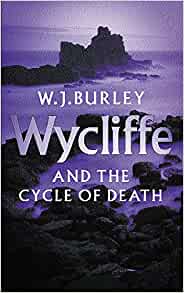
… Wycliffe and the Cycle of Death by W J Burley.

From the back cover:

When Matthew Glynn, a respectable bookseller is found bludgeoned and strangled, Chief Superintendent Wycliffe is mystified. Why would anyone want to kill him, and in such a brutal manner?

But a look at Glynn’s background reveals tension within the family. Alfred Glynn, an eccentric recluse, has held a grudge against his brother for years and the older brother, Maurice, argued bitterly with Matthew over the sale of family land. Add to this a discontented son, valuable documents in the bookseller’s safe, and the mysterious, still unexplained disappearance of Matthew’s wife years earlier, and Wycliffe faces one of his most impenetrable cases yet.

Then another Glynn dies and the murderer’s identity seems obvious. But Wycliffe is not convinced – and soon uncovers some very murky secrets, and the possibility of another murder …

My view:

The story is set in Penzance and its immediate neighbourhood, so Burley, who knew the area well (he lived near Newquay), sets the scene well. The three Glynn brothers didn’t get on, with a long-standing quarrel between Matthew and Alfred, which was connected to their mother, and a more recent row between Matthew and his other brother, Maurice, who objected to Matthew’s proposal to build houses near to Maurice’s pottery. And as Trice, the local DI,  tells Wycliffe, the locals are suspicious of outsiders – he’s talking not just about Cornwall, but about the local area, Penwith, which in Cornish means ‘ … “the extreme end”. The people here feel different – they are different.’

And this is a murder mystery with a difference, because all is not clear by the end. There are plenty of suspects, not just the brothers but also their sister and grown-up children. The reader is left to work out the puzzle, indeed Wycliffe struggles to come to terms with his suspicions and his mind is in turmoil:

With something approaching desperation, Wycliffe was trying to see the events in perspective, to relate them one to another and to imagine the repressed tensions and accumulated bitterness which had finally surfaced. But what troubled him most was the thought that he was being pushed beyond his role as an investigating officer into decisions which were either moral or judicial or both. (page 185)

I liked the book very much, with its complex plot, convincing characters, and in particular the way Wycliffe’s humane and thoughtful character is portrayed. The ending certainly makes you think.

  • Paperback: 320 pages
  • Publisher: Orion; New Ed edition (2 Aug 2001)
  • Language: English
  • ISBN-10: 0752844458
  • ISBN-13: 978-0752844459
  • Source: I bought the book
  • My Rating: 4/5

A Crime Fiction Alphabet post for the letter W.