Crime Fiction Alphabet: U is for Nicola Upson

This week’s letter in Kerrie’s Crime Fiction Alphabet is letter-u
U.

Nicola Upson has written three novels featuring novelist Josephine Tey (Elizabeth Mackintosh 1896-1952):

  • An Expert in Murder
  • Angel with Two Faces
  • Two for Sorrow

She has also written two books of non-fiction:

  • Mythologies: Sculpture of Helaine Blumenfeld
  • In Good Company: A Snapshot of Theatre and the Arts

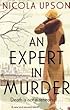
I recently read An Expert in Murder, a very detailed and intricate murder mystery. Nicola Upson has a passion for the theatre and it shines through to great advantage in this book, set in the theatrical world of  the 1930s – March, 1934 to be precise, as the final week of Josephine Tey’s play Richard of Bordeaux begins. Josephine is travelling from her home in Inverness to London by steam train when she meets an enthusiastic fan, Elspeth Simmons, who boarded the train at Berwick-upon-Tweed. They chat and Josephine takes a liking to her, feeling protective towards her.

They arrive in London, but then Elspeth is murdered and soon afterwards Bernard Aubrey, the theatre owner is also found dead, poisoned. Detective Inspector Archie Primrose, a friend of Josephine’s investigates. It’s a blend of fact and fiction. I don’t know much about Elizabeth Macintosh and so this representation of her persona as Josephine Tey seemed wholly fictional and actually she is a minor character in the sequence of events and plays little part in discovering the murderer. I think, on the whole, there is too much ‘telling’ and not enough ‘showing’ for my liking.

There is a great amount of family background, back stories and theatrical information that slowed down the action. But I liked the detailed descriptions of people and places and I especially liked the background details of the World War One, that had ended 16 years earlier but still cast its shadow. There are a number of coincidences in the book, but as Josephine tells Archie,

‘Anyway’, she continued wryly, ‘the only people who don’t believe in coincidence are the ones who read detective novels – and policemen. These things happen, Archie, even if we’re not supposed to use them in books. (page 45)

Reading An Expert in Murder made me think about mixing fact and fiction by using real people as characters. I decided that I don’t have a problem with historical fiction so wondered why its use in crime fiction should give me pause for thought. I think maybe it’s a step too far and I would have preferred it if Tey had been wholly a fictional character based on the author in the same way as John Terry, the leading actor in Tey’s play, is a fictionalised version of John Gielgud. Nicola Upson’s Author’s Note at the back of the book is interesting on this point when she explains that Elizabeth Mackintosh

… took a dim view of mixing fact and fiction – but she allowed it if the writer stated where the truth could be found, and if invention did not falsify the general picture. (page 290)

I think she succeeded in this, although, as she then adds

Murder, of course, does rather distort the general picture, but I hope that it won’t entirely eclipse a unique moment of theatrical history and the true beginnings of a remarkable writing career. (page 290)

I think that was a slight stumbling block for me, but I’m glad that it may have advertised Josephine Tey’s work to a wider audience. I haven’t read many of her books, but those I have read are excellent, especially The Daughter of Time.

Since reading An Expert in Murder I am interested in reading more of Nicola Upson’s Tey books and have  Angel with Two Faces lined up to read soon.

  • Paperback: 304 pages
  • Publisher: Faber and Faber; paperback / softback edition (5 Feb 2009)
  • Language English
  • ISBN-10: 0571237711
  • ISBN-13: 978-0571237715
  • Source: I bought the book

Crime Fiction Alphabet: T is for Once a Biker by Peter Turnbull

I’ve chosen Peter Turnbull’s Once a Biker, a Hennessey and Yellich mystery to illustrate the letter T in Kerrie’s Crime Fiction Alphabet. For a full list of his books see Fantastic Fiction.

Synopsis from the book jacket

When a death bed confession leads to the reopening of a murder case, it doesn’t bode well when both victims were members of the same bikers’ gang twenty years ago. As Detective Chief Inspector Hennessey and his team try to investigate, it seems the vow of silence is still as strong as it was all those years ago, and many ex-gang members refuse to discuss those days of dangerous initiation rites and violent dares. But, when an ex-member is suddenly found murdered, it seems that someone is determined to keep old secrets dead and buried…

My view

This is the 16th Hennessey and Yellich mystery, a police procedural set in the city of York. Once again I have jumped into a series that is well advanced in the sequence, but Once a Biker works well as a standalone. Chief Inspector George Hennessey is nearing retirement – ‘His pension was calling his name more and more loudly with each day that passed.’(page 15)  But he is still very much in charge and leads his team, Detective Sergeant Somerled Yellich, Detective Constables Thompson Ventnor and Reginald Webster (new to CID) in uncovering the murderer.

Tony Wells, dying of cancer in a hospice tells Gillian Stoneham, a counsellor, the whereabouts of Terry North’s body, buried in Foxfoot Wood outside York. Both Tony and Terry had been members of a bikers’ gang known as the Dungeon Kings. The post-mortem reveals that Terry had been killed by a blow to the head. There were fractures all over his body but no facial injuries. The pathologist Dr Louise D’Acre describes it as ‘a very dispassionate execution, but somebody wanted to hurt him before they killed him.’ (page 20)

One of the biker chicks had been murdered three weeks before Terry had been reported missing and Harry the ‘Horse’ Turner, a gang member had been convicted of her murder. Released from prison he now maintains that he was innocent and Hennessey believes him, but first he has to penetrate the bikers’ code:

“Don’t grass on your mates”. They are still bikers in their hearts, early middle-aged as they may be. Once a biker, always a biker. (page 62)

I know nothing about bikers and their gangs, but learnt a lot from this book, enough to make me glad that I didn’t – if the initiation ceremony is dangerous, the biker’s chicks’ leaving ‘ceremony’ is very brutal and shocking.

There is a very strong sense of place in this book, as George Hennessey walks to and from his office in Micklegate along the medieval city walls. I liked the chapter headings giving a short preview of the contents, in a similar vein to a Dickens’ novel, such as this for chapter 4 Wednesday, 19 June, 10.10 hours – 13.40 hours in which life in the biker gang is recalled.’ (page 71) In places the dialogue also has an old fashioned feel and the use of words, such as ‘forenoon’ adds to the formality not found in most of today’s crime fiction books. I liked it.

There is an intriguing ending to this book involving George Hennessey which made me realise that I have missed something in not reading the earlier books in the series, something I hope to remedy.

  • Paperback: 201 pages
  • Publisher: Severn House Paperbacks Ltd (Jun 2008)
  • Language English
  • ISBN-10: 9781847510266
  • ISBN-13: 978-1847510266
  • Source: Borrowed from the library

Crime Fiction Alphabet: S is for …

… The Stabbing in the Stables by Simon Brett, the seventh book in the Fethering Mysteries series.

Description from Fantastic Fiction:

Fethering’s favorite sleuths are at it again as Jude and Carole Seddon find themselves in the midst of some horseplay, after stumbling upon the body of ex-equestrian Walter Fleet at Long Bamber Stables.

The police attribute the stabbing death to the mysterious “Horse Ripper,” who’s been mutilating mares across West Sussex-and who Walter obviously caught in the act. But considering Walter’s track record out of the saddle, Jude and Carole find that there are plenty of suspects- including Walter’s put-upon wife and more than a few jealous husbands who wanted Walter put out to pasture.

Jude and Carole are amateur detectives, who live next door to each other in the village of Fethering. Jude (who won’t give her last name) is a healer and takes on a new patient a horse and his owner Sonia Dalrymple, kept in stable owned by Lucinda and Walter Fleet. Carole,  retired from the Home Office, divorced and shy, is very different from Jude, but they work well together.

They make enquiries and discover that Walter was not a popular man, not even his wife mourns his death. The Stables, however, is a source of rivalry and secrets, and suspicion lands on Donal, a drunken ex-jockey and horse healer. Jude and Carole don’t believe he is the murderer even when the police arrest him. Sonia, tense and  verging on hysteria is obviously hiding something and Imogen, a teenager helping out at the Stables, behaves very oddly.

It’s an easy read, a ‘cozy mystery’, enjoyable and not too taxing on the brain, as I did work it out before the denouement.

A Crime Fiction Alphabet post for the letter S.

Crime Fiction Alphabet – R is for …

… Ruth Rendell is one of my favourite authors, whether she writes under her own name or her pseudonym, Barbara Vine, so her novel, Tigerlily’s Orchids was an easy choice to illustrate the letter R for Kerrie’s Crime Fiction Alphabet.

Ruth Rendell was born on 17 February 1930 in London. She is Fellow of the Royal Society of Literature and has received many awards for her work, including the Crime Writers’ Association Cartier Diamond Dagger (lifetime achievement award), and the Sunday Times Award for Literary Excellence.
She is the author of a series of many novels featuring Detective Chief Inspector Wexford, set in Kingsmarkham, a fictional English town. The first of these, From Doon with Death, is also her first novel and was published in 1964. Books in the series include Kissing the Gunner’s Daughter (1992), Simisola (1994), Road Rage (1997), End in Tears (2005), and Not in the Flesh (2007). Under the pseudonym Barbara Vine her books include A Dark-Adapted Eye (1986), A Fatal Inversion (1987), winner of the Crime Writers’ Association Macallan Gold Dagger for Fiction, Gallowglass (1990), King Solomon’s Carpet (1991), Asta‘s Book (1993) and The Brimstone Wedding (1995). The Blood Doctor (2002) is a psychological novel based on the diaries of Lord Henry of Nanther, Queen Victoria’s physician.

In 1996 she was  awarded a CBE in 1996 and in 1997 became a Life Peer –  Baroness Rendell of Babergh.

Tigerlily’s Orchids, published in 2010, is her 60th published book. It’s one of her stand-alone psychological crime novels, full of decidedly disturbing and disturbed characters.

Summary from the book cover

When Stuart Font decides to throw a house-warming party in his new flat, he invites all the people in his building. After some deliberation, he even includes the unpleasant caretaker and his wife. There are a few other genuine friends on the list, but he definitely does not want to include his girlfriend, Claudia, as that might involve asking her husband.

The party will be one everyone remembers. But not for the right reasons. All the occupants of Lichfield House are about to experience a dramatic change in their lives’¦

Living opposite, in reclusive isolation, is a young, beautiful Asian woman, christened Tigerlily by Stuart. As though from some strange urban fairytale, she emerges to exert a terrible spell. And Mr and Mrs Font, the worried parents, will have even more cause for concern about their handsome but hopelessly naive son.

As I began reading this book which starts by introducing the dysfunctional characters living in the building I had that creepy, ominous feeling  Ruth Rendell creates so easily, generated by the sad and sordid lives of the seemingly ordinary people she describes. Part of me didn’t want to carry on reading, but another part felt compelled to read on. There is Olwen who is determined to drink herself to death, Stuart, who is having an affair with Claudia, whose husband knows about it and who threatens and attacks him; a doctor, who writes dodgy medical reviews, a caretaker who spies on young children and three girls who are flat-sharing. Then there are the people living over the road …

Rendell weaves together a story round the various characters, first concentrating on one then another, in a way that made me want to know more about each one. I read it quickly and it’s one that may benefit from re-reading but I don’t want to. By the end I was happy to finish it and return my copy to the library.

Crime Fiction Alphabet – Q

This week  it’s the letter Q in Kerrie’s Crime Fiction Alphabet.

In January I decided that for the Crime Fiction Alphabet I would read books that I already own and I made a list of possible authors/titles for each letter. It’s worked out OK – up to now. I don’t have any unread books that I could write about for the letter Q, so I looked in my local library for inspiration.

The library had a lot of books on the shelves by Quintin Jardine. I’d written about his book Fallen Gods: a Bob Skinner mystery last year in the Alphabet  series so I thought I’d try another one of his books and borrowed On Honeymoon with Death: an Oz Blackstone Mystery. At the same time I also picked up Thereby Hangs a Tail: a Chet and Bernie Mystery by Spencer Quinn.

I’ve read the opening chapters of each one and decided I don’t really want to read either of them right now.

The book cover tells me that On Honeymoon with Death is about Oz Blackstone and Primavera Phillips trying to rekindle their relationship by returning to L’Escala, the idyllic Spanish village where they were once so happy. But things go wrong and then a body turns up face down in the swimming pool. My problem with the opening chapter is that I didn’t take to Oz’s outsize ego.

So I turned to Thereby Hangs a Tail but the idea of a doggy narrator called on to investigate threats made against  a pretty pampered show dog named Princess didn’t thrill me.

So both books are going back to the library unread – unless anyone can tell me that these are books that I will enjoy if I read a bit further on.

So my offering for the letter Q is A Question of Blood, the 14th Inspector Rebus book by Ian Rankin, which I read and wrote about last year.

Whilst looking for Q ideas I read about The Quincunx by Charles Palliser. This sounds a most interesting book. The description on various websites leads me to think I would like it:

Description from Amazon:

The Quincunx is an epic Dickensian-like mystery novel set in 19th century England, and concerns the varying fortunes of young John Huffam and his mother. A thrilling complex plot is made more intriguing by the unreliable narrator of the book – how much can we believe of what he says? First published in 1989, The Quincunx was a surprise bestseller and began a trend for pastiche Victorian novels. It remains one of the best.
If you’ve read this can you let me know what you think of it?

Crime Fiction Alphabet: P is for P D James

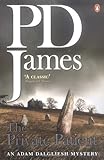
This week’s letter in Kerrie’s Crime Fiction Alphabet is the letter P. My choice is The Private Patient by P D James. I like the fact that not only does the author’s name begin with P (for Phyllis) but the title also has a double ‘P’.

Description from the back cover

When the notorious investigative journalist Rhoda Gradwyn books into Mr Chandler-Powell’s private clinic in Dorset for the removal of a disfiguring and long-standing scar, she has every prospect of a successful operation by a distinguished surgeon, a week’s peaceful convalescence in one of Dorset’s most beautiful manor houses, and the beginning of a new life. She was never to leave Cheverell Manor alive. Dalgliesh and his team, called in to investigate the murder, and later a second death, are confronted with problems even more complicated than the question of innocence or guilt.

My view

This book is not a quick, easy read. It took me several days of slow, careful reading to absorb the details of this complex book. All the characters are described in detail. Rhoda is described as a private person as well as being the private patient. She has a painstakingly probing personality – ideal for an investigative journalist:

Neither dislike nor respect worried her. She had her own private life, an interest in finding out what others kept hidden, in making discoveries. Probing into other people’s secrets became a lifelong obsession, the substratum and direction of her whole career. She became a stalker of minds. (page 8 )

The novel is built up very slowly and methodically and it is only after nearly 100 pages that Rhoda is murdered and Commander Adam Dalgleish and his team are called to the Manor to investigate her death. Dalgleish is preparing for his marriage to Emma Lavenham and his  first thoughts are that maybe he’d had enough of murder. Although it wasn’t the most horrific corpse he’d seen he thought it

… seemed to hold a career’s accumulation of pity, anger and impotence. (page 138)

There are many suspects – a group of seven people in the Manor any of whom could have killed Rhoda – Chandler-Powell, Sister Holland, Helena Cressett, whose family had previously owned the Manor for more than 400 years, Letitia Frensham, Helena’s old governess now working at the Manor as book keeper, the cook and his wife, Dean and Kimberley Bostock and the domestic helper, Sharon Bateman. Marcus Westhall, the surgical assistant and his sister Candace, although they lived in the nearby Stone Cottage, also had access to the Manor and then there was Robin Boyton (the Westhall’s cousin) who was staying at Rose Cottage. He had recommended the Manor to Rhoda.

Dalgleish and his team interview all the suspects and discover many secrets and connections, delving into their lives. The clues are all there, but despite paying close attention as I read, it was only near the end of the book that I worked out who was responsible for the murders. This is a thoughtful book, with precise descriptions of people and places and yet it is tense and dramatic. I enjoyed it.

The Private Patient

  • Paperback: 512 pages
  • Publisher: Penguin (24 Sep 2009)
  • ISBN-10: 014103923X
  • ISBN-13: 978-0141039237
  • Source: I bought it