Crime Fiction Alphabet – C is for Christopher Brookmyre

At first glance I wouldn’t have thought that Christopher Brookmyre would be my sort of author. He writes gritty,down to earth crime fiction, with no punches withheld. And when my son first lent me Quite Ugly One Morning I wasn’t at all sure that I would like it. I was wrong, I loved it – see here.

Brookmyre, a Scottish author, tackles corruption and social injustice in his books; they are satirical and full of bite, full of tension and pace. Before he became a full-time writer he was a journalist. After writing Quite Ugly One Morning he went on to write:

(Links go to Wikipedia)

For a critical perspective of Christopher Brookmyre’s work see this article at Contemporary Writers and for summaries of his books go to his page at Little, Brown Book Group.

Crime Fiction Alphabet is hosted by Kerrie at Mysteries in Paradise.

Crime Fiction Alphabet – Letter B – W J Burley

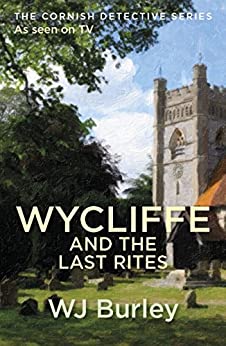
This week I’ve chosen to feature W J Burley to illustrate the letter B for Kerrie’s Crime Fiction Alphabet. I knew of  his Wycliffe novels but had never read any, or watched any of the TV dramatisations, so I came to Wycliffe and the Last Rites with no preconceptions. I really don’t know why I never watched the 1990s TV series starring Jack Shepherd as Wycliffe, but as I didn’t I was able to form my own image of him in my mind directly from the book.

William John Burley was born in Falmouth, Cornwall in 1914. His first book was published in the 1968. All in all he produced 22 more Wycliffe books and 5 others. He died in 2002 whilst he was writing his 23 Wycliffe book. There is more information about him at this website – W J Burley.

Wycliffe and the Last Rites
Paperback: 192 pages
Publisher: Orion; New Ed edition (7 Nov 2002)
Language English
ISBN-10: 075284931X
ISBN-13: 978-0752849317
Source: I bought it

Description from the back cover:

A bizarre murder shakes the Cornish village of Moresk. Arriving at church on Easter morning the vicar discovers the body of a woman sprawled across the chancel steps. To add to the horror, the church is filled with the discordant sound of an organ chord, the notes apparently chosen at random and wedged down.

Has the church been desecrated by a Satanist ritual? Chief Superintendent Wycliffe sees the crime more as an expression of hatred directed at others in the community, besides the dead woman. His investigation, however, is frustrated at every turn, and when another horrific murder is committed Wycliffe thinks he knows who the killer is. But can he prove it?

My thoughts:

This novel has a strong sense of location, with many passages describing the beautiful countryside of Cornwall. The characters are also well defined – a small local community focussing on the twin sisters, Katherine Geach and Jessica Dobell. The relationship between them is strained, with Jessica having a sense of guilt about a hit and run accident she’d witnessed 16 years earlier and admitting that she hadn’t played fair with Katherine.  After their parents’ deaths Jessica had inherited the family farm and lived there with the Vintners and their son, a strange family filled with hatred and resentment over their reduced circumstances. Then there is the Vicar and his sister, who had been forced to move from their previous parish, the houseboat man, Lavin, who is badly disfigured following an accident, and Arnold Paul, the organist and his ‘brother’.

Detective Chief Superintendent Wycliffe is a quiet character who thinks things through before divulging his suspicions to his colleagues. He delegates tasks to his team leaving himself free to concentrate on the victim. To him ‘hope is an ultimate resource’. His evening walks are a necessity for him to ponder what he has discovered and he is calm and collected:

It was characteristic that he should walk rather than drive or be driven; he refused to allow his days to become crowded with events in a frenetic succession of images like a television screen, lacking even commercial breaks to aid digestion. (pages 44 -5)

His problem in finding the murderer is that all the possible leads pointed to a limited range of possible suspects but none of them matched his specification for the criminal. It seemed he had to believe the impossible. It’s a tightly plotted book, concisely and precisely written and I enjoyed it very much. I have one other book of Burley’s to read – Wycliffe and the House of Fear. After that I’ll be looking out for his other books.

Crime Fiction Alphabet – A is for …

… Agatha Christie

For the first of this year’s Crime Fiction Alphabet hosted by Kerrie I’ve chosen a double A – Agatha Christie – An Autobiography.

I finished reading it at the end of December. I can’t remember exactly when I began reading it. I think it was the end of May because in a Sunday Salon post then I wrote that I was thinking about starting it. I read short sections of it most days since I started it and felt quite sad when I came to the end. It was like having a daily chat with Agatha.


It took her fifteen years to write it. She stopped in 1965 when she was 75 because she thought that it was the ‘right moment to stop’. It seems right that a book that took her so long to write should take me a long time to read. As well as being a record of her life as she remembered it and wanted to relate it, it’s also full of  her thoughts on life and writing. I’ve written about her Autobiography in a few posts as I was reading it:

It struck me as I was reading her Autobiography that  it’s not very easy to work out the dates of many of the events she described. It follows on chronologically but is so interspersed with her thoughts and reflections that I forgot the date, or she hadn’t mentioned it. She wrote about her childhood, teenage years, friends and family, and her marriage to Archibald Christie; but although she wrote about their divorce she didn’t write about her disappearance in 1926. She wrote about her travels around the world, the two world wars, her interest and involvement with archaeology and her marriage to Max Mallowan.

Towards the end of the book she wrote that she had decided not to tidy up her Autobiography too much:

Nothing is more wearying than going over things you have written and trying to arrange them in proper sequence or turn them the other way around. I am perhaps talking to myself – a thing one is apt to do when one is a writer. (page 455)

What she remembered most were things that were most vivid and it was places that remained most clearly in her memory. She never had a good memory for people, apart from her own dear friends:

A sudden thrill of pleasure comes into my mind – a tree, a hill, a white house tucked away somewhere by a canal, the shape of a hill. Sometimes I have to think for a moment to remember where and when. Then the picture comes clearly, and I know. (page 416)

She wrote quite a lot about her writing methods, writing criticism, hearing your own voice, economy in wording, writing detective stories, adapting plays and writing them herself, the right length for a detective story (50,000 words), writing two novels at once, writing books set in historical periods and the joy of creation. The one book that satisfied her completely is not one of her detective books but one she wrote under the name of Mary Westmacott – Absent in Spring – and she wrote it in three days flat (pages 516 -7).

She ended the book with these words:

A child says ‘Thank God for my good dinner’.

What can I say at seventy-five? ‘Thank God for my good life, and for all the love that has been given to me.’ (page 551)

Alphabet in Crime Fiction

I mentioned in an earlier post that I hoped Kerrie at Mysteries in Paradise would be running the Alphabet in Crime Fiction – a Community Meme/Challenge again. I really enjoyed taking part in it this year, not only reading and writing the books, but also reading the other participants’ posts. I found so many authors and blogs that were new to me.

And she has set it up again for  2011!

Here are the rules:

Each week, beginning Monday 10 January 2011, you have to write a blog post about crime fiction related to the letter of the week.
Your post MUST be related to either the first letter of a book’s title, the first letter of an author’s first name, or the first letter of the author’s surname.

So you see you have lots of choice.
You could write a review, or a bio of an author, so long as it fits the rules somehow.

There is as Kerrie says lots of choice but the real challenge for me is writing a post every week and in some cases finding a title, or author for some of the letters – X, Q, and Z were  hard and I seem to remember that N was quite difficult and J too.  I was particularly pleased to have found Dave Zeltserman’s books and I’ll be looking for more by him to fill the Z spot.

I’m looking forward to it immensely.

My Crime Fiction A – Z

Kerrie’s Crime Fiction Alphabet has come to the end. It’s been a most rewarding challenge. I’ve looked back at some books I read a while ago, read new books from favourite authors and discovered new authors.

The posts had to be related to either the first letter of a book’s title, the first letter of an author’s first name, or the first letter of the author’s surname. I did a mixture.

In the middle of the alphabet we moved house and I missed out the letter ‘L‘, so I’ve added in my review of Doctored Evidence by Donna Leon to complete the alphabet.

Here is my Crime Fiction A – Z:

They are all good reads in different ways.

I suppose it is inevitable that there are six books listed here by Ian Rankin and three by Agatha Christie as I’m reading steadily through their books. The series, though, has meant that I’ve sought out other authors, particularly to find those for the letters Q, X and Z and the books by the authors I found are probably the ones that most stand out in my mind now the series has come to an end.

Many thanks to Kerrie for thinking of this series. I hope she can come up with more ideas to stimulate my reading.

Crime Fiction Alphabet: Z is for Pariah by Dave Zeltserman

I’ve really enjoyed taking part in Kerrie’s Crime Fiction Alphabet – many thanks Kerrie! For the last letter I’ve chosen Pariah by Dave Zeltserman.

I toyed with the idea of writing about Carlos Ruiz Zafon, but it’s been a long time since I read The Shadow of the Wind, so my memory is a bit rusty about the details and I haven’t started his latest book The Angel’s Game.

I don’t think the only other book I have by a ‘Z’  author, Gem Squash Tokoloshe by Rachel Zadok, qualifies as crime fiction and I don’t have any books with titles beginning with Z. So it was off to the library to see what they had – not a lot! But Pariah by Dave Zeltserman was sitting on the shelf and I borrowed it although the quote on the front cover made me doubt whether any book could live up to such praise:
‘The perfect pitch of reality, history, crime, celebrity, plagiarism, and sheer astounding writing.’ Ken Bruen

Now I’ve read it, in my opinion it doesn’t. I’ve recently joined the Cozy Mystery Challenge and this book just doesn’t qualify for that category – it has everything a ‘cozy’ mystery doesn’t.

As I began it I thought I wasn’t going to like this at all – too much swearing, too much gratuitous violence, too much blood and gore, just too much ‘reality’ (but not reality as I know it). So I put the book down and began another one. But somehow I found myself thinking about Pariah and wondering how it would turn out and I just had to go back and finish it.

It’s a study in evil. The narrator is Kyle Nevin, a killer without a conscience, just released from an eight-year prison sentence, determined to get revenge on Red Mahoney, South Boston’s head mobster, who had set him up with the FBI. But he needs money to track down Red and carry out his plan. He stops at nothing to get what he wants, killing, maiming, robbery, drugs, drink, sex, etc, etc – until it all goes wrong that is.

All though I wanted things to go wrong for him the irony is that it’s through writing a novel that it finally happens. He’s approached by a publisher to fictionalise his crimes:

I want this to be a tough, hard-hitting crime novel, something where there are no winners, only losers, and with the authenticity that you are more than capable of providing. (page 222)

I really enjoyed this part of the book. Dropped in between some of the chapters are Kyle’s notes to the editor, so I knew all along that this was a book he was writing, but it is onlyin the last few chapters that this comes to the fore. Part of the pleasure for me was the contrast between creative fiction writing – there is a character who has an MFA in creative writing who Kyle pays to write the book for him, until the publisher rejects his submission, telling him that it’s unacceptable because it ‘screamed MFA’ (Master of Fine Arts). He wanted writing with ‘raw energy’.

And I loved it when it came to the ‘celebrity’ interiews, the plagiarism charge and the reaction of book reviewers and book bloggers.

The papers had a field day with me, but the bloggers were the worst. Jesus they were unmerciful. During those four days I couldn’t sleep and spent my time reading all that shit written about me on those blogs. (page 267)

This is a tough tale, a dark thriller, written with confidence and fluency. Kyle is an anti-hero, a real pariah and I disliked him intensely. I may not have liked the characters, the language or the content of this story but it certainly has great impact and has lingered in my mind for days.