Books from the Mobile Library: July 2021

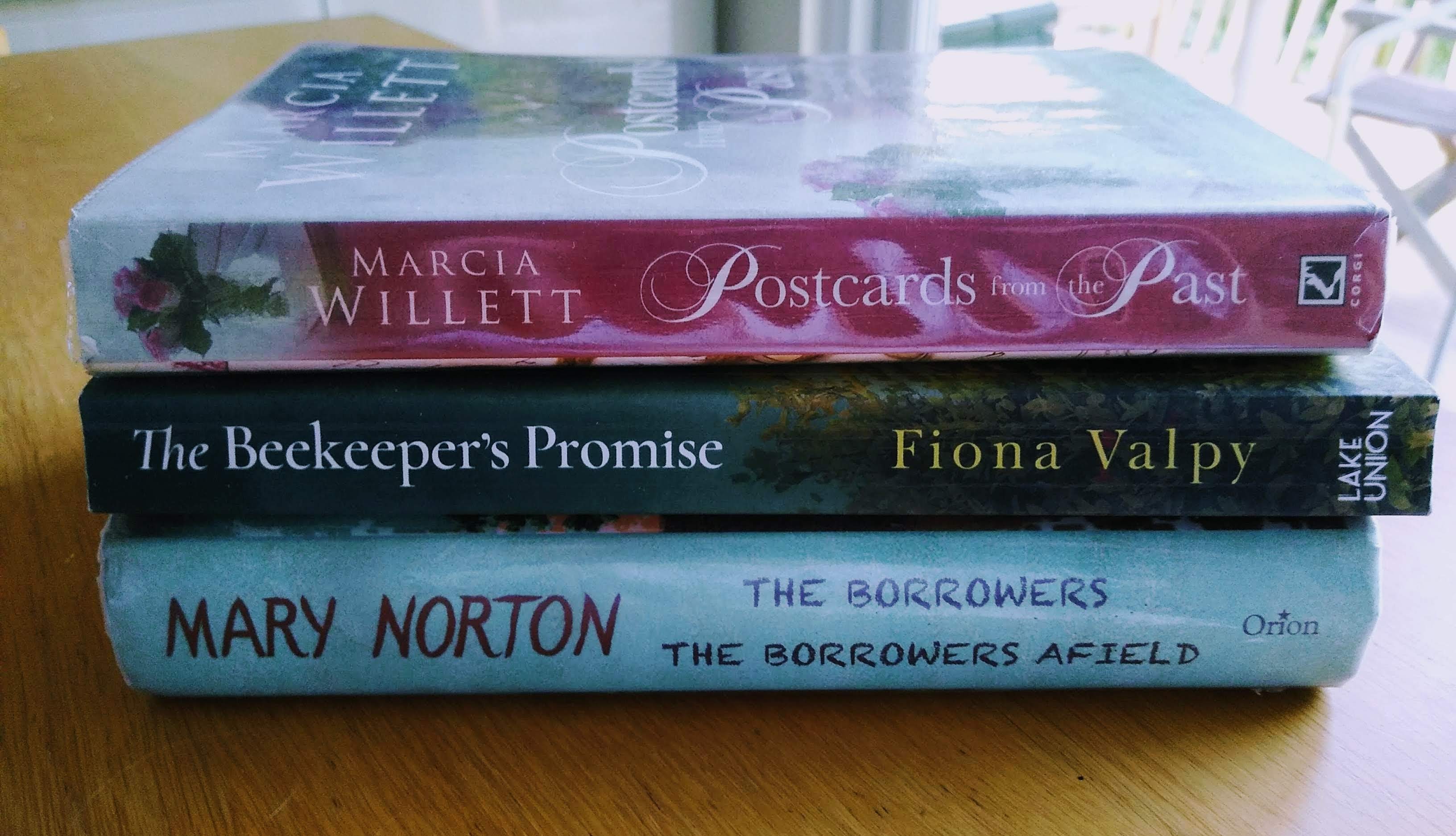
I borrowed three more books from the Mobile Library last Tuesday, all by new-to-me authors. The first two books in the photo below are books I picked from the shelves at random, so they’re in the nature of a lucky dip – I may or may not enjoy them. The third book is one I reserved.

Postcards from the Past by Marcia Willett. I have never come across her books before, even though I see she has written many books. The description on the back cover of a family with a mysterious past appeals to me.

From the back cover:

Siblings Billa and Ed share their beautiful, grand old childhood home in rural Cornwall. Their lives are uncomplicated. With family and friends nearby and their free and easy living arrangements, life seems as content as can be.

But when postcards start arriving from a sinister figure they thought belonged well and truly in their pasts, old memories are stirred. Why is he contacting them now? And what has he been hiding all these years?

The Beekeeper’s Promise by Fiona Valpy. I don’t read much romantic fiction, so this book may not be for me, but the opening paragraph appealed to me. I wrote about this book in My Friday post.

The Borrowers and The Borrowers Afield by Mary Norton. I’ve never read these children’s stories, although I vaguely remember watching a TV adaptation years ago.

From the book jacket:

Deep within the floorboards in the nooks and crannies of a quiet old house, live the tiny Borrowers, Pod, Homily and Arrietty Clock. They own nothing and borrow everything from the human ‘beans’ above them. And they have just one rule: they must never be seen.

Have you read any of these books? Are you tempted?

The Railway Children by E Nesbit: a Short Review

I have got behind with writing about the books I’ve read, so this is short review as I try to ‘catch up’:

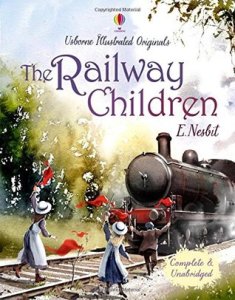
The Railway Children by Edith Nesbit. It was originally serialised in The London Magazine during 1905 and first published in book form in 1906. It’s ‘a feel good’ book about a family living in a world long gone – 1905 to be precise.

Three young children, Roberta, known as ‘Bobbie’ (12), Peter (10), and Phyllis (8) move from London to ‘The Three Chimneys’, a much smaller house in the countryside near a railway line, with their mother. Their father had mysteriously left their home in the company of two men one evening. The children don’t know where he has gone or why. Their lives are drastically changed as without their father’s income, their mother is now busy writing to earn money.

The children have lots of adventures as they explore the countryside and especially the railway line and station. They make friends with the railway staff and in particular with one of the railway passengers, who they call the ‘Old Gentleman’. They prevent a train disaster, rescue a schoolboy, who has broken his leg and is stranded in a railway tunnel, and help a Russian refugee, who is trying to find his family. But the mystery surrounding their father continues to worry the children, especially Bobbie. Thankfully there is a happy ending!

I enjoyed The Railway Children but would have loved it if I’d read it when I was a child. There’s an emphasis on friendship and on helping others in the right way, that is on the importance of giving that is not perceived as charity, for instance, to avoid wounding the pride and self respect of others. Throughout I was surprised by the amount of freedom and independence the children enjoyed and the dangers they were exposed to including walking on the railway lines!

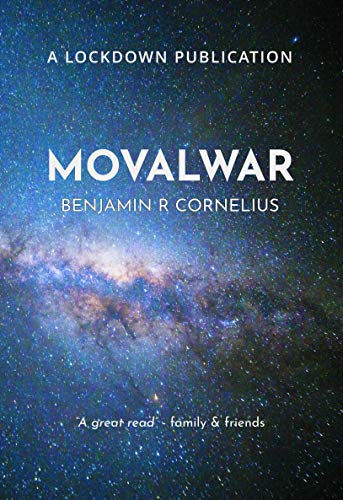
Movalwar by Benjamin Cornelius

Rating: 5 out of 5.

Benjamin Cornelius is 11 years old. He’s my friend’s great-nephew, and I was delighted to read his book Movalwar. He wrote it during the pandemic when he was in lockdown with his family. I was most impressed with it – his storytelling, his imagination and his command of language. It gripped me right from the first start and I just had to read on. It’s about two eleven year-old boys, Alfie and Ben and their exciting and dangerous journey to save the fate of two worlds.

With no school because of the pandemic, the boys’ adventure begins when Alfie has a dream demanding that he goes to Movalwar through a secret lake to return a mysterious possession that controls that evil kingdom. Then he finds a box in his grandparents’ attic, containing a multi-coloured gemstone that reveals a map showing mountains, islands, seas and jungles. And so their adventure begins as he and Bobby set out to find the entrance to the evil kingdom.

Meanwhile the pandemic has reached a peak, no cure has been found, the rate of infection is rising and a vaccine has yet to be created. London has been plunged into chaos. And in Movalwar Alfie’s and Bobby’s lives are in increasing danger. Will they succeed?

I liked the mix of fantasy and real life in this tense, fast-paced book that kept me absorbed in the story all the way through. Ben also designed the lovely cover for his book. I hope Ben will continue to write more stories – he says he is currently enjoying thinking of new ideas for another story.

  • Publisher : Eklegein (11 Sept. 2020)
  • Language: : English
  • Paperback : 116 pages
  • ISBN-10 : 1907971653
  • ISBN-13 : 978-1907971655
  • Source: I bought the book
  • My rating: 5 stars

The Secret Garden – Book and Film

Recently I watched the 2020 film of The Secret Garden. The first thing so say it is that it is not like Frances Hodgson Burnett’s book. The basic premise is the same – Mary Lennox is an orphaned child who goes to live with her uncle in Yorkshire where she discovers a secret garden. I’m not going to describe the differences between the book and the film – there are so many – but the main difference is the garden itself. And that is what disappointed me the most about the film.

The ‘garden’ is not a garden – it is a huge version of maybe the Amazon rain forest, a digital fantasy, nothing like the garden in the book. And Misselthwaite Manor has been morphed into Misselthwaite Hall, a huge palatial building dominating the Yorkshire skyline. And what has become of Ben Weatherstaff, the gardener and Mrs Sowerby, Dickon and Martha’s mother? They are just not in the film!

If you don’t like modern versions of old favourites, then steer clear of this film – it is nothing like the book. It’s CGI ‘magic’ is simply not the real Magic of the natural world.

This is what I wrote about the book when I last re-read it 8 years ago. I’m tempted to read it again to obliterate the film from my imagination.

I read The Secret Garden several times as a child and the story has stayed with me ever since. For years my picture of the ideal garden has been a walled garden, just like the secret garden. The story can be read on different levels. As a child it seemed to me to be a straight forward story of Mary Lennox, orphaned after her parents died of cholera in India. Up until the age of nine she had lived a cosseted life looked after by servants, in particular her Ayah, ignored by her parents. After their death she was sent to live at Misselthwaite Manor, on the bleak Yorkshire moors, with her uncle, who was a hunchback recluse, who took little interest in her. Soon after Mary’s arrival, her uncle went abroad leaving her again in the care of servants. These were very different from the servants in India and Mary struggled to adjust.

Soon after she discovers she is not the only child in the house, when she finds Colin, her cousin, a hypochondriac, unable to walk, who believes he won’t live to grow up. Both Mary and Colin are selfish children, hating both themselves and the adults in their lives. Both also hate the outdoors, but encouraged by Martha, her maid, Mary wanders in the gardens of the Manor house and comes across a walled garden, which apparently has no door. There seems no way to get inside it – until guided by a robin, she finds an old key buried in the earth. I loved the descriptions of the Yorkshire countryside, the garden and how under the influence of Martha and her younger brother Dickon and even the grumpy gardener, Ben Weatherstaff, Mary blossomed as the year progressed along with the garden.

Reading it now I can see it is full of symbolism using nature, the Bible and myths, that I never noticed as a child. The image of the garden is used as both paradise lost and paradise regained. As the garden is nurtured and begins to blossom so do Mary and Colin, through springtime and into summer, culminating in the autumn when both are brought to full health. Dickon is accompanied by a young fox, a lamb, a crow and tame squirrels, reminiscent of St. Francis of Assisi and plays his pipe to charm the animals, like Pan. His mother, Mrs. Sowerby, is a plain-speaking down-to-earth Yorkshire woman, full of common sense and wisdom, who through Dickon and Martha helps the children, feeding Mary and Colin with both her words and wholesome food. At times I thought the language becomes over sentimental and a bit syrupy (I never thought that as a child). But there are descriptions that still appeal to me, such as this description of the roses in the garden:

And the roses – the roses! Rising out of the grass, tangled round the sundial, wreathing the tree trunks, and hanging from their branches, climbing up the walls and spreading over them with long garlands falling in cascades – they came alive day by day, hour by hour. Fair, fresh leaves and buds – and buds – tiny at first, but swelling and working Magic until they burst and uncurled into cups of scent delicately spilling themselves over their brims and filling the garden air. (page 210 in my copy)

Above all it is the power of Magic that is invoked in this book. The magic of nature, that makes plants and people grow and develop, the magic of the power of positive thinking and prayer, of the healing power of the mind, and of laughter and love. Sometimes it seemed too simplistic and yet at the same time I was swept along with the sentiments and enjoying the experience of re-reading this book.
Bookshelf Travelling for Insane Times

Judith at Reader in the Wilderness hosts this meme – Bookshelf Travelling for Insane Times.  I am enjoying this meme, looking round my actual bookshelves and re-discovering books I’ve read or am looking forward to reading. The idea is to share your bookshelves with other bloggers.

This is really a Friday meme, but once more I’m late writing my post!

For this week’s post I’ve been looking through some of my oldest books.

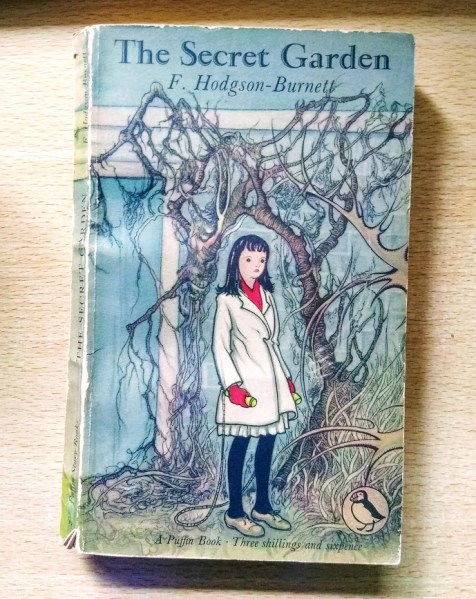
The Secret Garden

First is a book from my childhood, The Secret Garden by Frances  Hodgson-Burnett. It is now yellowing and a bit battered, but still in one piece. In the description at the front of the book the editor writes: Girls like it most, and between the ages of nine and fourteen – and, be warned, keep your copy carefully. You will want to go back and read it over and over again. I can’t remember how old I was, but the editor was right – I did read it over and over again.  I’ve wanted a walled garden ever since I read about the secret garden that Mary found at her Uncle’s house, Misselthwaite Manor in Yorkshire. It’s about the magic of nature, that makes plants and people grow and develop, the magic of the power of positive thinking and prayer, of the healing power of the mind, and of laughter and love.

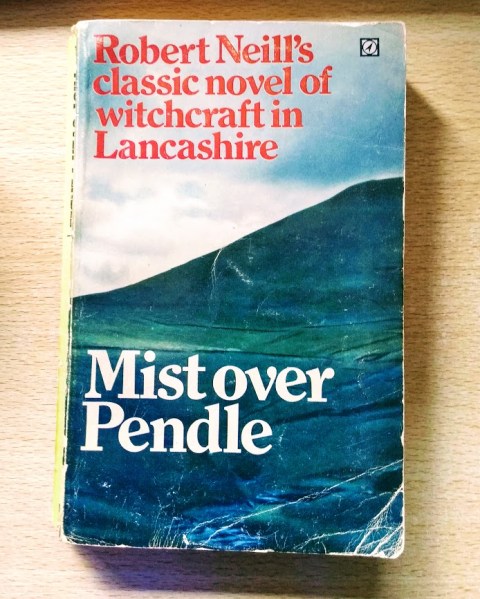
Mist over PendleNext a book I read as a teenager – Mist Over Pendle by Robert Neill. Set in rural Lancashire in the early 17th century it tells the story of Margery Whitaker, an orphan who went to live with her relatives on the Lancashire and Yorkshire border. People have died, apparently from belladonna poisoning and two old crones are suspected of witchcraft. Margery and her cousin Roger investigate whether they really were witches. I found it fascinating and it was probably the book that started me off reading historical fiction.
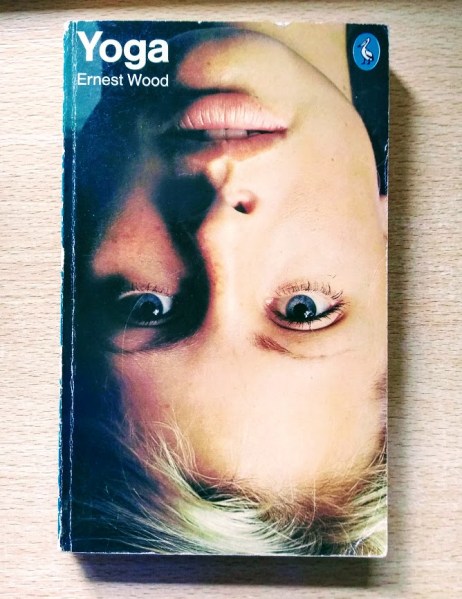
YogaI began doing yoga when I was in my thirties and Yoga by Ernest Wood is one of several books I bought at the time. It’s not just a book about the yoga breathing practices or the yoga postures – and there are no photos demonstrating them – it’s more about the classical background of yoga and its goals – the awakening of the higher spirit, bodily and mental health and the benefits of yoga in daily life. So, there are chapters on the ethics and morality of yoga, yoga and the intellect, yoga and vitality and the basic philosophy of yoga.
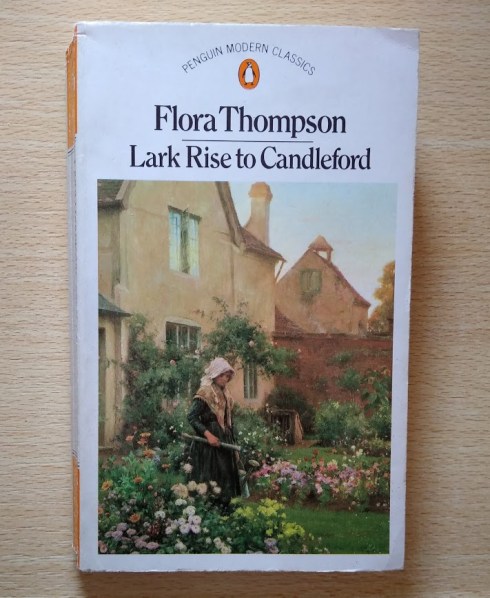
Lark Rise mineAnd finally a book I read in my forties. I’d had a really bad case of flu which meant that I couldn’t even lift my head off the pillow, never mind pick up a book! But when  I was recovering I read and loved Flora Thompson’s book Lark Rise to Candleford. It’s a trilogy including in addition to Lark Rise, Over to Candleford and Candleford Green. It’s a record of country life at the end of the 19th century, based on the author’s experiences during childhood and youth. It chronicles May Day celebrations and forgotten children’s games as well as the daily lives of farmworkers and craftsmen, and her friends and relations.

Bookworm: A Memoir of Childhood Reading by Lucy Mangan

Square Peg, Random House UK|1 March 2018|336 p|Review copy|4*

Bookworm: A Memoir of Childhood Reading by Lucy Mangan will appeal to all bookworms, but it’s more than an account of what Lucy read, it’s also a history of children’s books, details of their authors and a memoir of Lucy’s childhood. I loved it – it’s full of the joy and love of books, the intensity of reading and the ‘instant and complete absorption in a book‘. She writes with verve and humour, in a chatty style that makes it so readable. Reading her book is like being in conversation with a friend.

As I am older than Lucy, inevitably she mentions books I didn’t read as I was growing up (but have read some of them in later life) , especially in the later sections of her book, books she read as a teenager, but I was quite surprised and pleased to find that our reading in early childhood was so similar, and just like her, books have made me the person I am – why else would I be writing a blog called ‘BooksPlease‘.

As long as I can remember I have loved books and I can’t remember a time when I couldn’t read. So I was delighted to find that she too loved Teddy Robinson by Joan L Robinson.  This is the first book I remember borrowing from the library. I loved it so much I was dreadfully upset that I had to return it. Teddy Robinson was owned by a little girl named Deborah and I am so envious that Lucy Mangan has actually met Deborah, who showed her the original drawings for the books her mother wrote.

And then there are some of my most loved books when I was young such as Milly-Molly-Mandy, Alice’s Adventures in Wonderland, the Katy books, Little Women, Good Wives and Jo’s Boys, The Borrowers, the Narnia books, Ballet Shoes, and The Secret Garden. I re-read them many times over.

There’s a whole section on Enid BlytonThe Blyton Interregnum. I was very interested to see her view of this writer whose books I too adored. Blyton wrote around 760 books during her fifty-year writing career! Despite the criticism of her books as mediocre material, formulaic books with fantastical plots Lucy considers, correctly I think, that they are books that provided comfort reading during and in the aftermath of the Second World War. Not only that, they are satisfying stories that lay down a base for future reading, providing books that are fun to read and opening up the ‘pleasure-filled world of reading’. Then there are the questions about prejudice, sexism, class snobbery and racism, in Blyton’s books, which Lucy (and I) missed completely whilst reading as children.

She writes about re-reading the books as an adult as a ‘discombobulating experience‘ – stories that once wholly enraptured you no longer have that same magic, and about her disappointment in returning to Enid Blyton’s books and finding them unreadable. It’s the main reason I don’t go back to the books I loved as a child – I really don’t want to lose the magic they held for me then.

There is so much in this book I could write about, it’s packed with the magic of books and reading it has given me hours of nostalgic pleasure – but the best thing I think is to leave you to read this lovely book for yourself.

Many thanks to Random House UK for a review copy via NetGalley.