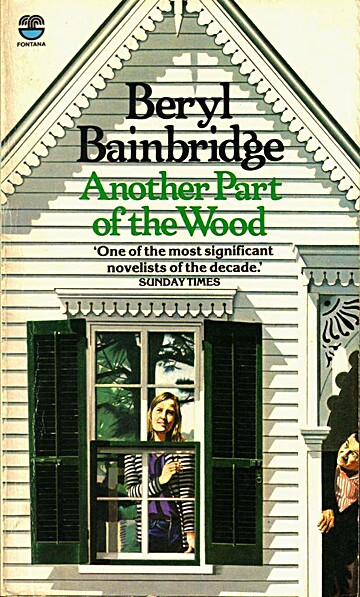
Another Part of the Wood by Beryl Bainbridge

Rating: 4 out of 5.

Synopsis from Amazon:

Joseph decides to take his mistress and son, together with a few friends, to stay in a cabin in deepest Wales for the weekend – with absolutely disastrous results. Beryl Bainbridge’s gift for deadpan dialogue and spare narrative, and her darkly comic vision of the world, are all in evidence in this early novel.

I read Another Part of the Wood because I’ve enjoyed other books by Beryl Bainbridge. It’s a novella, really, as it’s only 159 pages. I love her style, dark humour with clear, concise prose, and fully realised characters. It was her second book, first published in 1968. She revised the book and reissued it in 1979. My copy is a Fontana edition published in 1980. I read it at this time because it’s the novel that came up for me to read for the latest Classics Club Spin. It’s also one of my TBRs, a book that I’ve owned since 2016.

Like all of Beryl Bainbridge’s books that I’ve read it is well written and makes compulsive reading, with individual, mainly unlikable, characters who are mostly at odds with each other. I enjoyed the oddness, never really knowing what would happen next. The title has a theatrical feeling, pointing out the different scenes in the book as the action switches from one part of the wood to another, with one or more of the characters taking centre stage.

It’s set in Flintshire, Wales, in a holiday camp, which consists of huts in a wood at the foot of a mountain. There is George, the owner of the land, and Balfour who works in a factory during the week and helps him at the weekends. George, is obsessed with the Holocaust and Balfour, a shy, quiet man suffers from some sort of illness – he gets sick very suddenly with a high temperature and the shivers as though he’s turned to ice. All he can do is hide away and sleep it off.

The book begins as George’s friend, Joseph, a selfish, insensitive man, arrives for the weekend from London, with his young son, Roland, his girlfriend Dotty, and Kidney, a fat teenager who apparently has learning disabilities and a health problem (never explained), dependent on his pills. In addition Joseph has invited another couple to join them, Lionel and his wife, May, an unhappy couple with a dysfunctional and argumentative relationship. They are all townies, like fish out of water in the countryside and find the huts claustrophobic and too basic – May refuses to use either the chemical toilet or the bushes.

The atmosphere is tense right from the start and rises throughout the book as their relationships become increasingly fractious. Having promised Roland that he would take him for a walk up the mountain, Joseph leaves him to his own devices. He withholds Kidney’s pills and argues with Dotty. Dotty and Balfour walk off to the village where she buys a coat of many colours and Balfour falls ill. The wood, as in fairy tales, is not a safe place.

The world was a deep deceptive forest, full of promises and little glades and clearings, and in the dark depths roamed the wolves, savage, snapping their great teeth, waiting to spring on those who wandered from the path. (page 73)

There’s a sense of foreboding, the sense that something terrible is about to happen … but what, and who is in danger? I felt that more than one of these characters could come to a sticky end. And I was unsure, fearing the worst for one particular character – and sadly I was right. It was inevitable.

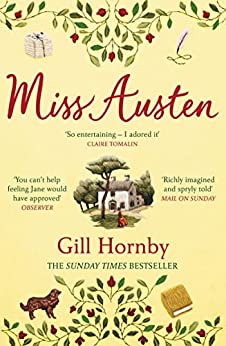
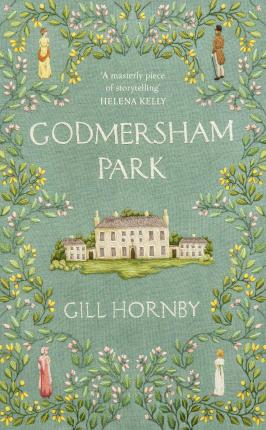
Miss Austen & Godmersham Park by Gill Hornby

In January I read Miss Austen by Gill Hornby, but despite enjoying it I didn’t write about it then. And in September I read Godmersham Park. Both are based on Jane Austen and her relationships with family and friends.

Miss Austen is the untold story of the most important person in Jane’s life – her sister Cassandra. After Jane’s death, Cassandra lived alone and unwed, spending her days visiting friends and relations and quietly, purposefully working to preserve her sister’s reputation. Set in 1840, Cassandra in her ’60s, visits Isabella Fowle following the death of her father, the Reverend Fowle when Isabella is packing up her parents’ belongings so that a new reverend can move in. Cassandra is convinced that her own and Jane’s letters to Eliza Fowle, the mother of Cassandra’s long-dead fiancé, are still somewhere in the vicarage. Eventually she finds the letters and confronts the secrets they hold, secrets not only about Jane but about Cassandra herself. Will Cassandra reveal the most private details of Jane’s life to the world, or commit her sister’s legacy to the flames?

I was surprised by how much i enjoyed this book as I don’t usually like spin-offs, sequels or prequels of my favourite books, but I really enjoyed this book as Cassandra relives her life with Jane, revealing what life was like for spinsters living in the early 1800s. It is different from Jane Austen’s own novels but still manages to recreate that flavour of her novels that I have loved ever since I first read Pride and Prejudice. It’s very well researched, a novel that held my attention from the beginning right to the end. A definite 4.5 star book.

I didn’t enjoy Godmersham Park quite as much as Miss Austen. It is the fictionalised life of Anne Sharp, employed as the governess to Fanny, Jane Austen’s niece. Fanny’s father was Edward Austen, who was adopted by the wealthy Knight family (Thomas Knight was a cousin), taking their name in 1812. Anne became one of Jane’s closest friends.

Little is actually known about Anne as Gill Hornby acknowledges in her Author’s Note. So the story of her early life before her arrival in 1804 at Godmersham Park is a ‘fiction, fashioned out of the biographies of other, contemporary genteel ladies who found themselves working as governesses.’ But the two years she spent working for the Austen family were recorded by Fanny in her diaries and so Gill Hornby has closely followed her account. Henry Austen, Jane’s favourite brother was a regular visitor at Godmersham and Jane, Cassandra and their mother visited too during those two years.

Anne had no experience of teaching, but was left with no alternative as her mother had died and she had to find employment. She found it difficult – treated neither as a servant nor as one of the family, she risked dismissal if she overstepped the mark. Similarly she found that Henry Austen’s attention put her in the most awkward situations. But when Jane visited she was able to relax in her company and the two struck up a friendship.

I can’t quite put my finger on why I find this novel not as good as Miss Austen. But it moves at a slower pace and apart from the mystery that surrounds Anne’s father, I didn’t find it as absorbing – there’s that anticipation in Miss Austen of will Cassandra find the letters and what will they reveal. In parts Godmersham Park came over to me as just a tiny bit flat and I never grew as fond of Anne as I did of Cassandra. Having said that, I did enjoy this book enough to give it 3.5 stars.

The Classics Club Spin Result

The spin number in The Classics Club Spin is number …

which for me is Moll Flanders by Daniel Defoe. The rules of the Spin are that this is the book for me to read by 29th January 2023.

Synopsis

I grew as impudent a Thief, and as dexterous as ever Moll Cut-Purse was’

Born and abandoned in Newgate Prison, Moll Flanders is forced to make her own way in life. She duly embarks on a career that includes husband-hunting, incest, bigamy, prostitution and pick-pocketing, until her crimes eventually catch up with her. One of the earliest and most vivid female narrators in the history of the English novel, Moll recounts her adventures with irresistible wit and candour—and enough guile that the reader is left uncertain whether she is ultimately a redeemed sinner or a successful opportunist. 

I hesitated before adding this book to my Classics Club list and now I’m not sure that I do want to read it. I’m hoping that at least I’ll like it. If you have read it I’d love to know what you thought of it.

Did you take part in the Classics Spin? What will you be reading?

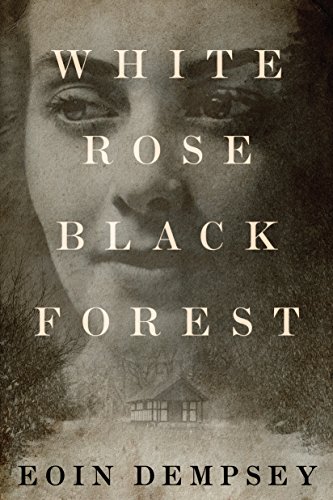
White Rose, Black Forest by Eoin Dempsey

Rating: 3 out of 5.

This is the second of several short posts as I try to catch up with writing reviews of books I read earlier this year.

White Forest, Black Rose by Eoin Dempsey is a World War 2 novel which is different from other books set during the War that I’ve read before, told from the perspective of a German who opposed the Nazis. It is set in the Black Forest, Germany in 1943, where Franka Gerber is living alone in an isolated cabin, having returned to her home town of Freiburg after serving a prison sentence for anti-Nazi activities.

It is December and the Forest is blanketed in deep snow when she discovers an unconscious airman lying in the snow wearing a Luftwaffe uniform, his parachute flapping in the wind. Taking him back to the cabin she saves his life, but whilst he is unconscious she hears him speak in English and so it seems that he is not who she first thought he was. Both his legs are broken and, having been a nurse, Franka is able to set the bones, and tries to discover his true identity. Trapped in the cabin they both gradually reveal details of their past lives and learn to trust each other.

It is a tense, claustrophobic novel and as soon as he is able to walk they decide to leave the cabin and so begins a race against time, as they are hunted by the Gestapo. Can they trust each other enough to join forces on a mission that could change the face of the war and their own lives forever?

White Rose, Black Forest is a novel inspired by true events, although the author doesn’t clarify what is fact and what is fiction. I enjoyed it, especially the historical aspects. The White Rose movement in Germany was a non-violent intellectual resistance group in Nazi Germany, who conducted an anonymous leaflet and graffiti campaign that called for active opposition to the Nazi regime.

It slots into the Forest box in the Wanderlust Bingo card and is also one of my TBRs, a book I’ve owned since 2018.

State of Wonder by Ann Patchett

Once more I’m behind with reviews of some of the books I’ve read in June, July and August, so this is the first of several short posts as I try to catch up with writing reviews.

Rating: 5 out of 5.

I loved State of Wonder by Ann Patchett!

After a slow start I began to realise that this was a book I was really going to enjoy. In some ways it is similar to Heart of Darkness by Graham Greene, but set in the Brazilian jungle along the Rio Negro instead of the Belgian Congo in Africa. It slots into the River box in the Wanderlust Bingo card. It is also one of my TBRs, a book I’ve owned since 2015 and so qualifies for the Mount TBR Challenge.

Dr. Annick Swenson, a research scientist, is developing a drug that could alter the lives of women forever. But she refuses to report on her progress, especially to her investors, whose patience is fast running out. Anders Eckman, a lab researcher, is sent to investigate. When Dr. Swenson reported that Anders had died of a fever in a remote part of the jungle, Dr. Marina Singh, a former student of Dr. Swenson, is sent to find out what has happened to him.

From that point onwards it gets more and more complicated. First of all it’s very difficult for her to meet Dr. Swenson, and when she does eventually reach her there are all the dangers of the rain forest to deal with, including deadly snakes, hundreds of insects, mysterious natives and exotic diseases plus the intense heat. There are also secrets and lies that are only gradually revealed.

The novel raises questions about the morality and ethics of research into the use of extreme fertility treatments and drug studies in general, along with the exploitation of native populations. It is wonderfully descriptive and I could easily imagine that I was there in the jungle, experiencing the oppressive heat and humidity. I found it all fascinating and I was totally absorbed in the story.

The Night Hawks by Elly Griffiths

Quercus| 4 February 2021|e-book| Print Length 321 pages| My own copy| 4*

Synopsis:

Dr Ruth Galloway returns to the moody and beautiful landscape of North Norfolk to confront another killer. A devastating new case for our favourite forensic archaeologist in this acclaimed and bestselling crime series.

The Night Hawks, a group of metal detectorists, are searching for buried treasure when they find a body on the beach in North Norfolk. At first Nelson thinks that the dead man might be an asylum seeker but he turns out to be a local boy, Jem Taylor, recently released from prison. Ruth is more interested in the treasure, a hoard of Bronze Age weapons. Nelson at first thinks that Taylor’s death is accidental drowning, but a second death suggests murder.

Nelson is called to an apparent murder-suicide of a couple at the isolated Black Dog Farm. Local legend talks of the Black Shuck, a spectral hound that appears to people before they die. Nelson ignores this, even when the owner’s suicide note includes the line, ‘He’s buried in the garden.’ Ruth excavates and finds the body of a giant dog.

All roads lead back to this farm in the middle of nowhere, but the place spells serious danger for anyone who goes near. Ruth doesn’t scare easily. Not until she finds herself at Black Dog Farm …

My thoughts:

The Night Hawks is the 13th book in the Dr Ruth Galloway books. I’ve enjoyed the earlier books, despite the fact that they are written in the present tense. But it’s been a while since I last read one, 5 years to be precise and I’ve missed a few of them as the last one I read was the 9th book, The Chalk Pit.

So, Ruth’s life has moved on the three books I haven’t read! There is a Who’s Who of the main characters at the end of the book giving their backstories which helps if you haven’t read the earlier books, and reminded me of who they all are and their relationships.

Ruth, the central character, is now Head of the Department of Archaeology at her old university, the fictional University of North Norfolk, having been promoted after the retirement of her old boss, Phil Trent. Her replacement as the archaeology lecturer is David Brown, who Ruth finds annoying. She doesn’t really know why as they have the same academic speciality, the prehistoric era, particularly as that is partly why she employed him to teach the courses that she used to teach. She is also a special advisor to the north Norfolk police.

Her complicated relationship with Detective Chief Inspector Nelson, the father of her daughter, Kate, now ten years old, continues in this book. Nelson thinks of himself as an old-fashioned policeman. But Superintendent Jo Archer is keen to bring the force into the twenty-first century and wants him to retire. He dismisses that idea, maintaining that the police force needs his experience and know-how. He has no plans to retire and avoids talking to her whenever he can.

A body is found on the beach at Blakeney Point, a young man who Nelson guesses is an illegal immigrant, an asylum seeker, and then a skeleton, buried in a mound of what appears to be Bronze Age weapons, discovered by the group known as the Night Hawks when they were searching for buried treasure.

The police are also investigating what at first appears to be a case of murder-suicide at Black Dog Farm, an isolated farm said to be haunted by the Black Shuck. Shuck is the name given to an East Anglian ghostly black dog that is said to roam the coastline and countryside of East Anglia, a large, shaggy dog said to be an omen of death. And there had been quite a few sightings of such a dog near Black Dog Farm.

I was thoroughly entertained by this mystery, glad to get re-acquainted with Ruth, her family and her friends and colleagues. There is a really strong sense of place, so much so that I could easily visualise the scenes and gain a sense of what it’s like to be there at the beach, with the shingle and the sand dunes at Blakeney Point and the north Norfolk countryside.

I hope to read books I’ve missed, namely The Dark Angel, The Stone Circle and The Lantern Men, before too long, and then the 14th in the series, The Locked Room.