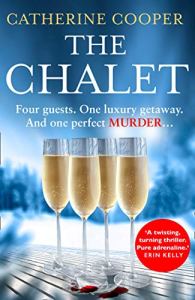
The Chalet by Catherine Cooper

3*

The Chalet, by Catherine Cooper, is a fast-paced murder mystery, set mainly in La Madière, a fictional ski resort in the French Alps. It is her first published full-length novel, though she has also written several (unpublished) thrillers for teens and a (what used to be called) chick lit novel set in TV production.

Synopsis

French Alps, 1998 -Two young men ski into a blizzard… but only one returns.

20 years later – Four people connected to the missing man find themselves in that same resort. Each has a secret. Two may have blood on their hands. One is a killer-in-waiting. Someone knows what really happened that day.

And somebody will pay.

The Chalet is Catherine Cooper’s first published full-length novel, though she has also written several (unpublished) thrillers for teens and a (what used to be called) chick lit novel set in TV production.

I read The Chalet quickly. It’s well written, easy reading, with a beautiful setting in the French Alps. It began well and I was quickly drawn into the drama of the story. The narrative moves between 1998, and 2020 and is told from several of the characters’ perspectives. None of the characters are particularly likeable and they all seem to have something to hide.

It’s a story of revenge, stemming from the events in 1998 when two brothers go skiing with their girlfriends and only one of the brothers returns. The weather conditions were bad and on a difficult off-piste route they lost contact with their guides and only one of them was found, but he couldn’t remember anything about what had happened. The body of the other brother was only found 20 years later after an avalanche hit the resort.

In 2020 a group of people, four couples mixing business with pleasure are staying at the same resort in a luxury chalet. The atmosphere is a difficult one as the couples’ relationships begin to breakdown, particularly when the weather worsens and a storm sets in, leaving them somewhat isolated. Various past events became clearer as secrets are revealed. Although there are plenty of twists and turns, it really wasn’t hard to work out what had happened and who was seeking revenge. An entertaining read, but maybe a bit too predictable by the latter half of the book. The last paragraph promises there is more to come in this story – I’ll be interested to see what happens next, if there is a sequel.

  • ASIN: ‎ B086JJ2TK1
  • Publisher: ‎ HarperCollins (31 Oct. 2020)
  • X-Ray: ‎ Enabled
  • Print length: ‎391 pages
  • My Rating: 3*

My thanks to NetGalley and Harper Collins, the publishers for a review copy.
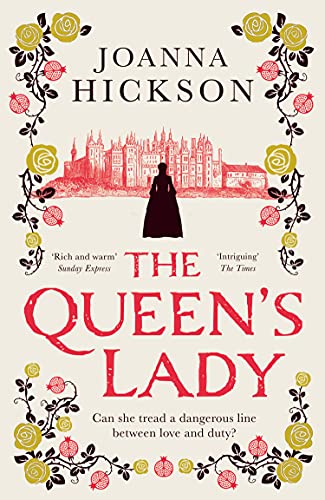
The Queen’s Lady by Joanna Hickson

Harper Collins|20 January 2022|451 pages|e-book via NetGalley|Review copy|4*

Publishers’ Description:

As lady-in-waiting and confidante to Queen Elizabeth, wife of Henry VII, Joan understands royal patronage is vital if she and her husband, Sir Richard, are to thrive in the volatile atmosphere of court life.

But Tudor England is in mourning following the death of the Prince of Wales, and within a year, the queen herself. With Prince Henry now heir to the throne, the court murmurs with the sound of conspiracy. Is the entire Tudor project now at stake or can young Henry secure the dynasty?

Drawn into the heart of the crisis, Joan’s own life is in turmoil, and her future far from secure. She faces a stark choice – be true to her heart and risk everything, or play the dutiful servant and watch her dreams wither and die. For Joan, and for Henry’s Kingdom, everything is at stake…

My thoughts:

I enjoyed reading Joanne Hickson’s first book in her Queens of the Tower series, The Lady of the Ravens (my review), so I was keen to read the sequel, The Queen’s Lady, continuing the story of Joan Vaux, Lady Guildford. She was a lady in waiting to Queen Elizabeth, the wife of Henry VII and had became a good friend and confidante of Elizabeth. Her son Henry, known as Hal, had also became a good friend to the young Prince Henry.

It begins one evening at the Tower of London in April 1502. There’s strange atmosphere, as the ravens sit hunched in silence in the trees around the White Tower, Joan thought, as if awaiting some sad event, sensing death. One of the things I had particularly enjoyed in The Lady of the Ravens was Joan’s fascination for and care of the ravens of the Tower of London firmly believing in the legend that should the ravens leave the Tower for good then the crown would fall and ruin would return to the nation.

1502 had begun with pageantry and the New Year celebrations for the wedding of Prince Arthur, the heir to the throne, and Katharine of Aragon. It looks as if the ravens had indeed sensed death because in April he became seriously ill and died. It was Joan who had to break the news to Elizabeth and help console her in her grief. His death left Prince Henry as the heir to the throne.

In addition King Henry’s agents had uncovered a new Yorkist plot against the throne. Joan’s husband, Sir Richard Guildford is a Privy Councillor and loyal to Henry, but Henry is persuaded that he could be guilty of treason and he is imprisoned. Joan’s life is suddenly turned upside down. What happens next is fascinating to read covering Joan’s involvement in both national affairs and in her personal life.

I thoroughly enjoyed this novel. It is beautifully written, grounded in its historical context, full of colour and life. At the end of the book there’s a Glossary of words and terms that are not commonly in use today, which I wish I’d realised was there earlier. Intriguingly, Joanna Hickson promises in her Author’s Note that she has ‘more fascinating fifteenth century lives in sight’. I’m looking forward to see what she writes next.

The Author:

Joanna Hickson became fascinated with history when she studied Shakespeare’s history plays at school. However, having taken a degree in Politics and English she took up a career in broadcast journalism with the BBC, presenting and producing news, current affairs and arts programmes on both television and radio. Now she writes full time.

My thanks to the publishers for my review copy via NetGalley.

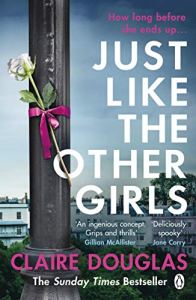
Just Like the Other Girls

I read Just Like the Other Girls, a psychological thriller, by Claire Douglas in November. My copy is a NetGalley review copy that I’ve had for over a year! I really should have read it earlier. It was published in August 2020 by Penguin.

Synopsis

Una Richardson is devastated after the death of her mother. Hoping for a fresh start, she responds to an advertisement and steps into the rich, comforting world of elderly Mrs Elspeth McKenzie. But Elspeth’s home is not as safe as it seems. Kathryn, her cold and bitter daughter, resents Una’s presence. More disturbing is the evidence suggesting two girls lived here before.

What happened to the girls? Why will the McKenzies not talk about them? As the walls close in around her, Una fears she’ll end up just like the other girls . . .

My thoughts:

Like the other books I’ve read by Claire Douglas this revolves round family secrets and mother/daughter/sister relationships and there are enough twists and turns that at first puzzled me, but it didn’t grip me as her earlier books did. Although it begins well and at first I was intrigued by the mystery, I thought there were too many coincidences to be credible and it was just too far-fetched. This means that the chilling atmosphere that had been built up at first faded away. Having said that I did want to know how it would end so I read on but was not surprised by the final reveal.

  • ASIN: B081RBYHJQ
  • Publisher: Penguin (6 Aug. 2020)
  • Language:‎ English
  • Print length: 388 pages
  • Page numbers source ISBN: ‎0063138115
  • My rating: 3*

My thanks to NetGalley and Penguin, the publishers for a review copy.
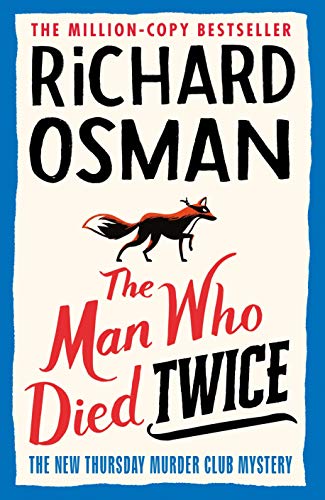
The Man Who Died Twice by Richard Osman

Penguin| 16 September 2021| 422 pages| Review copy| 1*

I don’t want to say much about this book. If you’re expecting crime fiction that exercises your ‘little grey cells’ this is not the book for you. Granted it is complicated and there’s lots going on, plenty of murders, drug dealers, spies and mobsters etc, etc. But essentially it is light easy reading,with the sort of humour that makes you groan in despair, and a great deal of waffle and tedious wittering on.about various mundane matters. As you can see I’m not the target market for this book and with nearly 8,000 ratings on Amazon, 96% of which are 5 and 4 stars, I am definitely in the minority. I was hoping I’d enjoy it more than his first book, The Thursday Murder Club, but sadly I think it’s worse.

Here’s the synopsis:

It’s the following Thursday.

Elizabeth has received a letter from an old colleague, a man with whom she has a long history. He’s made a big mistake, and he needs her help. His story involves stolen diamonds, a violent mobster, and a very real threat to his life.

As bodies start piling up, Elizabeth enlists Joyce, Ibrahim and Ron in the hunt for a ruthless murderer. And if they find the diamonds too? Well, wouldn’t that be a bonus?

But this time they are up against an enemy who wouldn’t bat an eyelid at knocking off four septuagenarians. Can The Thursday Murder Club find the killer (and the diamonds) before the killer finds them? 

My thoughts:

It follows on from Richard Osman’s first book about four residents of Coopers Chase retirement village, Elizabeth, Joyce, Ron, and Ibrahim, four septuagenarians, who call themselves The Thursday Murder Club. Elizabeth is a former MI5 agent and this book reveals a lot about her life as a spy. Needless to say she is clever, with the answers to all the problems that are thrown at her when her ex-husband appears on the scene, having stolen 20 million pounds of jewellery from the Mafia.

As in The Thursday Murder Club, the text is written in the past tense interspersed with extracts from Joyce’s diary written in the present tense. Joyce is an irritating character, and her diary is where most of the waffling and wittering on is found. She also explains what has been happening as though having read it already the reader is too dim to understand it. Then we are treated to DCI Chris Hudson’s cringey romance with Patrice, PC Donna de Freitas.

Overall the characters are rather stereotypical, and the plot is over complicated and unconvincing. Richard Osman’s type of humour does not match mine, so I doubt very much that I’ll be reading any more of his books – I see he has another one in the pipeline!

A Corruption of Blood by Ambrose Parry

Canongate Books| 19th August 2021| 405 pages| Review Copy| 5*

This is the third book in Ambrose Parry’s historical series starring Will Raven & Sarah Fisher, set in 19th century Edinburgh. I loved the other books, The Way of All Flesh and The Art of Dying and A Corruption of Blood is equally as good, if not better.

Description

Edinburgh. This city will bleed you dry.

Dr Will Raven is a man seldom shocked by human remains, but even he is disturbed by the contents of a package washed up at the Port of Leith. Stranger still, a man Raven has long detested is pleading for his help to escape the hangman.

Back at 52 Queen Street, Sarah Fisher has set her sights on learning to practise medicine. Almost everyone seems intent on dissuading her from this ambition, but when word reaches her that a woman has recently obtained a medical degree despite her gender, Sarah decides to seek her out.

Raven’s efforts to prove his erstwhile adversary’s innocence are failing and he desperately needs Sarah’s help. Putting their feelings for one another aside, their investigations will take them to both extremes of Edinburgh’s social divide, where they discover that wealth and status cannot alter a fate written in the blood.

Ambrose Parry is the pseudonym of crime fiction author, Chris Brookmyre and Marisa Haetzman, a consultant anaesthetist. Will is a doctor working with Doctor James Young Simpson, a professor of midwifery, who discovered the anaesthetic properties of chloroform (a real historical character), and Sarah, is the Simpsons’ housemaid, but she now assists Professor Simpson and is studying medicine. The two of them have a complicated and somewhat spiky relationship, which continues in this novel.

The combination of a crime fiction writer and an anaesthetist works excellently in Ambrose Parry’s novels. The research into the history of medicine is extensive, making this book a combination of historical fact and fiction, a tale of murder and medical matters, with the social scene, historical and medical facts slotting perfectly into an intricate murder mystery. 

The mystery begins when the body of a baby wrapped in a parcel, is found floating in the Forth. The child had been strangled with a length of white tape. Sarah meanwhile is involved in finding a missing child. When Sir Ainsley Douglas, a prominent and wealthy member of Edinburgh society is found dead from arsenic poisoning, Will reluctantly gets involved in the murder investigation. How the mysteries interlink gradually becomes clear and although I soon realised how Sir Ainsley had been murdered, I was puzzled about who did it and was completely taken by surprise when the culprit was revealed.

Like all good historical fiction, this book weaves together fact and fiction. The Historical Note at the end of the book sorts out what was real and what was invented. The subjects covered include details about infectious diseases, the difficulties women experienced in obtaining a medical degree, and crimes children suffered in the 19th century. I think A Corruption of Blood is an exceptionally excellent murder mystery and an informative historical novel, with great period detail and convincing characters. I look forward to reading more books by Ambrose Parry.

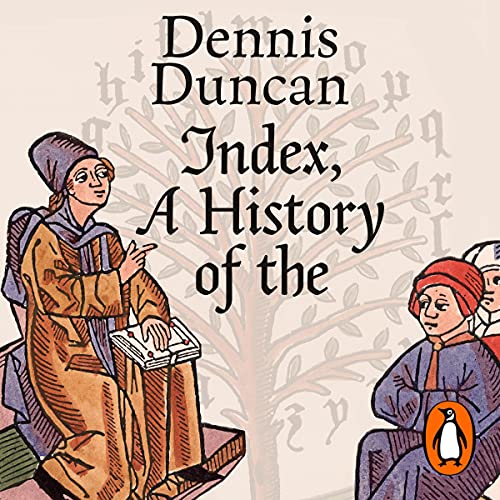
Index, A History of the by Dennis Duncan

Penguin| 19 August 2021| 339 pages| Review copy| 4*

Synopsis:

Most of us give little thought to the back of the book – it’s just where you go to look things up. But here, hiding in plain sight, is an unlikely realm of ambition and obsession, sparring and politicking, pleasure and play. Here we might find Butchers, to be avoided, or Cows that sh-te Fire, or even catch Calvin in his chamberwithaNonne. This is the secret world of the index: an unsung but extraordinary everyday tool, with an illustrious but little-known past. Here, for the first time, its story is told.

Charting its curious path from the monasteries and universities of thirteenth-century Europe to Silicon Valley in the twenty-first, Dennis Duncan reveals how the index has saved heretics from the stake, kept politicians from high office and made us all into the readers we are today. We follow it through German print shops and Enlightenment coffee houses, novelists’ living rooms and university laboratories, encountering emperors and popes, philosophers and prime ministers, poets, librarians and – of course – indexers along the way. Revealing its vast role in our evolving literary and intellectual culture, Duncan shows that, for all our anxieties about the Age of Search, we are all index-rakers at heart, and we have been for eight hundred years.

My thoughts:

This book is not just about the history of the index, but also about the history of reading and the evolution of the book from the scrolls, manuscripts and the codex before the the invention of printing – how they were produced and used. I was interested in reading it as I’m an ex-librarian and cataloguer, later an assistant in a county record office where a large part of my job involved indexing. If you think like me that an index is an indispensable part of a non fiction book then you’ll enjoy this book, which is both informative and entertaining. And I often wish fiction books were indexed too – one of the advantages of an e-book is that you can search the text, even better if it has the X-Ray feature.

It explains the difference between the index and the table of contents, goes into the evolution of page numbers and the problems of alphabetisation. This is not a dry, factual account it is written with humour and insights into the past, using examples from historical texts, and from indexes complied as satirical attacks on their authors. I never knew indexes had been used as weapons! Nor did I know that some works of fiction had been indexed in the past – full details in Chapter 6 ‘Indexing Fictions: Naming was Always a Difficult Art’, quoting from Lewis Carroll’s works. Carroll was fascinated with indexes, leaning particularly towards the whimsical, using his logician’s wit.

Neither is it stuck in the far distant past, Duncan brings it up to date in the digital age and the ubiquity of the search engine with the rise of anxiety that this is changing our brains, shortening our attention spans and eroding our capacity for memory. But this, Duncan explains is nothing new as the history of the index shows that there have always been fears that nobody will read properly any more when they could just use an index to replace the ways of close reading. The ways we read have changed over the generations.

The Index, a History of the is simply fascinating.

About the Author

Dennis Duncan is a writer, translator and lecturer in English at University College London. He has published numerous academic books, including Book Parts and The Oulipo and Modern Thought, as well as translations of Michel Foucault, Boris Vian, and Alfred Jarry. His writing has appeared in the Guardian, the Times Literary Supplement, and the London Review of Books, and recent articles have considered Mallarmé and jugs, James Joyce and pornography, and the history of Times New Roman.