
I take ‘quirky’ to mean characters that are odd, who act in unexpected ways, are a bit peculiar or different, maybe a bit outrageous or unusual in some way. They’re the type of character that makes a book either very good or boringly bad. It really depends on the situation and whether they fit into the story or are there just for effect.
There are so many characters that can be described as quirky but one that came to my mind as I read the question is Alice in Pinkerton’s Sister by Peter Rushforth. She is certainly eccentric and peculiar, nothing she does is what people expect of her. The book starts off: ‘The madwoman in the attic was standing at the window.’
Her neighbours think she is simple, strange and definitely mad and are outraged by what she says and does. It’s a bizarre story mainly seen through Alice’s mind which because she lives mainly in the world of books is a very strange place indeed. It’s funny, well ludicrous at times, full of literary and musical references and I got lost in it for hours.
Winter In Madrid by C. J. Sansom

Sansom vividly conveys the horror and fear of the realities of life in Spain during the Spanish Civil War and the first two years of the Second World War. The opening chapter dramatically sets the tone for the book with the brutality of the Battle of Jarama in 1937 then leaps straight into the bombing of London in 1940. Then Harry Brett, traumatised by his injuries at Dunkirk is sent to Spain to spy for the British Secret Service. He is plunged into the terrible living conditions in Madrid where people are starving, children are left homeless to fend for themselves and wild dogs roam the rubble of bombed houses.
He turned into a square. Two sides had been shelled into rubble, all the houses down, a chaos of broken walls rising from a sea of shattered bricks and sodden rags of bedding. Weeds had grown up between the stones, tall scabrous dark-green things. Square holes in the ground half filled with green scummy water marked where cellars had stood. The square was deserted and the houses that had been left standing looking derelict, their windows all broken.Harry had never seen such destruction on such a scale; the bombsites in London were small by comparison. He stepped closer, looking over the devastation. The square must have been intensively shelled. Everyday there was news of more raids on London – did England look like this now?
This is a long and detailed book, but it moves along rapidly, with believable characters, including the bullying Ambassador, Sir Samuel Hoare, Alan Hillgarth, the chief of intelligence (both of whom are real historical figures), diplomats, Spanish Monarchists and Falangists and the ordinary Spanish people. Franco’s Madrid is shown as a place where fear, poverty and corruption stalk the streets; where hatred and suffering are paramount. It’s a chilling picture, but Harry finds love too when he meets Sofia and plans her escape with him to England after he has completed his mission.
The question is will Franco maintain Spain’s neutrality and enter the war in support of Hitler? Harry’s cover is as an interpreter, whilst his mission is to make contact with Sandy Forsyth, who he had known at public school in England, gain his confidence and discover the truth behind the rumour that gold deposits have been discovered in Spain, which would boost the economy making Spain less reliant on British support. Harry, a reluctant spy, soon finds himself in danger. He is plagued by memories of another school friend Bernie Piper, an ardent Communist who had enlisted in the International Brigades and had disappeared, reported killed at the Battle of Jarama. Barbara, an ex- Red Cross nurse, now Sandy’s girlfriend and Bernie’s former lover is convinced Bernie was not killed She appeals to Harry for help in finding Bernie, and so the story moves to its climax.
With its haunting themes of corruption, murder, the power of authority and heroism Winter In Madrid captivated my imagination. I expect it will be made into a film but I don’t think I could bear to watch it after enjoying this book so much.
Note: This book qualifies for the following Challenges – From the Stacks (I’ve had it unread for months), the Chunkster Challenge (it’s 530 pages) and What’s In a Name?
Celebrate the Author Challenge – Virginia Woolf
 Virginia Woolf was born on 25 January 1882. She was the daughter of Sir Leslie Stephen and the wife of Leonard Woolf. Fearing that she was going mad, she weighed her pocket down with a large stone and drowned herself in the River Ouse on 28 March 1941.
She wrote many books, works of non-fiction as well as novels, short stories and essays. I’ve only read a few – Mrs Dalloway, To The Lighthouse, Kew Gardens (a short story), Flush: a biography of Elizabeth Barrett Browning’s dog, and A Room of One’s Own and The Three Guineas (in one volume).
For this Challenge I decided to read The Death of the Moth and Other Essays, a book I bought in a second-hand bookshop a few years ago and have never read. This was originally published in 1942 by Leonard Woolf. Virginia had been getting together essays, which she proposed to publish in the autumn of 1941, or the spring of 1942. She had left behind her many essays, sketches and short stories, some of which had been previously published in newspapers, which he decided were worth republishing and in this book he also included some of those previously unpublished. In an Editorial Note he wrote that the first four essays ‘were written by her, as usual in handwriting and were then typed out in rather a rough state. I have printed them as they stand, except that I have punctuated them and corrected obvious verbal mistakes. I have not hesitated to do this, since I always revised the MSS. Of her books and articles in this way before they were published.’
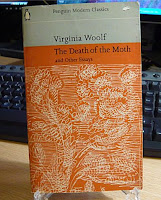
I am reading these essays very slowly, just one or two a day, letting them sink into my mind as I eat my breakfast. The Death of the Moth is one of the previously unpublished essays. It is very short – just over 3 pages long. So much meaning is packed into these three pages. It is a meditation on the nature of life and death seen through the perspective of a moth. It flies by day, fluttering from side to side of a window pane.
He was little or nothing but life. … there was something marvellous as well as pathetic about him. It was as if someone had taken a tiny bead of pure life and decking it as lightly as possible with down and feathers, had set it dancing and zigzagging to show us the true nature of life.
As the day progresses the moth tires and falls on his back. He struggles vainly to raise himself. She watches, realising that it is useless to try to do anything to help and ponders the power of death over life: ‘As I looked at the dead moth, this minute wayside triumph of so great a force over so mean an antagonist filled me with wonder.’
The essays I’ve read so far have a melancholy, sombre tone, considering the nature of the self in Evening Over Sussex, beautiful Sussex facing the sea with its ‘mottled and marbled’ fields‘, and the poignancy of death in Three Pictures and Old Mrs Grey.
Street Haunting: a London Adventure is lighter in mood telling of the pleasures of rambling through the London streets, watching other people and visiting a second-hand bookshop. This description expresses so well the pleasure of browsing among second-hand books:
Second-hand books are wild books, homeless books: they have come together in vast flocks of variegated feather, and have a charm which the domesticated volumes of the library lack. Besides, in this random miscellaneous company we may rub shoulders against some complete stranger who will, with luck, turn into the best friend we have in the world.
Also on a more cheerful note is ‘ Twelfth Night’ at the Old Vic (written in 1933), discussing the differences between reading Shakespeare and watching his plays acted on the stage. This seemed so timely to me as I’ve been bemoaning various TV productions of adaptations of books that I have loved reading.
Virginia Woolf expresses it so much better than I ever could. Not only is the scenery upsetting:
The actual persons of Malvolio, Sir Toby, Olivia and the rest expand our visionary characters out of all recognition. At first we are inclined to resent it. You are not Malvolio; or Sir Toby either, we want to tell them; but merely impostors. We sit gaping at the ruins of the play, at the travesty of the play. And then by degrees this same body or rather all the bodies together, take our play and remodel it between them. The play gains immensely in robustness, in solidity. The printed word is changed out of all recognition when it is heard by other people.
She continues to discuss how we begin then to criticise the actors’ performances and compare their versions unfavourably with our own. Still the performance has made us read the play again and whetted our appetite for other performances that are still to come. I felt the same when I saw Twelfth Night last year in Stratford. As I described here the RSC’s performance was not how I read the play. But I think I enjoy the performance of a play more than an adaptation of a book. As Virginia Woolf wrote Shakespeare was writing for the stage. Novels however, are meant to be read and that is why I think I have difficulty accepting a filmed version.
On Wednesday I went to see the film The Golden Compass and reacted mostly as she described in this essay. I thought the setting was good, the acting was fine, but yes Lyra was not my Lyra, Lord Asriel was not my Lord Asriel and so on through all the characters, although Ian McKellen was just right as the voice of Iorek. At the end of the film I felt a sense of anti-climax. The Golden Compass only covers the first of Philip Pullman’s trilogy His Dark Materials and there is so much more in the books than is in the film.
Yet to come in this collection are essays on Henry James, E M Forster, the Art of Biography, Why?, Professions for Women and Thoughts on Peace in an Air Raid. I’m not going to rush reading these, but intend to savour every one.
Huh? – Booking Through Thursday

Oh dear, my mind went blank when I read this question. My favourite book – which one is that? And one that other people haven’t heard of? I tend not to talk about books much to anyone these days apart from my family and people at the book groups I go to and talking to these people we usually find out about books the others haven’t heard of. Reading blogs I come across so many books that I haven’t heard of too, so maybe other people haven’t heard of the ones I like.
Trying to think what is my favourite book I looked at my catalogue on LibraryThing. I liked The Poisonwood Bible – 6,578 other people own that book – so not unknown. How about Things Fall Apart? No, 3,805 others have that. So on and so forth.
I think I’ve mentioned Melvyn Bragg’s book A Son of War before, but that is one book I liked that not many other people on LibraryThing own (41 others). The Man Who Listens by Taylor Caldwell is another – only one other person has that in their catalogue. How about Lambs of God by Marele Day (75 others have it) or Winter in the Hills by John Wain (10 others)? I liked these too, but I’m not sure they’re my favourites.

There is poetry. No one that I’ve talked to has heard of Jack Mapanje or his books Of Chameleons and Gods (4 others on LT) and The Chattering Wagtails of Mikuyu Prison (1 other person). I don’t read a lot of poetry, but I was really taken with these, maybe because I first heard them read by Jack when I was at a Summer School for an Open University course on English Literature. Jack was imprisoned in Malawi from September 1987 to May 1991, detained without charge or trial. Hearing him tell of his experiences was so moving.
Books, Books and yet more Books

Today, I went to the library and saw Author, Author by David Lodge on the books for sale trolley. That’s a book I know someone on one of the blogs I read wrote about some time ago and I thought sounded worth reading. I remember looking for a copy, but I’m sorry whoever you were I didn’t write it down in my notebook. Anyway, I bought it for the grand sum of 10p – a bargain, indeed and thank you fellow blogger, it promises to be an interesting novel. It’s set in London in the 1880s and is a fictionalised story of Henry James. In the preface David Lodge writes:
Nearly everything in this story is based on factual sources. With one insignificant exception, all the named characters were real people. Quotations from their books, plays, articles, letters, journals, etc., are their own words. But I have used a novelist’s licence in representing what they thought, felt and said to each other; and I have imagined some events and personal details which history omitted to record. So this book is a novel, and structured like a novel.
I know what to expect and I think some biographers could benefit from making such a statement, as sometimes I’ve read in a supposedly factual accounts phrases like ‘must have thought’ ‘possibly’, and ‘would have’, making sweeping assumptions about a person’s state of mind, or knowledge.
I also intended to write about each book I read, if not in detail at least a short note on what I thought about it. In December I read a number of books very quickly in the run up to Christmas and New Year and never made any notes as I read. Now when I look back I realise I can not actually write very much about them without re-reading them and much as I enjoyed reading them the first time it’s too soon for re-reads and two of them are library books that have to go back soon (I can’t keep on renewing them).
So, here are the books I read in December that I’ve not written about:

Four Stories by Alan Bennett
I do like Alan Bennett’s books. I can hear him speak as I read. These are long short stories, which I think I prefer to the really short short stories. In the first story The Laying on of Hands, about the funeral service of Clive, a masseur to the famous, the congregation is made up of numerous celebrities and others who had known Clive. The service didn’t go as Father Jolliffe had planned, although he hadn’t decided what exactly he was going say about Clive, until he started to speak. Then he found himself throwing it open to the floor and the true circumstances of Clive’s death emerged.
My favourite story is The Lady in the Van, the true story of Miss Shepherd who lived in her van in Alan Bennett’s front garden. A sympathetic and amusing account of an eccentric old lady.
Solstice by Joyce Carol Oates
I didn’t enjoy this as much as some of the other books by Joyce Carol Oates that I’ve read. I think it’s because I didn’t really like either of the two main characters and got rather irritated by them. It’s beautifully written, so I did finish it. It’s about Monica who arrives to teach at a boys’ school in Pennsylvania after the break-up of her marriage and Sheila, an artist who is rather a recluse, eccentric, and unpredictable. Sheila just breezes into Monica’s life, with disastrous effect.
My Cleaner by Maggie Gee
Again, I didn’t get on with the two main characters in this book, but this didn’t prevent me from enjoying this book. Vanessa, white, middle-class and totally self-absorbed asks Mary, black, and equally selfish, to return from Uganda to help look after Justin, Vanessa’s 22 year old son. Mary had worked as Vanessa’s cleaner 10 years earlier, but their relationship has changed and the balance of power between the two women shifts as the story reaches its climax. This is the first book by Maggie Gee that I’ve read and I would like to read more.
Here Lies Arthur by Philip Reeve
I’ll write about this in more detail. For now I’ll just say that this is one of the best books I’ve read recently. I always like books about Arthur and Merlin and this more than lived up to my expectations. Thanks Table Talk for introducing me to this book. It has most of the things I look for – believable characters, a riveting plot and well written.
Old Filth by Jane Gardam
This was a good find from the library. It’s funny, warm and tells the story of a retired QC. I became very fond of him. I think I will re-read this before returning it to the library and write about it properly.
A Journey Across America: The Christmas Train
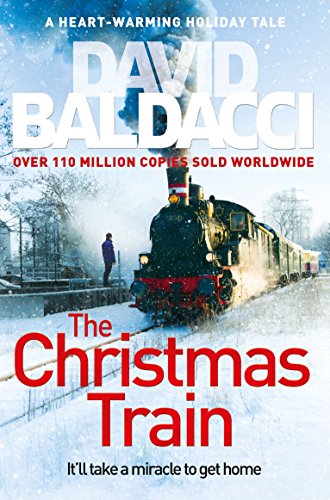
I’ve been reading The Christmas Train by David Baldacci and got engrossed in the route taken by Tom Langdon as he travelled by train from Washington DC across America to Los Angeles. I’ve had to look at Google Maps and Google Earth, Wikipedia and other internet sites in my quest to learn more about the places the train journey passed through. Knowing next to nothing about the geography of the USA I’ve found this a fascinating exercise.
I wouldn’t have read this book at all if Sam at The Life and Times of Me hadn’t mentioned it in her comment on my post on Christmas Books. Basically this is a love story. Tom, a world-weary journalist is travelling from Washington DC to spend Christmas with his girlfriend who lives in Los Angeles. It’s also a detective story as there is a thief on the train and I didn’t work out the thief’s identity at all, so that was a surprise. Added to that are the stories of the staff and other passengers, including Eleanor, the long-lost love of Tom’s life, and her employer, Max a movie director – what is the real reason they are travelling by train, after all Max has his own private jet?
The book is easy to read but what really interested me were the journey and some references that are really extra to the plot. First the references – Mark Twain and The Cumberland Gap. Tom has decided to use the time on the train to write a story about the journey, inspired by the fact that Sam Clemens, otherwise known as Mark Twain had married one of his ancestors. There was a legend that Twain had never published the story of his transcontinental railroad trip taken at Christmas time during the latter part of his life and Tom’s father had asked him to finish the story Twain had never published. Tom refers to Twain’s Innocents Abroad, an account of a five-month journey on a steam ship to Europe and the Holy Land, as ‘one of the funniest, most irreverent travel books ever written. I’d like to read that book. I’ve already got Tom Sawyer and Huckleberry Finn lined up to read this year, so now I’m looking out for Innocents Abroad, Life on the Mississippi and The Man Who Corrupted Hadleyburg as well.
The Cumberland Gap I knew of before reading this book is the song by Lonnie Donegan from the late 1950s and I’d never realised that it referred to a gap in the Appalachian Mountains in Tennessee, a natural breach in the mountains on the route to the Plains and the Pacific; an ancient path widened by Daniel Boone to take wagons into the western frontiers. Reading the book I had the words of the song going through my head over and over again – I suppose that’s not the effect that David Baldacci would have expected from his readers, but I enjoyed it.
 Photo of Cumberland Gap licensed under the Creative Commons License
I think David Baldacci must like Mark Twain, Hitchcock films maybe (North by Northwest starring Cary Grant gets a mention), and above all I think he must like trains. He obviously has researched the passenger train service, Amtrak – the Capitol Line from Washington D C to Chicago and then the Southwest Chief on to Los Angeles. I got to know a bit about the places the trains either stopped at or went by – Rockville, Maryland where F Scott Fitzgerald is buried, Harper’s Ferry West where John Brown made his raid on the federal army before the Civil War started – another song going through my head – ‘John Brown’s body lies a’mouldering in the grave.’ Cumberland Gap, over the Mississippi and yet another song in my head, this time Paul Robeson’s ‘Ol Man River‘; Kansas City and Dodge City – thinking of outlaws, Gunsmoke and High Noon. On the train goes through the Raton Pass, Apache Canyon (more western films pop into my head), Las Vegas in New Mexico, La Junta and Pike’s Peak in Colorado and the Sangre de Cristo Mountains, Albuquerque (visions of the Rio Grande) and Gallup before reaching Los Angeles. The climax comes as the train is halted in its tracks with no way back to Chicago or forward to Los Angeles and they need a miracle to survive.
I enjoyed this book on several levels. I liked the story. It’s an entertaining easy read with a few surprises along the way. I liked the characters, the snapshot insights into the lives of a variety of people and the passing scenery of the numerous places on the journey. David Baldacci has written numerous books, so there are plenty more of his for me to read and I’ll be looking out for them.
NB see more Christmas titles here – Suggest a Christmas Title.

