Agatha Christie Reading Challenge: My Progress

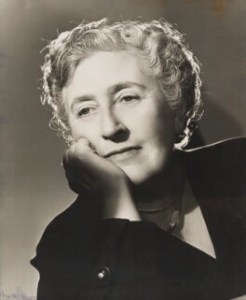
The Agatha Christie Reading Challenge is an open-ended challenge to read all of Agatha Christie’s books and short stories, run by Kerrie at Mysteries in Paradise. I first read some of Christie’s books when I was a teenager and hadn’t read any for years until I borrowed a copy of The Crooked House from my local library three years ago. This reminded me of how much I had enjoyed her books and set me off reading them again. Over the years I must have read a good number of them but had never kept any records of what I read at the time.

So when I saw that Kerrie was running this challenge I decided to join in. It’s one of the best challenges out, for me at least, because all you have to do is read Agatha Christie’s books at your own pace and link to the Agatha Christie Carnival once a month. There’s no pressure to meet any deadlines – if you haven’t read any Christie books for the Carnival that’s OK and you just carry on reading when you like.

I’m not even trying to read them in the order they were published, even though Kerrie and some others are, because I’m reading books I already own or books that I find in librarys and/or bookshops. So far I’ve read 17 and 2 collections of her short stories – I’ve listed them on a separate page.

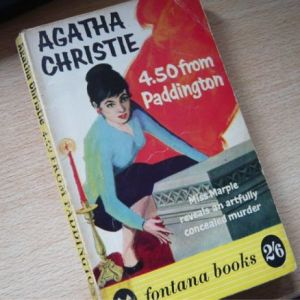
My latest find is 4.50 from Paddington, which I received from Juxtabook as part of my prize in her recent competition. Catherine described this book as a ‘rather aged paperback’ and it is, but then it is 50 years old, published in 1960 for just 2/6 (in old money). It may be old and faded, but because it was published soon after Agatha Christie wrote it, it has a contemporary feel about it. I’ve watched so many TV and film versions, with different actors playing the part of Miss Marple, some more successfully than others that it’s interesting to see this book. I’m not sure who the woman on the front cover is meant to portray – surely not Miss Marple?
And this is the back cover – really that’s all the blurb you need to capture your interest.

This will be my next Agatha Christie book to read.
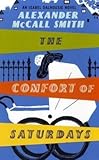
The Comfort of Saturdays by Alexander McCall Smith: Book Review

I do like the Isabel Dalhousie books and this one The Comfort of Saturdays is so good. What I find so fascinating about the series is that whilst not a lot actually happens, a lot goes on in Isabel’s head. Isabel is an ‘intermeddler’ … She imagined the dictionary definition:one who meddles in affairs that are no business of hers. (page 153) She can’t resist appeals for help and tries to do the right thing.

In The Comfort for Saturdays her main concern apart from her relationship with her family, Jamie, the father of her son, Charlie, and her niece, Cat, is trying to discover the truth behind Dr Thompson’s disgrace on resigning from all medical work. He was an infectious diseases specialist carrying out a drugs trial on a new antibiotic, which was going well until two patients developed serious side effects and then another patient died. He was accused of falsifying figures and producing a misleading report. His wife asks Isabel to clear his name as she believes he is innocent. Dr Thomas has sunk into a deep depression, too ashamed to go out of his flat.

Isabel is also struggling with the dilemma of whether to include a paper by Professor Dove in the Review of Applied Ethics, which she both owns and edits. Earlier she had dismissed Dove from the editorial board and on the one hand she doesn’t want to appear petty in rejecting his paper, which she doesn’t think meets the Review’s standards and on the other, she needs to show that Dove is treated equally with other people who submit papers.

Issues that interested me as I read the book included thoughts on the existence of otherwise of God and Hell, agnosticism, the possibility of ‘killing’ God, the existence of a merciful creator, and justice:

She had never been able to understand how anybody could reconcile the existence of Hell with that of a merciful creator; he simply would not have embarked on us in the first place to send us to some Hieronymous Bosch-like torture chamber or its more modern equivalent (a place of constant piped music, perhaps). Hell might be an airport, she thought lit with neon and insincere smiles. No, she told herself; she was prepared to accept the possible existence of a creator, in the same way she was prepared to accept curved space, but he or she would not invent Hell, whatever twists and turns on the subject of free will and choice were resorted to by the concepts apologists. (page 70)

She goes on to recognise, however, that although people relish the idea of eternal justice we should be careful about abolishing Hell, and also that we should accept that because the wicked more often than not get away with their wickedness and much as we would like a perfect world ruled by perfect justice, this is not the way it will ever be.

Other themes that arise are jealousy, guilt, and the nature of freedom – between people in a relationship – trust, values, and money. Yet all this thinking doesn’t make the book tedious, far from it, because McCall Smith writes in such an engaging style, mixing in events and descriptions of the location along with what I think of as Isabel’s meditations that keeps me turning the pages to find out not only what will happen next, but also what Isabel thinks about it.

One more quotation that made me smile is this:

There were things, she thought, which were probably true, but which we simply should not always acknowledge as true; novels, for example – always false, elaborately constructed deceptions, but we believed them to be true while we were reading them; we had to, as otherwise there was no point. One would read, and all the time as one read, one would say, mentally, He didn’t really. (page 42)

I do believe The Comfort of Saturdays is true – even though I know it’s all a figment of McCall Smith’s imagination.

The title? Well, Isabel liked Saturdays, but not quite so much, she thought if she had to work. And yet even a working Saturday seemed subtly different from a weekday … (page 175) Saturday was her favourite day.

Weekly Geeks – Shiny Book Syndrome

The Weekly Geeks’ topic this week is from Tara SG (25 Hour Books). She writes:

In case you don’t know me, I like to make up medical sounding names for my book obsessions. For example: P.A.B.D.. I’d now like to introduce Shiny Book Syndrome. This is usually accompanied by a book hording problem yet to be named.

So what is Shiny Book Syndrome? It is when a person only wants to read their newest book and leave piles of poor unread books on their shelves to collect dust.

What can you do to alleviate the symptoms?

My first suggestion would be to make a list of all the books you own. I use GoogleDocs. I start by creating a form and then can organize the spreadsheet to see what I have and if I’ve read it yet or not. (For more info on how to do this, go here).

My immediate reaction to this topic was that yes I have Shiny Book Syndrome, but when I looked at the list of books I’ve recently finished I realised that although I may think of reading my newest acquisition, I don’t actually do it.

I am tempted to read new books as soon as possible, and sometimes give in but mostly I wait until I’ve at least finished the books I’m currently reading. By that time the urge to read that newest book has faded, only to be replaced by the next book/s.

At the end of last year I joined Emily’s Attacking the TBR Tome Challenge and have been making quite a few inroads into my unread books (I’ve read 18 of them since December!) and I try to balance my reading – reading some from the TBR shelves, then some of the new books and slot in reading library books somewhere in between. Other challenges may help, if I can slot in some of the TBR books, but often they don’t, so these days I’ve backed off from some challenges.

Borrowing books from the library is one  reason I don’t get round to reading my own books, because I’ll often read a library book in preference merely because it’s due back and I’ve reached the renewal limit.

Most of my books are catalogued in Library Thing, unread books tagged TBR. It’s very useful as I can quickly see all the books I’ve yet to read, but that doesn’t make me pick one up and read it. Why is it that once I’ve owned books for a while they no longer have the same attraction they had when I bought them? There are always more books to attract me – that’s it – I keep on finding more books I want to read.

But, it’s not really a problem, because I read as the mood or interest in a book takes me. It would be a problem if I was left with no books to read as I would feel deprived and irritable – that would be much worse than too many.

Weekly Geeks – Book Trailers?

The Weekly Geeks’ question is about book trailers:

In the last year or two a new entity has arisen in the publishing world: the book trailer. Apparently every self-respecting book has to have one these days so it seemed a good time to have a chat about them. Feel free to answer as many (or as few) of these questions as you like.

  • Do you watch book trailers?
  • If yes, do you actively seek them out or just watch the ones that get pushed to you in some way?
  • If you don’t watch them, why not?
  • Have you ever read a book based solely on seeing the trailer? What book was it and what did you like about the trailer?
  • Where do book trailers come on your list of things that influence you with regards to what books to read (friends’ recommendations, mainstream reviews, bloggers, bookstore promotions, the blurb….)?
  • Do you have a favourite book trailer that you’d like to share? What do you like about it?
If you have missed out on seeing many book trailers you might like to visit the Moby Awards website which list the nominees and winners of what is set to become an annual award for the best (and worst) book trailers.

My answer

I enjoy deciding what to read, sometimes it’s better than actually reading a book – not every book’s a winner. So anything that helps me decide what to read next is welcomed. At the moment as I’ve just finished one book I’m wondering which one to read next and this time I want to read a book for the pure joy of the reading experience – not to accomplish anything, or to learn something, nor to cross a book off a list of to-be-read books. I want to read a book I’m going to enjoy that entertains me, holds my attention and intrigues me.

So when I came across this question I realised that here is another source of information on books and it’s one that has somehow escaped my attention until now. I scour book blogs for inspiration and browse my bookshelves, library shelves and bookshop shelves. I scan on-line book sellers and get information from family and friends, from newspapers, and from radio and TV programmes about books, but I’ve never watched a book trailer before today.

My starting point was the link above to the Moby Awards site, where I looked at a few trailers and was disappointed. Nothing there to hold my attention, nothing to excite me or make me want to read the books. I looked for more and found a trailer for a new ghost story by Susan Hill – The Small Hand.  It’s so-so, some spooky-type music and black and white images, but it doesn’t make me want to read the book any more than a written description would. In fact I prefer the written description, for one thing it’s a lot quicker than watching a trailer and for another it’s the words I want, not sounds or images, as I can supply those myself from my imagination.  Book trailers just don’t appeal to me.

But although they’re not for me, I think that anything that gets people reading books is a good thing.

Friday Finds – Books and a Bookshop

New-to-me books this week are Naming the Bones by Louise Welsh,  and The Sisters who would be Queen by Leanda de Lisle.

Louise Welsh is the author of The Cutting Room, a dark mystery, which I read several years ago and thought was good, if rather scary. Naming the Bones looks promising:

Knee-deep in the mud of an ancient burial ground, a winter storm raging around him, and at least one person intent on his death: how did Murray Watson end up here? (Blurb on the back cover)

Dipping into the book I see that the story moves from Edinborough and Glaslow to the Isle of Lismore a small island off the west coast of Scotland. I’m tempted to start reading at once and as I’m nearing the end of Barbara Vine’s A Dark Adapted Eye I think this will be my next book.

I seem to be drawn these last few months to the Tudor period. Having read fiction – Wolf Hall by Hilary Mantel (Thomas Cromwell) and currently reading Portrait of an Unknown Woman (Thomas More’s family) I also bought a book of non-fiction, namely The Sisters who would be Queen: the tragedy of Mary, Katherine and Lady Jane Grey by Leanda de Lisle. This is the story of the tumultuous lives of Lady Jane Grey, known as the “Nine-Day Queen”,  and her sisters. I nearly didn’t buy this book as I don’t like pictures of headless women on book covers! But the blurb by Julian Fellowes attracted my attention:

An enthralling story of tyranny and betrayal … meticulous history that reads like a bestselling novel.

I bought these books in a real bookshop – Main Street Books in St Boswell’s. I first found out about this shop from Cornflower’s blog (where she has lovely photos of the shop) and it is a real find – not only books, but a cafe and gift shop and they also sell antiques. We’d been to Melrose and stopped in Main Street Books on the way home (just a short detour), where we browsed and had lunch.

Friday Finds is  hosted by Should Be Reading.

Musing Mondays – Currently Reading

Monday Musings is hosted by Should Be Reading.

This week’s question is:

What are you currently reading? Would you recommend it to others? Is it part of a series (if so, which one)? What are you thinking about it? What book(s) would you compare it to, if any?

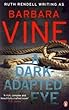
Currently I’m reading A Dark Adapted Eye by Barbara Vine. I think it’s the first one Ruth Rendell wrote under the pseudonym Barbara Vine. I’m still in the opening chapters and working out the relationships between the characters. It’s a psychological crime novel about a family with secrets. The blurb reads:

Brilliantly plotted. Vine is not afraid to walk down the mean streets of the mind and can build up an almost tangile atmosphere of menace and unease. (Daily Telegraph)

It’s not part of a series, although the Vine books are all psychological crime novels and from what I’ve read so far I would certainly recommend it if you like that sort of book.

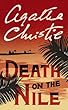
I’m also reading Death on the Nile by Agatha Christie, featuring Hercule Poirot. I haven’t read this before, although I’ve seen the film with Peter Ustinov as Poirot and the TV version starring David Suchet, so as I’m reading it I’m remembering what happens and can visualise the setting in Egypt on the Nile alongside the Pyramids. I like the way Christie sets up so many possible suspects and then reveals how each one couldn’t be the murderer. I think I remember who did it, and how – but I could be wrong. As I like Agatha Christie I’d recommend any of her books, and this one is a classic.

I have a third book on the go, although at present it’s lagging behind as I’m enjoying the other two books so much. It’s Portrait of an Unknown Woman by Vanora Bennett, historical fiction set in Tudor England (Henry VIII) with Thomas More’s family. That’s not to say that I’m not enjoying this book, but it’s quite slow to get going – or rather I’m slow at reading it, because it is quite detailed and not a lot happens at first.

It covers the same period as Wolf Hall by Hilary Mantel, when Henry VIII wants a divorce from Katherine of Aragon to marry Anne Boleyn, but there is little comparison between these two books apart from that. I suppose I’d compare it to Philippa Gregory’s books. And if you like detailed and well-researched historical fiction, then it is for you.