Friday Finds – Bookshops

This week I found details of some independent bookshops in the Scottish Borders – The Borders Book Trail:

I’ve visited just two of them – The Main Street Trading Company at St Boswells and Latimer Books at Kelso, both lovely bookshops, well worth visiting. The Main Street bookshop has the additional attraction of a café and gift shop.

I hope to look up the other bookshops as well, especially the wonderfully named Founditatlast Bookshop whose address is The Middle of Nowhere (actually it’s near Kelso). This is a secondhand bookshop spread over four floors with thousands of books on practically any subject.

Then there is The CobbyShop, also near Kelso, selling secondhand children’s books and postcards, three bookshops in Melrose, one in Peebles and lastly, by no means least, Last Century Books in Innerleithen. More details on The Borders Book Trail website. (By the way, I’m not getting commission from any of these shops, just in case you were wondering!)

A Friday Finds post.

Gormenghast – Titus Groan by Mervyn Peake

This week is the start of the Gormenghast Read-Along:

Titus Groan: The Hall of the Bright Carvings ‘“ Near and Far (p15 ‘“ p136 in my edition, Vintage 1998)

I was a bit concerned that re-reading this book would spoil my memory of it. I needn’t have been, I’m finding it just as entrancing, whisking me off to the strange world that is Gormenghast.

Gormenghast, that massing of stone, the castle, surrounded by an ‘epidemic‘ of mean dwellings swarming round its walls, with its ‘irregular roofs‘, ‘time-eaten buttresses, of broken and lofty turrets’, and the enormous Tower of Flints:

This tower, patched unevenly with black ivy, arose like a mutilated finger from the fists of knuckled masonry and pointed blasphemously at heaven. At night the owls made of it an echoing threat; by day it stood voiceless and cast its long shadow. (page 15)

These first few chapters set the scene and introduce the characters, all eccentric, grotesque even and above all – strange. The castle is filled with excitement at the birth of an heir to Gormenghast, although not everyone welcomes it with delight. Indeed, Mr Flay, Lord Gormenghast’s personal servant, calls it a ‘Challenge to Change!‘ and he doesn’t want ‘Change!‘ And neither does Fuchsia, Titus’s older sister, and on hearing of his birth she refused to believe it. She’s a girl of

about fifteen with long, rather wild black hair. She was gauche in movement and in a sense, ugly of face, but with how small a twist might she not suddenly have become beautiful. Her sullen mouth was rich and full – her eyes smouldered. (page 51)

The descriptions are very visual, with a strong expression of colour and solidity and there is an emphasis on the importance of ritual and tradition.

List of characters so far (in order of appearance):

  • the craftsmen who created the Bright Carvings, the forgotten people living outside the Castle.
  • Mr Rottcodd, the curator of the Bright Carvings.
  • Mr Flay, the thin, bony and taciturn servant of Sepulchrave, Earl of Gormenghast.
  • the Grey Scrubbers, a company of 18 men who clean the kitchen, deaf slablike men.
  • Abiatha Swelter, the fat, drunken slob who is the head chef – Flay and Swelter dislike each other intensely.
  • Steerpike, a kitchen boy whose aim is to escape from the kitchen, loathing Swelter.
  • Doctor Prunesquallor with a high pitched voice and an alarming laugh.
  • Fuchsia, Lord Sepulchrave’s daughter.
  • Countess of Sepulchrave, Gertrude, dark red hair, huge, surrounded by birds and white cats.
  • Nannie Slagg, a little ancient woman, nurse for Titus and before that Fuchsia.
  • Titus, newly born baby with extraordinary violet eyes.
  • Lord Sepulchrave, bound by tradition, long olive coloured face, a melancholy man.
  • Sourdust, the librarian, knotted beard very lined face as though made of brown paper.
  • Keda, a woman from the Dwellings of the Bright Carvers, Titus’s wet-nurse.
  • Lady Cora and Lady Clarice, Sepulchrave’s sisters, resentful of Gertrude, wanting what she has that they think should be theirs- power.

Normally I like a book to move along swiftly – this one doesn’t, but I’m perfectly happy reading it slowly, enjoying the scenes it conjures up in my mind.

Reading for the rest of 2011

I joined several challenges earlier in the year and that has angled my reading towards certain books rather than just reading whatever appeals to me at the time. My idea was to reduce the number of my t0-be-read books and it has, although I still have plenty more.

But the time has come after nearly 6 months of doing this when I want to break out. I’m feeling confined by reading to challenges and want to just pick up a book and read it regardless. I’ve got two books borrowed from friends to read and even though they say there’s no rush I feel I should read them as soon as I can and then there are two books from LibraryThing’s Early reviewers still to read and they’re beginning to make me feel as though I ought to read them and that then feels like a deadline, plus I’m in a local book group and there’s the next book for the end of June to read and I haven’t started it yet.

Occasionally I receive books from authors/publishers which also makes me feel under an obligation to read them in preference to other books and although I only accept books I think I’ll like sometimes I’d rather read something else.

So, I’m easing off from challenges for a while at least, although as the Crime Fiction Alphabet has only 5 more weeks to run I’ll carry on with that. And I’ll read the book group choices – the next one is The Bell by Iris Murdoch (a book I have read before and enjoyed). But apart from that if I see books in the bookshops/libraries/on book blogs, etc and they appeal I’ll read them. Maybe they’ll fit in the challenges and maybe they won’t …

Crime Fiction Alphabet: U is for Nicola Upson

This week’s letter in Kerrie’s Crime Fiction Alphabet is letter-u
U.

Nicola Upson has written three novels featuring novelist Josephine Tey (Elizabeth Mackintosh 1896-1952):

  • An Expert in Murder
  • Angel with Two Faces
  • Two for Sorrow

She has also written two books of non-fiction:

  • Mythologies: Sculpture of Helaine Blumenfeld
  • In Good Company: A Snapshot of Theatre and the Arts
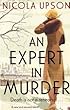
I recently read An Expert in Murder, a very detailed and intricate murder mystery. Nicola Upson has a passion for the theatre and it shines through to great advantage in this book, set in the theatrical world of  the 1930s – March, 1934 to be precise, as the final week of Josephine Tey’s play Richard of Bordeaux begins. Josephine is travelling from her home in Inverness to London by steam train when she meets an enthusiastic fan, Elspeth Simmons, who boarded the train at Berwick-upon-Tweed. They chat and Josephine takes a liking to her, feeling protective towards her.

They arrive in London, but then Elspeth is murdered and soon afterwards Bernard Aubrey, the theatre owner is also found dead, poisoned. Detective Inspector Archie Primrose, a friend of Josephine’s investigates. It’s a blend of fact and fiction. I don’t know much about Elizabeth Macintosh and so this representation of her persona as Josephine Tey seemed wholly fictional and actually she is a minor character in the sequence of events and plays little part in discovering the murderer. I think, on the whole, there is too much ‘telling’ and not enough ‘showing’ for my liking.

There is a great amount of family background, back stories and theatrical information that slowed down the action. But I liked the detailed descriptions of people and places and I especially liked the background details of the World War One, that had ended 16 years earlier but still cast its shadow. There are a number of coincidences in the book, but as Josephine tells Archie,

‘Anyway’, she continued wryly, ‘the only people who don’t believe in coincidence are the ones who read detective novels – and policemen. These things happen, Archie, even if we’re not supposed to use them in books. (page 45)

Reading An Expert in Murder made me think about mixing fact and fiction by using real people as characters. I decided that I don’t have a problem with historical fiction so wondered why its use in crime fiction should give me pause for thought. I think maybe it’s a step too far and I would have preferred it if Tey had been wholly a fictional character based on the author in the same way as John Terry, the leading actor in Tey’s play, is a fictionalised version of John Gielgud. Nicola Upson’s Author’s Note at the back of the book is interesting on this point when she explains that Elizabeth Mackintosh

… took a dim view of mixing fact and fiction – but she allowed it if the writer stated where the truth could be found, and if invention did not falsify the general picture. (page 290)

I think she succeeded in this, although, as she then adds

Murder, of course, does rather distort the general picture, but I hope that it won’t entirely eclipse a unique moment of theatrical history and the true beginnings of a remarkable writing career. (page 290)

I think that was a slight stumbling block for me, but I’m glad that it may have advertised Josephine Tey’s work to a wider audience. I haven’t read many of her books, but those I have read are excellent, especially The Daughter of Time.

Since reading An Expert in Murder I am interested in reading more of Nicola Upson’s Tey books and have  Angel with Two Faces lined up to read soon.

  • Paperback: 304 pages
  • Publisher: Faber and Faber; paperback / softback edition (5 Feb 2009)
  • Language English
  • ISBN-10: 0571237711
  • ISBN-13: 978-0571237715
  • Source: I bought the book

Gormenghast by Mervyn Peake

Jackie at Farm Lane Books Blog is hosting a read-along of Mervyn Peake’s trilogy Gormenghast beginning with Titus Groan. The reading schedule is on Jackie’s blog – reading approximately 100 pages a week.

I first read Gormenghast when I was at school. I’d found the books in my local library and devoured them, amazed at the story and it’s macabre, dreamlike and fantastic setting. The strangeness of it captivated me.

Years later I watched the BBC’s serialisation Gormenghast (the first two books) and bought the books to re-read them. For one reason or another I didn’t so when I saw Jackie’s read-along I decided to join in. As you can see from my photo I haven’t even unwrapped books 2 and 3. I hope I enjoy them as much as I did the first time round.

Crime Fiction Alphabet: T is for Once a Biker by Peter Turnbull

I’ve chosen Peter Turnbull’s Once a Biker, a Hennessey and Yellich mystery to illustrate the letter T in Kerrie’s Crime Fiction Alphabet. For a full list of his books see Fantastic Fiction.

Synopsis from the book jacket

When a death bed confession leads to the reopening of a murder case, it doesn’t bode well when both victims were members of the same bikers’ gang twenty years ago. As Detective Chief Inspector Hennessey and his team try to investigate, it seems the vow of silence is still as strong as it was all those years ago, and many ex-gang members refuse to discuss those days of dangerous initiation rites and violent dares. But, when an ex-member is suddenly found murdered, it seems that someone is determined to keep old secrets dead and buried…

My view

This is the 16th Hennessey and Yellich mystery, a police procedural set in the city of York. Once again I have jumped into a series that is well advanced in the sequence, but Once a Biker works well as a standalone. Chief Inspector George Hennessey is nearing retirement – ‘His pension was calling his name more and more loudly with each day that passed.’(page 15)  But he is still very much in charge and leads his team, Detective Sergeant Somerled Yellich, Detective Constables Thompson Ventnor and Reginald Webster (new to CID) in uncovering the murderer.

Tony Wells, dying of cancer in a hospice tells Gillian Stoneham, a counsellor, the whereabouts of Terry North’s body, buried in Foxfoot Wood outside York. Both Tony and Terry had been members of a bikers’ gang known as the Dungeon Kings. The post-mortem reveals that Terry had been killed by a blow to the head. There were fractures all over his body but no facial injuries. The pathologist Dr Louise D’Acre describes it as ‘a very dispassionate execution, but somebody wanted to hurt him before they killed him.’ (page 20)

One of the biker chicks had been murdered three weeks before Terry had been reported missing and Harry the ‘Horse’ Turner, a gang member had been convicted of her murder. Released from prison he now maintains that he was innocent and Hennessey believes him, but first he has to penetrate the bikers’ code:

“Don’t grass on your mates”. They are still bikers in their hearts, early middle-aged as they may be. Once a biker, always a biker. (page 62)

I know nothing about bikers and their gangs, but learnt a lot from this book, enough to make me glad that I didn’t – if the initiation ceremony is dangerous, the biker’s chicks’ leaving ‘ceremony’ is very brutal and shocking.

There is a very strong sense of place in this book, as George Hennessey walks to and from his office in Micklegate along the medieval city walls. I liked the chapter headings giving a short preview of the contents, in a similar vein to a Dickens’ novel, such as this for chapter 4 Wednesday, 19 June, 10.10 hours – 13.40 hours in which life in the biker gang is recalled.’ (page 71) In places the dialogue also has an old fashioned feel and the use of words, such as ‘forenoon’ adds to the formality not found in most of today’s crime fiction books. I liked it.

There is an intriguing ending to this book involving George Hennessey which made me realise that I have missed something in not reading the earlier books in the series, something I hope to remedy.

  • Paperback: 201 pages
  • Publisher: Severn House Paperbacks Ltd (Jun 2008)
  • Language English
  • ISBN-10: 9781847510266
  • ISBN-13: 978-1847510266
  • Source: Borrowed from the library