What’s in a Name 5

In September I completed this year’s What’s in a Name Challenge and I’ve been wondering whether or not to join in again for next year’s challenge. On the one hand, I’ve done it most years and it’s one of the few challenges that I’ve joined that I’ve finished. On the other hand I’m not over keen on reading a book based on the fact that it has a particular word in the title. But, then again I do like making lists and seeing if I can find enough of my unread books to match the categories.

So, I am going to take part, because I’ve gone through my books and found that I have more than enough books to finish the challenge and after all it only involves reading 6 books over the year. It’s hosted by Beth at Beth Fish Reads:

The categories and my choices are as follows:

A book with a topographical feature in the title.  I have lots of choice for this category – 

  • On the Black Hill by Bruce Chatwin
  • The Way Through the Woods by Colin Dexter
  • The Secret River by Kate Grenville
  • Hanging Valley by Peter Robinson
  • The Ghost Road by Pat Barker
  • The River Midnight by Lilian Nattel
  • Shadows in the Street by Susan Hill
  • The Island by Victoria Hislop
  • The Road by Cormac McCarthy

A book with something you’d see in the sky in the title

  •  Cloud Atlas by David Mitchell
  • The Book of Air and Shadows by Michael Gruber
  • Death in the Clouds by Agatha Christie

A book with a creepy crawly in the title – just one book!

  • The Wasp Factory by Iain Banks

A book with a type of house in the title:

  • The Girl Who Kicked the Hornet’s Nest by Steig Larsson
  • The House of Spirits by Isabel Allende
  • Wycliffe and the House of Fear by W J Burley
  • I’m the King of the Castle by Susan Hill

A book with something you’d carry in your pocket, purse, or backpack in the title:

  • The Scarlet Letter by Nathaniel Hawthorne
  • Notes from an Exhibition by Patrick Gale
  • Schindler’s List by Thomas Keneally
  • Village Diary by Miss Read
  • They Do It With Mirrors by Agatha Christie
  • Book of Love by Sarah Bower

A book with something you’d find on a calendar in the title:

  • The Friday Night Knitting Club by Kate Jacobs
  • The Year of the Flood by Margaret Atwood
  • The Day Gone By by Richard Adams (autobiography of the author of Watership Down)

Book Beginnings on Friday

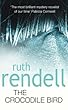
I began reading The Crocodile Bird by Ruth Rendell last night for no reason other than it has been on the top of a pile by my bedside for a while.

It begins well:

 The world began to fall apart at nine in the evening. Not at five when it happened, nor at half-past six when the policemen came and Eve said to go into the little castle and not show herself, but at nine when all was quiet again and it was dark outside.

I had to read on, even though I was falling asleep. It grabbed my attention – what had happened? It must have been something bad, because the policemen came. Who is Eve? Who did she tell to go into the little castle and why? The little castle … what is that? If the thing that happened was so bad, why hadn’t the world begun to fall apart at five? Whatever happened at nine must have been much worse – or was it?

This is a Ruth Rendell book, so I expect it to be mysterious and creepy. I’ve read further on and it’s full of secrets that are slowly being revealed and so far I’m enjoying the experience.

Book Beginnings is run by Kathy at A Few More Pages.

How to participate: Share the first line (or two) of the book you are currently reading on your blog or in the comments. Include the title and the author so we know what you’re reading. Then, if you would like, let us know what your first impressions were based on that first line, and let us know if you liked or did not like the sentence. The link-up will be at  every Friday and will be open for the entire week.

Much in Evidence by Henry Cecil

I’ve been reading quite a few long books recently and fancied something shorter, and more amusing. I also noticed that I’ve not been reading much crime fiction lately, so I looked at my bookshelves and took down Much in Evidence by Henry Cecil (published in the US as The Long Arm). My copy is a secondhand book, with this great cover.

I haven’t read any of Cecil’s other books, but after reading this one I certainly will look out for more. there is a list of his books on Fantastic Fiction. It’s no surprise to me to find out that Henry Cecil, real name Henry Cecil Leon (1902 -1976), was a judge and I loved the way he pokes fun at the law and the legal system in this book. The dialogue is masterful, and the characters are hilarious, from the drunken solicitor, Mr Tewkesbury, to the barrow boy, Mr Brown. The plot is farcical, which I found fascinating and highly entertaining.

To summarise the plot very briefly – Mr Richmond, bald and lame was attacked in his home and robbed of £100,000. The insurance company reluctantly paid up, but then they discover that a series of bald, lame men had been making dubious claims on insurance companies and he is charged with fraud.

Coincidences abound in this book, until you just don’t know what to believe. Is there just once coincidence too many … ? It was with relief that I read the last chapter, where my suspicions were confirmed.

My rating: 4/5

Details of a new copy of Much in Evidence (from Amazon UK):

  • Paperback: 212 pages
  • Publisher: House of Stratus; New edition edition (16 Oct 2000)
  • Language English
  • ISBN-10: 1842320572
  • ISBN-13: 978-1842320570

War Through the Generations Challenge – World War One

I’ve been thinking about Reading Challenges for next year. At first I thought I would only do one or two, because I start out full of enthusiasm and then find that by listing the books I want to read often ends up with me forgetting about them and reading something completely different. I’m very much a ‘mood’ reader. This made me feel a bit pressured when I remembered that I haven’t read the books/finished a particular challenge.

But then I realised that the pressure is purely of my own making, and as I really enjoy making lists and seeing which books I already own would fit into a challenge, I’ve decided to go ahead, make my lists and if I do complete the challenge, so much the better. This of course, means that I’m not treating it as a ‘challenge’, but then I don’t consider reading is or should be a ‘challenge’.  I  think I’ll call it ‘themed reading‘.

My books fit so well into this theme, so I’m signing up for The War Through the Generations:World War 1 Challenge.

Here are the details:

The challenge will run from January 1, 2012, through December 31, 2012.
The books, whether fiction or non-fiction must have WWI as the primary or secondary theme and occur before, during, or after the war, so long as the conflicts that led to the war or the war itself are important to the story. Books from other challenges count so long as they meet the above criteria.

  • Dip: Read 1-3 books in any genre with WWI as a primary or secondary theme.
  • Wade: Read 4-10 books in any genre with WWI as a primary or secondary theme.
  • Swim: Read 11 or more books in any genre with WWI as a primary or secondary theme.

And these are my books:

  • All Quiet on the Western Front by Erich Maria Remarque – a book I mean to read each year. I started it a couple of years ago and never finished it. I’ll have to start again.
  • The Ghost Road by Pat Barker – set in 1918 as the War came to an end. This is the third in the trilogy. I haven’t got the first two, so hope this stands well on its own.
  • Testament of Youth by Vera Brittain. This is Vera Brittain’s autobiography. She was 21 in 1914.
  • Chronicle of Youth by Vera Brittain. This is her war diary 1913 – 1917 on which she based Testament of Youth.

Book Beginnings on Friday

This morning I finished reading Faulks on Fiction by Sebastian Faulks, a book I’ve been reading slowly for a few weeks (my review coming soon). It’s time to choose another non-fiction book to take its place. It’s got to be a book I can read in small bites and not lose the thread, maybe a biography/autobiography, or a diary, collection of letters, or a history book.

I’ve looked at a few and have decided on this one:

The half-timbered mansion disappeared long ago, and the paved thoroughfare lies buried beneath the dust of centuries. The Great Fire tore the heart out of this corner of Elizabethan London, devouring books, buildings and streets. One of the few things that survived is a small and insignificant-looking map – crinkled, faded, but still bearing the proud name of its owner. (page 1)

This is the beginning of Giles Milton’s about the first English settlement in the New World in the sixteenth century. It’s Big Chief Elizabeth: how England’s Adventurers gambled and won the New World. I’ve read his earlier book Nathaniel’s Nutmeg, which is a fascinating tale of the ‘competition between England and Holland for possession of the spice- producing islands of South-East Asia throughout the 17th century.’
I like the beginning of Big Chief Elizabeth, which within a few words captures the mystery and appeal of history for me. I’m looking forward to discovering more about the map and its owner.

Blurb from the back cover:

Big Chief Elizabeth has it all: gallant English seadogs, coiffured courtiers, exotic locations and lots of fights with pirates, Spaniards and Indians. (Sunday Telegraph)

Plus I’m interested to read Giles Milton’s newest book, Wolfram: the Boy who Went to War.

Book Beginnings on Friday is hosted by Katy at A Few More Pages.

Westwood by Stella Gibbons: a Book Review

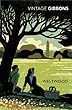
I found Westwood by Stella Gibbons a slightly disappointing book. I liked it, but didn’t love it, as I’d hoped I would. I do enjoy descriptive writing, and there are some beautiful descriptive passages, but there were far too many, even for me, which eventually made me wish Gibbons would just get a move on. Lynne Truss in the introduction wrote that she loves it deeply and it made her laugh and weep. I found it amusing in places and also touching. It’s a slow meander through the characters, their lives and their houses.

Margaret Steggles, a plain young woman finds a ration book on Hampstead Heath which provides her with an introduction into the lives of Gerard Challis and his family, his beautiful wife, Seraphina, his self-absorbed daughter Hebe and her spoilt children and Zita the family’s maid. Margaret idolises Gerard, who is a playwright. He in turn falls under the spell of her best friend, Hilda. The contrast between Margaret and Hilda is marked. Margaret is serious, somewhat of a snob, ‘not the type to attract men’, and impressed by the artistic circle surrounding the Challis family. Hilda, a beautiful young woman who attracts many male admirers has no trace of romance in her nature and Margaret realises that Hilda ‘would not or could not be serious’. Margaret becomes obsessed with Gerard’s house, Westwood and longs to be there whenever she can. Feeling that she has outgrown Hilda, she cultivates a friendship with Zita.

This is not a wartime novel, although it is set in London just after the Blitz and there are some wonderful descriptions of the city and its unexpected green and unspoilt places amidst the ruins of bombed houses. Although the war is not really in focus, the atmosphere of the times infuses the novel. The nature of war itself is discussed by Grantey, the family’s old nurse in her conversation with Hebe:

… it’s all part of God’s plan for doing away with war for good and all.

All those dreadful explosions and atrocities and secret weapons they keep on talking about, … and not knowing when you go to bed at night if you’ll be alive when you wake up in the  morning – that’s all part of God’s plan. He’s letting it get worse and worse, so’s it’ll destroy itself, like; it’ll get so bad not even wicked people’ll want it , and then it’ll stop. (page 277)

Really???

It’s a novel about relationships, about friendship, about hope and longing and above all about disappointment and ‘coming to terms with life’.

*Slight spoiler alert follows*

*I wouldn’t have known without Lynne Truss’s introduction to the book that Gerard was based on the writer Charles Morgan, who had annoyed Stella Gibbons, and Gerard’s characters in his dreadful plays are parodies of Morgan’s female characters. Morgan had claimed that a sense of humour was lacking in writers.The pompous Gerard is the butt of the humour in the novel  – in particular the scene where his grandchildren find him in a compromising situation in Kew Gardens – that did make me smile.*

  • Paperback: 464 pages
  • Publisher: Vintage Classics (4 Aug 2011)
  • Language English
  • ISBN-10: 009952872X
  • ISBN-13: 978-0099528722
  • Source: I bought it
  • My Rating 3/5

Stella Gibbons’s more famous novel is Cold Comfort Farm. I used to think I’d read it, now I’m not so sure. I like Westwood just enough to make me curious to look out for it. If you’ve read it, or Westwood, what are your views?