Beryl Bainbridge Reading Week

All week Gaskella has been hosting the Beryl Bainbridge Reading Week and I’m just in time to join in.

Beryl Bainbridge (1934 – 2010) was made a Dame in 2000. She wrote 18 novels, three of which were filmed, two collections of short stories, several plays for stage and television, and many articles, essays, columns and reviews. Five of her novels were nominated for the Booker Prize, but none of them won it. Years ago I read two of her books, historical novels, one being According to Queenie, a novel about the life of Samuel Johnson as seen through the eyes of Queeney, Mrs Thrale, and the other Master Georgie, set in the Crimean War telling the story of George Hardy, a surgeon.

This week I’ve read A Quiet Life, first published in 1976 before she wrote her historical novels.

Synopsis from the book jacket:

Alan, a schoolboy living in a seaside village after the war, is concerned about the behaviour of his sister Madge. She has been seen talking to a German prisoner on the beach. Gradually her nightly disappearances affect the whole household. The parents become bitterly estranged, the wireless is turned up full volume so the neighbours won’t hear the rows and the slamming of doors. Inexorably, Alan’s conscience and his love for his family lead to disaster. Does time distort or clarify events in the past? After twenty years can one ever be sure they took place at all?

My Thoughts:

I didn’t know before I read it that it is a semi-autobiographical novel, using her own childhood and background as source material. I was struck immediately by the claustrophobic atmosphere pervading the novel. The family live in a small house, their living arrangements reduced by the fact that the rooms were full of furniture and ornaments and they kept the freezing cold lounge just for visitors of which they had very few. And Alan had to have his mother’s permission to use the dining room to do his homework. They lived on top of each other in the kitchen where the armchairs in front of the fire made it difficult to enter and move about.

Most of the time they spent escaping from the house – Father to the garden, Mother out, thought by Father to be having an affair, Alan to school, church or youth club and Madge to the pinewoods or to the beach with her German. As Madge says Alan ‘keeps everything bottled up, … anything for a quiet life.’ Whereas Alan realised that Madge ‘came out with things for precisely the reasons he hid them – to avoid embarrassment.’

Alan’s embarrassment is increased when he gets a girlfriend, Janet and is made worse by Madge’s behaviour – she gets away with much worse than he ever can. There are some wonderfully vivid scenes, such as Alan scrambling up a sand dune and seeing Madge and the German caressing each other behind a small hillock. Then there is Father hurling the arm of his father-in-law’s chair out of the house onto the lawn, followed by him manhandling the chair out of the house, lurching across the grass with it to the greenhouse and then setting fire to it. The whole episode is rendered farcical when his false teeth fly out of his mouth into the fire and Mother squealed with laughter, the sound carrying across the ‘bleak and desolate gardens.’

There’s pathos and dark humour and I found it moving and disturbing. Madge in particular seemed a problem for her parents and Alan, at one time manipulative and at another understanding and sympathetic. It expresses the pain of living with parents who don’t get on, the frustrations caused by rigid code of behaviour and class structure of the period, the shame they would suffer if the neighbours ever discovered what was happening, and the rows, stress and unhappiness they all endured.

I was interested to know more about the book and found this fascinating interview between Beryl Bainbridge and Anthony Clare in August 1983. I was intrigued to hear that so many of the descriptions and incidents in A Quiet Life were based on her own experiences. In fact she said that her creative urge was fuelled by what happened to her and from the age of 9 or 10 she had started to write about her parents and her background. She described herself as a child as an ‘awkward little devil‘, and I could see so much of that in the character of Madge – even down to the bad cough she could bring on at will.

My verdict: A brilliant book. She doesn’t waste any words, but still clearly sets the scene, portraying the everyday dilemmas, disasters and scandals of her eccentric characters. I’ll be reading as many more of her books that I can find.

New-To-Me Books

Tuesday was a good day for books. It was a good day for other things too, such as meeting our nephew for lunch, but that is by the by.

I went to Barter Books in Alnwick, one of my favourite secondhand bookshops and came away with a pile of 10 books – bartered, not bought. The way it works is that you take books in and they offer you a sum of money for them and then you ‘buy’ more. You can, of course, just buy books.

I went prepared with a list of authors to look for and found books by most of them. From  top to bottom in the photo above they are:

Wycliffe and the Four Jacks by W J Burley. This book doesn’t look as though it has been  read at all!  Wycliffe is on holiday in Cornwall and gets drawn into the investigation into the murder of bestselling novelist David Cleeve.

Agatha Christie’s Sleeping Murder: Miss Marple’s Last Case, which was published posthumously and Lord Edgewhere Dies, an early Poirot investigation.

Death at the President’s Lodging by Michael Innes, an Inspector Appleby mystery in which he investigates the bizarre death of the President of St Anthony’s College, somewhere between Oxford and Cambridge.

Bones and Silence: a Dalziel and Pascoe novel by Reginald Hill. This won the CWA Gold Dagger Award in 1990. Reginald Hill died in January this year. I’ve only read a few of his books, although I’ve watched all the Dalziel and Pascoe TV series.

Tamburlaine Must Die by Louise Welsh. Set in 1593 this novella tells the story of Christopher Marlowe’s last days, weaving together fact and fiction.

The Grey Coast by Neil M Gunn. I’d read on Katrina’s blog Pining for the West about one of Gunn’s book and made a note of his name. So, I was pleased to find this book, his first novel published in 1926, described on the back of the book as a novel about the scenes of his childhood at the turn of the century.

Two books by Beryl Bainbridge, because this week it’s Beryl Bainbridge Week on Gaskella’s blog. There were several to choose from and I picked The Birthday Boys, a fictionalised version of Scott’s 1912 Antarctic expedition, and A Quiet Life, a novel  with ‘a post-war lower-middle-class setting characterised by meanness, frustration and emotional evasion.’

And finally, a book I’ve been wondering whether to read or not – Julian Barnes’s The Sense of an Ending, the winner of the Man Booker Prize 2011. This is ‘the story of one man coming to terms with the mutable past.’  I couldn’t resist getting it as it looked brand new.

Crime Fiction Alphabet: Letter E

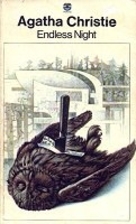
Endless Night (Agatha Christie Collection)…

Endless Night by Agatha Christie was first published in 1967.

She usually spent three to four months writing a book, but she wrote Endless Night in six weeks. It differs from most of her other books in that it is a psychological study. In fact it reminded me very much of Ruth Rendell’s books, writing as Barbara Vine. It has the same suffocating air of menace throughout the book, with more than one twist at the end.

The title comes from William Blake’s Auguries of Innocence:

Every Night and every Morn
Some to Misery are born.
Every Morn and every Night
Some are born to Sweet Delight.
Some are born to Sweet Delight,
Some are born to Endless Night.

It’s hard to write about this book without identifying the murderer.  Don’t read the Wikipedia entry if you don’t want to know,  as that gives it away completely.

The narrator is Michael Rogers, a young man with grand ideas who’d had many jobs and not enough money to buy everything he wanted. He longs for a fine, beautiful house designed by his architect friend, Santonix and after seeing the Sale Notice of ‘The Towers’ and its land, known locally as ‘Gipsy’s Acre’, he dreams that he would live there with the girl that he loved.

His dreams come true when he meets and falls in love with Ellie, an American heiress. They marry when she reaches 21 and she buys the ‘The Towers’ . Santonix designs and builds them a new, modern house and they live there – but not happily ever after because ‘Gipsy’s Acre’  is said to be cursed. Indeed, old Mrs Lee, who tells fortunes and prophesies the future warns Ellie:

‘I’m telling you my pretty. I’m warning you. You can have a happy life – but you must avoid danger. Don’t come to a place where there’s danger or where there’s a curse. Go away where you’re loved and taken care of and looked after.  You’ve got to keep yourself safe. Remember that. Otherwise -otherwise- ‘ she gave a short shiver. I don’t like to see it, I don’t like to see what’s in your hand. (pages 32-3)

It’s Michael  who dominates the book, with his aspirations, his determination to get what he wants, his optimism and also his difficult relationship with his mother, his inability to get along with Ellie’s family and her companion, Greta, who Michael thinks has an undue influence on her.There is little or no detection, and no investigators – no Poirot or Miss Marple – to highlight the clues to the murders, for there are several.

I read Endless Night very quickly and easily, convinced of the characters and the locations. But thinking about it now I can see that it’s deceptively easy to read and I read it too quickly, hardly taking in hints and clues along the way, although I did begin to sense who the murderer was. It’s a study of avarice, of the effect of the pursuit of wealth, of the restless desire to possess. It’s also about evil, love, hate and desire – and ‘endless night’ is a terrible fate.

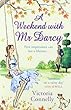
A Weekend with Mr Darcy by Victoria Connelly

I don’t normally read romantic chick-lit fiction, but this book was a gift, described as a light easy read and it is. I didn’t expect too much from it but I quite enjoyed it. A Weekend with Mr Darcy takes place at a Jane Austen conference, attended by Katherine Roberts, a university lecturer who doesn’t want her colleagues to know she is a Jane Austen fan and Robyn Love, a Jane Austen fanatic who is stuck with Jace,a boyfriend from her childhood who dislikes anything to do with Jane Austen.

They meet at the conference at Purley Hall in Hampshire, not far from Jane Austen’s birthplace, Chawton Cottage. Katherine is hoping to meet the novelist Lorna Warwick, famous for her risqué Regency romances, but Lorna who has been writing to Katherine is reluctant to go, not wanting Katherine to find out that she is in fact a man, Warwick Lawton. (This is not a spoiler as it’s revealed early on in the book.) But as Warwick he goes to Purley Hall and the inevitable conclusions follow. Robyn is desperately trying to ditch Jace, who has insisted on driving her to Hampshire and staying at a local pub. Chaos follows as Robyn falls in love with Dan, who she thinks is ‘totally beautiful’.

The attraction of the book for me is in the Jane Austen references and in particular the Jane Austen quiz. The book may not be entirely my cup of tea, but it has made me keen to re-read the Jane Austen novels I haven’t read for many years, such as Mansfield Park, Sense and Sensibility and in particular Northanger Abbey which I haven’t read since I was at school.

For a more detailed and enthusiastic review than mine see this post on the Austenprose blog.

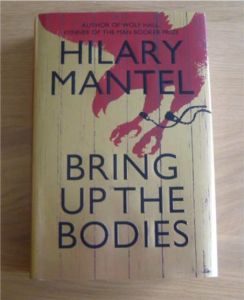
Bring Up the Bodies by Hilary Mantel

Synopsis from the book cover:

By 1535 Thomas Cromwell, the blacksmith’s son, is far from his humble origins. Chief Minister to Henry VIII, his fortunes have risen with those of Anne Boleyn, Henry’s second wife, for whose sake Henry has broken with Rome and created his own church. But Henry’s actions have forced England into dangerous isolation, and Anne has failed to do what she promised: bear a son to secure the Tudor line. When Henry visits Wolf Hall, Cromwell watches as Henry falls in love with the silent, plain Jane Seymour. The minister sees what is at stake: not just the king’s pleasure, but the safety of the nation. As he eases a way through the sexual politics of the court, its miasma of gossip, he must negotiate a ‘˜truth’ that will satisfy Henry and secure his own career. But neither minister nor king will emerge undamaged from the bloody theatre of Anne’s final days.

Some thoughts:

Bring Up the Bodies by Hilary Mantel is described on the sleeve of the book cover as ‘a speaking picture, an audacious vision of Tudor England that sheds its light on the modern world.’

It is, of course, the sequel to Wolf Hall and I was too keen to read it to wait for the paperback to come out. I finished it a while ago and have been mulling over in my mind what to write about it. On balance, I didn’t enjoy it as much as Wolf Hall and I had just a little feeling of anti-climax about it, but then the novelty of Wolf Hall for me was the way Hilary Mantel not only brought the Tudor world alive but also how she overturned my ideas of both Thomas Cromwell and Sir Thomas More. As there is no denying that I knew that Anne Boleyn was not going to make a go of her marriage to Henry VIII, so there was little drama there for me. I didn’t even want her to escape her fate.

And yet, Bring Up the Bodies is still a brilliant book. It’s beautifully written, even if it is in the present tense, full of colour and detail so that there is no doubt that this is 16th century England, with vivid descriptions of the people, buildings, fabrics, and landscapes of both town and countryside.

One of the things that stood out for me in Wolf Hall was just how much of a family man Cromwell was, how much he loved and protected them. In Bring Up the Bodies, my overall impression of him is as a politician, a schemer and an implacable enemy. Right from the start he’s in the thick of the action as he and Henry are out hunting, flying their hawks. Cromwell’s are named after his dead daughters, a reminder of him as the family man, but immediately we are made aware that he is very much in the king’s service.  

He never spares himself in the king’s service, he knows his worth and his merits and makes sure of his reward: offices, perquisites and title deeds, manor houses and farms. He has a way of getting his way, he has a method; he will charm a man or bribe him, coax him or threaten him, he will explain to a man where his true interests lie, and he will introduce that same man to aspects of himself he didn’t know existed. … he is distinguished by his courtesy, his calmness and his indefatigable attention to England’s business.  (pages 6-7)

Truly, a man not a man to ignore. A man to be wary of, and even though Henry fondly and familiarly calls him ‘Crumb’, a man needing to take great care of himself. Anne Boleyn, in contrast, by the end of the book is ‘ a tiny figure, a bundle of bones’  when she is brought to the scaffold. But Cromwell is not deceived:

She does not look like a powerful enemy of England, but looks can deceive. If she could have brought Katherine to this same place, she would have. If her sway had continued, the child Mary might have stood here; and he himself of course, pulling off his coat and waiting for the coarse English axe. (page 395)

However, this is not the end of Cromwell:

Summer, 1536: he is promoted Baron Cromwell. He cannot call himself Lord Cromwell of Putney. He might laugh. However. He can call himself Baron Cromwell of Wimbledon. He ranged all over those fields, when he was a boy.

The word ‘however’ is like an imp coiled beneath your chair. It induces ink to form words you have not yet seen and lines to march across the page and overshoot the margin. There are no endings. If you think so you are deceived as to their nature. They are all beginnings. Here is one. (page 407)

And so, on to the next book …

A Classics Challenge – June Prompt

This month’s prompt for the Classics Challenge is to create a visual tour using quotes from the book you are reading; a series of images that closely represents how you see the scene or description. It doesn’t have to absolutely follow the text but it must reflect the mood.

I’ve been reading Charles Dickens’ A Tale of Two Cities and so there are many scenes I could choose from, varying from London to Paris, from calm and peaceful scenes to trial scenes and scenes of violence, revolution and death by guillotine.

But I’ve decide to concentrate on the place described by Dickens as Doctor Manette’s house in London, the house he lived in with his daughter, Lucie after he was released from the Bastille in Paris.

The quiet lodgings of Doctor Manette were in a quiet street corner not far from Soho Square.

Soho Square illustration is South-west Corner of Soho Square in 1816. From an aquatint in John B. Papworth's Select Views of London

I was intrigued by it being described as a quiet street corner – in Soho. But the Soho of 1780 was rather different from what it later became, so I had to alter my mental picture of it. This view of Soho Square is from about 50 years after the events in the book, but it shows the rural nature of London at that time.

I wondered about the location of the Manettes’ lodging house, just where was it? And then I founnd this plan (see illustration below) showing the location of Soho Square, coloured in green. Just below the Square are Greek Street and Rose Street. It has been conjectured that Dr Manette’s house was No.1 Greek Street with its courtyard in Rose Street.  In 1895 Rose Street was changed to Manette Street after Dicken’s character:

Soho Square

However that may or may not been, at that time Soho was very much in the countryside:

A quainter corner than the corner where the doctor lived, was not to be found in London. There was no way through it, and the front windows of the doctor’s lodgings commanded a pleasant little vista of street that has a congenial air of retirement on it. There were few buildings then, north of the Oxford-road, and forest trees flourished, and wild flowers grew, and the hawthorn blossomed, in the now vanished fields.

Hawthorn Blossom
Hawthorn bushes

Somewhat different from the London scene these days!

Doctor Manette occupied two floors of the house, with a courtyard at the back:

where a plane-tree rustled its green leaves

It was where Lucie, Mr Lorry from Tellson’s Bank and Charles Darney sat under the tree talking and drinking wine and where Lucie and her father sat when she told him she was going to marry Darney:

Plane Tree - from Wikimedia © Copyright David Hawgood

I could just imagine the scene:

Never did the sun go down with a brighter glory on the quiet corner in Soho, than one memorable evening when the  Doctor and his daughter sat under the plane-tree together. Never did the moon rise on a milder radiance over great London, than on that night when it found them still seated under the tree, and shone upon their faces through its leaves.

Moonlight