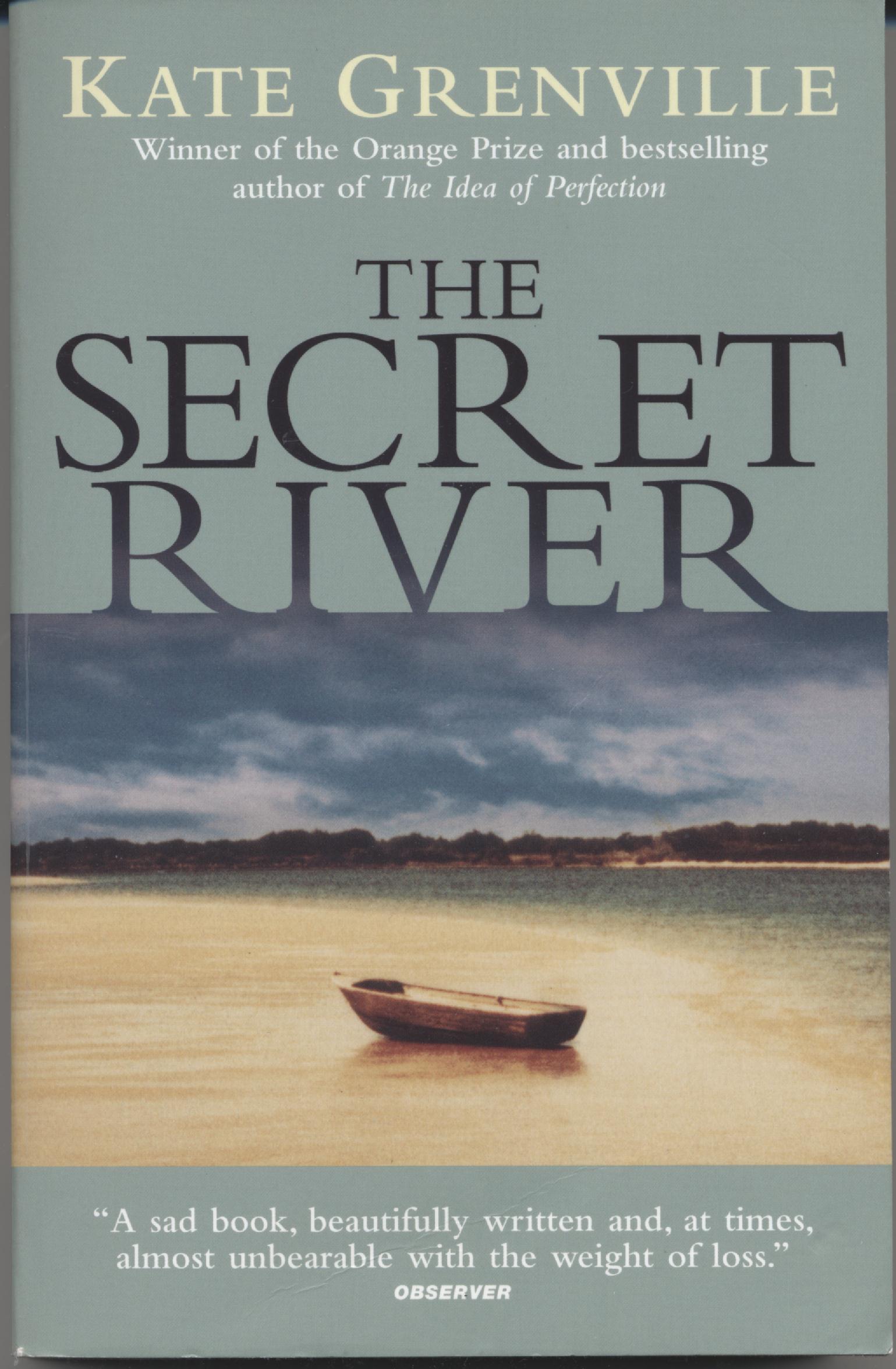
The Secret River by Kate Grenville: a Book Review

Every now and then I read a book that completely captivates me and transports me to another world and The Secret River by Kate Grenville is one of those books. I know a book is a good book for me if I abandon any other books I’m reading and can’t wait to get back to it each time I have to put it down. This is one of those books.
It begins:

The Alexander, with its cargo of convicts, had bucked over the face of the ocean for the better part of a year. Now it had fetched up at the end of the earth. There was no lock on the door of the hut where William Thornhill, transported for the term of his natural life in the Year of Our Lord eighteen hundred and six, was passing his first night in His Majesty’s penal colony of New South Wales. There was hardly a door, barely a wall: only a flap of bark, a screen of sticks and mud. There was no need of lock, of door, of wall: this was a prison whose bars were ten thousand miles of water.

This is historical fiction, straight-forward story-telling following William Thornhill from his childhood in the slums of London to Australia. He was a Thames waterman transported for stealing timber; his wife,Sal and child went with him and together they make a new life for themselves. It’s about struggle for survival as William is eventually pardoned and becomes a waterman on the Hawkesbury River and then a settler with his own land and servants.

The novel raises several issues – about crime and punishment, about landownership, defence of property, power, class and colonisation. The settlers take land owned by the ‘blacks’ – the Aborigines – with the inevitable resulting conflicts and atrocities on both sides. It begins with confrontation between William and the ‘blacks’ as William tries to negotiate a relationship with the Aborigines who unknown to him owned the land he had been granted. But it’s not the only conflict he has to deal with because he also has to contend with some of the  other English settlers on neighbouring land who have a much more violent attitude towards the Aborigines. Although William has a longing for the land he does not have the same identification with it as the Aborigines do:

‘˜Jack slapped his hand on the ground so hard a puff of dust flew up and wafted away.  This me, he said. My place. He smoothed the dirt with his palm so it left a patch’¦ Sit down hereabouts.’ …

… there was an emptiness as he [Thornhill] watched Jack’s hand caressing the dirt. This was something he did not have: a place that was part of his flesh and spirit. (page 344)

It’s a well-paced narrative with good descriptive writing setting the scenes vividly in their locations. It’s rhythmic expressing moods, the differences in cultures and the mounting tension. There are some stereotypical characters, but the main characters, William in particular, are convincing. Their dilemmas they face come over as real as they struggle to come to terms with their situations.

I found this book difficult to put down and it has lived in my mind for days – a dramatic and vivid story and thought -provoking as well. There are two more novels by Kate Grenville about Australia’s history – The Lieutenant, published in 2008, and Sarah Thornhill, published earlier this year. I hope they’re as good.
Best Crime Fiction January-June 2012

Kerrie at Mysteries in Paradise is collecting readers’ best crime fiction reads for the year up to the end of June. She asks for the title, author and year of publication of your best 10 (or so) reads. They do not need to be recent publications.

These are the titles that I’ve rated at least 4/5:

Crime Fiction Pick of the Month – June 2012

The Crime Fiction Pick of the Month meme is hosted at Mysteries in Paradise by Kerrie. I read 5 crime fiction books this month and my pick of the month is:

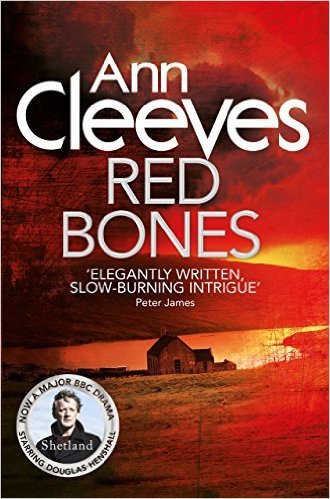
Red Bones by Ann Cleeves

Red Bones is the third book in Ann Cleeves’s Shetland Quartet. It’s set on Whalsay, where two young archaeologists, excavating a site on Mima Williams’s land, discover human bones. They are sent away for testing – are they an ancient  find or are the bones more contemporary? Sandy Wilson, Inspector Jimmy Perez’s sergeant is Mima’s grandson. He is visiting his family when late one night he finds Mima’s body. It appears she was shot accidently by his cousin Ronald, out shooting rabbits. Then one of the archaeologists is also found dead, and even though it appears to be suicide Jimmy and Sandy are not convinced, thinking it could be murder.

I really like these Shetland mysteries. They are complicated and slow-moving books that enable you to immerse yourself in the mystery. The characters have depth and the locations are superbly described. In this book Ann Cleeves explores both the history of the island, its close-knit community, its traditions and the intricacies of the close family relationships. In contrast to the rest of the series the novel is narrated by Sandy as well as Jimmy and consequently both their innermost thoughts and feelings are revealed.

Red Bones is currently being filmed for a two-part TV drama. More good news – Ann Cleeves’s website reveals that there is another Jimmy Perez mystery in progress  – Dead Water to be published in January 2013.

The four books in the Shetland series are:

Crime Fiction Alphabet: G is for Sue Grafton

This week’s letter in Kerrie’s Crime Fiction Alphabet is the Letter G.

Sue Grafton is the author of the alphabet- titled series of books featuring Kinsey Millhone, a private investigator. So far there are 22 books in the series covering the letters A – V. For the full list see Sue Grafton’s website.

The books are set in and around the fictional town of Santa Teresa, California, based on Santa Barbara, where Grafton has a home in the suburb of Montecito. She was born in 1940, the daughter of detective novelist C. W. Grafton. She began writing at the age of 18 and before writing the Kinsey Millhone novels she was a TV scriptwriter. I think it’s remarkable that her novels have been published in 28 countries and in 26 languages, including Bulgarian and Indonesian, but she has no wish to sell the film and television rights to her books. Based on the one book of hers that I’ve read, A is for Alibi, I think they would make an excellent TV series, but maybe it’s a good decision. TV adaptations have a most irritating tendency of changing plots and the characters rarely match up to my mental images! 

A is for Alibi was first published in 1982.

Synopsis from Grafton’s website:

When Laurence Fife was murdered, few mourned his passing. A prominent divorce attorney with a reputation for single-minded ruthlessness on behalf of his clients, Fife was also rumored to be a dedicated philanderer. Plenty of people in the picturesque Southern California town of Santa Teresa had a reason to want him dead. Including, thought the cops, his young and beautiful wife, Nikki. With motive, access, and opportunity, Nikki was their number one suspect. The jury thought so too.

Eight years later and out on parole, Nikki Fife hires Kinsey Millhone to find out who really killed her late husband.

A trail that is eight years cold. A trail that reaches out to enfold a bitter, wealthy, and foul-mouthed old woman and a young boy, born deaf, whose memory cannot be trusted. A trail that leads to a lawyer defensively loyal to a dead partner – and disarmingly attractive to Millhone; to an ex-wife, brave, lucid, lovely – and still angry over Fife’s betrayal of her; to a not-so-young secretary with too high a salary for too few skills – and too many debts left owing: The trail twists to include every turn until it finally twists back on itself with a killer cunning enough to get away with murder.

My view:

I thought this was a well constructed and convincing murder mystery. Kinsey is a likeable, strong character. In this first book she comes across as a loner. She’s 32, twice divorced with no children or pets, or indeed any ties, although she does have plenty of friends and contacts who help out with her investigations and she goes jogging – a lot. There are  some cameos of characters, who I suspect feature in the later books. There is her landlord Henry Pitts, a former baker aged 81 who makes a living devising crossword puzzles. Kinsey is ‘halfway in love’ with Henry.

It’s a fast-paced book, easy to read and with no gory details, which I have to skim read in other books (the equivalent of watching the TV  behind my fingers). I liked it and now will have to find the other books in the series.

Who taught you to read?

btt button

A while ago, Deb at Booking Through Thursday interviewed her readers for a change, and her final question was, ‘œWhat question have I NOT asked at BTT that you’d love me to ask?’

This morning’s BTT question is the question I asked:

Who taught you to read?

I asked this because I don’t remember who taught me to read and I wondered if anyone else does actually remember being taught.

I just can’t remember a time when I couldn’t talk, walk or read. I know that I could read before I went to school and that I loved being read to and being told stories. It was my dad who read to me at night before I went to sleep and he was the one who made up silly, funny stories to keep me and my sister entertained. So maybe it was him who taught me to read.

But it could have be my mum who taught me because she was the one who took me to the library with her. The library was a small branch library with children’s and adults’ books in the same room and I could choose my own books whilst she chose hers and she could keep an eye on me at the same time. She was the one who always had her head in a book when she wasn’t busy doing anything else. 

I wish I could remember. All I do remember is loving books and it seems as though I learnt to read by looking and listening rather than being taught. But it can’t have been that simple – can it?

Crime Fiction Alphabet: F is for Fatherland

This week it’s the letter F in Kerrie’s Crime Fiction Alphabet. I’ve chosen Fatherland by Robert Harris.

It’s a fast-paced thriller set in Germany in 1964, but not the historical Germany of that date, because Hitler is approaching his 75th birthday, and Germany had won the Second World War ‘“ it’s historical fiction that never was ‘“ an alternative history. And yet many of the characters actually existed, their biographies are correct up to 1942 and Harris quotes from authentic documents in the book. The Berlin of the book is the Berlin that Albert Speer planned to build.

What is definite is that this is a murder mystery, beginning with the discovery of the naked body of an old man, lying half in the Havel, a lake on the outskirts of Berlin. The homicide investigator is Xavier March of the Kriminalpolizei (the Kripo) and the victim is Josef Buhler, one of the former leading members of the Nazi Party who had been instrumental in devising ‘˜the final solution’. As March digs deeper, despite being taken off the case by the Gestapo, he discovers  a larger conspiracy as more of the former leading Nazis are murdered.

March is in some ways a typical cop, disillusioned, sceptical and suspicious of authority. He’s also divorced and losing the respect of his son, with disastrous effects. He isn’t the only one investigating the deaths. Charlie Maguire, a female American journalist has her own reasons for wanting to uncover the murderer and together they travel to Zurich to inspect the private Swiss bank account of one of the victims.

It’s a complex book and leads March into a very dangerous situation as he discovers the truth. It’s a real page-turner, full of suspense and consequently I read it very quickly, eager to know what happened next and what lay behind the murders. The ending is suitably ambiguous – it’s not the sort of book where all the loose ends are neatly tied up. Neither is the alternative history element dominant, although I did find all the little details fascinating. For example Churchill and the Royal Family have gone to Canada and Joseph Kennedy is the US president. It is predominantly crime fiction, that makes you think about the nature of good and evil and about the ways in which society handles corruption.