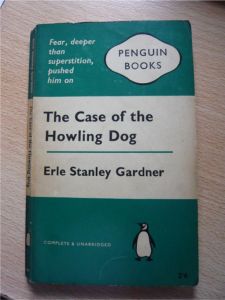
The Case of the Howling Dog by Erle Stanley Gardner

In January I read The Case of the Curious Bride also by Gardner and was rather disappointed because I found it far-fetched and at times was at a complete loss to understand what  Perry Mason was doing and why. I wondered whether to bother reading any more of the Perry Mason books. But I had enjoyed the TV series very much years ago and I still had one more of the books to read. So, the other day I began reading The Case of the Howling Dog and was relieved when I realised that it is much better than the Curious Bride case!

Synopsis from the back cover:

A dog howled by night in the quiet of Milpas Drive, and drove Arthur Cartright crazy with terror. He begged lawyer Perry Mason to bring a warrant against its owner, who, he said, had taught the dog to howl in order to drive him mad. According to superstition the howling meant a death in the neighbourhood, and Cartright appeared to believe it.

But Mason believed that a deeper fear than superstition was impelling his client and when both the dog and its owner were killed he took up the challenge and set himself to find the murderer.

My view:

The Case of the Howling Dog was first published in 1934, the fourth Perry Mason book and inevitably it is dated, but interesting because of that. I couldn’t really see my way through all the intricacies of this case but I thought it was very entertaining and well done, and I hadn’t foreseen the twist at the end. It’s fast-paced, with just the right balance of description and dialogue.

Mason is quickly established as a lawyer who doesn’t like routine:

I want excitement. I wan to work on matters of life and death, where minutes count. I want the bizarre and the unusual. (page 21)

So at first he’s not really interested in Cartright’s problem and thinks the man is crazy. But it soon becomes obvious that there is more to the case than making a will and taking out a warrant against the dog’s owner. In fact it becomes a complicated and complex murder mystery, and involves Mason getting dangerously close to breaking the law himself; as Paul Drake, the tall detective with drooping shoulders, warns him more than once he’s skating on thin ice. Mason insists that everything he does is within his rights and he is representing a client who is entitled to a fair trial. The Deputy Attorney, Claude Drumm thought the prosecution was certain of a verdict, but he hadn’t reckoned with Mason’s tactics.

Della Street was also doubtful that Perry was doing the right thing

‘Perry Mason,’ she said. ‘I worship you. You’ve got more brains and more ability than any other man I know. You’ve done things that have been simply marvellous, and now you’re doing something that is just plain, downright injustice. (pages 114-5)

But he insists what he is doing is his duty:

It’s the function of the lawyer for the defence to see the facts in favour of the defendant are presented to the jury in the strongest possible light. …

That’s my sworn duty. That’s all I’m supposed to do. (page 115)

And at the end that is just what he does do and after the trial Della views him through starry eyes!

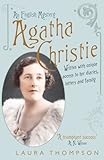
Agatha Christie: An English Mystery by Laura Thompson

It took me weeks to read Laura Thompson’s book Agatha Christie: An English Mystery. It has taken me several days to write and re-write this post because I’ve found it difficult to put down my thoughts about it without going into too much detail (and this is still a long post). My overall impression of the book is that I felt as though I was intruding into Agatha Christie’s private life that she had not wanted to be made known. I also think that Laura Thompson had found it difficult to separate the woman from her writing, because throughout the book facts are interspersed with suppositions drawn from Agatha Christie’s novels and in particular from Unfinished Portrait, a novel Agatha wrote under the pseudonym, Mary Westmacott.

Agatha Christie: An English Mystery is described as a ‘perceptive and stylish biography‘ on the jacket sleeve, but it is not just a biography; it is also a study of Agatha Christie’s novels, drawing conclusions from her writing about her thoughts, feelings and emotions and a fictionalised version of Agatha’s disappearance in 1926. Laura Thompson’s sources are unpublished letters, papers and notebooks.

First of all, concerning the study of the novels I was dismayed as I was reading this book at the amount of information she reveals about the crime fiction novels, including giving away who the murderers are in a number of cases. Charles Osborne’s book The Life and Crimes of Agatha Christie is much better, outlining the books, not just her crime novels but also her non-fiction, stories for children, poetry and plays in chronological order and nowhere does he reveal the identity of any of the murderers.

Then the fictionalised version of Agatha’s disappearance is in a chapter called ‘The Quarry‘, which begins ‘Time for a new story‘, words which did not immediately alert me that Laura Thompson was no longer writing strictly from the sources at her disposal but also from her imagination, putting words into Agatha Christie’s mouth that she could not have known, and describing her reactions to the people she met and the newspaper reports of her disappearance. Later in this chapter she wrote:

All biography is story-telling. No life is a code to be deciphered: there will always be gaps and inconsistencies, and it is stories that make the missing connections. Omniscience is for Hercule Poirot. Real life knows less; it has the beauty of mystery; and this, despite the books she wrote, was something that Agatha understood very well. She must have known she had created a puzzle of a different order, with all the geometric complexity of ‘Roger Ackroyd’ – and how to work it out? Turn it this way? That way? – and yet the twist in the tale: it was true, and therefore it could never be solved. It was perfect in fact. The perfect metaphor for human mystery. What could be more impenetrable than the woman who moved through Harrogate like a smiling ghost, reading newspaper reports about her own vanished self? (page 219)

I just wish she had not gone so far down the story-telling line in this book and had left this episode of Agatha Christie’s life as an impenetrable mystery, or at least had made it clear straight away when she was writing imaginatively. I have absolutely no objections to fictionalised versions of a life (for example I really liked Justine Picardie’s book Daphne: a novel, which merges fact and fiction) but I do think it should be obvious that it is fictionalised. Nor do I object to different interpretations of

Laura Thompson quotes from Unfinished Portrait, using this as evidence of Agatha’s thoughts, beliefs, and emotions. In Osborne’s book he also states that Unfinished Portrait, which was published in 1934, is based on events in Agatha’s life:

The story of Celia is remarkably similar to the story of Agatha as readers were eventually to be offered it in ‘An Autobiography’ more than forty years later. Several incidents are common to ‘An Autobiography’  and ‘Unfinished Portrait’, and the novel is quite clearly a fictionalised, more detailed, and emotionally more forthcoming version of the first third of the biography. The portraits of Celia’s mother and her grandmother are really of young Agatha Miller’s mother and the grandmother with who she stayed in Ealing. The men in Celia’s life are the men in Agatha’s life, and Dermot, whom Celia marries, is Archie Christie. (page 105)

but he also quotes from Max Mallowan’s writings about the book, pointing out it is a blend of fact and fiction:

The book is not one of her best because, exceptionally, it is a blend of real people and events with imagination. Only the initiated can know how much actual history is contained therein, but in Celia we have more nearly than anywhere else a portrait of Agatha. (page 106 of ‘The Life and Crimes of Agatha Christie’)

It is evident that Agatha Christie wrote about things she knew – the use of poisons from her work in a pharmacy during the First World War and her journey on the Orient Express are just two examples. Laura Thompson later in the book acknowledges that it is impossible to know what Agatha really thought – this is in the chapter called ‘The Second Husband‘, (page 298) writing about Agatha’s reaction to the Woolleys’ interference with her honeymoon with Max Mallowan. And she acknowledges that it would not have occurred to Agatha Christie that conclusions about her character would be drawn from her remarks in the novels about Jews, ‘blacks’ and servants, so I think it is difficult to decide what inferences can be drawn about Agatha from her fiction!

The last sections of Thompson’s book deal in detail with Agatha Christie’s tax problems and there is a rather ‘gossipy’ section about whether or not Max was having affairs. Overall, I think that the book as a biography is unbalanced, concentrating on the events surrounding Agatha’s disappearance and there is much speculation and supposition. I prefer Agatha’s own version of her life: An Autobiography, in which she merely referred to the events of 1926 thus:

The next year of my life is one I hate recalling. As so often in life, when one thing goes wrong, everything goes wrong. (page 356)

Finally, if biography is ‘story-telling’, about making connections to fill in the missing gaps with stories, then I’m not sure I want to read it and there have been several times when reading this book that I’ve thought about abandoning it. I’m uncomfortable with the feelings it can provoke – disliking gossip, distrusting witnesses who may have a private agenda, and squeamishness about reading private correspondence. I felt all of this whilst reading this book.

I went back to a book I read a few years ago – Hermione Lee’s book Body Parts: Essays on Life-Writing.This is about writing biography and the relationship of biography to fiction and history. Lee writes that biographies must give a ‘quasi-fictional, story-like shape to their material (or no none will read them)’, but against this there is the ‘responsibility for likeness and the need for accuracy’.Gaps and silences give rise to interpretations ‘through a process of conjecture, invention, intuition and manipulation of the evidence.’  Biography may seem as if it is factual because it is constructed from sources such as letters, diaries and other people’s accounts, etc but it is inevitably an interpretation and quasi-fictional. I have to remember that – it’s a reading between the lines! And as Lee says:

Whether we think of biography as more like history or more like fiction, what we want is a vivid sense of the person.

What makes biography so curious and endlessly absorbing is that through all the documents and letters, the context and the witnesses, the conflicting opinions and the evidence of work, we keep catching sight of a real body, a physical life: the young Dickens coming quickly out of a room, sprightly, long-haired, bright-eyed, dandyish, in crimson velvet waistcoat or tartan trousers …

As I read Laura Thompson’s book I did catch glimpses of Agatha Christie, but they were rather swamped by inferences drawn from her books, by the fictionalised version of her disappearance and by the descriptions of her tax problems towards the end of her life. I felt closer to the real Agatha Christie whilst reading her Autobiography. As well as being a record of her life as she remembered it and wanted to relate it, it’s also full of her thoughts on life and writing and in particular about her love of life and the joy of being alive.

But I will carry on reading biographies!
First Chapter First Paragraph: The Sea Change

Every Tuesday Diane at Bibliophile by the Sea hosts First Chapter First Paragraph Tuesday Intros, to share the first paragraph or (a few) of a book she is reading or thinking about reading soon.

The Sea Change

This week I’m featuring a book that was published in May this year. It is The Sea Change, a debut novel by Joanna Rossiter.

It begins with a Prologue, set in Kanyakumari India, in 1971 where Alice is thousands of miles away from home the day after her wedding:

It is there before we know about it. Being Born. A Persian rug, unrolling. Our wave, heavy like death.

‘Up! Up!’ a voice shouts from outside the guesthouse. It doesn’t belong to James. ‘It’s coming!’

Where is he?

Stone. Bone. think hard and then harder. That’s how it hits the shore. It takes the beach in one breathtaking gulp, palm trees dominoing down and fishing boats scattering as easily as the seeds of a dandelion. Streets fuse into the flesh of the water, like new limbs, new skin, until it morphs into a moving city. Trucks and tuk-tuks roll over and over like shorts in a washer: houses are picked up whole. Then, with sea-soaked hands, the water sets itself alight. flames – blinding and orange – buoy themselves forward on black, black, mirrorless liquid.

I’ve quoted more than the first paragraph because the words drew my eyes on down the page with such dramatic images of the destructive power of the sea and our powerlessness as it sweeps across the landscape. I can visualise it so easily. And where is James?

Saturday Snapshot: Ben

Today my Saturday Snapshots are from old photos. This is Ben, the X-Border Collie when he was a puppy.

Ben - puppy 01

He never grew very big and had health problems all his life. As a puppy he had pancreatitis. When he was older he developed diabetes and we had to give him an injection every day, but he never complained.

Ben 003


He was a lovely dog.

For more Saturday Snapshots see Melinda’s blog West Metro Mommy Reads.


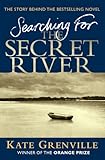
Searching for The Secret River by Kate Grenville

Searching for the Secret River is Kate Grenville’s account of how she came to write The Secret River. Her interest began with her great-great-great grandfather, Solomon Wiseman,who was the original ferryman at Wiseman’s Ferry. Her mother had told her stories about him, but she wanted to know more about what he was like and what he might have done when he first encountered Aboriginal people.

It is a fascinating book detailing how she went about her research into family history and how she imagined his life from facts gleaned from the records and the places he had lived.

She writes about reading. As a short-sighted child reading was her whole life:

I read in the bath, I read on the toilet, I read under the desk at school, I read up in my tree house, feeling the branches of the jacaranda swell and subside under me.

I can identify so well with this. I was a short-sighted child and read everywhere too, walking round the house, in bed under the covers with a torch when I should have been asleep, all the places Kate Grenville read, although not in a tree house – I would have loved a tree house!

She writes about writing. As a writer she couldn’t help examining how other writers went about their writing – seeing how books had been made. One book that helped her with writing The Secret River is Anil’s Ghost by Michael Ondaatje, a novel based on historical events in which some of the characters are apparently versions of real people. She had come to the point in her book where she had written lots of notes, forty-seven folders of notes!! So she made lists to try to organise her writing and then began just writing scenes and descriptions of various aspects – about London and Sydney, the convict system, and what she called ‘elements of memoir.’ But she thought that lots of her writing was dry and dead.

Reading Anil’s Ghost, however she realised that she had to take herself out of the book and find a character to carry out the search for the story of Wiseman and his dealings with the Aboriginal people. To do this she had to see the scenes before she could write them:

The hard part of the writing wasn’t finding the words – they seemed to come reasonably easily. If they started to come reluctantly, I stopped writing and began with something else. The hard part was finding the picture. Once I could see and hear the moment, I could write it.

In her first draft some parts were in the first person, some in the third person, but always from Wiseman’s point of view. The first-person point of view seemed right but then she decided that that didn’t match Wiseman’s character and there were things she wanted the book to say that Wiseman couldn’t say – about the Aboriginal culture for one thing. So, it had to be in the third person, but the ‘third person subjective’ – ‘from Wiseman’s point of view but only partly in his voice.’

There is so much in this book – the research, the notes, the descriptive passage, the numerous drafts, finding the right voices, the characters, identifying the central drama of the novel, the right eighteenth century names, developing Wiseman into a character, renaming him William Thornhill and building a picture of the Thornhill family. Then the dialogue had to be right, to be convincing. She listened to a recording of Robert Browning, went through transcripts of Old Bailey trials, looked at how Dickens, Defoe and other writers put words into their characters’ mouths.She remembered her mother’s and grandfather’s sayings, phrases and idioms. In the end she decided that she wouldn’t try

to reconstruct the authentic sound of nineteenth century vernacular. My job was to produce something that sounded authentic. … I read all the dialogue aloud. If anything hit a false note, it was obvious straight away. This was a bad one for example: ‘That bit of land, he said. Remember, I told you. We’ll lose it if we don’t move soon.’

This sounded terribly drawing-room. I muddied it up: ‘that bit of land, he said. Remember he telled you. We’ll miss out if we don’t grab it.’

She deleted large sections of dialogue.

The whole book is compelling reading, not just because it’s about how she wrote the book and the enormous amount of work she put into research, but also because in itself it paints a picture of life in London in the late eighteenth century and Australia in the early years of settlement in the early nineteenth century. I was captivated from start to finish.

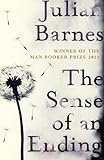
The Sense of an Ending by Julian Barnes

When Julian Barnes’s The Sense of an Ending first came out in 2011 I was initially interested in reading it, then was put off by a few critical reviews of it (something along the lines of it being about schoolboy-adolescent behaviour) and thought I’d look at it in the library before deciding whether or not to read it.  A year ago I saw it in a secondhand book shop (Barter Books) and bought it, after a quick glance told me it wasn’t just about adolescents, but I left it languishing on my bookshelves until the other day when I suddenly felt the urge to read it, I don’t know why! It seemed the right time.

Well, I really liked it (so much for reading reviews – it’s better to make up your own mind). It’s about memory and the effect of time, about ageing, about the nature of history and literature, about nostalgia and the question of responsibility.

It’s not a long book – just 150 pages – and I read it in two sittings. But its length belies its complexity and it’s actually quite a puzzle, because the narrator Tony knows that his memory is unreliable, that he can’t be sure of the actual events of his life. The best he can do is to be true to the impressions of those events that have remained with him. As he says at the beginning of the book:

… what you end up remembering isn’t always the same as what you have witnessed. (page 3)

Later on he realises that:

… as the witnesses to your life diminish there is less corroboration, and therefore less certainty, as to what you are or have been. (page 59)

The first part of the book is about Tony and his friends at school. There were three of them initially, then Adrian joined their clique. All of them were pretentious, but Adrian was rather different – he pushed them ‘to believe in the application of thought to life, in the notion that principles should guide actions.‘ (page 9)

Gradually, after they finished school and went their various ways through university, their contact with each other became less frequent. Tony’s relationship with his girlfriend, Veronica ends but he is less than happy when Adrian and Veronica began to see each other. Soon after Tony learns that Adrian committed suicide. Years later, after Tony has retired, he is shocked when he receives a letter telling him that Veronica’s mother has left him £500 and Adrian’s diary. However, Veronica has possession of the diary and refuses to hand it over to Tony, stating that she was not ready to part with it yet. The rest of the book concerns Tony’s efforts to get the diary and to work out what actually happened to Adrian.

Of course, it is not straight- forward as Tony meets with the brick wall that his memory has put between him and Veronica. And for the reader this poses a problem, because we see events through Tony’s words, what he says he did and thought, and what he thought about other people and their actions. He wants to know why Adrian committed suicide, what happened between him and Veronica, and how come her mother had Adrian’s diary. His memories are suspect and he knows it and it does not help him (or the reader) that Veronica is so unhelpful and tells him he ‘just doesn’t get it … You never did and you never will‘.

Just what did happen is never stated explicitly and the reader is left to puzzle it out with just a few clues. I’m not sure I got the whole picture, but I enjoyed trying to unravel the mystery. In the end I think it illustrates the nature of memory rather than being concerned about what actually happened, because as Adrian says:

History is that certainty produced at the point where the imperfections of memory meet the inadequacies of documentation. (page 17)