Evil Under the Sun by Agatha Christie: a Book Review

In Evil Under the Sun Poirot is on holiday in Devon staying in a seaside hotel – a seaside mystery instead of a country house mystery!

Here’s the blurb:

It was not unusual to find the beautiful bronzed body of the sun-loving Arlena Stuart stretched out on a beach, face down. Only, on this occasion, there was no sun! she had been strangled. Ever since Arlena’s arrival at the resort, Hercule Poirot had detected sexual tension in the seaside air. But could this apparent ‘crime of passion’ have been something more evil and premeditated altogether?

My thoughts:

It’s August, the sun is hot, people are enjoying themselves, swimming and sunbathing and yet Poirot remarks that the sight of the recumbent figures on the beach reminds him of the Morgue in Paris, ‘the bodies – arranged in slabs – like butcher’s meat!’  The other guests remark it’s an unlikely setting for crime but Poirot disagrees:

‘It is romantic, yes,’ agreed Hercule Poirot. ‘It is peaceful. The sun shines. The sea is blue. But you forget Miss Brewster, there is evil everywhere under the sun.’

And so it turns out, with the discovery of Arlena’s dead body. Arlena, who Major Barry describes as ‘a personification of evil’.

‘She’s the world’s first gold-digger. And a man-eater as well! If anything personable in trousers comes within a hundred yards of her, it’s fresh sport for Arlena!’

Her step-daughter, Linda hates her and wants to kill her, wishing she would die.

Arlena was strangled. Poirot  maintains that her murder has resulted from her character, and his investigations revolve around understanding exactly what type of person she was. The suspicion of guilt is cast over one person after another; either a man or a woman could have been strong enough to strangle Arlena and there are plenty of suspects. And even Poirot is puzzled because from the beginning it had seemed to him that one person was clearly indicated as the murderer but at the same time it seemed impossible for that person to have committed the crime.

Poirot describes the murder as a ‘very slick crime‘ and indeed it was perfectly planned and timed. At the end he explains at length how he collected together all the isolated significant facts and events to make a complete pattern to discover the identity of the murderer. Although I enjoyed this book I did think the explanation was too long and the characters  were a bit sketchy and sterotypical. It all seemed to be more of a puzzle solving exercise, than a captivating mystery.

Agatha Christie wrote Evil Under the Sun during 1938 and it was published in 1941, having first appeared as a serial in the USA at the end of 1940. I read it on my Kindle.

  • Format: Kindle Edition
  • File Size: 416 KB
  • Print Length: 320 pages
  • Publisher: Harper (14 Oct 2010)
  • Sold by: Amazon Media EU S.à r.l.
  • Language English
  • ASIN: B0046H95QS
  • Source: I bought it

Reading this book completes the What’s in a Name 4 challenge.

The Hanging Wood by Martin Edwards

The Hanging Wood (Lake District Mysteries 5)The Hanging Wood is another great book from Martin Edwards. It’s his 5th Lake District Mystery, and although each one can be read as a stand-alone, I think it’s good to read them in order of publication. Full details of his books are on Martin’s website.

Historian Daniel Kind is carrying out research at St Herbert’s Residential Library where Orla Payne works. She is obsessed by the disappearance of her brother Callum,  twenty years earlier when he was a teenager and she was a child of seven. When her uncle was found dead in Hanging Wood, the police assumed he had committed suicide after killing Callum, even though his body was never found. Daniel encourages Orla to speak to DCI Hannah Scarlet, who heads the Cold Case Review Team at Cumbria Constabulary about her brother’s disappearance. However, a drunken Orla fails to convince Hannah to reopen the case and it is only after Orla’s death that the police decide to review Callum’s disappearance. As Hannah tries to discover what happened to Callum, she begins to think their deaths are connected and were not accidental or suicide.

I really enjoyed this book, with its interesting characters and atmospheric Lake District setting. The Hanging Wood itself with its towering wych elms, rowan, ash and oak trees, and old paths obscured by grass, heather and brambles is not a pleasant place:

The sun was barely visible through the canopy of leaves and there was an earthy primitive smell in the air. Even on a day like this, the Hanging Wood had the odour of decay. Purple foxgloves supplied a scattering of colour, but for Hannah, the flowers conjured up sinister memories. They were poisonous, and when she was small, a thoughtless uncle warned her that nibbling the stems in his garden would kill her. She’d spent the rest of the day in a state of terror. She remembered his name for foxgloves: dead man’s bells. (location 2225)

The case is intriguing and cleverly constructed. I thought I’d worked it out and I did, but only after several red herrings threw me off track for a while. I like the mix of cold and new cases, the sense of history and the characterisation – a most satisfying read.

I also like the sub-plot of Hannah and Daniel’s relationship. Both of them are now living on their own, but Marc is still trying to patch things up with Hannah and Hannah is just not sure. I think for this strand of the novels it really does help to read the books in sequence.

  • Format: Kindle Edition
  • File Size: 518 KB
  • Print Length: 352 pages
  • Publisher: Allison & Busby (25 July 2011)
  • Sold by: Amazon Media EU S.à r.l.
  • Language English
  • ASIN: B005C1AMFU
  • Source: I bought it

Murder on the Eiffel Tower by Claude Izner

I thought Murder on the Eiffel Tower was a frustrating book to read. On the one hand it combines crime fiction and historical fiction, which is a favourite genre so I expected to be good. It begins really well as Eugénie Patinot takes her nephews and niece to the newly-opened Eiffel Tower in 1889. They sign the visitors’ book, the Golden Book and then Eugénie collapses and dies, apparently from a bee-sting.  Then there is Victor Legris, a bookseller (even better – historical crime fiction and a bookshop!) who is determined to find out what had really happened. More deaths occur, also caused by bee-stings. Could Paris really be invaded by killer  bees?

So far, so good, but the historical descriptions kept interfering with the mystery. Although it was interesting it slowed the book down too much and was distracting, to my mind. And the mystery wasn’t that good either, with too much guesswork by Victor, who kept changing his mind about who he suspected (and so did I).  I also thought the characters were rather flimsy and I didn’t really engage with any of them. Maybe it’s the translation but I wasn’t enthralled with the style of writing, either, which in parts was a bit tedious. I loved the cover, though.

I bought this book secondhand from Barter Books, without knowing anything about it or the author, attracted by the idea of a murder on the Tower and the cover. From the book I discovered that Claude Izner is the pen-name of two sisters, Liliane Korb and Laurence Lefèvre. They are both booksellers on the banks of the Seine, so that was why I found the book-selling scenes the best part of the book. They are also experts on 19th century Paris – hence the plethora of historical detail, I suppose.

  • Paperback: 304 pages
  • Publisher: Gallic Books (1 May 2007)
  • Language English
  • ISBN-10: 190604001X
  • ISBN-13: 978-1906040017
  • Source: I bought the book

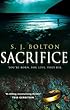
Sacrifice by S J Bolton: a Book Review

I found most of Sacrifice an absolutely compelling book to read. It begins with the discovery of a corpse buried in the peat in Tora Hamilton’s field on Shetland. This is no ordinary corpse because the heart has been removed and there are marks etched into the skin that look very similar to the carvings Tora has seen in the cellar of her house. Tora is an obstetric surgeon. She had recently moved to the Shetland Isles with her husband Duncan, who although he had been born on the Isles, hadn’t been back there for twenty years.

Tora uses her position at the hospital to search patient records and aided by D S Dana Tulloch begins to discover some very suspicious and sinister facts. Despite opposition from her boss and from Dana’s boss the two women dig deeper and become involved in a very dangerous and bizarre situation, endangering both their lives.

I was swept along with the story, but as more twists and turns in the plot developed with links to folklore and myth I found it became rather far- fetched the more I read. But, having said that I did like the book. I liked the drama, the characters were well-defined, and I liked the tension that built up between the characters as Tora began to wonder who she could trust. I liked the setting of a mysterious, remote and isolated place where outsiders find it difficult to fit in and where dark deeds could take place. I liked it enough to want to read more books by S J Bolton.

Tom Fleck: a Novel of Cleveland and Flodden by Harry Nicholson

I don’t often get offered books for review that really appeal to me, but recently I have had two – one was Dorte Jakobsen’s The Cosy Knave, which I wrote about earlier and the second is Tom Fleck by Harry Nicholson.

When Harry emailed me to ask if I would review his book I knew I couldn’t refuse – a book set in the 16th century and about the Battle of Flodden Field. Now, I love history and historical fiction. Flodden Hill, where the battle took place in 1513 is just down the road from me and it’s a place that fascinates me.  I replied saying that I’d like to read it but it could be some time before I did as I have so many other books queued up to read. But as I opened it and started reading it I just had to carry on!

Harry Nicholson is a really good storyteller and as I read I was transported back to the 16th century. His book is well-researched, but the detail never reads like a text book or intrudes. He consulted many sources, including primary and secondary sources such as wills, inventories and parish registers, printed journals and historical and archaeological society papers as well as studying military costumes and weapons at the national museum of arms and armour at Leeds.

From the Back Cover

The year: 1513. The place: North-East England. Tom Fleck, a downtrodden farm worker but gifted archer, yearns to escape his masters. He unearths two objects that could be keys to freedom: a torque of ancient gold and a Tudor seal ring. He cannot know how these finds will determine his future. Rachel Coronel craves an end to her Jewish wanderings. When the torque comes to rest around the neck of this mysterious woman, an odyssey begins which draws Tom Fleck into borderlands of belief and race. The seal ring propels Tom on a journey of self-knowledge that can only climax in another borderland – among the flowers and banners of Flodden Field.


The story is about Tom, a young farm worker on the Warren Manor Estate in Cleveland. He longs to escape and farm his own land. So when Mark, the Lord of the Manor’s son orders him to go north with the militia from the manor to fight against the Scots on the border, he takes matters into his own hands and leaves home to join forces with drovers from Durham.  The drovers and Tom get caught up in the preparations for war and as Tom is a gifted archer he is pressed into joining the English forces in fighting against the Scots under James IV at Flodden Field.

It is also a love story, as Tom and Rachel fall in love, but then there is his sweetheart, Mary who he left behind at home. Who will he choose, if indeed, he should survive the battle? Generally I’m not keen on reading battle scenes but Harry dealt with this very well and actually I think it’s one of the best accounts of the Battle of Flodden that I’ve read.

All in all, this is a fascinating glimpse into the lives of ordinary people and the aristocracy in the 16th century, caught up in war.  It highlights differences in their lives and in their deaths – the rich received honours and church burials, whereas the rest were simply bundled together in pits in the field:

‘That’s the way of it, Tom – that’s the way of it; no stone lions at our feet, nor a brass plate to cover us. There’ll be nowt apart from green rushes to mark our spot.’ (page 230)

More information on Tom Fleck is on Harry’s website where you can read Chapter 1.  And for more details of the battle, including the routes the armies took and a tour of the battlefield see The Remembering Flodden Project.

  • Paperback: 266 pages
  • Publisher: YouWriteOn.com (11 Jan 2011)
  • Language English
  • ISBN-10: 1908147768
  • ISBN-13: 978-1908147769
  • Source: review copy from the author

Dumb Witness by Agatha Christie: a Book Review

I found it wasn’t too difficult to work out who the murderer was in Agatha  Christie’s Dumb Witness, because there is a rather obvious clue at one point, but that didn’t spoil my enjoyment of this book. In fact I felt it added to my satisfaction and there was a further development which I hadn’t thought of at the end, which surprised me.

From the back cover:

Everyone blamed Emily’s accident on a rubber ball left on the stairs by her frisky terrier. But the more she thought about her fall, the more convinced she became that one of her relatives was trying to kill her. On April 17th she wrote her suspicions in a letter to Hercule Poirot. Mysteriously he didn’t receive the letter until June 28th … by which time Emily was already dead!

Dumb Witness is set in the small country town of Market Basing (a fictional name) where Miss Emily Arundell lived in Littlegreen House. Part of Poirot’s problem is that he doesn’t actually have a murder to investigate because Miss Arundell’s death was certified by her doctor as a death from natural causes from a long standing medical condition. But he thought he was under an obligation from Miss Arundell to investigate. He uses subterfuge to find out more information, pretending to be writing a biography of General Arundell, Emily’s father. And from some very slender facts he reconstructs the sequence of events leading up to her death.

As usual there are a number of suspects, mostly the members of her family, her nephew and niece Charles and Theresa Arundell and her married niece Bella and her husband Doctor Tanios. Then there is her companion, the rather ineffectual Miss Wilhelmina Lawson, and the servants. Poirot considers each one in turn. He also considers the character of the murderer, as he explains to Captain Hastings, the narrator, who is completely baffled as he assists Poirot in looking at the evidence:

‘Since at the moment, it is only suspicion and there is no definite proof, I think I must leave you to draw your own deductions, Hastings. And do not neglect the psychology – that is important. The character of the murderer – that is an essential clue to the crime.’

‘I can’t consider the character of the murderer if I don’t know who the murderer is!’

‘No, no, you have not paid attention to what I have just said. If you reflect sufficiently on the character – the necessary character of the murder – then you will realize who the murderer is!’ (page 184)

The ‘dumb witness’of the title is Bob, Emily’s wire-haired terrier in what is described as ‘the incident of the dog’s ball.’ Agatha Christie dedicated Dumb Witness to her wire-haired terrier, Peter, describing him as ‘most faithful of friends and dearest companion, a dog in a thousand‘. Bob plays an important part in the plot and indeed Agatha Christie gives him some dialogue!

I didn’t think I knew anything about Dumb Witness before I read it – I didn’t even know the title. But after I read it I checked the entry in wikipedia and found that Dumb Witness  had been adapted for television in 1996 as one of the episodes of Agatha Christie’s Poirot with David Suchet playing the role of Hercule Poirot. I then remembered watching it and being surprised because it was set in the Lake District, which I thought was most unusual for an Agatha Christie book.  Now I’ve read the book I can see that the TV adaptation differed considerably from the original story. As I hadn’t read it when I watched the adaptation that didn’t bother me in the slightest. It would have done the other way round!

NB: take care reading because if you haven’t read earlier books featuring Poirot, in chapter 18 he gives away the names of the murderers in four of his earlier cases.

First published in Great Britain in 1937
published in the US as Poirot Loses a Client, also known as Mystery at Littlegreen House or Murder at Little Green House.
This edition published by Harper Collins 1994
ISBN: 9780006168089
251 pages
Source: My own copy