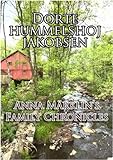
Anna Märklin's Family Chronicles by Dorte Hummelshoj Jakobsen

This is the second book by Dorte Hummelshoj Jakobsen that I’ve read. I liked the first one The Cosy Knave, but I liked her latest book, Anna Märklin’s Family Chronicles even more. The Cosy Knave, as the title suggests, is humorous and rather quirky, whereas Anna Märklin’s Family Chronicles is a psychological mystery and not at all cosy.

Set in Denmark in the present day with flashbacks to Sweden (where her father’s family came from) during the early part of at the beginning of the twentieth century, Anna Storm finds herself with beset with problems. Her father is seriously ill and strangely secretive about his family background:

There were so many things her father did not want to talk about. Illness and death, war and accidents. Things did not change for the better because you talked about them  he claimed.

Anna longs to know more and when she finds her grandmother’s journal she is enthralled. But digging into the past can reveal secrets that you might not want to know.

At the same time she is concerned about Karin, her best friend and neighbour, whose life is under threat for reasons Karin doesn’t divulge. When Anna can’t contact Karin, either by phone or at home, she eventually uses Karin’s spare key to enter her flat and finds her lying dead on the kitchen floor. it looks as though she slipped and hit her head – but was it really an accident?

Anna Märklin’s Family Chronicles has depth both in mystery and in characterisation and the setting is superb. I was transported in time and place as I read and fearful for Anna’s safety as she dug deeper into the mysteries surrounding her. I really enjoyed this book and hope that Dorte Jakobsen will write more in this vein.

  • Format: Kindle Edition
  • File Size: 439 KB
  • Publisher: Candied Crime (18 Dec 2012)
  • Sold by: Amazon Media EU S.à r.l.
  • Language: English
  • ASIN: B00AQIGSVQ
  • Source: my copy supplied by the author
  • My Rating: 4/5

Dorte Hummelshoj Jakobsen is a teacher from Denmark, teaching English at upper secondary level. In her spare time she reads and writes crime fiction in English and Danish, and in 2010 she sold her first flash stories to American magazines or publishers. One story appeared in Discount Noir (edited by Ste Weddle & Patricia Abbott).

Since then she has published two collections of flash fiction, “Candied Crime” (humour) and “Liquorice Twists” (a bit darker). Her bestsellers are the romantic ghost story “Heather Farm” (suspense plus romance in the Dunes near the Danish west coast) and the cosy novel “The Cosy Knave” (European title: “Murder deLight”).

For an interview with Dorte see Linda Rae Blair’s website.

Scottish History

Ever since we moved to live just south of the border with Scotland I’ve been interested in learning more about its history. My knowledge was limited to the basics and mainly related to the monarchy – Robert the Bruce, Mary Queen of Scots, James VI of Scotland and I of England, the Jacobite Rebellions, and Bonnie Prince Charlie and so on.

Many books have been written on Scottish history and when I saw this little book some years ago I thought it could be a good place to start to find out more:

A Short History of Scotland by Richard Killeen is by its very nature a summary account and a basic introduction. There are 31 short chapters covering the period from Prehistoric Scotland up to the Twentieth Century – all in 69 pages, including coloured illustrations of people and places.

I found the early chapters the most interesting (maybe because it was mainly new information for me) covering the early periods – Iron Age Celts, Roman Scotland and later invaders – Anglo-Saxons, raiders from Dalriada in Ireland (Irish Celts), Picts and Vikings.

Much of the book is the history of the monarchy. Kenneth MacAlpin was the first King of Scotland (9th century) but not of all modern Scotland – he never established himself in the Borders, which was held by the Anglo-Saxon Northumbrians. Northumbria had formerly extended from the Humber right up to the Forth, and it was not until Malcolm II (1005-34) won the battle of Carham in 1018 that the land north of the Tweed became part of his kingdom.

The book traces the history of Scotland through the various battles for power and control – the Norman settlement of the lowlands founding abbeys and cathedrals, the contest for the crown between John Balliol and Robert Bruce (both members of the Norman aristocracy) and the intervention of Edward I of England in choosing John Balliol as king in 1292 and claiming formal overlordship for himself and his successors.

Scottish kings had paid feudal homage to English kings before the 1290s. As far back as 1174, William the Lion had acknowledged himself the formal vassal of Henry II. Such acts did not imply that Scotland was a dependency of England. In the first place, England and Scotland hardly existed in the modern sense. The age of centralised states with uniform laws, secure boundaries with centralised administration – all things we take completely for granted – lay well in the future. (page 28)

Edward’s actions triggered Scottish resistance, with William Wallace winning victory over the English at Stirling Bridge in 1297. Wallace was then defeated within a year at the Battle of Falkirk. Robert the Bruce gained the crown, and in 1314 defeated Edward II at the Battle of Bannockburn: ‘the battle which confirmed Scotland as an independent kingdom.’ (page 31)

Moving forward in time, Killeen describes the history of Scotland until the Reformation as ‘a guignol of intrigue, faction and murder mixed with solid achievement.’ The rest of the book includes chapters on the Stewarts, Mary Queen of Scots, the Union of Crowns (1603), the Civil War, Glencoe, the Act of Union (1707), Scottish Enlightenment, the Clearances and the Industrial Revolution.

Reading this little book has spurred me on to read more detailed histories and I’ve started with Neil Oliver’s A History of Scotland. More about that another time.

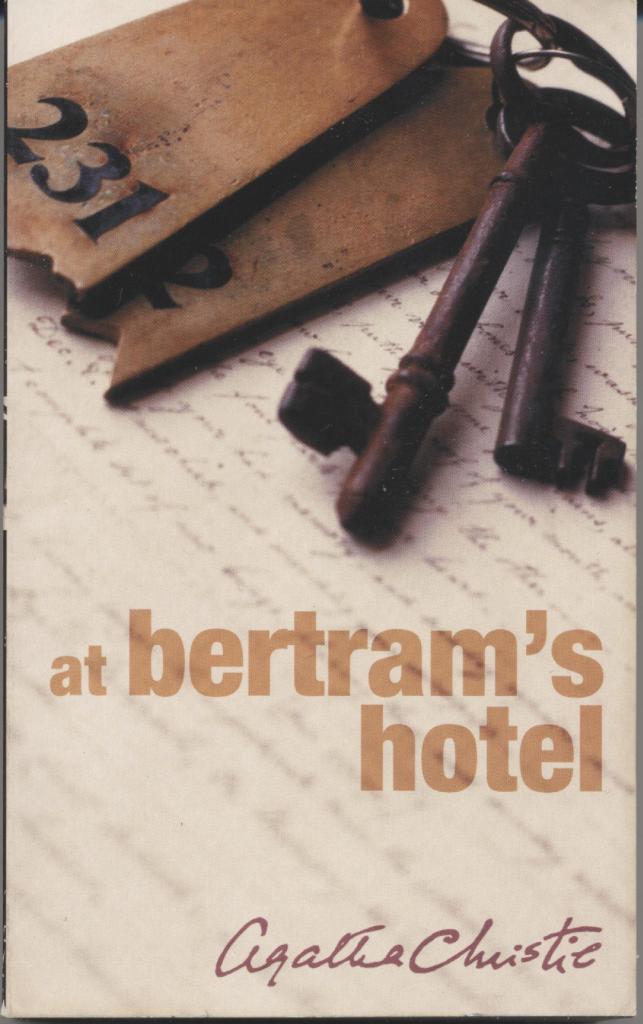
At Bertram’s Hotel by Agatha Christie

At Bertrams Hotel 001

I try to read at least one Agatha Christie book a month. This month’s book is At Bertram’s Hotel, a Miss Marple book, first published in 1965, and written when Agatha Christie was seventy five.

Synopsis (from book cover):

An old-fashioned London Hotel is not quite as reputable as it makes out’¦

When Miss Marple comes up from the country for a holiday in London, she finds what she’s looking for at Bertram’s Hotel: traditional decor, impeccable service and an unmistakable atmosphere of danger behind the highly polished veneer.

Yet, not even Miss Marple can foresee the violent chain of events set in motion when an eccentric guest makes his way to the airport on the wrong day’.

My view:

Miss Marple is now the same age as Agatha Christie was at the time she was writing At Bertram’s Hotel and some of her thoughts and reactions are most likely to be those of the author herself  – reflections on comfort for example – most appreciative of her bed, and a beautifully cooked breakfast, a real breakfast with properly poached eggs and enjoying ‘a delightful morning of shopping’ at the Army& Navy Stores.  But Miss Marple is not one of the main characters in this book, although she does play a vital role.

In some ways, Bertram’s Hotel itself is a leading ‘character’. It’s ‘dignified, unostentatious and quietly expensive‘, patronised by clergymen, ‘dowager ladies of the aristocracy up from the country’ and ‘girls on their way home from expensive finishing schools.’ It’s Miss Marple’s choice when her nephew and his wife decide to do something for ‘poor old Aunt Jane’ and pay for her week’s stay. And yet it doesn’t seem real to her, the fact that it didn’t seem to have changed over the years made her think that it ‘really seemed too good to be true.’ (page 26)

There’s a long build up to any crime being committed and It’s only towards the end of the book that a murder occurs. Scotland Yard are concerned about a crime network that is getting too big and organised:

Robbery on a big scale was increasing. Bank hold-ups, snatches of pay-rolls, thefts of consignments of jewels sent through the mail, train robberies. Hardly a month passed but some daring and stupendous coup was attempted and brought off safely. (page 49)

(I was reminded that Agatha Christie was writing this at the time of, or shortly after the ‘Great Train Robbery’ of 1963 in which a gang of robbers held up a mail train and made off with £2.6 million (equivalent to £41 million now) – later in the book a train robbery takes place in Ireland.)

A number of characters are introduced quite quickly and I had to keep reminding myself who they were and how they fitted into the story. There’s the hotel staff, including Henry the ‘perfect butler’ and the visitors, including Lady Sedgewick and a number of elderly ladies, Colonel Luscombe and other retired military gentlemen, Canon Pennyfather, a vague forgetful white-haired elderly cleric, Elvira Blake, Colonel Luscombe’s ward and the police, including Chief Inspector Davy (nicknamed ‘Father’ by his staff – a nickname that I thought irritating and out of place, probably intended to make him seem paternal and safe). There is also the mysterious Mr Robinson, who I’ve come across in some of Agatha Christie’s other books.

The novel meanders along through a number of subplots before reaching the climax, which I thought was a bit signposted. The ending is both predictable and surprising with a final twist in the last sentence that pleased me.

One of the things I like about At Bertram’s Hotel are the little insights into Miss Marple’s mind – and her past. For example she had first visited Bertram’s Hotel as a  girl of fourteen with her uncle and aunt, her Uncle Thomas had been a Canon of Ely. And I was delighted to discover that she had known romance because when she was a young woman she had had a friendship with ‘a very unsuitable young man‘ whose name she has forgotten. But her mother had firmly nipped that friendship in the bud, which later Jane realised was wise although at the time Jane Marple, ‘that pink and white eager  young girl … such a silly girl in many ways’ had ‘cried herself to sleep for at least a week.’ (page 26)

As in other books featuring Miss Marple it’s her characteristic curiosity, what she preferred to call ‘taking an interest in other people’s affairs’, that is crucial to the plot. She is very good at overhearing conversations and she’s a light sleeper. She’s also very perceptive and just a touch cynical, no longer the silly girl of her youth.

  • Paperback: 224 pages
  • Publisher: HarperCollins; Masterpiece edition edition (1 July 2008)
  • Language: English
  • ISBN-10: 0007121032
  • ISBN-13: 978-0007121038
  • Source: I bought the book
  • My Rating: 4/5

Adventures of a One-Breasted Woman by Susan Cummings

I received Susan Cumming’s book Adventures of a One-Breasted Woman: Reclaiming My Moxie After Cancer from the publisher via LibraryThing‘s Early Reviewer programme.

About the author from Goodreads:

Susan Cummings is a writer, an actress and now a 20-year breast cancer survivor. Once a newspaper reporter, she has since been published in a number of literary journals and written songs and plays. Feeling alone and vulnerable after her mastectomy for early-stage breast cancer, she looked, in vain, for a memoir of another woman’s experiences after cancer treatment. Eventually she wrote the book she had sought. She lived in New York City for many years, but is now settled in western Massachusets.

The fact that I’ve read this book shows how I’ve become more adjusted to reading about cancer than I was a few years ago. At that time I had grave misgivings about reading about breast cancer because my mother had died from it many years ago. But I was diagnosed with breast cancer a year last August and was so encouraged by how treatment has improved over the years that I’m now able to face reading about it. I haven’t had a mastectomy as Susan Cummings had but I was able to identity with some of the feelings she describes. Even so, I hesitated about reading the book as everyone has their own ways of coping and everybody’s experience is different.

Susan Cummings was diagnosed with cancer in 1992 and she chose to have a mastectomy rather than a lumpectomy followed by radiation because her surgeon said it would be a more assured cure. She didn’t move on after the operation and struggled with fear that the cancer would recur and with shame about her disfigured body.

Her book follows her thoughts and feelings over the six years after her surgery with openness. At times she was depressed, at others more optimistic and cheerful, accepting her body for what it is. I thought it was very good, easy to read and encouraging to read about someone who had not only survived but had managed to overcome her problems and face up to life with courage. Throughout the book I thought she looked realistically at the options open to her. It’s also an account of relationships and how they change, about her childhood and about different and alternative methods of healing.  I’m glad to have received and read it.

Crime Fiction Alphabet: Letter Y

Kerrie’s Crime Fiction Alphabet has reached the letter Y – an easier letter to illustrate than last week’s letter X. My choice this week is …

Murder by Yew by Suzanne Young. (The first book in the Edna Davies Mysteries series) I read this on Kindle.

Synopsis (Fantastic Fiction)

When her handyman dies of taxine poisoning, Edna Davies, amateur herbalist, becomes the prime suspect. Nearly certain that she hadn’t concocted a poisonous potion and desperate to save herself from arrest, Edna taps into strengths she never before realized she possessed. Shunned by the townsfolk, questioned by the police, and threatened by thieves, she follows the clues of a forty-year-old disappearance to capture a killer.

My View

Suzanne Young is an American author with a degree in English from Rhode Island University. She has worked as a writer, editor and computer programmer. She now writes fiction full time. For more information see her website

Murder by Yew is the first book by Suzanne Young that I have read. It’s an entertaining ‘cosy’ murder mystery, set in mainly in Rhode Island, a light and quick read. The story is told in the third person from Edna’s perspective. It’s clearly written, with well described locations. The dialogue is lively, apart from one section with reported dialogue which isn’t so convincing.

Edna and her husband, a retired doctor, have recently moved to Rhode Island and she is getting to know her neighbours. She employs Tom Greene to do jobs around the house and garden. The former owner of the house was a keen gardener and had left notebooks filled with comments on the plants in the garden, along with recipes for home-brews and potions and Edna is enjoying herself making some of them, such as chamomile tea with a touch of lemon balm. When Tom collapses and dies the police take samples of her tea mixes and suspect that he had been poisoned by the addition of yew to one of Edna’s tea blends.

Tom’s little grandson, Danny, who is deaf with a speech problem, holds the key to the mystery, but his mother won’t allow Edna to talk to him. Things go from bad to worse for Edna as people begin to shun her and then a storm hits Rhode Island. The cast of characters is well-drawn, with Edna as a most likeable amateur sleuth. She has to discover the motive for killing Tom – was it to do with his present day work,or did it lie further back in his past? Does the recent spate of robberies have a link to his murder and what is the significance of the presence of Edna’s housekeeper in a photo taken in Boston by Edna’s daughter? Edna proves most resourceful in sorting it all out and discovering the murderer’s identity. I had my suspicions about one character quite early on in the book – and I was right, so maybe it was just a bit predictable, which isn’t a bad thing!

Suzanne Young has written two more Edna Davies mysteriesMurder by Proxy and Murder by Mishap, both also available on Kindle and I’m looking forward to reading them.

  • Format: Kindle Edition
  • File Size: 348 KB
  • Print Length: 252 pages
  • Publisher: Mainly Murder Press; 1 edition (27 Nov 2009)
  • Sold by: Amazon Media EU S.à r.l.
  • Language: English
  • ASIN: B003P8P8G0
  • Source: I bought it
  • My Rating 3.5/5

Crime Fiction Alphabet: X is for …?

letter_XKerrie’s Crime Fiction Alphabet has reached the letter X this week but I haven’t found any books to fit in the required categories:

Your post MUST be related to either the first letter of a book’s title, the first letter of an author’s first name, or the first letter of the author’s surname, or even maybe a crime fiction “topic”. But above all, it has to be crime fiction.
So you see you have lots of choice.
You could write a review, or a bio of an author, so long as it fits the rules somehow.

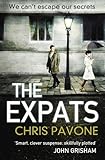
So I decided to add another category – a book with a title that sounds as though it begins with the letter and plumped for The Xpats, or as it really is – The Expats by Chris Pavone.

Synopsis (Chris Pavone’s website):

Kate Moore is a typical expat mom, newly transplanted from Washington DC to the quiet cobblestoned streets of Luxembourg. Her days are filled with coffee mornings and play-dates, her weekends with trips to Paris and Amsterdam. Kate is also guarding a tremendous, life-defining secret, one that’s becoming unbearable, indefensible. It’s also clear that another expat American couple are not really who they’re claiming to be; plus Kate’s husband is acting suspiciously. While she travels around Europe, looking for answers, she’s increasingly worried that her past is finally catching up with her. As Kate digs, and uncovers the secrets of the people who surround her, she finds herself buried in layers of deceit so thick they threaten her family, her marriage, and her life.

My view:

The book moves between the present day and the past, just two years earlier and is narrated through Kate’s perspective. Although I like this type of narrative, I had to concentrate to follow the changes in time and location as I read. It begins slowly and then gradually the tension builds and builds as Kate discovers more secrets and reveals secrets of her own to the reader. It certainly kept me wanting to know more and trying to work out the bluffs and double bluffs.

I liked the insights into the expat life – the adjustments in lifestyle and expectations come over very well and the locations are described in just enough detail for someone (me) who hasn’t been to these places to visualise the scenes. Chris Pavone has been to all the locations and there is a helpful itinerary map on his website.

Most of all I liked the tension in Chris Pavone’s narrative and the contrast between Kate’s everyday life as a mother of two young boys, the interaction between her and her husband and friends, and her ‘secret’ life with all its dangers and complications. I think Pavone portrays the female perspective well and Kate is a fully rounded character. I don’t often read spy thrillers, but found myself completely engrossed in this one, even though by the end I thought the whole thing was almost too incredible to believe. But then, what do I know about spies and cyber crime?