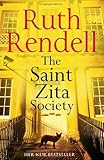
The Saint Zita Society by Ruth Rendell

When I began to read The Saint Zita Society I could not remember all the characters, so many were introduced one after the other. So, I wrote them all down together with where they lived. In the first 30 pages I counted 28 characters. It helped to write their names down, and eventually their relationships and characteristics became familiar to me. There were just a few of the initial characters who did not play a large part later in the book.

I’d borrowed the book from the library and had totally missed the fact that the book’s endpapers contain a plan of Hexham Place with the names of the people who live at each house! It was partly my own fault that I missed this, not looking properly and skipping over straight away to the first chapter, but it was also because the library had covered up the front endpaper with labels and had sealed the book jacket to both the front and back endpapers! It would really have helped if I’d seen this when I started to read the book!

This is not a who-done-it, nor a why-done-it, but is really a character study of the people who live and work at Hexham Place in Pimlico and a ‘will-they get away with it’ mystery. To that extent I found it entertaining, if predictable. As usual with Ruth Rendell’s books the characters are a mix of odd personalities, with even the most ‘normal’ ones, revealing their idiosyncrasies – a reflection of real society, I suppose!

The Saint Zita Society is the brainchild of June (78 years old and the paid companion of the wealthy Princess Susan Hapsburg, 82 years old) who lives at No. 6 Hexham Place, along with Gussie the dog). As June explains Saint Zita is the patron saint of domestic servants, who gave food and clothes to the poor. The Society doesn’t function well, mainly because the members (cleaners, drivers, gardeners, and home helps – a nanny and an au pair) use it to air their grievances with little hope of resolving them. On the fringes of the Society is Dex, a strange man who keeps to himself, sees evil spirits and talks to Peach, his ‘god’, on his mobile. The others are uneasy around Dex, especially when they’re told that he had  tried to kill his mother and had spent time in a place for the criminally insane, but he is now cured and working as a gardener for Dr Jefferson at No.3 Hexham Place

After about a third of the book there is a death and an attempt to cover it up. And from that point on the action spirals to its predictable conclusion and even what I think was meant as an unexpected twist near the end was also rather obvious.

Overall, not a taxing mystery, but a look at the interaction between a group of disparate characters. I enjoyed it even though it lacked suspense and it ends rather abruptly (a bit like this post!). Just be careful next time you’re out shopping in a crowd or are out jogging on your own!
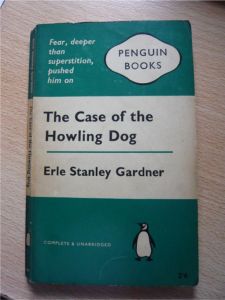
The Case of the Howling Dog by Erle Stanley Gardner

In January I read The Case of the Curious Bride also by Gardner and was rather disappointed because I found it far-fetched and at times was at a complete loss to understand what  Perry Mason was doing and why. I wondered whether to bother reading any more of the Perry Mason books. But I had enjoyed the TV series very much years ago and I still had one more of the books to read. So, the other day I began reading The Case of the Howling Dog and was relieved when I realised that it is much better than the Curious Bride case!

Synopsis from the back cover:

A dog howled by night in the quiet of Milpas Drive, and drove Arthur Cartright crazy with terror. He begged lawyer Perry Mason to bring a warrant against its owner, who, he said, had taught the dog to howl in order to drive him mad. According to superstition the howling meant a death in the neighbourhood, and Cartright appeared to believe it.

But Mason believed that a deeper fear than superstition was impelling his client and when both the dog and its owner were killed he took up the challenge and set himself to find the murderer.

My view:

The Case of the Howling Dog was first published in 1934, the fourth Perry Mason book and inevitably it is dated, but interesting because of that. I couldn’t really see my way through all the intricacies of this case but I thought it was very entertaining and well done, and I hadn’t foreseen the twist at the end. It’s fast-paced, with just the right balance of description and dialogue.

Mason is quickly established as a lawyer who doesn’t like routine:

I want excitement. I wan to work on matters of life and death, where minutes count. I want the bizarre and the unusual. (page 21)

So at first he’s not really interested in Cartright’s problem and thinks the man is crazy. But it soon becomes obvious that there is more to the case than making a will and taking out a warrant against the dog’s owner. In fact it becomes a complicated and complex murder mystery, and involves Mason getting dangerously close to breaking the law himself; as Paul Drake, the tall detective with drooping shoulders, warns him more than once he’s skating on thin ice. Mason insists that everything he does is within his rights and he is representing a client who is entitled to a fair trial. The Deputy Attorney, Claude Drumm thought the prosecution was certain of a verdict, but he hadn’t reckoned with Mason’s tactics.

Della Street was also doubtful that Perry was doing the right thing

‘Perry Mason,’ she said. ‘I worship you. You’ve got more brains and more ability than any other man I know. You’ve done things that have been simply marvellous, and now you’re doing something that is just plain, downright injustice. (pages 114-5)

But he insists what he is doing is his duty:

It’s the function of the lawyer for the defence to see the facts in favour of the defendant are presented to the jury in the strongest possible light. …

That’s my sworn duty. That’s all I’m supposed to do. (page 115)

And at the end that is just what he does do and after the trial Della views him through starry eyes!

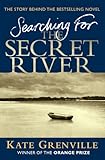
Searching for The Secret River by Kate Grenville

Searching for the Secret River is Kate Grenville’s account of how she came to write The Secret River. Her interest began with her great-great-great grandfather, Solomon Wiseman,who was the original ferryman at Wiseman’s Ferry. Her mother had told her stories about him, but she wanted to know more about what he was like and what he might have done when he first encountered Aboriginal people.

It is a fascinating book detailing how she went about her research into family history and how she imagined his life from facts gleaned from the records and the places he had lived.

She writes about reading. As a short-sighted child reading was her whole life:

I read in the bath, I read on the toilet, I read under the desk at school, I read up in my tree house, feeling the branches of the jacaranda swell and subside under me.

I can identify so well with this. I was a short-sighted child and read everywhere too, walking round the house, in bed under the covers with a torch when I should have been asleep, all the places Kate Grenville read, although not in a tree house – I would have loved a tree house!

She writes about writing. As a writer she couldn’t help examining how other writers went about their writing – seeing how books had been made. One book that helped her with writing The Secret River is Anil’s Ghost by Michael Ondaatje, a novel based on historical events in which some of the characters are apparently versions of real people. She had come to the point in her book where she had written lots of notes, forty-seven folders of notes!! So she made lists to try to organise her writing and then began just writing scenes and descriptions of various aspects – about London and Sydney, the convict system, and what she called ‘elements of memoir.’ But she thought that lots of her writing was dry and dead.

Reading Anil’s Ghost, however she realised that she had to take herself out of the book and find a character to carry out the search for the story of Wiseman and his dealings with the Aboriginal people. To do this she had to see the scenes before she could write them:

The hard part of the writing wasn’t finding the words – they seemed to come reasonably easily. If they started to come reluctantly, I stopped writing and began with something else. The hard part was finding the picture. Once I could see and hear the moment, I could write it.

In her first draft some parts were in the first person, some in the third person, but always from Wiseman’s point of view. The first-person point of view seemed right but then she decided that that didn’t match Wiseman’s character and there were things she wanted the book to say that Wiseman couldn’t say – about the Aboriginal culture for one thing. So, it had to be in the third person, but the ‘third person subjective’ – ‘from Wiseman’s point of view but only partly in his voice.’

There is so much in this book – the research, the notes, the descriptive passage, the numerous drafts, finding the right voices, the characters, identifying the central drama of the novel, the right eighteenth century names, developing Wiseman into a character, renaming him William Thornhill and building a picture of the Thornhill family. Then the dialogue had to be right, to be convincing. She listened to a recording of Robert Browning, went through transcripts of Old Bailey trials, looked at how Dickens, Defoe and other writers put words into their characters’ mouths.She remembered her mother’s and grandfather’s sayings, phrases and idioms. In the end she decided that she wouldn’t try

to reconstruct the authentic sound of nineteenth century vernacular. My job was to produce something that sounded authentic. … I read all the dialogue aloud. If anything hit a false note, it was obvious straight away. This was a bad one for example: ‘That bit of land, he said. Remember, I told you. We’ll lose it if we don’t move soon.’

This sounded terribly drawing-room. I muddied it up: ‘that bit of land, he said. Remember he telled you. We’ll miss out if we don’t grab it.’

She deleted large sections of dialogue.

The whole book is compelling reading, not just because it’s about how she wrote the book and the enormous amount of work she put into research, but also because in itself it paints a picture of life in London in the late eighteenth century and Australia in the early years of settlement in the early nineteenth century. I was captivated from start to finish.

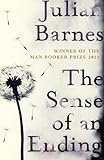
The Sense of an Ending by Julian Barnes

When Julian Barnes’s The Sense of an Ending first came out in 2011 I was initially interested in reading it, then was put off by a few critical reviews of it (something along the lines of it being about schoolboy-adolescent behaviour) and thought I’d look at it in the library before deciding whether or not to read it.  A year ago I saw it in a secondhand book shop (Barter Books) and bought it, after a quick glance told me it wasn’t just about adolescents, but I left it languishing on my bookshelves until the other day when I suddenly felt the urge to read it, I don’t know why! It seemed the right time.

Well, I really liked it (so much for reading reviews – it’s better to make up your own mind). It’s about memory and the effect of time, about ageing, about the nature of history and literature, about nostalgia and the question of responsibility.

It’s not a long book – just 150 pages – and I read it in two sittings. But its length belies its complexity and it’s actually quite a puzzle, because the narrator Tony knows that his memory is unreliable, that he can’t be sure of the actual events of his life. The best he can do is to be true to the impressions of those events that have remained with him. As he says at the beginning of the book:

… what you end up remembering isn’t always the same as what you have witnessed. (page 3)

Later on he realises that:

… as the witnesses to your life diminish there is less corroboration, and therefore less certainty, as to what you are or have been. (page 59)

The first part of the book is about Tony and his friends at school. There were three of them initially, then Adrian joined their clique. All of them were pretentious, but Adrian was rather different – he pushed them ‘to believe in the application of thought to life, in the notion that principles should guide actions.‘ (page 9)

Gradually, after they finished school and went their various ways through university, their contact with each other became less frequent. Tony’s relationship with his girlfriend, Veronica ends but he is less than happy when Adrian and Veronica began to see each other. Soon after Tony learns that Adrian committed suicide. Years later, after Tony has retired, he is shocked when he receives a letter telling him that Veronica’s mother has left him £500 and Adrian’s diary. However, Veronica has possession of the diary and refuses to hand it over to Tony, stating that she was not ready to part with it yet. The rest of the book concerns Tony’s efforts to get the diary and to work out what actually happened to Adrian.

Of course, it is not straight- forward as Tony meets with the brick wall that his memory has put between him and Veronica. And for the reader this poses a problem, because we see events through Tony’s words, what he says he did and thought, and what he thought about other people and their actions. He wants to know why Adrian committed suicide, what happened between him and Veronica, and how come her mother had Adrian’s diary. His memories are suspect and he knows it and it does not help him (or the reader) that Veronica is so unhelpful and tells him he ‘just doesn’t get it … You never did and you never will‘.

Just what did happen is never stated explicitly and the reader is left to puzzle it out with just a few clues. I’m not sure I got the whole picture, but I enjoyed trying to unravel the mystery. In the end I think it illustrates the nature of memory rather than being concerned about what actually happened, because as Adrian says:

History is that certainty produced at the point where the imperfections of memory meet the inadequacies of documentation. (page 17)

The Bookman's Tale by Charlie Lovett

When Alma Books contacted me to ask if I would like a review copy of The Bookman’s Tale: a novel of love and obsession by Charlie Lovett I was delighted. How could I resist a book about books, involving a search to discover the truth behind what could be a priceless Shakespearean manuscript? The book arrived the next day and I made the ‘mistake’ of looking at it whilst I drank a cup of coffee. I couldn’t put it down and by the end of the day I had read half the book.

The Bookman’s Tale

Synopsis from the back cover:

 A mysterious portrait ignites an antiquarian bookseller’s search – through time and the works of Shakespeare – for his lost love.

After the death of his wife, Peter Byerly, a young antiquarian bookseller, relocates from the States to the English countryside, where he hopes to rediscover the joys of life through his passion for collecting and restoring rare books. But when he opens an eighteenth-century study on Shakespeare forgeries, he is shocked to find a Victorian portrait strikingly similar to his wife tumble out of its pages, and becomes obsessed with tracking down its origins. As he follows the trail back to the nineteenth century and then to Shakespeare’s time, Peter learns the truth about his own past and unearths a book that might prove that Shakespeare was indeed the author of all his plays.

My view:

There are three different strands to this book, which interconnect and are interwoven throughout the book: the present day ie 1995 with Peter in England, the 1980s in America when Peter met and fell in love with Amanda, and the story of the Pandosto manuscript, a romance by Elizabethan poet Robert Greene, on which Shakespeare based The Winter’s Tale, from 1592 to 1879.

It began really well and Peter is not the only bookseller involved in the story – there is Bartholomew Harbottle in the Elizabethan/Stuart period and the Victorian Benjamin Mayhew both of whom play important roles. I really liked the historical sections and the details about the book trade and forgery is fascinating. I found the love story between Peter and his beloved Amanda rather cloying. Peter himself, suffers from an anxiety disorder and it is only his love for books and Amanda that seemed to make it possible for him to function at all – a good portrayal of an obsessive neurotic character.

By the second half of the book however, my enthusiasm for it began to droop a little as the chase around England became more frantic and a bit improbable. The many story lines as the book progressed became a series of cliff hangers, culminating in what seemed to me like something out of a cross between a Dan Brown novel, an Enid Blyton Famous Five book and a murder mystery. But, although there are just too many coincidence, twists and turns, and at times it is a bit melodramatic I still enjoyed it, swept along by the plot, an absorbing mix of historical fact and fiction, mystery and romance set in a book lovers’ world.

Charlie Lovett is a writer, teacher and playwright of plays for children. He is also a former antiquarian bookseller and an avid book collector. All this is evident in The Bookman’s Tale! He has a website with more information about the book and the sources he used.

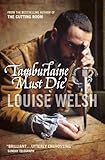
Tamburlaine Must Die by Louise Welsh

It was a treat to read Tamburlaine Must Die, a short book that I read in a day. I can’t remember when I last read a book in a day!

Sometimes novellas, such as this is with just 140 pages, can seem lacking, needing more depth of character or plot, leaving me feeling that it should really have been a full length novel, or an even shorter story. But Tamburlaine Must Die has an immediacy, that drew me in to the late Elizabethan world.

I wrote about the opening paragraph and synopsis on Tuesday and almost immediately after I began to read the book. Written in the first person and set in May 1593, it’s a tense, dramatic story of the last days of Christopher Marlowe, playwright, poet and spy. Accused of heresy and atheism, his death is a mystery, although conjecture and rumours abound. Louise Welsh has used several sources in writing this novella, but as she writes in the Author’s Note:

History has bequeathed us a tantalising framework of facts – the Elizabethans were as prolific as the Stasi when it came to official documents. Yet the facts can’t tell us the full tale and historian’s theories on Marlowe’s death are ultimately well informed, meticulously researched speculation.

We know that Marlowe dies in a house in Deptford. We know the date of his death and the three men present. We know the nature of the wound that killed him. Everything else is educated guesswork, or in this author’s case, a fiction.

Tamburlaine Must Die conveys the claustrophobic atmosphere of danger surrounding Marlowe; who can he trust, and who is behind the pseudonym of ‘Tamburlaine’, who posted a libellous handbill referencing Marlowe’s plays? He is very aware that death is just around the corner:

A dagger can find its way into a belly or a back before the victim spies it. I thought I felt the prickle of surveillance on my shoulders. And though I knew it was most likely the effect of my own blood running faster in my veins, I made my way from the crush of people, trying to keep note of who was around me, checking  if any faces lingered in the thinning crowd. (page 31)

As well as Marlowe, Louise Welsh throws in Dr Dee and Thomas Walsingham, Marlowe’s patron and refers to Walter Raleigh too. In such a brief book she has managed to convey the political and the seedy underworld of the Elizabethan period, the dishonesty and love of intrigue, the dangers of the plague and the threat of war. Has much changed since then, I wonder.