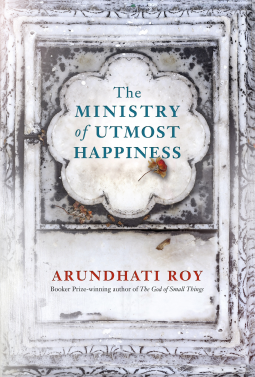
The Ministry of Utmost Happiness by Arundhati Roy

I wanted to read Arundhati Roy’s second novel, The Ministry of Utmost Happiness because I’d loved her first novel, The God of Small Things when it won the Booker Prize in 1997.
Blurb:

The Ministry of Utmost Happiness takes us on an intimate journey across the Indian subcontinent from the cramped neighbourhoods of Old Delhi and the glittering malls of the burgeoning new metropolis to the snowy mountains and valleys of Kashmir, where war is peace and peace is war, and from time to time ‘normalcy’ is declared. Anjum unrolls a threadbare Persian carpet in a city graveyard that she calls home.

We encounter the incorrigible Saddam Hussain, the unforgettable Tilo and the three men who loved her – including Musa whose fate as tightly entwined with hers as their arms always used to be. Tilo’s landlord, another former suitor, is now an Intelligence officer posted to Kabul. And then there are the two Miss Jebeens: the first born in Srinagar and buried, aged four, in its overcrowded Martyrs’ Graveyard; the second found at midnight, in a crib of litter, on the concrete pavement of New Delhi.

At once an aching love story and a decisive remonstration, a heart-breaker and a mind-bender, The Ministry of Utmost Happiness is told in a whisper, in a shout, through tears and sometimes with a laugh. Its heroes are people who have been broken by the world they live in and then rescued, patched together by acts of love-and by hope. For this reason, fragile though they may be, they never surrender. Braiding richly complex lives together, this ravishing and deeply humane novel reinvents what a novel can do and can be. And it demonstrates on every page the miracle of Arundhati Roy’s storytelling gifts.

My thoughts:

My initial reaction to it was one of disappointment. After a good beginning I struggled with it because there is so much description, so little plot and such a large cast of characters. At times I was on the verge of abandoning the book, but then first one episode and then another and another held my imagination and I read on. Now, though, I’m glad I finished it as the ending is clearer and more understandable than the middle, where quite frankly I was for the most part bewildered.

It’s a difficult book to read firstly because of its structure (or lack of structure) and secondly because of its content. It’s not a straight narrative, as it moves backwards and forwards in time and place and between different narrators, both in the third and first person, all of which makes it a disjointed and fragmentary book. There are stories within stories, some of which at first appear to be totally unconnected to anything else, but looking back I can see how they become interwoven into the whole (I think).

I preferred the beginning, the story about Anjum, to the rest of the book but by the end it’s as though Roy decided to bring all the strands together, to come back full circle to Anjum and the community she established in the old graveyard in Delhi. Maybe it’s because she spent 10 years or so to write it. For more details about why it took over 20 years for Arundhati Roy to write her second novel see this article, Fiction Takes Its Time in The Guardian.

I’m sure that I didn’t pick up all the political and cultural references, but the issues surrounding caste, nationalism, gender and religious conflict are clear. It’s a book about love and loss, death and survival, grief, pain and poverty. There are outcasts, the hijras – transgender individuals, rape victims, addicts and abandoned babies; and there is a lot of violence, massacres, beatings, tortures and rapes. It’s a heartbreaking book, which doesn’t spare the details. I was relieved to finish it.

Thanks to the publisher for an ARC via NetGalley.

  • Format: Kindle Edition
  • File Size: 2822 KB
  • Print Length: 417 pages
  • Publisher: Penguin; 01 edition (6 Jun. 2017)
  • My rating: 2.5

The Ministry of Utmost Happiness is the first book for my 10 Books of Summer Challenge.

A Place of Execution by Val McDermid

For years I’ve steered clear of reading any of Val McDermid‘˜s books and the reason is that I can’t stand to watch the violence and torture scenes in TV series such as Wire in the Blood, based on her Tony Hill/Carol Jordan series. But then I thought that maybe I wasn’t being fair to judge a writer’s work on films based on the books, and I read Cleanskin, one of the Quick Reads series, aimed at ‘adults who’ve stopped reading or find reading tough, and for regular readers who want a short, fast read.’ I enjoyed it and I’ve been meaning to read one of her full length books ever since.

There are many to choose from but I decided to read A Place of Execution, one of her standalone books. The book was made into a 3-part TV drama shown on ITV 1 in 2008, which I didn’t see. It is one of my TBRs.

A Place of Execution

Blurb:

In the Peak District village of Scarsdale, thirteen-year-old girls didn’t just run away. So when Alison Carter vanished in the winter of ’63, everyone knew it was a murder.

Catherine Heathcote remembers the case well. A child herself when Alison vanished, decades on she still recalls the sense of fear as parents kept their children close, terrified of strangers.

Now a journalist, she persuades DI George Bennett to speak of the hunt for Alison, the tantalising leads and harrowing dead ends. But when a fresh lead emerges, Bennett tries to stop the story ‘“ plunging Catherine into a world of buried secrets and revelations.

My thoughts:

This is an excellent psychological thriller, full of tension and suspense, set in the Derbyshire village of Scardale, an isolated community of about ten houses, where everyone is related, a place that had a reputation of being a law unto itself. So everyone could tell Detective Inspector George Bennett the time that Alison Carter left home taking her dog for a walk. But despite extensive searches her body is never found, although they do find her dog in the woodland, tied to a tree with elastoplast wound round its muzzle.

A Place of Execution spans the years from 1963 when Alison went missing up to 1998 when Catherine Heathcote, a journalist decided to write a book about the case. It had Bennett’s first major investigation and he’d been determined to find out what had happened to Alison. The majority of the book is about his investigation and the meticulous searches he and his team carried out until the case was resolved. But why in 1998 after going over the details of the case with Catherine did he suddenly write to her begging her to abandon the book?

The sense of place and time is so well done in this book and the characterisation is so good that I felt I knew these people. Even when the case appears to have been resolved there is something more, something hidden that still needs to be revealed. I had an inkling about what it was but I had by no means guessed all of it. But the clues were all there.

There are many layers in A Place of Execution. The villagers are a close-knit community suspicious of outsiders and reluctant to talk to the police. I realised towards the end of the book that the way that Val McDermid has structured the book allows for a great deal of deception and that things are not always what they seem. I loved it and I shall definitely be reading more of her books.

Paperback, 624 pages
Published February 6th 2006 by Harper Collins (first published June 7th 1999)

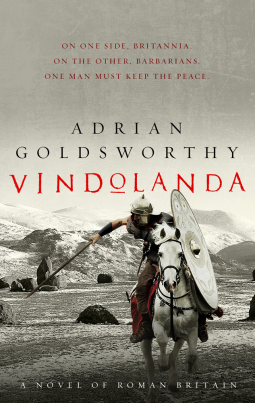
Vindolanda by Adrian Goldsworthy

AD 98: The bustling army base at Vindolanda lies on the northern frontier of Britannia and the entire Roman world. In twenty years’ time, the Emperor Hadrian will build his famous wall, but for now defences are weak, as tribes rebel against Roman rule, and local druids preach the fiery destruction of the invaders.

Flavius Ferox is a Briton and a Roman centurion, given the task of keeping the peace on this wild frontier. But it will take more than just courage to survive life in Roman Britain…

I was quickly drawn into Vindolanda by Adrian Goldsworthy, a novel set in northern frontier of Britain in 98 AD. It’s full of historical detail. Whilst some characters are based on real people about whom little is known apart from their names, most of the characters are fictional, including the main character, centurion Flavius Ferox.  He is based at a small fort called Syracuse (a fictional fort) near the garrison of Vindolanda (modern Chesterholm). Vindolanda is south of Hadrian’s Wall and predates its construction.

The story begins with the arrival of Vindex, the head of the native scouts and a minor son of a chieftain of the Brigantes tribe, who announces that there is a force of at least sixty barbarians in the area planning an attack on the road to Coria (modern day Corbridge). He needs Ferox’s help in hunting these marauders. This is just the start of a series of skirmishes, ambushes and full scale battles. There is at least one traitor in the Roman army informing the tribes of the army’s movements and Ferox is charged with finding out who it is.

I enjoyed reading Vindolanda and the insight it gives into the early period of British history. Adrian Goldsworthy’s Historical Note at the end of the book is excellent, explaining just what is fictional and what is fact in his novel. After Boudicca’s defeat in AD 60 there was little resistance to the Romans in southern Britain, but it was different in northern Britain where there were frequent outbursts of violence, raids and warfare.

There are sections in the Historical Note about the Roman army describing its structure and tactics, on the period before the construction of Hadrian’s Wall, on tribes and druids. The most interesting section for me is the one on Vindolanda and the Writing Tablets found there. These are wooden tablets written in ink on thin sheets of wood. Hundreds of them have survived, most are mundane containing details of daily life, letters, accounts and give an idea about the food they ate and of the social life of the commanders and their families. Among them are details about the commanding officer around AD 98, the Prefect Flavius Cerialis and his wife, Sulpicia Lepidina, both of whom are major characters in the novel.

Vindolanda is a most enjoyable and informative book. I have just one criticism of it, which is purely personal because my eyes always glaze over during battle scenes (both in books and on screen) and in this book there is just too much detail about the battles for me interrupting the storyline, even though the scenes are graphic and fast-paced.

My thanks for the advance review copy I received courtesy of NetGalley and the publishers, Head of Zeus.

  • Hardcover
  • Expected publication: June 1st 2017 by Head of Zeus
  • ISBN13 9781784974688
  • Source: Review copy
  • My rating: 4*

The Author 

Adrian Goldsworthy has a doctorate from Oxford University. His first book, THE ROMAN ARMY AT WAR was recognised by John Keegan as an exceptionally impressive work, original in treatment and impressive in style. He has gone on to write several other books, including THE FALL OF THE WEST, CAESAR, IN THE NAME OF ROME, CANNAE and ROMAN WARFARE, which have sold more than a quarter of a million copies and been translated into more than a dozen languages. A full-time author, he regularly contributes to TV documentaries on Roman themes.

For more information see his website.

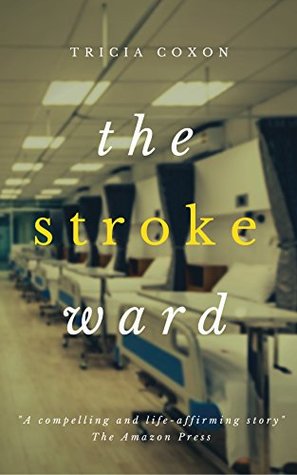
The Stroke Ward by Tricia Coxon

‘Life is fragile on the stroke ward’

The Stroke Ward: A portrait of a century of life in the north east of England, told through the lives of six very different women

The Stroke Ward: A portrait of a century of life in the north east of England, told through the lives of six very different women by Tricia Coxon is a beautiful book. First of all I have to say that I know the author. However, she did not ask me to read her book and I bought my copy. I am absolutely delighted to say that I enjoyed it immensely. It is fiction, inspired by Tricia’s three week sojourn in a stoke ward in Northumberland when she began to imagine the lives and history of the women on the ward, their past and what the future would hold for them.

I was quickly drawn into the story exploring the lives of the six stroke patients and the nurses who cared for them.  Tricia Coxon writes beautifully, vividly conveying the trauma and catastrophic effects of a sudden stroke, the confusion and loss of dignity and independence.  It is a moving story as each woman remembers the past, seeing themselves at various stages in their lives:

When night falls and the lights are dimmed, the stroke ward is full of memories. Shadowy, misty and delicate, they fill space like a spider’s web quivering on a frosty bush. (Loc 53)

All the women have different memories and are distinct characters. I felt I knew these women, that I was there in the ward with them, that I was inside their minds, living their memories with them. Meg is the one I was most drawn to. She can remember the past with vivid accuracy. When she was a small girl Meg’s father went on the Jarrow March to 10 Downing Street in London in 1936 to present a petition against the mass unemployment and extreme poverty in the north-east of England. When he returned Meg and the family were thrilled when Ellen Wilkinson came to tea – a special tea party. She was the local MP who had accompanied them on the March and had tried to improve their working and living conditions. But she is now confused about what has happened to her, hardly able to move, and suffering from anxiety and increasing dementia she needs specialist care. I was in tears as I read her story.

I loved the stories of these women’s lives and how Tricia has woven into them events such as the Jarrow March, the Spanish Civil War and a touching incident in Virginia Woolf’s life when she stayed at an Inn in Wooler whilst recovering from a nervous breakdown.  I also loved the warmth, the depth of compassion and dedication she portrays in the nurses’ care for their patients.

The Stroke Ward is a gem of a book that explores the nature of love and loss, friendship and family, and life and death. I loved it.

  • Kindle Edition, 186 pages
  • Published April 3rd 2017 by Tyne Bridge Publishing
  • Source: I bought my copy
  • My Rating: 5*

Amazon UK link

Amazon US link

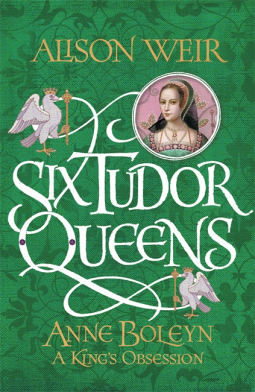
Six Tudor Queens: Anne Boleyn: A King’s Obsession by Alison Weir

Anne Boleyn: A King’s Obsession is Alison Weir’s second book in her series of novels about Henry VIII’s Queens and is due to be published on 18 May 2017.

Just like her first book on Katherine of Aragon this is fictional biography at its most straight forward, written in an uncomplicated style. It is a long and detailed story told from Anne Boleyn’s point of view following her life from when she was eleven up to her execution in 1536.

Mainly I think because I didn’t know much about it before I really enjoyed the first part of the book detailing Anne’s time at the court of the Archduchess Margaret, Regent of the Netherlands, then at the French court where she served Mary Tudor (Henry VIII’s sister) and then she was transferred to the household of Queen Claude, the wife of François I. Anne became proficient in French, and accomplished in the art of pleasing, and witty, flirtatious conversation.

She also learnt from the Archduchess how a woman could rule, and about the ‘New Learning’, that is the texts of ancient Greece and Rome that had been recently discovered. She learnt from Erasmus about the corruption within the Church and she had access to the Archduchess’ library, where she found books written by Christine de Pizan, who had enlightened views on women’s education. The Archduchess encouraged her to show that women were just as capable as men, so that men would admire women for their courage, character and intellect and not just their beauty.

I’m much more familiar with the rest of her life story. As Alison Weir acknowledges in her author’s note in some ways Anne Boleyn is unknowable, we do not have ‘a wealth of her letters’ to get an insight into her inner thoughts and much of the material we do have comes from a hostile source, the Imperial ambassador, Eustache Chapuys. In writing this novel she has tried to reconcile conflicting views of her and I think she has succeeded, portraying her as a flawed and human character. Anne was ambitious and in her early years she had the example of the Archduchess Margaret who  introduced her to ideas questioning the traditional ideas about women.

Alison Weir has kept closely to the historical record, although taking ‘occasional minor liberties’ and ‘modernising the language in places to make the context clearer. Some quotes have been taken out of context or put in the mouths of others’. And the scenes between Anne and Leonardo da Vinci are imaginary (much to my disappointment).

Perhaps it is because she kept closely to the records that the period when Henry was pursuing Anne is described at great length, whilst attempting to end his marriage to Katherine. I found it increasingly tedious to keep reading about how Anne left the court and went to Hever Castle, her parents’ home, then returned to court and then went back to her parents, etc, etc.

Overall, I enjoyed this book, but it is too long and in places very pedestrian and flat. At times it is a bit like reading chick-lit, for example as Mary Boleyn describes how Henry raped her and later as Henry complains to Anne that he has not ‘bedded with a woman in years’, looking at her with ‘anguish and longing in his eyes.’ He comes across as a weak character, truly obsessed with Anne but his passion soon cooled after their marriage when she failed to produce a male heir. And Anne is portrayed as a complex, intelligent woman but obsessed with her ambition for the power that came with being queen.

  • Format: Kindle Edition
  • File Size: 2923 KB
  • Print Length: 544 pages
  • Publisher: Headline Review (18 May 2017)
  • My rating: 3.5*

My thanks to the publishers via NetGalley for a review copy.

The Body in the Ice by A J MacKenzie

The Body in the Ice (Romney Marsh Mystery #2)

Blurb:

Christmas Day, Kent, 1796

On the frozen fields of Romney Marsh stands New Hall; silent, lifeless, deserted. In its grounds lies an unexpected Christmas offering: a corpse, frozen into the ice of a horse pond. It falls to the Reverend Hardcastle, justice of the peace in St Mary in the Marsh, to investigate.But with the victim’s identity unknown, no murder weapon and no known motive, it seems like an impossible task.

Working along with his trusted friend, Amelia Chaytor, and new arrival Captain Edward Austen, Hardcastle soon discovers there is more to the mystery than there first appeared. With the arrival of an American family torn apart by war and desperate to reclaim their ancestral home, a French spy returning to the scene of his crimes, ancient loyalties and new vengeance combine to make Hardcastle and Mrs Chaytor’s attempts to discover the secret of New Hall all the more dangerous.

Historical crime fiction is one of my favourite genres and The Body in the Ice by A J MacKenzie is a most enjoyable read. It’s the 2nd Hardcastle and Chaytor Mystery set in Romney Marsh and the surrounding countryside in 1796-7. I haven’t read the first one in the series, The Body on the Doorstep, but it didn’t seem to matter as I had no difficulty in reading this as a standalone, even though there are references back to the first book, but I do intend to read it as I enjoyed the second book so much.

Reading historical crime fiction is a different experience from reading modern crime fiction – no modern technology, just old-fashioned crime detection and deduction and a certain amount of intuition.  The late eighteenth century is a newish period for me, but The Body in the Ice appears (as far as I can judge) to be well grounded historically and geographically.

Historically this is the period after the end of the American War of Independence, so Britain and America are at peace, but Britain and revolutionary France are at war with the constant threat of a French invasion. Geographically, the area is not one I know but there is a map showing the locations together with a plan of New Hall, at the beginning of the book an empty and bleak (fictional) house owned by the Rossiter family, and also the Rossiter Family Tree.

The winter of 1796-7 was exceptionally harsh and cold and on Christmas Day in the village of St Mary in the Marsh, on the Kent coast Amelia Chaytor is spending the day with her friends, spinsters Miss Godfrey and Miss Roper when their maidservant bursts in and announces that she has seen someone at New Hall stables, frozen into the ice face down. Previously two men had been seen arriving at the Hall and at first it looks as though one of them has killed the other as they have both disappeared.

The Reverend Hardcastle is informed and as a justice of the peace he sets out to investigate the murder, aided by Joshua Stemp, the parish constable. It’s soon obvious that this is a complicated matter as the body they pulled from the ice was that of a black woman, dressed as a man.

Add into the mix the American family who arrive after the murder to establish their claim to their ancestral home, the village community, smugglers and French spies, and slavery and racism. The characters of Revd Hardcastle and Amelia Chaytor in particular are well drawn and convincing. His sister, Cordelia provides a comic element – she is a gothic novelist, who incidentally gave a young Jane Austen writing tips, accompanied by her cowardly (but lovable) dog Rodolpho.

It’s fast paced, and like all good mysteries it’s full of twists and turns, tension and drama, mixed together with both national and local politics. I enjoyed it immensely and will read more books by A J Mackenzie. The next book in the series will be The Body in the Boat.

My thanks to the publishers and NetGalley for my copy of this book.

The Authors:

A J Mackenzie is the pseudonym of Marilyn Livingstone and Morgen Witzel, an Anglo-Canadian husband-and-wife team of writers and historians. They write non-fiction history and management books under their own names, but ‘become’ A J MacKenzie when writing fiction. For more details about the authors and their books see their website.

  • Format: Kindle Edition
  • File Size: 1094 KB
  • Print Length: 368 pages
  • Publisher: Zaffre (20 April 2017)
  • Source: Review copy
  • My Rating: 5*