Beachcombing by Maggie Dana: Book Review

beachcombingRecently, Maggie Dana kindly sent me a copy of her book  Beachcombing which  is to be published this week, on June 5.  It’s the story of Jill who is fifty-two, divorced and living alone in a beach cottage in Connecticut. On a visit to her friend, Sophie in England where they grew up, she meets Colin, a boyfriend from their teenage years. From the moment she fell down the stairs  and fainted at his feet I could see what was coming.

Of course, Jill falls in love with Colin, who thirty-five years later is not the boy she thought he was.  She thinks he’s going to marry her and come to live with her leaving his partner, Shelby, and the prosperous little hotel they run in the Cotswolds. And then, everything  goes wrong! She has to work her way through heartbreak, work and financial problems, and innumerable car problems. At times she had fallen out with both of her best friends. The only problem free relationships she has are those with her two grown up sons.

Jill has a phobia about middle aged men leaving their wives for younger women and that colours her relationships so much so that she cannot see what is so obvious to everyone else. Despite having friends she is lonely and mistakes lust for love. I began to despair that she would ever come to her senses.  I got to the point where I wondered what could possibly go wrong next and even at the end when things seem about to get better I wasn’t convinced they would.

The things I liked about Beachcombing were the way the characters are delineated (Jill is actually an amalgamation of a few women I’ve known) and the descriptions of the locations:

I race across my patio and head for the path between the dunes that separate my backyard from the beach. The tide’s coming in. I jump a line of seaweed and shells and plunge into the waves. The cold takes my breath away. Ducking under I swim a few strokes, then tread water and watch windsurfers bounce like butterflies across the metallic blue chop. In the distance, a freighter ploughs its way toward New York, and just beyond the lighthouse a small fishing boat chugs into the harbour.

I’ve lived on the beach for sixteen years and this view still gives me goosebumps. It validates my life. It keeps me from knuckling under when cranky clients, clogged sinks, and leaky roofs gang up on me at the same time.

But I’d have liked it more if it wasn’t written in the first person present tense.  It’s a personal thing – I’m never too keen on that. Instead of adding to the drama I found that the continual crises Jill encountered actually lessened their impact; once one had passed it had gone, in a series of “nows”. I had the same problem reading The Time Traveler’s Wife.

The back cover describes Beachcombing as

… a coming-of-middle-age story about girl friends when you’re no longer a girl, and growing up when you’re already grown up, and the price you’re willing to pay for the love of your life.

I think that is a good summary. I wondered what the title – Beachcombing – implies. It occurred to me that the sea casts up a lot of rubbish on the beach and maybe that symbolises the rubbish that came into Jill’s life. It can also leave treasures. Jill’s problem was that she had difficulty in distinguishing  the rubbish from the treasures.
Doctored Evidence by Donna Leon: Book Review

doctored-evidenceDoctored Evidence is the first book by Donna Leon that I’ve read. Maybe I should have started with the first Commissario Brunetti book, Death at La Fenice, because I felt as though I’d walked into a room where everyone else knew each other and I didn’t.

It started off well with the murder of the most unlikeable character Maria Battestini. At first Flori, her Romanian maid is suspected of her murder but it is clear from Signora Gismondi’s evidence that the maid could not have had time to kill the old woman. What follows is the investigation of the murder by Commisario Brunetti aided by Signorina Elettra and Inspector Vianello.

It was going well and then I began to get a bit bored as it became bogged with lots of possiblities for who killed Battestini. At the end when the murderer was revealed I only had a vague impression of the character and had to go back to read various scenes again. For me the minor characters were all a bit vague, with the exception of Signora Gismondi who came across very clearly. I would have liked more about her.

I liked Brunetti; he seems to be a maverick character. I think a Commissario is in charge of a police station or division or something similar, but at one point I wondered if his boss was Signora Elettra, only to discover that she works for Brunetti’s boss Vice-Questore Patta. Maybe this would all be clearer to me if I began with the first Brunetti book.

I liked the scenes with Brunetti’s family, his conversations with his wife and the descriptions of their meals. At one point when he tells his wife he won’t be home for a meal she replies “Wonderful”, because she can read while she eats. I also liked the way their discussion about the Seven Deadly Sins influences how he tries to work out the motive behind the murder and that he picks the wrong sin. The scenes with Lieutenant Scarpa, a most unlikeable character, where his antagonism towards Brunetti and the way Brunetti eventually deals with him are among the most vivid in the book.

In a way I was a bit disappointed with Doctored Evidence but overall I liked it enough to look for another book by Donna Leon.

This is the 17th library book I’ve read this year contributing to the Support Your Local Library Reading Challenge 2009.

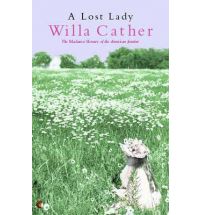
A Lost Lady by Willa Cather: a Book Review

a-lost-ladyI was very impressed with A Lost Lady by Willa Cather and now I want to read more of her books. I read it through in one sitting, which is most unusual for me, but having started it I just had to finish it. Not that there’s any mystery to solve, but just because I was enjoying the story, the writing and the scenes it conjured up in my mind.

A Lost Lady is about Mrs Forrester, a beautiful woman married to an older man, an elderly railroad pioneer living in a house on a hill at Sweet Water in the Nebraska plains along the Burlington railroad. She’s a well-loved, beautiful “lady-like” woman and the house, well known for Mrs Forrester’s hospitality and welcome, is in an idyllic setting. The story is told mainly through the eyes of Judge Pommeroy’s nephew, Niel Herbert, aged 12 at the beginning of the book.

There is an episode near the beginning of the book that completely shocked me, involving boys and a woodpecker. Even the boys watching who were not especially sensitive were “indignant and uncomfortable, not knowing what to do.”  This episode signals the end of an idyllic life style. Captain Forrester looks back with nostalgia at his early days in the West, a time when

One day was like another, and all were glorious: good hunting, plenty of antelope and buffalo, boundless sunny sky, boundless plains of waving grass, long fresh water lagoons yellow with lagoon flowers, where the bison in their periodic migrations stopped to drink and bathe and wallow. “An ideal life for a young man,” the Captain pronounced. (page 48)

His working life was ended by a railroad accident, and it’s now a time when life is changing. He is aging and helpless, and with the failure of the bank in Denver his dreams have ended. Mrs Forrester who adapts to change also symbolises the end of a past age. Niel has idolised her but as she begins to drink and takes a lover he is shattered, disllusioned:

In that instant between stooping to the window-sill and rising, he had lost one of the most beautiful things in his life. Before the dew dried, the morning had been wrecked for him; and all subsequent mornings, he told himself bitterly. This day saw the end of that admiration and loyalty that had been like a bloom on his esixtence. He could never recapture it. It was gone, like the morning freshness of the flowers. (pages 83-4)

Mrs Forrester is indeed “lost”, no longer the woman she was, not only “lost” to Niel, but “lost” to the values of the times. Other themes explored in A Lost Lady are the rise of materialism, a longing for the past seen as a golden age, the spoiling of the countryside in the name of progress and the changing role of women in society. There is also an emphasis on the need to adapt and to accept the possiblity of loss. I can see some similarities to Madame Bovary, in Mrs Forrester’s adultery (the book has been called “the Madame Bovary of the American frontier”), but there aren’t many similarities between the two woman other than that. Madame Bovary reads romantic fiction, is dissatified with her husband and commits suicide, whereas Mrs Forrester carries on with her life, is practical and does not give in to despair.

A Lost Lady is a complex novel, written in 1922 and published in 1923, and although it deals with the passing of the old order it still seems relevant today. Perhaps every age is the end of one period and the start of another.

The Spare Room by Helen Garner: A Short Book Review

It was with a sigh of relief that I read the last page of The Spare Room by Helen Garner. I’d read about this book and when it was offered on LibraryThing’s Early Reviewers Programme I ticked the box, never thinking I would “snag” it, but I did. I was hesitant about reading it, because it sounded a tough subject – for three weeks Helen’s friend Nicola who is suffering from cancer, stays with her whilst she undergoes alternative therapy. Nicola refuses to accept that she is dying and Helen struggles to cope with the situation.

It’s not a book that I would say I enjoyed. It is a difficult book to read, not because of the style of writing, which is fluent, but because of the agonising descriptions of Nicola’s condition and the anguish and anger that hits Helen. But I’m glad I read it; it was nowhere nearly as bad as I imagined it would be and I will look out for more books by Helen Garner.

The Body in the Library by Agatha Christie: Book Review

body-in-library001

I wrote some initial thoughts about The Body in the Library in my Sunday Salon post.  This is the mystery of who killed Ruby Keene. Ruby was eighteen, a professional dancer employed at the Majestic Hotel Danemouth as a dance hostess. Her body was found  in the Bantrys’ library at Gossington Hall in St Mary Mead. Then the charred body of another girl is found in an abandoned quarry. Who killed these girls and why?

The police are investigating the murder, including Inspector Slack, who is anything but slack, an energetic man, with a bustling manner. The police investigation is reinforced by the retired head of Scotland Yard, Sir Henry Clithering, whilst quietly in the background Miss Marple, at the request of Mrs Bantry, is also looking for the murderer.  I had little idea who it was even though I read the book very carefully. I had my suspicions and was completely wrong.

There are various suspects – Colonel Bantry, because the body was found in his library, Basil Blake who is connected with the film industry, has loud, drunken parties, George Bartlett, a rather dim-witted chap who is a guest at the Majestic, apparently the last person to see Ruby alive, and the Jefferson family – Conway Jefferson confined to a wheelchair, who was proposing adopting Ruby as his daughter, Mark, his son-in-law and Adelaide his daughter-in-law. Ruby was hired by the hotel as a dance hostess to partner Raymond Starr (also the tennis coach) after Josie Turner had sprained her ankle.

This is a satisfying murder mystery in that all the clues are there and when Miss Marple reveals who the killer is it is so clear that I don’t know why I hadn’t realised pages earlier, but that is Agatha Christie’s skill. A quick and enjoyable read.

For more reviews of Agatha Christie’s books have a look at the Agatha Christie Challenge.

Pride and Prejudice by Jane Austen: a Book Review

jane-austen

Jane Austen has long been one of my favourite authors, ever since I read my mother’s copy of Pride and Prejudice   – it’s the brown book shown in the photo.

I’ve read this now so many times, watched TV and film adaptations that I’m not sure what to write about it. Usually I write about the plot and the characters to help me remember a book, but I don’t need to in this case.

What struck me this time in reading Pride and Prejudice is the language. Jane Austen is never sentimental or preachy, but treats serious subjects with humour and irony. Pride and Prejudice is full of wit and humour and timeless characters – foolish people, flirts, bores, snobs, self-centred and dishonest people as well as “good” people like Jane Bennet, who is determined to see good in everyone.

I was also aware of the many times she used the word “civilities”, and its variations. This was a society where manners were most important, behaving civilly towards each other and observing the correct etiquette. It’s a novel about manners as much as about pride and prejudice, about how people behave and how they see each other and the world. I like the original  title Jane Austen gave her book – First Impressions – because the first impression Elizabeth and Mr Darcy had of each other wasn’t love at first sight (or was it?), not a promising start. I used to try to work out which one was proud and which prejudiced, but decided that each of them is both. Fortunately, both weren’t too proud to admit they were wrong.

I enjoy reading about Jane Austen and her world and there are many books available. I have Maggie Lane’s Jane Austen’s World which looks at daily life in Jane’s England and includes accounts of the numerous dramatisations of her books. When I won a giveaway book from Dorothy at Of Books and Bicycles I was delighted that one of the books she had on offer was Jane Austen: a Life by Claire Tomalin. I’ve started to read it and now I’ve finished Pride and Prejudice I’ll be able to concentrate more on it. I love the cover, which shows the painting The Great House and Park at Chawton, owned by Jane’s brother Edward.

Several years ago I read Carol Shields’ biography, which lead me to James Edward Austen-Leigh’s Memoir of Jane Austen, published in 1869. He was her nephew and of course, knew her personally. I found a copy in my local library. In it he described her as a

clear brunette with a rich colour; she had full round cheeks, with mouth and nose small and well formed, bright hazel eyes, and brown hair, forming natural curls close round her face.

She was

fond of music and had a sweet voice, both in singing and speaking.

And he thought she was a calm and even person distinguished from other people by

that peculiar genius which shines out clearly enough in her works.

And I think that says it all – she was a genius.