Murder Being Once Done by Ruth Rendell

Murder Being Once Done was first published in 1972. Inspector Wexford is convalescing, staying with his nephew, Howard, in London. He is bored, fussed over by his wife Dora, on a strict diet, denied the food he loves, absolutely ordered off alcohol and police work by his doctor, so all he can do to pass his time is to take walks and talk with his nephew about More’s Utopia which he has borrowed from the library. What makes it all most frustrating is that his nephew is a Dectective Superintendent and he is investigating the death of  Loveday Morgan, aged about 20, found in a vault in a London cemetery.

Wexford just cannot resist going to the scene of the crime – Kenbourne Vale Cemetery, a huge and bizarre  place, which Wexford finds profoundly sinister and awe-inspiring:

Never before, not in any mortuary or house of murder, had Wexford so tellingly felt the oppressive chill of death. The winged victory held back her plunging horses against a sky that was almost black, and under the arches of the colonnades lay wells of gloom. He felt that not for anything would he have walked between those arches and the pillars that fronted them to read the bronze plaques on their damp yellow walls. Not for renewed health and youth would he have spent a night in that place. (page 17)

From then on he defies his doctor’s orders and helps Howard with his investigations. He has to go carefully though, feeling rather lost away from the familiar ground of Kingsmarkham, his “essential Wexfordness” deserting him for a while, and aware of the attitude of the townsman towards his country cousin. Wexford gets more involved and is convinced he’s found the murderer only to discover that he’s made a mistake. Then he realises how

deeply his illness had demoralized him. Fear of getting tired, fear of getting wet, fear of being hurt – all these fears had contributed to his failure. (page 138)

He’s about to give up, feeling old and useless. Then, when he is presented with a vital clue he gets back his yearning for the truth, excitement sets the adrenlin surging through his blood and shivers traveling up his spine as he sees his quarry in his sight.

Although this is quite a short book it’s densely packed, not only with details of the crime, but touching on such issues as single mothers, poverty, ignorance and religious intolerance. It’s strong on sense of place, and although there are a few passages painting a picture of life in the 1970s it has a timeless quality about it, with enough twists and turns for me to be unsure of the outcome.

I liked the chapter heading quotations from Sir Thomas More’s Utopia – the title comes from one of these:

The murder being once done, he is in less fear and more hope that the deed shall not be betrayed or known, seeing the party is now dead and rid out of the way, which only might have uttered or disclosed it.

The Girl on the Landing by Paul Torday

I read about The Girl on the Landing in newbooks magazine, along with the first chapter. It caught my attention, although I wondered if I wanted to read about mental illness. I needn’t have worried, as I was soon involved in the story – there was something very sinister going on.

Michael and Elizabeth Gascoigne are the narrators of the story and the question that puzzled me was, just how reliable are their accounts. It soon becomes obvious that it is Michael who is the problem. It begins when Michael and Elizabeth visit a friend’s country house and he spots a painting of a landing with a woman clad in a green dress in the background – except that there is no woman in the painting. Despite his outward calm and reliability he is mentally ill – hearing voices and seeing people who aren’t there – or are they? I began to wonder if they were real after all. Such was the effect this book had on me.  When he stops taking the drug their marriage takes on a new character, taking Elizabeth quite by surprise, initially liking it, but soon scaring her.

The location is split between Michael’s luxury London flat and his large country estate in Scotland. In London he is the part-time membership secretary of Grouchers, an exclusive gentlemen’s club. Here he is faced with a difficult situation when Mr Patel, a Ugandan Asian applies for membership, raising questions about the nature of Britishness and Englishness, identity and personality – all quite disturbing for Michael and the other members. Michael describes Grouchers as

… a fantasy world, where perfectly normal middle-aged, middle-class men were transformed for a few hours by a collective mania into behaving and speaking as if they were inhabiting some last outpost of the British Empire in the 1950s.

In contrast to life in London, is the Gascoignes’ life in Scotland, in the dank and gloomy house Michael inherited from his parents – Beinn Caorunn. Elizabeth hates the place and rarely goes there, but Michael loves it; it is the place where he feels “connected to the world again”. But  Michael has secrets and as the novel progresses the nature of these secrets are gradually revealed, building a sense of mystery and foreboding. Just who is the woman in the green dress, the Lamia and what did happen to Michael’s parents? As Michael says:

None of us knows who we really are.

The tension builds and I just had to finish the book, but I thought the ending was an anti-climax as Elizabeth takes over the narrative and we are left dangling. Just what did happen … ? But I couldn’t really imagine how else it could end and it was a very enjoyable book.

Sunday Salon

Last Sunday I wrote that I was going to concentrate on reading just two books at a time concentrating on reading one non-fiction and one fiction. I sort of stuck to my plan and am still reading Karen Armstrong’s The Case for God. I finished Among the Mad by Jacqueline Winspear (more about that in a later post) and my plan after that was to go back to reading one of the books shown on the sidebar – Wolf Hall or The Children’s Book.

But it didn’t work out like that, because I went with D to a hospital appointment and needed a book to read whilst waiting. Both Wolf Hall and The Children’s Book are heavy hardbacks and wouldn’t fit in my handbag so instead I picked up one of my library books – Faceless Killers by Henning Mankell and started to read that. Reading in a hospital waiting room is an exercise in concentration. First off  we had to use the hand spray to prevent catching, spreading the swine flu germs – how that works I don’t understand given that once you’re in you have to touch chairs, doors etc. Then we were told to sit on the green chairs whilst waiting to go to the next waiting area. The green chairs are next to the entrance doors that open automatically each time someone goes near, and it was a wet, windy day. One small boy was fascinated by the doors and kept walking in front of them saying “close” when they opened which meant that they stayed open. This went on for several minutes until his mother came and took him away. I read a few pages whilst being alternately amused and irritated and shivering.
We then were called to the next waiting area – no automatic doors, but a constant stream of doctors and nurses calling out names and ushering people through, people complaining about how long they’d had to wait, the phone ringing and people talking loudly. Still, it is a hospital, not a reading room, no matter how long you have to wait. But Faceless Killers is sufficiently engrossing so that I was hardly aware of what was going on around me.

I finshed it this morning and will now read either Wolf Hall or The Children’s Book. I started both of them a while back and only put them down because they’re so heavy it’s hard to read them in bed (where I like to do my reading). I’ll have to work on strengthening my hands and arms.

I hadn’t heard of Henning Mankell until the BBC broadcast the Wallender series last year with Kenneth Branagh playing Kurt Wallender. I’d been meaning to read one of the books since then. Branagh’s face was inevitably in my mind as I read Faceless Killers, but as it wasn’t one of the books filmed the rest was purely down to my imagination from reading the book.  Wallender is yet another detective to join the ranks of Rebus in my mind. He is a senior police officer and, like Morse, listens to opera in his car and in his apartment. He is lonely, morose, overweight and drinks too much. His wife, Mona has left him, he’s estranged from his daughter, Linda and has problems with his father, an artist who has painted the same picture for years and is now senile.

I discovered on the Inspector Wallender website that Faceless Killers is the first in the Kurt Wallender series of books, so for once I’ve begun at the beginning of a series! (Although Wallender first appears in The Pyramid, a collection of short stories). It’s about the brutal murder of the Lovgrens, an old man and his wife in an isolated farmhouse in Skane, the southern most province in Sweden (there’s a helpful map in the book). The old lady’s last word is “foreign”. Does this mean the killers are foreigners? When this is leaked to the press the ugly issue of racial hatred is raised. Are the killers illegal immigrants from the refugee camps, or should the police be looking at the Lovgrens’ family? Why would anyone kill them in such a savage way – they weren’t rich and had no enemies?

This is not just a detective story, apart from racial discrimination and refugees, Wallender reflects on the problems of change in Swedish society, of aging, and of the uncertainty and fragility of life – the incantation he often reflects on is:

A time to live and a time to die.

I hope to find the next Wallender book to read soon: The Dogs of Riga.

Faceless Killers, like other Wallender books, has been adapted into a series on Swedish TV and an English version, again with Kenneth Branagh, is due to be broadcast next year.

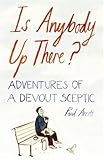
Is Anybody Up There? by Paul Arnott

Subtitled Adventures of  a Devout Sceptic I thought Is Anybody Up There? was an interesting book, although it is more a biography or memoir than an exploration of why Paul Arnott calls himself a sceptic. At times he seemed to me to be advocating most of the world’s religions. He describes how as a child he believed in fairies, leprechauns and Father Christmas, his introduction to Christianity, atheism and his growing interest in Buddhism, Hindusim and Islam.
In fact it’s only with Richard Dawkins that he has any real issues, thinking that “his extrapolations into altruism and faith [in The Selfish Gene] were too deterministic, rich in some answers and impoverished in others.” (page 5)

Writing about Dawkins’s The God Delusion he says

To my mind, it was if he had written a book about football and only focused on the hooligans, corruption in the boardroom, and the few bent referees, ignoring the fantastic skills of both male and female players on the ball and the communal wonder which comes with the scoring of a goal. Dawkins railed against easy targets one after the other, without recognising that every religious person, other than the lunatic fringe he was tilting at, agreed with him wholly about life at the extremes of faith. (page 5)

Arnott’s difficulty is that he just isn’t sure. He explored different faiths, but the “more [he] read and reread, the more any spiritual truth eluded [him].” (page 174) He admits that he “likes religions” (page 211), he commends a “laissez-faire approach” and believes in a “devout acceptance of the beliefs of others” (page 226).  And yes, he does believe there is “somebody” “up there”, whatever that is. His reasons are rather vague -“because of how much is going on out there down here” and because “most people throughout the ages have found it makes more sense to have an idea of divinity than not.”(page 205)

It’s easy reading, with information about a number of religious beliefs, but it’s not very enlightening. Still, I enjoyed reading it.

Friday’s Forgotten Books

Patti Abbott asked if I would contribute to her series, Friday’s Forgotten Books

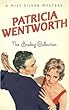
I’m not sure if Patricia Wentworth’s Miss Silver books can really be considered as “forgotten books”, especially as I found The Brading Collection on the library shelves. At any rate I wasn’t familiar with her books so I thought maybe it would fit the bill.

I knew nothing about Patricia Wentworth, except the little that was stated in the book itself. She was born in India in 1878 and wrote dozens of best-selling mysteries being recognised as one of the “mistresses of classic crime.” She died in 1961 and was as popular in the 1940s as Agatha Christie and Dorothy L Sayers. Miss Silver “was her finest creation”.

In The Brading Collection a worried Lewis Brading asks Miss Silver for help. He is obsessed by a feeling that something is going on behind his back, that whilst he is asleep someone is entering the annex to Warne House where he keeps his collection of jewellery, most of which has some connection with crime. Miss Silver, who has been compared by some to Miss Marple, is a former governess, now a private investigator takes a dislike to him and refuses to take on his case. However when, a fortnight later, he is shot she helps the police to discover his murderer.

As you would expect there are several suspects and the sequence of events leading up to the murder are carefully scrutinised by Miss Silver, described as a

 … dowdy little governess out of a family out of a family photograph … her hair very neat, her oldfashioned hat a little crooked, her hands in their black thread gloves folded primly upon a shabby bag with a tarnished clasp.

Behind her appearance, however, she has

… an intelligence which commanded respect … an integrity, a kindness, a sort of benign authority.

It all hinges on the timing of events, when people visited Lewis in the annex, whether the door was locked and who had a key. The suspects include Lewis’s secretary, James Moberley, reluctantly working for him under threat of exposure as a criminal, and his cousin and heir Charles Forrest, suspected by Stacy his ex-wife of stealing the Brading family necklace to fund the conversion of his family home into flats. Then there are Myra Constantine, who looks like a toad, ugly and venomous with flashing black eyes and her daughters, Milly and Hester, insignificant and bullied by her mother.  Why does Hester enter the annex late at night? Is Lilias Gray, Charles’s cousin a reliable witness? It all builds up to a climax with a dramatic ending, involving a car chase, reminding me of cops and robbers films, as the culprit drives off in a police car, chased by the furious Inspector Crisp.

All in all this is a satisfying book, with believable characters and plenty of surprises, although I had worked out who did before the denouement. I’m glad I found Patricia Wentworth and as there is a long list of her books there are plenty more to read.

The Riddle of the River by Catherine Shaw

The Riddle of the River by Catherine Shaw is the fourth book featuring Mrs Vanessa Weatherburn. It’s the first one I’ve read so it took me a little while to work out her background. Set in Cambridge in 1898  Vanessa used to be a school mistress until she married Arthur. Now with two children (twins) she acts as a private investigator.

Vanessa is enlisted by her friend, journalist Patrick O’Sullivan to investigate the death of a young woman found floating, reminding her of Ophelia, in the River Cam:

The grass and flowers, all the little life that flourishes on the edge of a stream, formed a frame for the figure of the floating girl. She lay face down in the water, caught in the rushes near the edge, her hair fanning out like algae, and her white dress forming a poetic, ghostly shape as the lines of those parts of it which floated under the water were deformed into waves. The back of her head emerged from the stream, and the wet hair floated, echoing the ripples of the Cam itself.

Her task is to identify the girl and discover why would anyone want to murder her. Her friend’s husband, Ernest Dixon leads her to wonder whether the unidentified body could be that of the lovely young actress named Ivy Elliot he saw playing the part of Ophelia in the Young Shakespeare Company on the outskirts of London.  In the production she actually floated away down a stream, out of sight. Ernest who has fallen in love with Ivy is worried about her disappearance. Just who was Ivy and how is she connected with the elderly and unpleasant Geoffrey Archer and his son Julian?

Vanessa, acting undercover travels by train to Holyhead where she embarks on the Royal Mail Steamer crossing to Dublin and then on to Kingston for the Regatta and there discovers a brilliant invention that revolutionised communication and so solves the “riddle of the river”. This is a well constructed book with plenty of complications that kept me guessing, a strong sense of location and well drawn and believable characters, but most of all I loved the way it evokes the Victorian era.

It was no surprise to read that the author is an academic and a mathematician as the novel includes many scientific details which combined with accounts of contacting the dead through the ether, the British Psychial Society, the scientific study of seances in the Victorian era, references to Sir Oliver Lodge, Sir Arthur Conan Doyle, and George Darwin, the son of Charles Darwin, make this a fascinating book.

The first three books featuring Vanessa are The Three-Body Problem, Flowers Stained with Moonlight, and The Library Paradox, which I hope to read soon.