The Tinder Box by Minette Walters: Book Review

I really enjoyed this novella by Minette Walters. Being a short mystery it is succinctly written and yet I could still imagine the characters and settings from the descriptions. The Tinder Box is aptly named – about a situation set to burst into flames at any moment.

Description from the book cover:

In the small Hampshire village of Sowerbridge, Irish labourer Patrick O’Riordan has been arrested for the brutal murder of elderly Lavinia Fanshaw and her live-in nurse, Dorothy Jenkins. As shock turns to fury, the village residents form a united front against Patrick’s parents and cousin, who report incidents of vicious threats and violence.

But friend and neighbour Siobhan Lavenham remains convinced that Patrick has fallen victim to a prejudiced investigation and, putting her own position within the bigoted community in serious jeopardy, stands firmly by his family in defence of the O’Riordan name.

Days before the trial, terrible secrets about the O’Riordans’ past are revealed to Siobhan, and the family’s only supporter is forced to question her loyalties. Could Patrick be capable of murder after all? Could his parents’ tales of attacks be devious fabrications? And if so, what other lies lurk beneath the surface of their world?

As the truth rapidly unfurls, it seems that Sowerbridge residents need to be very afraid. For beneath a cunning façade, someone’s chilling ambition is about to ignite . . .

My thoughts:

In some ways this is a theme-heavy book, dwelling as it does on prejudice, incitement to violence and vigilantism as the inhabitants of the village unite in their dislike of the O’Riordan family living in their midst. As the story unfolds it becomes clear that misunderstanding and ignorance are really the problem. I liked the way Minette Walters has structured The Tinder Box using flashbacks,  moving between events that lead up to Patrick’s arrest and the aftermath.

For such a short book it is remarkably complex and layered and the ending with its alternative scenarios is excellent. I think I enjoyed it so much because it is so condensed – it made a refreshing change from the long and detailed books I’ve been reading recently.

  • Hardcover: 128 pages
  • Publisher: Macmillan (14 Jun 2004)
  • Language English
  • ISBN-10: 1405048557
  • ISBN-13: 978-1405048552
  • Source: Library book


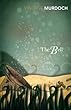
The Bell by Iris Murdoch: a Book Review

I first read The Bell years ago and it remained in my memory as an excellent book, but this time round I think my reading tastes have changed because, although I still liked it, I no longer found it so enchanting. Iris Murdoch wrote beautiful English, with detailed descriptions of the location – Imber Court, Imber Abbey and the lake and woods around them. But I just couldn’t work out the layout and that is actually relevant in this book. There was also too much detail about the thoughts and feelings of one of the characters – Michael Meade – for my liking, and yet for all the description he didn’t seem a real person, but more a mouthpiece for Murdoch’s philosophical thoughts. In fact most of the characters, with the exception of Dora, come across more as stereotypes than real people.

A lay community lives next to an enclosed order of nuns, a new bell is being installed and then the old bell, a legendary symbol of religion and magic  is retrieved from the bottom of the lake. The legend of the bell is that it fell into the lake after a 14th century Bishop had cursed the Abbey when a nun was discovered to have a lover and had drowned herself. The various characters include Dora Greenfield who is staying at Imber Court whilst her husband Paul is researching the Abbey archives. Paul is thirteen years older and is an art historian. Dora had left him six months earlier because she was afraid of him and was returning for the same reason. She is a young woman, a rather silly young woman who thinks one thing and immediately says the opposite, but Paul is probably the most obnoxious character in the book – he is a manipulative bully. The other residents at Imber Court are a mixed-up bunch, there for both religious and other reasons. As the date for the installation of the new bell approaches their weaknesses begin to be exposed.

Much of the book is taken up with discussions and examining the thoughts of the characters about the relationship of goodness to power. On the surface everything appeared to Dora to be peaceful, but underneath stresses and strains are causing the community to diverge into two parties. It’s not just a matter of organisation but also of morals and there is an impending sense of evil and menace.  Bearing in mind that The Bell was first published in 1958 this must have been quite a shocking book at the time – about the relationship between religion and sex and the angst and self-denial that it depicts.

  • Paperback: 352 pages
  • Publisher: Vintage Classics; New Ed edition (2 July 2009)
  • Language English
  • ISBN-10: 0099470489
  • ISBN-13: 978-0099470489
  • Source: I bought this book

For a rather more positive view of The Bell see The Senior Common Room.

Murder on the Orient Express by Agatha Christie

Murder on the Orient Express must be one of Agatha Christie’s most well known books. It was first published in 1934 and it was first filmed in 1974, starring Albert Finney as Hercule Poirot, and most recently in 2010 with David Suchet as Poirot. I’ve seen both films and so knew the plot, but I’d never read the book until now.

Poirot is on the Orient Express, on a three-days journey across Europe. But after midnight the train comes to a halt, stuck in a snowdrift. In the morning the millionaire Simon Ratchett is found dead in his compartment his body stabbed a dozen times and his door locked from the inside. It is obvious from the lack of tracks in the snow that no-one has left the train and by a process of elimination Poirot establishes that one of the passengers in the Athens to Paris coach is the murderer.

Poirot interviews the passengers and the Wagon Lit conductors, none of whom appear to have a motive for killing Ratchett or to have any connection with him or each other. Poirot decides that this

… is a crime very carefully planned and staged. It is a far-sighted, long-headed crime. It is not – how shall I express it? – a Latin crime. It is a crime that shows traces of a cool, resourceful, deliberate brain – I think an Anglo-Saxon brain. (page 193)

Having interviewed all the suspects Poirot draws up a list of questions about things that need explaining. This leads him to speculation and re-interviewing some of the suspects and eventually he arrives at the truth. It’s hard to know whether I would have arrived at the same conclusion if I hadn’t seen the films, but watching the first one it did become obvious before the denouement.

I liked this book enormously. I like the way Agatha Christie divided it into three sections – The Facts, the Evidence and Hercule Poirot Sits Back and Thinks. I liked the characterisation and all the, now so non-pc, comments about nationalities, highlighting class and racial prejudice. I like the problem-solving and ingenuity of the plot.

  • Paperback: 240 pages
  • Publisher: Harper; Masterpiece edition (Reissue) edition (3 Sep 2007)
  • Language English
  • ISBN-10: 0007119313
  • ISBN-13: 978-0007119318
  • Source: Library book because I can’t find my own copy!

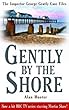
Gently by the Shore by Alan Hunter: Book Review

Gently by the Shore is the second Inspector Gently book by Alan Hunter. George Gently is called in to investigate a murder in Starmouth, a British seaside holiday resort. An unidentified body was found on the beach. The victim was naked, punctured with stab wounds. Gently summarises it:

He had wandered into town, this enigmatical foreigner, he had taken lodgings, he had found a cafe to his taste and a prostitute to his taste; and then he had been, in a short space of time, kidnapped, tortured, murdered and introduced into the sea, his room ransacked and plundered of something of value. There was a ruthlessness about that … it bore the stamp of organization. But there was no other handle. The organization persisted in a strict anonymity. (page 92)

All Gently has to go on is his intuition. This man had been in disguise, no one seemed to know him or why he was in Starmouth. Gently by the Shore was first published in 1956 and reflects that period of time. Gently smokes a pipe and puffs his way through the investigate often in a haze of smoke when questioning suspects who also smoke. The account of a British holiday scene in the fifties brought back memories of childhood holidays (without any murders!) of sunny days on the beach, wet days in amusement arcades on the penny slot machines, the end-of-piers shows, beach cafes, deckchairs, and staying in Guest Houses, where you had bed, breakfast and an evening meal but weren’t expected to stay in your room during the day, the change-over on a Saturday with a mass exodus of one set of holiday makers before the next lot arrived.

It has a very ‘English’ feel about it:

Exceeding Sunday-white lay the Albion Pier under mid-morning sun. Its two square towers, each capped with gold, notched firmly into an azure sky and its peak-roofed pavilion, home of Poppa Pickle’s Pierrots, notched equally firmly into a green-and-amethyst sea. Its gates were closed. They were not open until  half past two. The brightly dressed strollers, each infected in some degree by the prevailing Sundayness, were constrained to the languid buying of ice-cream, the indifferent booking of seats or the bored contemplation of Poppa Pickle’s Pierrots’ pics. They didn’t complain. They knew it was their lot. Being English, one was never at a loss for a moral attitude. (page 145)

The fifties were also the period where the death sentence was still in force and Gently and the main suspect discuss the ethics of killing comparing a hired killer with the hangman. Gently maintains that the death penalty is an ideal – ‘to protect people on their lawful occasions’, and that his duty is to catch the criminal. The case is complicated by the involvement of secret agents, at which point I thought the plot became too contrived, and Gently is faced with solving:

… a planned execution, the details of which have been efficiently erased. (page 189)

But, solve it, he does!

My verdict is that this book doesn’t live up to the promise of the first one, Gently Does It, but I enjoyed the setting, the ethical discussions and the problem-solving aspects.

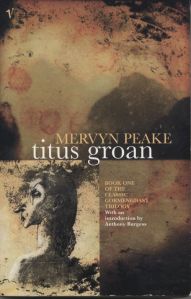
Titus Groan by Mervyn Peake: a book review

Titus Groan 001

Sometimes it’s dangerous to re-read a book you loved the first time round. There’s always the possibility that you’re going to be disappointed that it wouldn’t live up to to your expectations, especially if the first time you read it was whilst you were in your teens.

With Titus Groan I needn’t have worried. I thought it was fantastic the first time and absolutely fantastic this time too.

The world Peake created in Gormenghast is real on its own terms. It has history, culture and its own rituals and traditions. The novel is poetical,  rich in imagination, description and characters. It all came alive as I read on and the same magic I felt the first time was still there.

It was first published in 1946 but because it’s about an imaginary world it hasn’t dated at all. Yes, it’s slow-moving, but with a book like this that’s essential as there’s so much to absorb. The names of the characters are Dickensian, farcical and eccentric. It’s a story of good and evil, raising issues about equality, age versus youth, tradition versus change, destruction and violence, and insanity. It’s grotesque in parts, sensual and tender in others. It is brilliant.

It’s impossible to summarise in a few paragraphs. It begins with the birth of Titus, soon to be the 77th Earl of Gormenghast and ends when he is almost two years old. His father, Lord Sepulchrave has endured despair and then madness after his beloved library was burnt down and Steerpike, a disrespectful youth, has clawed his way out of the castle’s kitchen to a position of some power, by manipulation and deceit.

Titus thus inherits that immense structure – Gormenghast Castle and its surrounding kingdom and the possibility of change is in the air:

There would be tears and there would be strange laughter. Fierce births and deaths beneath umbrageous ceilings. And dreams, and violence, and disenchantment.

And there shall be a flame-green daybreak soon. and love itself will cry for insurrection! For tomorrow is also a day – and Titus has entered his stronghold. (pp 505-6)

I wrote about the first few chapters with a list of characters in an earlier post.

Titus Groan:

  • Paperback: 512 pages
  • Publisher: Vintage Classics; New edition edition (6 Oct 2005)
  • Language English
  • ISBN-10: 0749394927
  • ISBN-13: 978-0749394929
  • Source: I bought the book

And now, on to part two of the trilogy – Gormenghast.

Follow the Gormenghast Read-along on Jackie’s blog.

Crime Fiction Alphabet: W is for Dan Waddell

I’m not sure whether  The Blood Detective by Dan Waddell is historical crime fiction or genealogical crime fiction. One thing is certain it is crime fiction and one that I was thoroughly immersed in. If I gave books stars on this blog I would have given it 5 stars, if only the ending wasn’t so graphic. It’s the sort of scene that if I was watching it on TV it would have had me peeping through my fingers or even covering my eyes completely until it was over. There are bits of graphic violence earlier in the book, which I could just about cope with, but the grisly stuff at the end was a step too far for me.

That said it’s a fascinating fast-paced book linking the crimes of the past – the events of 1879 – to a series of murders in the present. DCI Grant Foster enlists the help of genealogist Nigel Barnes to track down the killer who has left cryptic clues carved into his victims’ bodies.

I used to work with archives, much of it helping people track down their family histories and so was very familiar with the sources Nigel uses to discover the original killer. I loved the way Waddell wove this into his story. Nigel Barnes is a convincing character and manages to solve both the modern day murders and the historical ones too, not only through family history but also through working out the topography of London through the years.  I loved that part of the book.

Dan Waddell as well as writing crime novels is the author of Who Do You think You Are?, the accompanying book of the TV series – one of my favourites, so it’s no surprise that The Blood Detective is so good on genealogy. He has his own website and also writes regularly on the Murder is Everywhere blog. His next book featuring Nigel Barnes is Blood Atonement and despite my phobia about graphic violence I’m planning to read that one too.

The Blood Detective

  • Paperback: 416 pages
  • Publisher: Penguin (7 Aug 2008)
  • Language English
  • ISBN-10: 9780141025650
  • ISBN-13: 978-0141025650
  • ASIN: 0141025654
  • Source: library book

The Crime Fiction Alphabet is hosted by Kerrie at Mysteries in Paradise. All you have to do is write a post relating to the letter of the week – either the first letter of the book title or of the author’s first or second name.