Portobello by Ruth Rendell: A Book Review

Portobello is one of Ruth Rendell’s psychological studies of obsessional and eccentric characters, with a touch of insanity and crime mixed in. I can’t say I ‘enjoyed’ it as in parts it really irritated me, but I did wonder how it was going to end and so read on. The setting is good; the description of the Portobello Road in London brings the area to life, making it a character in its own right:

The street is very long, like a centipede snaking up from Pembridge Road in the south to Kensal Town in the north, its legs splaying out all the way and almost reaching the Great Western Street main line and the Grand Union Canal.

… The Portobello has a rich personality, vibrant, brilliant in colour, noisy with graffiti that approach art, bizarre and splendid. an indefinable edge to it adds a spice of danger. There is nothing safe about the Portobello, nothing suburban. It is as far from an average shopping street as can be imagined. those who love and those who barely know it have called it the world’s finest street. (page 2)

The plot promised to be good, with Eugene Wren finding an envelope filled with money and sets in motion a chain of disastrous events. But it failed to live up to that promise. The money belonged to Joel, a very strange young man who after being attacked in the Portobello Road and losing the envelope, suffered a heart attack and a near-death experience in which he went through a tunnel and was then brought back.  Joel is accompanied by Mithras who came back with him through the tunnel. He descends rapidly into an unreal world shunning the light and doing nothing at all.

Eugene is a secretive man who owns a Fine Art Gallery and is engaged to Ella Cotswold, a doctor. Ella takes on Joel as a private patient even though it’s clear his problems are psychological rather than physical and even when she refers him to a psychotherapist he continues to consult her.

Eugene in an attempt to lose weight and give up smoking tries eating low-calorie sweets and becomes addicted to Chocorange, a sugar-free pastille containing just 4 calories. This is one of the parts of the book that irritated me – it is repeated ad nauseam  how he wants to give up, tries to and fails, how he hides packets everywhere.

A third set of characters are Lance Platt, a petty burglar (who told Eugene the money belonged to him) and his Uncle Gib. Lance Uncle Gib is a reformed burglar, now an Elder in the Church of the Children of Zebulon, who only puts up with Lance living in his house for the rent money. Uncle Gib is another unpleasant character:

… a tall, emaciated old man with his Voltairean face and his fluffy white hair singing hymns as he bounded along. Eccentricity is the norm in the Portobello Road. (page 134)

It’s descriptions like that, that kept me reading this book, for Rendell is expert in depicting sad and seedy individuals, the mentally ill, and obsessed and strangely addicted characters. I wasn’t impressed with the way she tied up all the loose ends; it seemed too sentimental and not in keeping with the rest of the book. Overall and having thought about since finishing it I think that the prose drags the book up beyond the two stars (meaning it was ok) I gave it on Goodreads, so if I could I’d upgrade that to two and half  – I nearly liked it! :)

I’d identified this as a book to read for Carl’s RIP IV Challenge but I’m not sure it fits, although there is some suspense in it and a touch of dark fantasy.

Paperback: 384 pages
Publisher: Arrow (13 Aug 2009)
Language English
ISBN-10: 0099538636
ISBN-13: 978-0099538639
Source: I bought it (in a 3 for 2 in Waterstones)

Awakening by Sharon Bolton: a Book Review

I read Awakening  very quickly because once I started reading I didn’t want to stop.

If you don’t like snakes this book won’t help you get over your phobia! Clare Benning is a wildlife vet who’d rather be with animals than with people. She was facially disfigured in a traumatic childhood accident, which isn’t explained until nearly the end of the book. She has recently moved to a quiet country village in Dorset, where she is soon drawn into more contact with other people than she had bargained for, when a man dies following a supposed snake bite.

To make matters worse this snake is not a native British snake but a  highly poisonous snake from Australia, a taipan:

Taipans can be very aggressive snakes. They’re fast and strong. Each one of them has enough venom to kill a whole battalion of policemen. People die within hours of being bitten. (page 62, Location 998)

Then more, and more snakes surface and it gets really scary. There is an awful lot of information in Awakening about snakes and yet none of it is out of place, nor does it slow down this fast-paced novel – it adds to the tension. And it’s not just because of the snakes – there are some very strange people and unexplained events that scare Clare, but she is relentless in her search for the truth. I really liked Clare; Bolton has depicted her so well drawing out how her physical scarring has caused her emotional fragility and how she deals with it. The relationships between the characters is also believable and the setting is very dark and atmospheric.

  • Format: Kindle Edition
  • File Size: 595 KB
  • Print Length: 544 pages
  • Page Numbers Source ISBN: 0312381875
  • Publisher: Transworld Digital (23 April 2009)
  • Sold by: Amazon Media EU S.à r.l.
  • Language English
  • ASIN: B0031RS22C
  • Source: I bought it

The Janus Stone by Elly Griffiths: a Book Review

I loved The Janus Stone by Elly Griffiths, which is just as well as I’d been looking forward to reading it after I’d enjoyed her first book The Crossing Places. Sometimes, a second book does not live up to the promise of the first, but in this case I think her second book is even better than the first. I just wish Elly Griffiths hadn’t written them in the present tense. I always have to overcome my dislike of it, until I become engrossed in the story and forget the tense.

From the Back Cover

Forensics expert Ruth Galloway is called in to investigate when builders, demolishing a large old house in Norwich, uncover the skeleton of a child – minus the skull – beneath a doorway. Is it some ritual sacrifice of just plain straightforward murder?

The house was once a children’s home. DCI Harry Nelson meets the Catholic priest who used to run it. He tells him that two children did go missing forty years before – a boy and a girl. They were never found.

When carbon dating proves that the child’s bones predate the children’s home, Ruth is drawn more deeply into the case. But as spring turns to summer it becomes clear that someone is trying very hard to put her off the scent by frightening her half to death…

My view

Once I’d become engrossed in this book I read it very quickly, eager to find out what happens next. It does follow on from The Crossing Places in that it features the main characters in that book and continues their story. Ruth is now pregnant, but she’s not sure she wants the father to know, although it’s obvious she’s pregnant and Harry has his suspicions about the identity of the father.

Two archaeological digs are in progress, one in Norwich where the body of a child is found under a doorway, which is where the book’s title comes from. Janus is the two-faced god of doors and openings and also of times of transition and change  as he could backwards and forwards at the same time. The Celts and sometimes the Romans used to bury bodies under walls and doors as offerings to Janus and the god Terminus.  The other is on a hillside outside Swaffham, where bones have also been found under a wall.

I like the mix of archaeology, mystery and crime fiction in Elly Griffiths’s books. This one has a double dose, with mythology and Catholicism running through the narrative as well as the police procedures.  Ruth is an interesting character, not your usual detective, she’s overweight, self-reliant but also feisty and tough. She has to be with everything that’s thrown at her and as her investigations lead her into great danger. Another interesting character, also found in The Crossing Places, is Michael Malone, also known as Cathbad, a lab assistant and sometime Druid:

When he is in his full Druid outfit, complete with flowing purple cloak, Cathbad can look impressive. Now, with his greying hair drawn back in a ponytail, white coat, jeans and trainers, he looks like any other ageing hippy who has finally found a nine-to-five job. Ruth is pleased to see him though. Despite everything, she is fond of Cathbad. (page 87)

Cathbad plays an important part in the tense ending to this book as Ruth is abducted, resulting in a dramatic if slow chase through the fog-bound Norfolk rivers:

It is like voyaging into the afterlife. they have left behind the solid world and entered into a dream state, moving silently between billowing white clouds. There is nothing to anchor them to their surroundings: no landmarks, no sounds, no earth or sky. There is only this slow progress through the endless whiteness, the sound of their own breathing and the lap of the water against the sides of the boat. (page 309)

It’s the suffocating, unearthly nature, the grey nothingness and the uncertainty that makes this so frightening and tense. I have Elly Griffiths’s next book, The House at Seas End, lined up to read very soon.

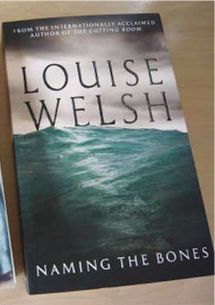
Naming the Bones by Louise Welsh: A Book Review

I’d planned to read Naming the Bones by Louise Welsh, which is from my to-be-read books and it seemed appropriate to include it in the books I’ve selected for the RIP IV Challenge. But as I read it I began to wonder if it really fitted into that category. Although the blurb on the back cover says it is ‘Loaded with Welsh’s trademark wit, insight and gothic charisma‘ the gothic elements are not evident in the first half or so of the book. It’s only as the story unfolds that the mystery element emerges and just a touch of the gothic and the occult comes to the fore.

Naming the Bones2
I found it a slow start as Dr. Murry Watson, an English literature professor from Glasgow University researches the life of a largely unknown poet Archie Lunan. Lunan had died thirty years earlier, presumed drowned off the island of Lismore, although his body had never been discovered. As Murray investigates Lunan’s life, talking to people who had known him, he begins to suspect that Archie’s death may not have been the suicide it seemed and as more deaths come to his attention the mystery grows and becomes more sinister.

Murray’s personal life is in a mess; his relationship with his brother has broken down following their father’s death and his work life is complicated by his affair with his boss’s wife. This is a detailed book, the characters are vivid and memorable and  each location is beautifully described, not only the sights and sounds but smells too:

Murray pulled back his hood. The scent of wood smoke mingled with the falling rain and the damp rising from the sodden earth. It was an ancient smell, the same one the earliest islanders who could be resting, preserved beneath the peat, had known a millennia or so ago. (pages 327-8)

It is when Murray arrives on the island of Lismore in Loch Linnhe on the west coast of Scotland that the pace picks up, and the tension builds. Here Murray finally meets Archie’s girlfriend, Christie and begins to piece together what had happened thirty years ago. The book ends with some ambiguities still to be explained, an ending which I found perfectly in keeping with the story.

I was taken with Welsh’s handling of biography, describing it as

… a paper facsimile of life hurtling towards death. (page 128)

Murray is hoping to discover how much Archie’s life had influenced his art, whereas his former tutor, Professor James, had insisted on the importance of divorcing writers’ lives from their work, thinking it to be reductive and simplistic. It is the work itself that is important and Murray wonders whether this is right and whether he should limit himself to a discussion of the poetry, rather than the man. Again Welsh leaves this open to the reader to decide.

Naming the Bones isn’t the book I thought it was going to be – it isn’t really ‘gothic’, or dark, or about the occult. It isn’t really crime fiction, either. Nor is it anything like the only other book by Louise Welsh that I’ve read – The Cutting Room, which is really gothic and dark. Once I’d got over my expectations I enjoyed the book for what it is – a mystery and a good one too.

  • Paperback: 389 pages
  • Publisher: Canongate Books Ltd (3 Feb 2011)
  • Language English
  • ISBN-10: 1847672566
  • ISBN-13: 978-1847672568
  • Souce: I bought it

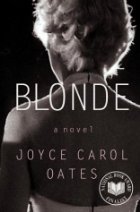
Blonde by Joyce Carol Oates: a Book Review

Blonde is a work of fiction, not a biography of Marilyn Monroe. I had to keep reminding myself of that as I was reading, because it was so easy to believe in the characters.

Joyce Carol Oates makes it crystal clear in her Author’s Note:

Blonde is a radically distilled “life” in the form of fiction, and, for all its length, synecdoche is the principle of appropriation. In place of numerous foster homes in which the child Norma Jeane lived, for instance, Blonde explores only one, and that fictitious; in place of numerous lovers, medical crises, abortions and suicide attempts and screen performances, Blonde explores only a selected, symbolic few.

… Biographical facts regarding Marilyn Monroe should not be sought in Blonde, which is not intended as a historic document, but in biographies of the subject.

As you would expect it’s a tragic story, intense and shocking in parts. It begins with a Prologue – 3 August 1962 with Death hurtling along towards 12305 Fifth Helena Drive, Brentwood, California. It then follows Norma Jeane Baker’s life in chronological sections from The Child 1932 – 1938 to The Afterlife 1959 – 1962. It switches from one narrator to the next, and from third person to first person perspective throughout. It’s brutal, tender and both lyrical and fragmented.

It focuses on need, on Norma/Marilyn’s need for love and acceptance – to be loved as a person and acknowledged as an actress. She wanted to be good. ‘Marilyn Monroe’ was a role she had to play:

A light must have shone in Norma Jeane’s eyes. An electric current must have run through her supple, eager girl’s body. She was “Marilyn” – no she was “Angela” – she was Norma Jeane playing “Marilyn” playing “Angela” – like a Russian doll in which smaller dolls are contained by the largest doll which is the mother … (pages 256-7)

She took drugs to help her sleep, and drugs to give her energy.She couldn’t cope with ordinary life, it baffled her without a script to follow and no guidance about what was happening, or why. She was driven, desperate to have a baby, desperate to know her father, calling her husbands ‘Daddy’, moody, childlike, fragile, always wanting to do and be better.

Joyce Carol Oates has got really inside this character, so much so that I could believe she’d had access to Norma/Marilyn’s thoughts and feelings. The other characters are intriguing, sometimes just given initials, Mr Z, W, C and so on, others are recognizable through their nicknames – The Ex-Athlete, The Playwright, The Prince and the President for example. But Marilyn is the star. In the Author’s Note Oates lists the sources she has consulted, not just biographies but also books about American politics, Hollywood and books on acting. Marilyn had kept a journal and also written poems, two lines of which are included in the final chapter; the other poems apparently by her are invented. Some of the text is taken from interviews and some is fictitious. But it’s all woven together so skilfully that it’s hard to tell what is from real life and what is not.

For me this ranks as one of Joyce Carol Oates best books, although I have by no means read all her books. The ones I’ve read have all had the power to move me. In addition to the ones I’ve written about on this blog I’ve also read The Tattooed Girl, Middle Age, Solstice and The Falls.

Evil Under the Sun by Agatha Christie: a Book Review

In Evil Under the Sun Poirot is on holiday in Devon staying in a seaside hotel – a seaside mystery instead of a country house mystery!

Here’s the blurb:

It was not unusual to find the beautiful bronzed body of the sun-loving Arlena Stuart stretched out on a beach, face down. Only, on this occasion, there was no sun! she had been strangled. Ever since Arlena’s arrival at the resort, Hercule Poirot had detected sexual tension in the seaside air. But could this apparent ‘crime of passion’ have been something more evil and premeditated altogether?

My thoughts:

It’s August, the sun is hot, people are enjoying themselves, swimming and sunbathing and yet Poirot remarks that the sight of the recumbent figures on the beach reminds him of the Morgue in Paris, ‘the bodies – arranged in slabs – like butcher’s meat!’  The other guests remark it’s an unlikely setting for crime but Poirot disagrees:

‘It is romantic, yes,’ agreed Hercule Poirot. ‘It is peaceful. The sun shines. The sea is blue. But you forget Miss Brewster, there is evil everywhere under the sun.’

And so it turns out, with the discovery of Arlena’s dead body. Arlena, who Major Barry describes as ‘a personification of evil’.

‘She’s the world’s first gold-digger. And a man-eater as well! If anything personable in trousers comes within a hundred yards of her, it’s fresh sport for Arlena!’

Her step-daughter, Linda hates her and wants to kill her, wishing she would die.

Arlena was strangled. Poirot  maintains that her murder has resulted from her character, and his investigations revolve around understanding exactly what type of person she was. The suspicion of guilt is cast over one person after another; either a man or a woman could have been strong enough to strangle Arlena and there are plenty of suspects. And even Poirot is puzzled because from the beginning it had seemed to him that one person was clearly indicated as the murderer but at the same time it seemed impossible for that person to have committed the crime.

Poirot describes the murder as a ‘very slick crime‘ and indeed it was perfectly planned and timed. At the end he explains at length how he collected together all the isolated significant facts and events to make a complete pattern to discover the identity of the murderer. Although I enjoyed this book I did think the explanation was too long and the characters  were a bit sketchy and sterotypical. It all seemed to be more of a puzzle solving exercise, than a captivating mystery.

Agatha Christie wrote Evil Under the Sun during 1938 and it was published in 1941, having first appeared as a serial in the USA at the end of 1940. I read it on my Kindle.

  • Format: Kindle Edition
  • File Size: 416 KB
  • Print Length: 320 pages
  • Publisher: Harper (14 Oct 2010)
  • Sold by: Amazon Media EU S.à r.l.
  • Language English
  • ASIN: B0046H95QS
  • Source: I bought it

Reading this book completes the What’s in a Name 4 challenge.