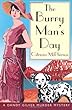
The Burry Man’s Day by Catriona McPherson

This is the second in Catriona McPherson’s Dandy Gilver series.

Synopsis (taken from the back cover):

August 1923, and as the village of Queensferry prepares for the annual Ferry Fair and the walk of the Burry Man, feelings are running high. Between his pagan greenery, his lucky pennies and the nips of whisky he is treated to wherever he goes, the Burry Man has something to offend everyone wherever he goes whether minister, priest or temperance pamphleteer. And then at the Fair, in full view of everyone – including Dandy Gilver, present at the festivities to hand out prizes he drops down dead.

It looks as though the Burry Man has been poisoned – but if so, then the list of suspects must include everyone in the town with a bottle of whisky in the house, and, here in Queensferry, that means just about everyone …

Part of my interest in The Burry Man’s Day is that it is set in South Queensferry, on the south shore of the Firth of Forth, now part of the city of Edinburgh, formerly in the County of Linlithgowshire. I’ve been there once. It’s close to the Forth Road Railway Bridge:

Forth Road Railway Bridge

I haven’t seen the Burry Man’s Parade, which features strongly in this book; it must be a strange sight.

The book has a rather slow start, but it’s one I enjoyed for all its historical detail about the place, its traditions and the people. It has a great sense of place, with a map of Queensferry at the beginning of the book which helps you follow the action. I wasn’t very taken with Dandy Gilver. I liked her more in a later book in the series. In this book she comes across as a busy-body, albeit kind-hearted, and a snob, but then that’s probably just a reflection of the class structure of the times. She’s married to Hugh, who seems to spend his life hunting and shooting and managing his large estate at Gilverton in Perthshire. Dandy doesn’t have much in common with him, being rather bored by life at Gilverton and Hugh doesn’t feature much in this book.

This is Dandy’s second investigation and I suppose if I read the first book, After the Armistice Ball, I might understand her relation with Hugh and with Alec Osborne, her co-investigator. That’s one of the drawbacks of reading a series out of order.

There’s a lot more to this mystery than the death of Robert Dudgeon, who been the Burry Man for 25 years. He’d been extremely reluctant to take the part this year and the question  why was that remained unanswered for the majority of the book. I had an idea about the reason, but only guessed part of it. It’s a convoluted tale and the motive for the murder is buried deep in the descriptions of the characters and their histories. It’s a book you need to concentrate on, and at some points I did have difficulty in sorting out some of the minor characters. Other than that I think it’s a very good book, although maybe a bit too long.

  • My Rating 4/5
  • Author’s website: http://www.dandygilver.com/author.htm – where you can read an extract from this book
  • Paperback: 336 pages
  • Publisher: Robinson Publishing (30 Aug 2007)
  • Language English
  • ISBN-10: 1845295927
  • ISBN-13: 978-1845295929
  • Source: Library book

Tony and Susan by Austin Wright

I read Tony and Susan by Austin Wright last November and parts of it are still vivid in my mind, but a lot of it has faded away. I’d put a few markers in the book, which act as pointers to sections I found notable, and which have helped to refresh my memory.

It’s a novel within a novel. Susan receives a manuscript novel, Nocturnal Animals, from her ex-husband. This is the outer story, which is nowhere nearly as interesting or absorbing as the inner story, her husband’s fictional tale of a crime, an ambush on the highway that leads to murder. Each time Susan stopped reading I just wanted to get back to the story of Tony Hastings and his family. It made me nervous as I was reading it and even more nervous went we drove anywhere, because Tony, his wife Laura and their daughter Helen were travelling on an Interstate going to their summer cottage in Maine when two cars in front of them blocked the lanes and forced them off the road. This does happen in real life, and the description is tense and vivid enough to make me believe it. It is terrifying.

The rest of the inner story is about Tony trying to get justice/revenge for what subsequently happened. There are questions on the back cover about why Susan’s husband sent her the manuscript, but the book doesn’t resolve any of these questions, which was disappointing. But I found it compelling reading and strangely enjoyable, if a little drawn out.  It was strange because that is Susan’s reaction as she reads about Tony:

This book has her in its grip, she can say that truly. The long, slow plunge into the evil night and Tony trying to brace himself by being civilised. The notion that being civilised conceals a great weakness.

She puts the manuscript back in the box, and even that seems like violence, like putting coffins into the ground: images from the book moving out into the house. Fear and regret. (page 110)

This is what this book is about – fear and regret – and also revenge. And it’s also about writing:

Once she asked him why he wanted to write. Not why he wanted to be a writer but why he wanted to write. His answers differed from day to day. It’s food and drink, he said. You write because everything dies, to save what dies. You write because the world is an inarticulate mess, which you can’t see until you map it in words. Your eyes are dim and you write to put your glasses on. No, you write because you read, to remake for your own use the stories in your life. You write because your mind is a babble, you dig a track in the babble to find your way around it. No, you write because you are shelled up inside your skull. You send out probes to other people in their skulls and you wait for a reply. (page 134)

There are more passages I could quote, but I think this one says a lot – and is long enough, anyway!

Tony and Susan was originally published in 1993. The author, Austin Wright was a novelist and Professor of English at the University of Cinncinnati. He died in 2003 at the age of 80.

  • Paperback: 352 pages
  • Publisher: Atlantic Books (1 July 2011)
  • Language English
  • ISBN-10: 1848870221
  • ISBN-13: 978-1848870222
  • Source: I bought it
  • My rating 3.5/5

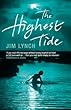
The Highest Tide by Jim Lynch

I enjoyed The Highest Tide by Jim Lynch, even though it’s a change from the type of books I’ve been reading recently. It’s the story of a young teenage boy, Miles O’Malley who is thirteen. He finds a giant squid dying on the mudflats at Skookumchuck Bay, at the southern end of Puget Sound, near his house. Such a rare creature causes intense interest and Miles is the focus of attention as he is pursued by TV crews wanting to interview him. The question is why has the squid been beached on the shore? What is happening out at sea?

It’s an easy book to read, even though packed with information about marine life, the ocean and tides, which Miles is passionate about. It’s narrated by an adult Miles, looking back at that summer he found the giant squid, when he had a crush on Angie, his ex-babysitter and his best friend, old Florence was getting sicker each week.

I’d visited Florence a least weekly for the past three years, in part because she increasingly seemed like the person most like me. She was almost as short and skinny but with huge bottom-fish eyes, as if she was designed to read in the dark, which suited her seeing how her gloomy home overflowed with books to the point stacks had to be moved to offer seats to more than one visitor. The clutter also added to the assumption that she was nuts. Most people didn’t know what else to call someone who called herself a psychic. My mother did. She called Florence a crazy witch. (page 47)

Florence, who is suffering from a variation of Parkinson’s disease, lives in a small steel-roofed summer cabin standing on stilts, washed underneath by the high tides. She predicts a superhigh tide in September. Miles is sceptical because September was known for mild tides. But Florence tells him:

‘Even science goes haywire sometimes, Miles.’ (page 50)

I was moved by Miles’s compassion for Florence, an old lady at the end of her life and his passion for the sea, whilst worrying about his parents’ divorce and his own troubles. It’s a beautifully written book about life, growing up, relationships and love. I was just sorry that this book had sat unread on my bookshelves for the last few years, but glad I did eventually get round to reading it.

  • Paperback: 256 pages
  • Publisher: Bloomsbury Publishing PLC; New edition edition (1 May 2006)
  • Language English
  • ISBN-10: 0747587620
  • ISBN-13: 978-0747579380
  • Source: I bought it
  • My Rating 4/5

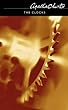
The Clocks by Agatha Christie: My Thoughts

The Clocks is one of Agatha Christie’s later books, published in 1963. I read it in December and then watched the TV version. They are different and for once that didn’t irritate me, although I do wonder why some of the names were altered. The main difference is that in the book, Poirot doesn’t appear until about halfway into the book, whereas in the TV version he is the main investigator.  So be it, I liked both versions.  This post is now just about the book.

Sheila Webb, a typist, had found a dead man in the sitting room at the home of Miss Pebmarsh at 19 Wilbraham Crescent. He had been drugged and then stabbed. Miss Pebmarsh who is blind didn’t know the dead man and denied ringing the secretarial agency and asking for Sheila. The strange thing was that there were five clocks in the sitting room and all, except for the cuckoo clock which announced the time as 3 o’clock, had stopped at 4.13. Sheila ran out of the house in a panic into the arms of Colin Lamb. Colin has his own reasons for being in Wilbraham Crescent, which only become clear later in the story. He reports the death to Detective Inspector Hardcastle and together they investigate. The first problem is to identify the dead man as no one knows who he is. In fact no one seems to know anything.

This is where Poirot gets involved because Colin knows him. Colin has changed his surname; his father had been a Police Superintendent  – presumably Superintendent Battle. Colin asks for Poirot’s opinion, and challenges him to solve the mystery. At this point Poirot then runs through what amounts to a potted history of crime fiction and the art of detection. He refers to real crimes and then to examples of criminal fiction, including The Leavenworth Case by Anna Katherine Green (which reminds me I have a copy on Kindle still to read). He lambasts fictional writers such as Gary Gregson (one of the characters in The Clocks) and Ariadne Oliver, another of Agatha Christie’s creations, thinking her books are highly improbable.

Colin gives him the facts and wants the answer. He says:

I want you to give me the solution. I’ve always understood from you that it was perfectly possible to lie back in one’s chair, just think about it all, and come up with the answer. That it was quite unnecessary to go and question people  and run about looking for clues. (page 193)

I enjoyed these aspect of the book immensely, where I imagine Agatha Christie was amusing herself at her characters’ expense. Poirot sends Colin away instructing him to talk to people and to let them talk to him. Later on his curiosity gets the better of him and he does leaves his chair and visit the scene of the crime.

I  also liked the descriptions of the neighbours in the Crescent and the confusing way the houses are numbered. I did work out the significance of the numbering quite early on in the book, which rather pleased me. There are many red herrings and I didn’t think the separate plot involving Colin’s work as a British Intelligence agent was terribly interesting,or necessary, although the two plots do connect by the end.

For a more detailed account of the book see Wikipedia.

My rating: 4/5

Death in the Clouds by Agatha Christie: a Book Review

Death in the Clouds is a kind of locked room mystery, only this time the ‘locked room’ is a plane on a flight from Paris to Croydon, in which Hercule Poirot is one of the passengers.

In mid-air, Madame Giselle, is found dead in her seat. It appears at first that she has died as a result of a wasp sting (a wasp was flying around in the cabin) but when Poirot discovers a thorn with a discoloured tip it seems that she was killed by a poisoned dart, aimed by a blowpipe.

At the inquest the jury’s verdict is that the murderer is Poirot! However the coroner refuses to accept this and finds that the cause of death was poison with insufficient evidence to show who had administered the poison. All the other passengers and flight attendants are suspects and Poirot together with Inspector Japp, studies the passenger list with details of their belongings. There is a helpful plan of the cabin at the front of the book showing who sat where, including a crime fiction writer, a flute-playing Harley Street doctor, two French archaeologists, a dentist, a hairdresser, a Countess (formerly an actress), a woman who is a compulsive gambler, a crime writer and a businessman . Despite all this I was quite unable to work out who did it.

The question is who could have acquired the rare poison and how could it have been shot at Madame Giselle without anyone noticing that happening. Why would anyone want to kill her, and how were any of the suspects connected with her? Even when Poirot details the clues, including the Clue of the Passenger’s Baggage (and I read through the list a few times), I still didn’t work it out.

Apart from the ingenious mystery, which the coroner describes as the most astonishing and incredible case he had ever dealt with, there were other things I enjoyed in reading this book. First of all the ‘psychological moments’  in which people don’t notice what is happening in front of them because their attention is diverted. Then there is the way Christie makes fun of crime fiction writers and readers, making Japp comment that:

I don’t think it healthy for a man always to be brooding over crime and detective stories, reading up all sorts of cases. It puts ideas into his head. (page 63)

Poirot’s denouement at the end of the book clears up all the confusion, detailing his impressions, precise ideas and methods in dealing with the case. Looking back through the book, all the clues were there, of course, but so cleverly concealed that in most cases I had overlooked them or not realised their significance. A most enjoyable book!

  • Paperback: 336 pages
  • Publisher: HarperCollins; Masterpiece edition (Reissue) edition (3 Mar 2008)
  • Language English
  • ISBN-10: 000711933X
  • ISBN-13: 978-0007119332
  • Source: I bought the book
  • My rating 4/5

Dandy Gilver and the Proper Treatment of Bloodstains by Catriona McPherson

I hadn’t come across any of Catriona McPherson’s books until the publishers emailed me about her latest book – Dandy Gilver and an Unsuitable Day for a Murder, which is coming out in the spring and they kindly sent me the fifth in the Dandy Gilver series – Dandy Gilver and the Proper Treatment of Bloodstains. Given that it has the sort of title and jacket cover that normally make me avoid a book, I was pleasantly surprised to find that I really enjoyed this book. It just goes to show not to judge a book by its cover.

It’s set in Edinburgh in 1926, when Dandy (short for Dandelion Dahlia!), a wealthy aristocrat who is also an amateur sleuth, receives a letter from Lollie Balfour asking for help as she is convinced that her husband is going to kill her. The only way Dandy can investigate is for her to go undercover as lady’s maid to Lollie. She manages to pass as a  lady’s maid (albeit an inexperienced one) with the other household servants, who with just one exception, all have stories of how horrible Mr Balfour is. And then he is found dead in his bedroom, a locked room, stabbed with ‘a long, bone-handled knife, lodged to its hilt and standing straight up out of his neck, pooled all round with blood that was almost black.’

There are plenty of suspects for his murder, including Lollie herself, and Dandy has to work out who is telling the truth. I had my suspicions quite early on but hadn’t quite foreseen the actual outcome or culprit. Even though I didn’t get it right I was on the right lines, which is pleasing and in any case I wouldn’t have liked it to be too easy to work out the puzzle.

Along with a good plot, the characters are all well defined and distinct and although at one point I thought the amount of description of the miners’ strike was just that bit too detailed, it has a great sense of time and place reflecting the mood of the 1920s during the general strike. And now I do know the proper treatment for bloodstains.

  • Hardback: 291 pages
  • Publisher:Thomas Dunne Books (2009)
  • Language English
  • ISBN-13: 978-0312654184
  • Source: the publishers

My rating 4.5/5

I wonder how I’ve managed to be totally unaware of Catriona McPherson‘s books up to now. She is a Scottish writer who now lives in Northern California. I’ll certainly read more of her books in future.