Book Beginnings

I’ve been reading books recently and not writing about them. I didn’t have the impetus at the time (too many other things going on in my life right now to distract me), but I hope to write about them quite soon:

  • The Hanging Wood by Martin Edwards – excellent
  • Evil Under the Sun by Agatha Christie  – very good
  • Murder on the Eiffel Tower by Claude Izner – a bit disappointing

I’m about to start reading S J Bolton’s second book Awakening. Here are the opening sentences from the Prologue:

The darkest hour I’ve ever known began last Thursday, a heartbeat before the sun came up.

It was going to be a beautiful morning, I remember thinking, as I left the house; soft and close, bursting with whispered promises, as only a daybreak in early summer can be. The air was still cool but an iridescence on the horizon warned of baking heat to come. Birds were singing as though every note might be their last and event the insects had risen early.

This opening is full of threat. Even though it is a beautiful morning it foreshadows some dreadful event coming soon, in contrast to the fine day.

I decided to read Awakening after finishing Sacrifice, which I wrote about in my last post, especially as several people commented that her later books are better.

Book Beginnings on Friday is hosted by Katy at A Few More Pages.

Book Beginnings

Miss Arundell died on May 1st. Though her illness was short her death did not occasion much surprise in the little country town of Market Basing where she had lived since she was a girl of sixteen. For Emily Arundell was well over seventy, the last of a family of five, and she had been known to be in delicate health for many years and had indeed nearly died of a similar attack to the one that killed her some eighteen months before.

But though Miss Arundell’s death surprised no one, something else did. The provisions of her will gave rise to varying emotions, astonishment, pleasurable excitement, deep condemnation, fury, despair, anger and general gossip.

These are the opening lines of Agatha Christie’s Dumb Witness. And because it is an Agatha Christie book, it is obvious that Miss Arundell’s death should be cause for suspicion and that it was most unlikely to have been a natural death.

From the fact that the date of her death is specified in the first sentence makes me think that must be significant. And the surprising contents of her will also indicate that Miss Arundell had perhaps changed her it – why was that?

I’m still reading Dumb Witness and as the title indicates and the cover picture on my copy shows, a dog has an important part in the mystery – one which Hercule Poirot has to solve, with very little to go on.

Book Beginnings on Friday is hosted by Katy, at  A Few More Pages.

Book Beginnings

Last week I found another little secondhand bookshop – The Border Reader – a lovely little shop above a tea room near Melrose in the Scottish Borders. I browsed the bookshelves upstairs and had a cup of Earl Grey tea and a slice of Lavender and Lemon Drizzle Madeira cake downstairs – a most pleasurable afternoon.

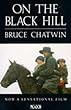
And up the stairs I found in the bookcase to the right of the photo a book I’ve had on my wishlist for a while. It’s On the Black Hill by Bruce Chatwin.

The book begins:

For forty-two years, Lewis and Benjamin Jones slept side by side, in their parents’ bed, at their farm which was known as ‘The Vision’.

The bedstead, an oak four-poster, came from their mother’s home at Bryn-Draenog when she married in 1899. Its faded cretonne hangings, printed with a design of larkspur and roses shut out the mosquitoes of summer, and the draughts in winter. Calloused heels had worn holes in the linen sheets, and parts of the patchwork quilt had frayed. Under the goose-feather mattress, there was a second mattress, of horsehair, and this had sunk into two troughs, leaving a ridge between the sleepers. (page (9)

The Black Hill is not one of the Black Hills of Dakota – known to me only from the song, sung by Doris Day, but it is one of the Black Mountains on the border of England and Wales, although fictionalised in this book. The book was first published in 1982 and won the James Tait Black Memorial Prize that same year. It’s also been made into a film. It looks to be a gentle, richly descriptive book about lonely lives on a farm, largely untouched by the 20th century. A nice change from all the crime fiction I’ve been reading recently.

Book Beginnings on Friday is hosted by Katy, at  A Few More Pages.

Book Beginnings

There came Death hurtling along the Boulevard in waning sepia light.

There came Death flying as a children’s cartoon on a heavy unadorned messenger’s bicycle.

There came Death unerring. Death not to be persuaded. Death-in-a-hurry. Death furiously pedalling. Death carrying a package marked *SPECIAL DELIVERY HANDLE WITH CARE* in a sturdy wire basket behind his seat.

These are the opening lines of the Prologue, ‘Special Delivery’ in Joyce Carol Oates’s novel Blonde. The date is 3 August 1962 – the date of Marilyn Monroe’s death. It doesn’t give anything away – Marilyn’s death has been well documented even if it still remains under suspicion and speculation. Blonde tells the fictionalised story of Norma Jeane Baker, who became the beautiful ‘Fair Princess‘ of the movies.

The only difficulty I have in reading Blonde is the weight and size of the book – not ideal for reading in bed. And it has 738 pages – and I’m only on page 52.

Book Beginnings is hosted by Katy at A Few More Pages, where you can leave a link to your own post on the opening lines of a book you’re currently reading.

Book Beginnings

This morning I finished reading Titus Groan by Mervyn Peake, a fantastic book, which I’ll write more about soon. And as I’m nearing the end of the other books I’m currently reading I’m thinking about what to read next.

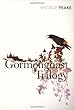
One, of course, will be the next book in the Gormenghast trilogy – Gormenghast. The opening paragraph is:

Titus is seven. His confines, Gormenghast. Suckled on shadows; weaned as it were on webs of  rituals: for his ears, echoes, for his eyes a labyrinth of stone: and yet within his body something other – other than this umbrageous legacy. For first and foremost he is child. (page 7)

This sets the scene, following on from Titus Groan, which began with his birth and ended with his second birthday. Five years have passed since the ending of Titus Groan and this book promises to develop his story as evil spreads throughout Gormenghast. I just know it’s going to be good.

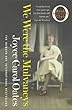
But I like to have more than one book on the go. As well as my own books, I’ve got a fair number of library books out at the moment all vying for attention and some are due back soon. So I was thinking of reading one of those next. But out shopping today I went into the British Heart Foundation charity shop and bought We Were the Mulvaneys by Joyce Carol Oates. I’ve been looking for this book for several years as I read somewhere it’s one of her best books. I was so pleased to find a good copy in the shop. It begins:

We were the Mulvaneys, remember us?

You may have thought our family was larger, often I’ve met people who believed we Mulvaneys were a virtual clan, but in fact there were only six of us: my dad who was Michael John Mulvaney, Sr., my mom Corinne, my brothers Mike Jr. and Patrick and my sister Marianne, and me – Judd. (page 3)

That’s a good start – introducing the family. I like family sagas. Described on the back cover as a ‘book that will break your heart, heal it, then break it again‘, it may be a roller-coaster ride and I’m anticipating it will be very good.

Book Beginnings is hosted by Katy at A Few More Pages, where you can leave a link to your own post on the opening lines of a book you’re currently reading.

Book Beginnings: The Bell

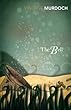
I love starting a book. There’s such potential to find a book that really satisfies the imagination, that draws you into its world and also makes you think. It’s even better when you can start a book you’ve read before, knowing that you enjoyed it but not remembering all the details and have it unfold before you still with the power to enchant. Such a book is The Bell by Iris Murdoch.

I first read it in the early 199os (I think), so my memory of it is only of the outline story – a new bell is to be installed at an Abbey, which triggers the discovery of the old bell and then tragedy strikes. I also remember that it was peopled by some interesting characters, but I couldn’t have told you who they are.

Here is the opening paragraph:

Dora Greenfield left her husband because she was afraid of him. She decided six months later to return to him for the same reason. The absent Paul, haunting her with letters and telephone bells and imagined footsteps on the stairs had begun to be the greater torment. Dora suffered from guilt, and with guilt came fear. She decided at last that the persecution of his presence was to be preferred to the persecution of his absence. (page 7)

Now, that’s not a good marriage, but it is a great opening to this story of a lay community at Imber Court, a beautiful house outside Imber Abbey, the home of an enclosed order of nuns. Paul is a guest at Imber Court studying some 14th century manuscripts which belong to the Abbey. You know straight away that Dora and Paul’s marriage is a disaster area, that Paul is a man to be feared and that Dora is a mass of contradictions, a complex character – will she be able to stand living with Paul? My immediate reaction was that she is making a big mistake.

So far I’ve read about a quarter of the book and it’s just as good as I remember. Iris Murdoch’s writing is so good, full of description so that you can see the people and places as though you were there and also full of insights into the characters thoughts and feelings. There is an impending sense of evil  and menace, for below the peaceful surface stress and tension abound.

Book Beginnings is hosted by Katy at A Few More Pages, where you can leave a link to your own post on the opening lines of a book you’re currently reading.