Lilian's Story by Kate Grenville: a Book Beginnings post

Book Beginnings ButtonBook Beginnings on Friday at Gilion’s blog Rose City Reader is the place to share the first sentence (or so) of the book you are reading, along with your initial thoughts about the sentence, impressions of the book, or anything else the opener inspires.

Lilian’s Story by Kate Grenville begins:
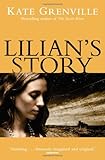
It was a wild night in the year of the Federation that the birth took place. Horses kicked down their stables. Pigs flew, figs grew thorns. the infant mewled and stared and the doctor assured the mother that a caul was a lucky sign. A girl? the father exclaimed, outside in the waiting room, tiled as if for horrible emergencies. This was a contingency he was not prepared for, but he rallied within a day and announced: Lilian. She will be called Lilian Una.

When I returned Sarah Thornhill by Kate Grenville to the library the other day Lilian’s Story was sitting on the shelf and because I’d enjoyed Sarah Thornhill and before that The Secret River I decided to borrow this book, even though I’ve got more than enough books of my own to keep me busy for a long time.

The back cover tells me that Lilian begins life as the daughter of a prosperous middle-class family and ends it as an eccentric bag-lady living on the streets, quoting Shakespeare for a living. I’m hoping it will be as good as the other two of Grenville’s books that I’ve read! This opening is promising, I think.
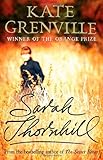
Sarah Thornhill by Kate Grenville: a Book Beginnings post

Book Beginnings Button

Book Beginnings on Friday at Gilion’s blog Rose City Reader is the place to share the first sentence (or so) of the book you are reading, along with your initial thoughts about the sentence, impressions of the book, or anything else the opener inspires.

I’m currently reading Sarah Thornhill by Kate Grenville. It begins:

The Hawkesbury was a lovely river, wide and calm, the water dimply green, the cliffs golden in the sun, and white birds roosting in the trees like so much washing. It was a sweet thing of a still morning, the river-oaks whispering and the land standing upside down in the water.

They called us the Colony of New South Wales. I never liked that. We wasn’t new anything. We was ourselves. (page 3)

I heaved a sigh of relief when I read these opening paragraphs. They paint such a beautiful picture in the first paragraph – I love the peaceful image of a dimply green river reflecting the world upside down – and then the contrast of the strongly individual statements in the second paragraph. The narrator is Sarah Thornhill, a young girl at the beginning of the book, the youngest daughter of William Thornhill, who had been transported to Australia for stealing timber and whose story is told in Kate Grenville’s book The Secret River.

My sigh of relief is because recently I’ve been rather disappointed in my choice of books. Sarah Thornhill is the follow up book to The Secret River, a book I absolutely loved and I was concerned that this book wouldn’t live up to my expectations (see my previous post on Joanne Harris’s book The Lollipop Shoes).

I’m now over half way through the book and although it’s written in different style from The Secret River, so far it’s living up to its early promise. My sigh of relief is now a sigh of contentment.

Book Beginnings

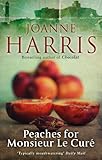
Peaches for Monsieur Le Curé: I really shouldn’t be reading this book yet as I’m still reading Joanne Harris’s The Lollipop Shoes, the book that precedes Peaches for Monsieur Le Curé, but I just had to see how it starts.

This is the beginning (and the whole of Chapter One):

Someone once told me that, in France alone, a quarter of a million letters are delivered every year to the dead.

What she didn’t tell me is that sometimes the dead write back.

Well, that seemed so familiar – and it is because here is the opening sentence of The Lollipop Shoes:

It is a relatively little-known fact that, over the course of a single year, about twenty million letters are delivered to the dead.

I’ve had The Lollipop Shoes for nearly five years and have only just got round to reading it. I bought it when it came out in hardback because I’d loved reading Chocolat and wanted to read more about Vianne Rocher – my post on Chocolat explains my love of this book. So far, though, it just doesn’t have the same enchantment as Chocolat and it’s giving me uneasy feelings. I don’t want to say too much just yet as I’ve only read half the book – but one of the characters is definitely not ‘nice’, she’s dangerous and devious, out to  change Vianne’s world.

In fact, when I first looked at The Lollipop Shoes I found I didn’t want to read it – it’s so different in mood from Chocolat. So it went back on the shelf until this week, when I read Christine’s review of Peaches for Monsieur Le Curé and I knew it was time to read Joanne Harris’s books. It sounds as though  Peaches for Monsieur Le Curé is just as enjoyable as Chocolat and maybe not quite so dark as The Lollipop Shoes, because she wrote: ‘it’s the kind of novel I’ll turn to on a grey day, when the world seems against me, and I want my spirits lifting without having to think too deeply about anything’.

For more Book Beginnings on Friday see Gilion’s blog Rose City Reader.

The Blackhouse by Peter May

I’ve had The Lewis Man, Peter May’s second book in his Lewis Trilogy since last year, but I haven’t read it yet as I’ve been meaning to read the trilogy in order. I’ve borrowed the first book, The Blackhouse, from the library and as I’ve just realised that it is due back next week – I thought I’d better start it.


It begins:

Prologue

They are just kids. Sixteen years old. Emboldened by alcohol, and hastened by the approaching Sabbath, they embrace the dark in search of love, and find only death.

A chilling beginning!

There is a murder, on the beautiful and desolate Isle of Lewis. Detective Inspector Fin MacLeod is sent to investigate. And there is a secret, something sinister lurking in the close-knit community. This is a mystery set in a place where ‘the past is ever near the surface, and life blurs into myth and history.’

It all looks very promising I think.

Book Beginnings ButtonBook Beginnings on Friday is hosted by  Gilion @ Rose City Reader.

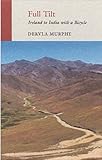
Full Tilt: Book Beginnings

One of the books I’m reading is Dervla Murphy’s Full Tilt: Dunkirk to Delhi on a Bicycle. It was first published in 1965 and is an account of her journey in 1963. I’m finding it slow reading because I’m constantly wondering about the places she describes, how they’ve changed since the early 1960s and looking them up.

Her journey took her through Europe, Persia (Iran), Afghanistan, over the Himalayas to Pakistan and into India. She travelled on her own, with a revolver in her saddle bag. It’s amazing.

It begins with her desire to cycle to India:

On my tenth birthday a bicycle and an atlas coincided as presents and a few days later I decided to cycle to India. I’ve never forgotten the exact spot on a hill near my home at Lismore, County Waterford, where the decision was made and it seemed to me then, as it still seems to me now, a logical decision, based on the discoveries that cycling was a most satisfactory method of transport and that (excluding the USSR for political reasons) the way to India offered few watery obstacles than any other destination at a similar distance. (page 1)

And that is what she did 21 years later.

So far I have travelled with her to Afghanistan, where she is on her way to Kabul via Khandahar. Needless to say I’m struck with thoughts about how much has changed in the world since then. I’m full of questions, not just about the current situation with all the places she describes, but also about how she managed it, how she found out where to stay, and how she communicated with people for example.

It’s very much a personal account, not so much about the actual cycling, although I was amused by her account of getting her cycle repaired in a Persian cycle shop where they would not use a screwdriver but hammered every screw into place. Not so funny, because a few days later the back wheel came off, as the relevant screw had been ruined!

Book Beginnings on Fridays is hosted by Gilion at Rose City Reader.

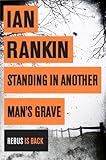
Standing in Another Man’s Grave by Ian Rankin

Yesterday I received Ian Rankin’s new book, Standing in Another Man’s Grave and it’s looking good.

It begins:

He’d made sure he wasn’t standing too near the open grave.

Closed ranks of other mourners between him and it. The pall-bearers had been called forward by number rather than name – six of them starting with the deceased ‘s son. Rain wasn’t quite falling yet, but it had scheduled an appointment.

The deceased is a retired policeman. The unnamed man, standing at the funeral had known him. He was desperate for a cigarette. After the coffin is lowered into the grave one of the mourners approaches him with a nod of recognition:

‘John’, he said.

‘Tommy’, Rebus replied, with another nod.

Rebus is back!

With the rain now falling he heads for his car, turns on the car’s CD player and Jackie Leven’s voice emerges singing about standing in another man’s grave. Except he isn’t – the track is called ‘Another Man’s Rain’.

I paused and decided to look for the track. Here it is:

I’m trying to read this book slowly, but the plot and Rebus is gradually pulling me in. I just have to keep turning the pages. So, it’s back to the book now.

Fro more Book Beginnings on Friday see Gilion’s blog Rose City Reader.