My Friday Post: Weeds by Richard Mabey

On Fridays I join in with two book memes:

Book Beginnings on Fridays hosted by Rose City Reader, where bloggers share the first sentence or more of a current read, as well as initial thoughts about the sentence(s), impressions of the book, or anything else that the opening inspires. 

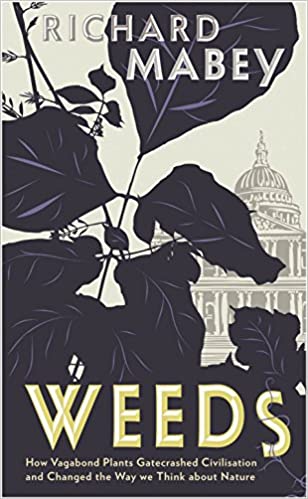
This week I’m featuring a non-fiction book, Weeds: How Vagabond Plants Gatecrashed Civilisation and Changed the Way We Think About Weeds by Richard Mabey. This is a book that I’ve dipped into, mostly at this time of year, when the weeds in our garden begin to grow again. It is full of fascinating facts – a cultural history of weeds. Richard Mabey argues that ‘we have caused plants to become weeds because of our reckless treatment of the earth. They are part of nature’s immune system, of its instinctive drive to green over the barrenness of broken soil and decaying cities.

Plants become weeds when they obstruct our plans, or tidy maps of the world. If you have no such plans or maps, they can appear as innocents, without stigma or blame. My own discovery of them was my first close encounter with plants, and they seemed to me like a kind of manna.
The Friday 56 hosted by Freda’s Voice, where you grab a book and turn to page 56 (or 56% of an eBook), find one or more interesting sentences (no spoilers), and post them.

To gaze at Albrecht Durer’s extraordinary painting Large Piece of Turf (Das Grosse Rasenstuck, (1503) is to glimpse an imagination pierced through the artistic conventions and cultural assumptions of its time and projecting itself forward three centuries. This is painting’s discovery of ecology. This is any corner of any waste patch of land in the early twenty-first century, or at any time. This is a clump of weeds looked at with such reverent attention that they might have been the flowers of Elysium.

Durer’s painting is not reproduced in the book, but this is it:

Large Piece of Turf Durer 1503

I’ve had this book for ten years – I think it’s time I read it through from start to finish.

My Friday Post: The Lieutenant by Kate Grenville

Every Friday Book Beginnings on Friday is hosted by Gillion at Rose City Reader where you can share the first sentence (or so) of the book you are reading. You can also share from a book you want to highlight just because it caught your fancy.

I’m currently reading A Room Made of Leaves by Elizabeth Grenville, her latest book, and have nearly finished it. I love her books and as I’ve nearly finished it I was wondering which book to read next and remembered I have one of her earlier books, The Lieutenant still waiting to be read. To my surprise when I opened it this morning I found that it is another book about one of the characters in A Room Made of Leaves. That character is William Dawes, a real person, a soldier in the first days of the Colony of New South Wales.

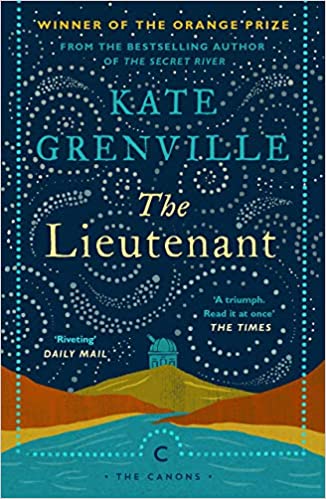
The Lieutenant  is about Daniel Rooke, based on real events in William Dawes’ life, using his notebooks in which he recorded his conversations with a young girl, Patyegarang, (also in A Room Made of Leaves), in his efforts to learn the language of the indigenous people of Sydney. It is a novel that stays close to the historical events. 

It begins:

Daniel Rooke was quiet, moody, a man of few words. He had no memories other than of being an outsider.

Also every Friday there is The Friday 56, hosted by Freda at Freda’s Voice. *Grab a book, any book. *Turn to Page 56 or 56% on your  ereader . If you have to improvise, that is okay. *Find a snippet, short and sweet, but no spoilers!

  1. Grab a book, any book.
  2. Turn to page 56, or 56% on your eReader. If you have to improvise, that is okay.
  3. Find any sentence (or a few, just don’t spoil it) that grabs you.
  4. Post it.
  5. Add the URL to your post in the link on Freda’s most recent Friday 56 post.

Page 56:

It seemed that the natives did not like the surgeon’s music any more than they had enjoyed his performance with the pistol. Their faces were stony. After a minute they took the two pieces of shield and disappeared into the woods.

Book description:

1788 Daniel Rooke sets out on a journey that will change the course of his life. As a lieutenant in the First Fleet, he lands on the wild and unknown shores of New South Wales. There he sets up an observatory to chart the stars. But this country will prove far more revelatory than the skies above.

Based on real events, The Lieutenant tells the unforgettable story of Rooke’s connection to an Aboriginal child – a remarkable friendship that resonates across the oceans and the centuries.

My Friday Post: Then She Was Gone by Lisa Jewell

Every Friday Book Beginnings on Friday is hosted by Gillion at Rose City Reader where you can share the first sentence (or so) of the book you are reading, along with your initial thoughts about the sentence, impressions of the book, or anything else the opener inspires.

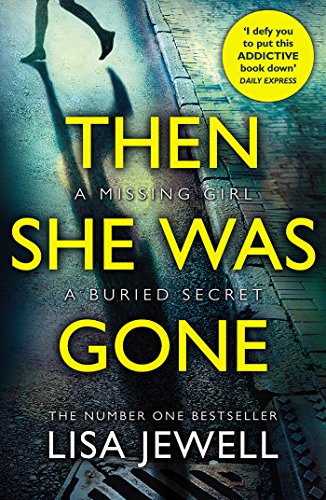
This week I’m featuring Then She Was Gone by Lisa Jewell, one of my TBRs that I bought two years ago. It’s a standalone book, first published in 2017.

It begins with a Prologue:

Those months before she disappeared were the best. .

Chapter One begins:

Laurel let herself into her daughter’s flat. It was, even on this relatively bright day, dark and gloomy. The window at the front was overwhelmed by a terrible tangle of wisteria while the other side of the flat was completely overshadowed by the small woodland it backed onto.

Also every Friday there is The Friday 56, hosted by Freda at Freda’s Voice.

  1. Grab a book, any book.
  2. Turn to page 56, or 56% on your eReader. If you have to improvise, that is okay.
  3. Find any sentence (or a few, just don’t spoil it) that grabs you.
  4. Post it.
  5. Add the URL to your post in the link on Freda’s most recent Friday 56 post.

Page 57 (page 56 is blank):

Laurel was alone. Her family was broken. There was nothing left. Literally nothing.

Blurb:

She was fifteen, her mother’s golden girl.
She had her whole life ahead of her.
And then, in the blink of an eye, Ellie was gone.

Ten years on, Laurel has never given up hope of finding Ellie. And then she meets a charming and charismatic stranger who sweeps her off her feet. But what really takes her breath away is when she meets his nine-year-old daughter. Because his daughter is the image of Ellie. Now all those unanswered questions that have haunted Laurel come flooding back.

What really happened to Ellie? And who still has secrets to hide?

My Friday Post: Not Dark Yet by Peter Robinson

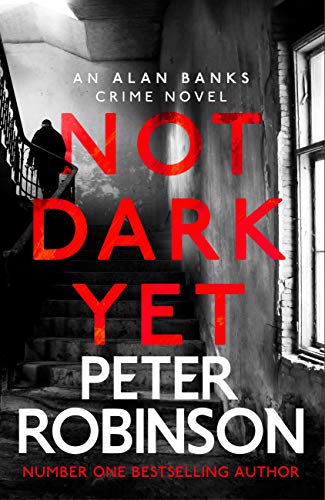
Yesterday Peter Robinson’s latest Inspector Banks book, Not Dark Yet was published and once I’d read the opening pages I decided to abandon any plans I had for what to read next and started to read it properly. So this is my choice this week for Book Beginnings on Friday and the Friday 56.

Every Friday Book Beginnings on Friday is hosted by Gillion at Rose City Reader where you can share the first sentence (or so) of the book you are reading, along with your initial thoughts about the sentence, impressions of the book, or anything else the opener inspires.

The book begins in Moldova:

Zelda hadn’t visited Chișinău since she had been abducted outside the orphanage at the age of seventeen. And now she was back. She wasn’t sure how she was going to find the man she wanted – she had no contacts in the city – but she did have one or two vague ideas where to begin.

Also every Friday there is The Friday 56, hosted by Freda at Freda’s Voice.

  1. Grab a book, any book.
  2. Turn to page 56, or 56% on your eReader. If you have to improvise, that is okay.
  3. Find any sentence (or a few, just don’t spoil it) that grabs you.
  4. Post it.
  5. Add the URL to your post in the link on Freda’s most recent Friday 56 post.

Page 56:

Banks found himself with a lot to think about as he made his way back to Vauxhall Underground station. He had originally intended to do some shopping while he was in London, check out the big Waterstones in Piccadilly, visit FOPP in Cambridge Circus, but decided he couldn’t face it. Like everyone else, he did most of his shopping online these days. London was too hot and too crowded today; he just wanted to go home.

My thoughts exactly each time I’ve been to London – I can’t stand crowds.

This is the 27th Inspector Banks books and I’ve read I’ve several of them, totally out of order, which doesn’t seem to matter – they work well as stand alone books. I’ve also watched the TV series, which I enjoy even though they are different from the books and my vision of Banks is nothing like Stephen Tompkinson who plays him. In fact, the characters are clearly meant to be different versions of the same person; they look different, have different personalities and meet different fates in different worlds.

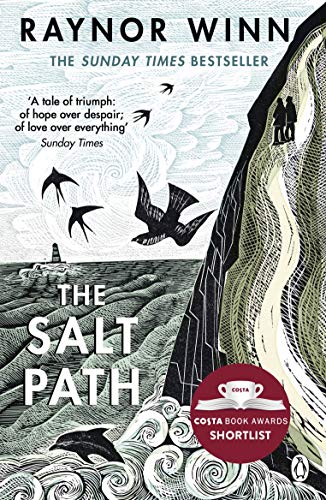
My Friday Post: The Salt Path by Raynor Winn

Every Friday Book Beginnings on Friday is hosted by Gillion at Rose City Reader where you can share the first sentence (or so) of the book you are reading. You can also share from a book you want to highlight just because it caught your fancy.

This week I’m featuring a book I’m about to start. It’s The Salt Path by Raynor Winn. It was her first book and it was shortlisted for the 2018 Costa Biography Award and the Wainwright Prize. I want to read it because it’s a true story about a couple, Raynor and Moth, her husband who is terminally ill, who had lost their home and their business. Faced with this terrible situation they decided to buy a tent and walk the Salt Path, the south-west coastal path, from Minehead in Somerset to Poole in Dorset, via Devon and Cornwall.

There’s a sound to breaking waves when they are close, a sound like nothing else. The background roar is unmistakable, overlaid by the swash of the landing wave and then the sucking noise of the backwash as it retreats.

Also every Friday there is The Friday 56, hosted by Freda at Freda’s Voice. *Grab a book, any book. *Turn to Page 56 or 56% on your  ereader . If you have to improvise, that is okay. *Find a snippet, short and sweet, but no spoilers!

  1. Grab a book, any book.
  2. Turn to page 56, or 56% on your eReader. If you have to improvise, that is okay.
  3. Find any sentence (or a few, just don’t spoil it) that grabs you.
  4. Post it.
  5. Add the URL to your post in the link on Freda’s most recent Friday 56 post.

Page 56:

The first time I saw Moth across the sixth-form college canteen I was eighteen. He was wearing a white collarless shirt as he dipped a Mars bar in a cup of tea. I was mesmerised.

Since travelling the South West Coastal Path, Raynor Winn became a regular long-distance walker and writes about nature, homelessness and wild camping. She lives in Cornwall. Her second book, The Wild Silence, is her follow-up book. I bought The Salt Path in 2018 and was keen to read it, but so many other books intervened, and it was only when I saw Raynor Winn on Kate Humble’s Coastal Walks programme on the South West Coastal Path that I remembered about her book.

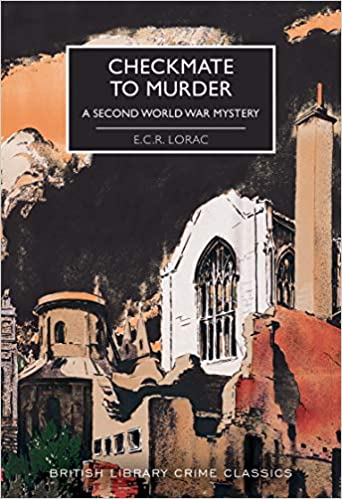
My Friday Post: Checkmate to Murder by E C R Lorac

Every Friday Book Beginnings on Friday is hosted by Gillion at Rose City Reader where you can share the first sentence (or so) of the book you are reading. You can also share from a book you want to highlight just because it caught your fancy.

This week I’m featuring one of the books I’m currently reading, Checkmate to Murder: a Second World War Mystery by E C R Lorac, first published in 1944. One of the things I like about this book is the setting and atmosphere of wartime London, when details such as blackouts, fire-watching and air raid precautions were everyday events.

It begins:

The vast studio had two focus points of light; between two pools of radiance was a stretch of shadows, colourless, formless, empty. At one end of the long, barn-like structure, where the light was most strongly concentrated, was a model’s platform. A high-backed Spanish chair stood upon it, with a dark leather screen as background. On the chair sat a man arrayed in the superb scarlet of a Cardinal’s robe, the broad-brimmed Cardinal’s hat upon his head.

Also every Friday there is The Friday 56, hosted by Freda at Freda’s Voice. *Grab a book, any book. *Turn to Page 56 or 56% on your  ereader . If you have to improvise, that is okay. *Find a snippet, short and sweet, but no spoilers!

These are the rules:

  1. Grab a book, any book.
  2. Turn to page 56, or 56% on your eReader. If you have to improvise, that is okay.
  3. Find any sentence (or a few, just don’t spoil it) that grabs you.
  4. Post it.
  5. Add the URL to your post in the link on Freda’s most recent Friday 56 post.
  1. Grab a book, any book.
  2. Turn to page 56, or 56% on your eReader. If you have to improvise, that is okay.
  3. Find any sentence (or a few, just don’t spoil it) that grabs you.
  4. Post it.
  5. Add the URL to your post in the link on Freda’s most recent Friday 56 post.

Page 56:

“Deceased was a miser, one of the real old-fashioned storybook misers. I won’t say I haven’t met one before – I have, though they are getting less common than they used to be. D’you remember old Simple Simon, who was always getting run-in for begging on the Embankment – £525 we found under the boards in his bedroom when he died, and another fifteen pounds odd in his filthy bedding. He died of starvation at last.”

~~~

About the book:

On a dismally foggy night in Hampstead, London, a curious party has gathered in an artist’s studio to weather the wartime blackout. A civil servant and a government scientist match wits in a game of chess, while Bruce Manaton paints the portrait of his characterful sitter, bedecked in Cardinal’s robes at the other end of the room. In the kitchen, Rosanne Manaton prepares tea for the charlady of Mr. Folliner, the secretive miser next door.

When the brutal murder of ‘Old Mr. F’ is discovered by his Canadian infantryman nephew, it’s not long before Inspector Macdonald of Scotland Yard is called to the scene to take the young soldier away. But even at first glance the case looks far from black-and-white. Faced with a bevy of perplexing alibis and suspicious circumstances, Macdonald and the C.I.D. set to work separating the players from the pawns to shed light on this toppling of a lonely king in the dead of night.

What do you think – would you read this book?