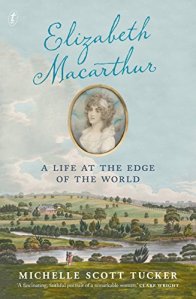
Elizabeth Macarthur by Michelle Scott Tucker

In 1788 a young gentlewoman raised in the vicarage of an English village married a handsome, haughty and penniless army officer. In any Austen novel that would be the end of the story, but for the real-life woman who became an Australian farming entrepreneur, it was just the beginning.

John Macarthur took credit for establishing the Australian wool industry and would feature on the two-dollar note, but it was practical Elizabeth who managed their holdings—while dealing with the results of John’s manias: duels, quarrels, court cases, a military coup, long absences overseas, grandiose construction projects and, finally, his descent into certified insanity.

Michelle Scott Tucker shines a light on an often-overlooked aspect of Australia’s history in this fascinating story of a remarkable woman.

My thoughts

Two years ago I read A Room Made of Leaves by Kate Grenville, historical fiction telling the story of Elizabeth and John Macarthur, who settled in Australia at the end of the eighteenth century, which made me keen to find out more about them. In particular it was the epigraph ‘ Believe not too quickly‘, which is a quotation from one of Elizabeth’s letters, that highlighted for me that A Room Made of Leaves is a work of fiction. And then I came across Michelle Scott Tucker’s biography: Elizabeth Macarthur: A Life at the Edge of the World and I was delighted to see that Kate Grenville references this book as the standard biography in her Acknowledgements. So I bought a copy.

Elizabeth was born on 14 August 1766 in Devon, England and she married John Macarthur in October 1788. In June 1789 they sailed with their first child, Edward, initially on the Neptune, and then on the convict ship Scarborough to New South Wales where John joined his regiment, the New South Wales Corps, in the recently established colony of New South Wales. They went on to have four more sons, James (1793-1794), John (1794-1831), James (1798-1867) and William (1800-1882), and three daughters, Elizabeth (1792-1842), Mary (Mrs Bowman, b.1795) and Emmeline (b.1808).

For sixty years, Elizabeth ran the family farm in Parramatta, west of Sydney town – on her own during her husband’s long absences abroad, four years during her husband’s first absence, and nine years during the second, when she was responsible for the care of their valuable merino flocks, as well as the Camden Park estate and the direction of its convict labourers. By the time Macarthur came back from that second absence, he was overwhelmed by mental illness, and they spent the last few years of his life apart. He died in 1834. The house and gardens of her farm, aptly named ‘Elizabeth Farm’ is now an ‘access all areas’ museum. In 1850, she died in her daughter and son-in-law’s house at Watson’s Bay outside Sydney, overlooking the Pacific Ocean.

I was interested to see how the biography differed from Kate Grenville’s novel. Both interpret the facts, based on Elizabeth Macarthur’s letters, journals and official documents of the early years of the New South Wales colony, trying to explain what happened and why, dependent on the available evidence. However, fiction is more flexible than a biography and can fill in the gaps where the documentary evidence is lacking. And Kate Grenville has used her storytelling imagination in filling in the gaps in the records, in particular about her relationship with William Dawes, an astronomer with the Corps, who was mapping the night sky. He had an observatory near Elizabeth’s farm and it was there that she attempted to learn from him about astronomy. However, in A Room Made of Leaves, Kate Grenville embellishes the basic facts, whilst exploring what it could have been that made Elizabeth ‘blush at my error‘, as she described it in a letter to her friend, Bridget, claiming she had mistaken her abilities and she ended her astronomical studies. Michelle Scott Tucker comments that the evening visits to Dawes’ observatory were open to misinterpretation, whereas Kate Grenville’s version is much more explicit as she imagines what might have happened. Her book, whilst it is based on history is fiction, as she makes clear in her Author’s Note at the end of the book.

I have only just skimmed the surface of this book – there is so much more detail about the landscape, the indigenous population, the disputes between various sections of the colony, about farming and the establishment of the wool industry, not forgetting the details of the Macarthur family members, illnesses, and the position of the women within the community – Elizabeth wasn’t the only colonial woman who was responsible for her family farm. She was resourceful, a good farm manager and business woman, was respected within the colony, and was loved by her family. There are a number of reasons I recommend this book. There is a ‘Select Bibliography’ which looks comprehensive to me, copious notes citing sources and a family tree. It is thorough, well researched and It provides an insight into the early years of Australia’s colonial history and it is an extremely readable biography of a fascinating woman.
Nonfiction November: Week 3: Be the Expert

Week 3: (November 15-19) – Be The Expert/ Ask the Expert/ Become the Expert with Veronica at The Thousand Book Project: Three ways to join in this week! You can either share 3 or more books on a single topic that you have read and can recommend (be the expert), you can put the call out for good nonfiction on a specific topic that you have been dying to read (ask the expert), or you can create your own list of books on a topic that you’d like to read (become the expert). 

I’m doing Be the Expert, but I am not an expert! My post is about a subject that I read a lot and enjoy enormously, and that is Autobiography/ Biography and Memoir.

These are just some of my favourites.

  1. Ice Bound:  One Woman’s Incredible Battle for Survival by Jerri Nielsen. Dr Jerri Nielsen was a forty-six year old doctor working in Ohio when in 1998 she made the decision to take a year’s sabbatical at the Amundsen-Scott South Pole Research Station in Antarctica, the most remote and perilous place on earth. Whilst she was there during the dark Antarctic winter of 1999 she discovered a lump in her breast. This is a true story of survival under extreme circumstances, of courage and endurance. 
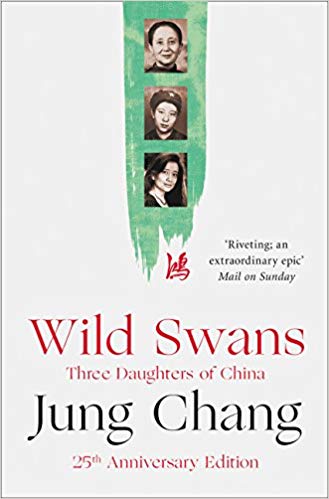
  2. Wild Swans: Three Daughters of China by Jung Chang – Jung Chang’s book about her grandmother, her mother and herself, telling of their lives in China up to and during the years of the violent Cultural Revolution. Her family suffered atrociously, her father and grandmother both dying painful deaths and both her mother and father were imprisoned and tortured.
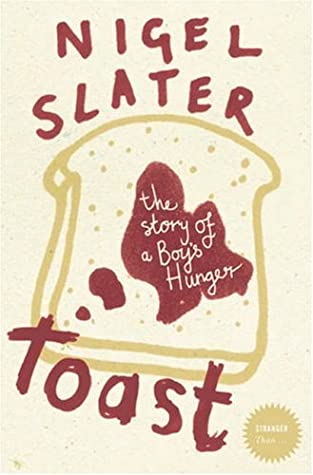
  3. Toast by Nigel Slater – the story of his childhood and adolescence told through food; food he liked and food he hated. Reading it was a nostalgic remembrance of my childhood, even though mine was so very different from his, apart from the food.
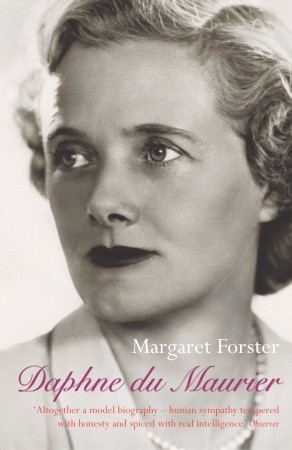
  4. Daphne by Margaret Forster – an extremely well researched and informative account of Daphne Du Maurier’s life, taken from her letters and private papers, with personal memories of her from her children, grandchildren and friends. It is a candid account of her relationships, eg her troubled married life; wartime love affair; and friendships with Gertrude Lawrence and Ellen Doubleday, as well as an excellent source of information on Du Maurier’s method of writing and views on life. 
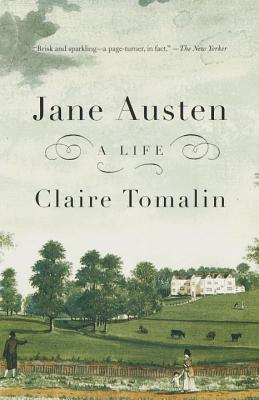
  5. Jane Austen by Claire Tomalin – I was surprised by how detailed it is given the fact that few records of her life have survived. Claire Tomalin admits that it was not an easy story to investigate, as Jane Austen wrote no autobiographical notes and if she kept any diaries they did not survive her. Most of her letters to her sister Cassandra were destroyed by Cassandra and a niece destroyed those she had written to one of her brothers. But as Tomalin discovered her life was “full of events, of distress and even trauma, which left marks upon her as permanent as any blacking factory.”
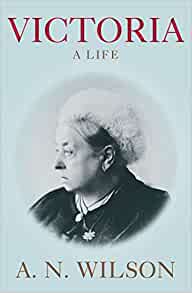
  6. Victoria: A Life by A N Wilson – masterful and detailed and like all good biographies this is well researched and illustrated, with copious notes, an extensive bibliography and an index. He had access to the Royal Archives and permission from Her Majesty Queen Elizabeth II to quote from materials in royal copyright. He portrays her both as a woman, a wife and mother as well as a queen set against the backdrop of the political scene in Britain and Europe.
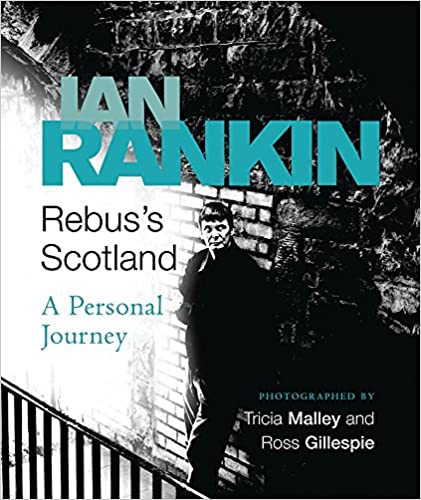
  7. Rebus’s Scotland: A Personal Journey by Ian Rankin is fascinating, with insights into Ian Rankin’s own life and that of the character he has invented, along with his thoughts on Scotland and the Scottish character. It’s partly autobiographical, blending his own life with Rebus’s biography. It also describes many of the real life locations of the books, in particular Edinburgh, Rebus’s own territory.
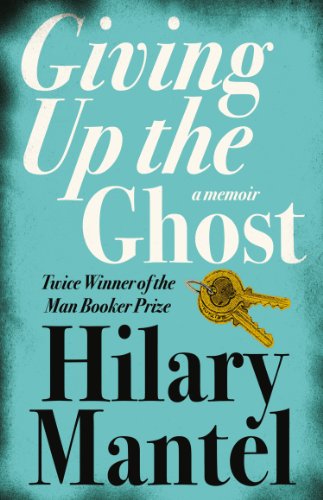
  8. Giving Up the Ghost a memoir by Hilary Mantel, which she states she wrote to take charge of her memories, her childhood and childlessness, feeling that it was necessary to write herself into being. From the age of 4 she believed that she had done something wrong and she was ‘beyond remedy and beyond redemption’. She thought it was because of her that her parents were not happy and that without her they would have had a chance in life. Home was a place where secrets were kept and opinions were not voiced. Her experience of ghosts at the age of 7 was horrifying she felt as though something came inside her, ‘some formless, borderless evil’.

Nonfiction November: Week 2 Book Pairings

Week 2: (November 8-12) – Book Pairing with Katie at Doing DeweyThis week, pair up a nonfiction book with a fiction title. It can be a “If you loved this book, read this!” or just two titles that you think would go well together. Maybe it’s a historical novel and you’d like to get the real history by reading a nonfiction version of the story. 

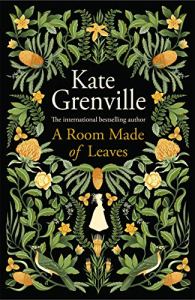
Earlier this year I read the novel A Room Made of Leaves by Kate Grenville and I’m pairing it with Elizabeth Macarthur: A Life at the Edge by Michelle Scott Tucker, which I haven’t read yet.

Kate Grenville is one of my favourite authors, so I was very keen to read A Room Made of Leaves. It’s historical fiction telling the story of the Macarthurs, Elizabeth and John Macarthur, who settled in Australia at the end of the eighteenth century. It’s based on the real lives of the Macarthurs using letters, journals and official documents of the early years of the New South Wales colony. Her writing suits me – historical fiction, with good descriptive writing setting the scenes vividly in their locations. I find her books difficult to put down and they stay in my mind long after I’ve finished reading. This one is no exception.

Whenever I read historical fiction I always want to know how much is fact and how much is fiction, how accurate it is. And so this novel intrigued me because Kate Grenville’s book begins with an editor’s note about ‘the ‘incredible discovery of Elizabeth Macarthur’s secret memoirs’ in a tin box containing old papers, revealing the real person behind the few letters she wrote home to her family and friends and a lot of ‘dull correspondence with her adult children’. Was this true, I wondered. So I turned to the back of the book to read Grenville’s Author’s Note and in that she clarifies that this is not history and, although the extracts from Elizabeth’s letters are from the letters of the real Elizabeth Macarthur, she has ‘taken some liberties in order to shape this work of fiction’. The old documents were Grenville’s ‘inspiration and guide’. In other words you have to bear in mind the epigraph, an actual quotation from one of Elizabeth’s letters: Believe not too quickly, a reminder that this is fiction.

It made me want to know more about the Macarthurs, and what was indeed their history, so I was delighted to find out that Kate Grenville references Michelle Scott Tucker’s biography: Elizabeth Macarthur: A Life at the Edge of the World as the standard biography in her Acknowledgements and I was even more delighted to see that it’s available as a ebook. So it is now in my Kindle and I’m keen to read it as soon as possible. I want to see what Michelle Scott Tucker has made of the same historical sources – history, after all, is an interpretation of the facts from the records, trying to explain what happened and why, dependent on available evidence. Fiction is more flexible and can fill in the gaps where the documentary evidence is lacking.

Throwback Thursday: Agatha Christie at Home

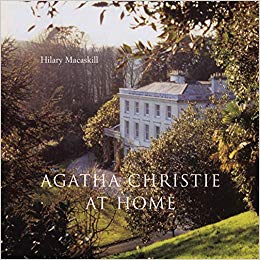
Today I’m looking back at my post on Agatha Christie at Home by Hilary Macaskill, which I first posted on 19 August 2013.

Here’s the first paragraph:

One of the things that struck me when I was reading Agatha Christie’s An Autobiography was her love of houses. It stemmed from her childhood dolls’ house. She enjoyed buying all the things to put in it – not just furniture, but all the household implements such as brushes and dustpans, and food, cutlery and glasses. She also liked playing at moving house, using a cardboard box as a furniture van.

Click here to read my full review

The next Throwback Thursday post is scheduled for September 30.

Additions to My TBRs

I am missing going to an actual bookshop, but I have been book shopping online. These are all books I’ve bought this year:

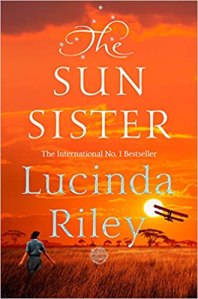
  1. The Sun Sister by Lucinda Riley – the sixth book in Lucinda Riley’s series, The Seven Sisters, which tells the story of adopted sisters and is inspired by the mythology of the famous star cluster. This one is about Electra D’Aplièse, who seems to have it all: as one of the world’s top models, she is beautiful, rich and famous.
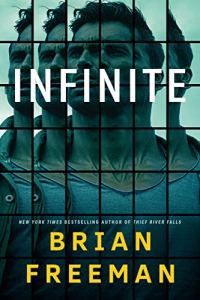
  2. Infinite by Brian Freeman – my Kindle First choice in February, a thriller about parallel universes.
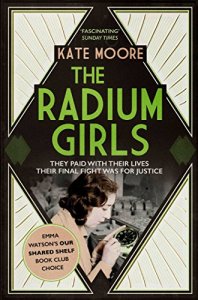
  3. The Radium Girls by Kate Moore – the true story about dial-painters, girls and women who painted the numbers on clocks, watches and other instruments using radium-infused luminous paint in the 1920s and 1930s. The girls shone brightly in the dark, covered head to toe in dust from the paint.
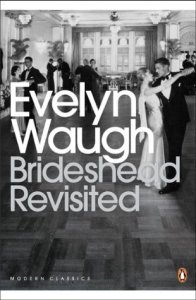
  4. Brideshead Revisited by Evelyn Waugh – the story of Charles Ryder’s infatuation with the Marchmains and the rapidly-disappearing world of privilege they inhabit. This is a book I’ve wondered about reading for years, so when I saw it was 99p on Kindle I bought it.
  5. Virginia Wolf: a Biography: 1882-1912 (vol 1) by Quentin Bell. Reading Woolf’s Orlando recently made me want to know more about her, so I bought this secondhand copy of her biography from AbeBooks.
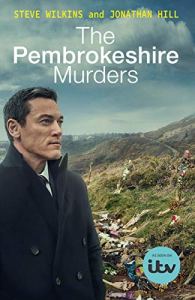
  6. The Pembrokshire Murders by Steve Wilkins and Jonathan Hill -the true story of a brutal murderer and the detectives who worked the cold case for six years in order to bring him to justice. I bought this after watching the ITV mini series in January.

Now, the questions are –

Which one to read first?
Or should I read one of my older TBRs first?
What do you do?
And how do you decide which book to read next?

Throwback Thursday: The Verneys

Today I’m looking back to 25 October 2007 when I wrote longer posts than I do now! This one, The Verneys of Claydon is about the Verney family who lived at Claydon House, a country house in the Aylesbury Vale, Buckinghamshire, England, near the village of Middle Claydon. It is now owned by the National Trust.

The Verneys: a True Story of Love, War and Madness in Seventeenth-Century England by Adrian Tinniswood.

This is how I began my post:

I became very fond of The Verneys as I read Adrian Tinniswood’s book The Verneys, shortlisted for the Samuel Johnson Prize for Non-Fiction 2007. If you’re interested in seventeenth century England you simply must read this book, or if you like reading biographies and family histories read this book. I think it would make a fantastic film or TV series.

It is a tour de force, a mammoth of a book. It is huge, both in its scope, its extraordinary detail and its length. It is also heavy, but only in weight. It is impressive in its coverage of not only the lives of the Verney family but also of the seventeenth century itself.

Madness, piracy, murder and adultery – The Verneys tells the story of a unique English family in the seventeenth century. Based on the near-miraculous survival of tens of thousands of Verney family letters in an attic, Adrian Tinniswood explores the history of one family in the most intimate detail. By drawing on this wealth of personal correspondence, he reveals the private and public world of members of the Buckinghamshire gentry, offering extraordinary insights into 17th Century family life.

Click here to read the rest of my review

Adrian Tinniswood OBE FSA is the author of fifteen books on social and architectural history, including Behind the Throne: A Domestic History of the Royal HouseholdThe Long Weekend: Life in the English Country House Between the Wars, a New York Times and Sunday Times bestseller; His Invention So Fertile: A Life of Christopher Wren and The Verneys: a True Story of Love, War and Madness in Seventeenth-Century England, which was shortlisted for the BBC/Samuel Johnson Prize. He has worked with a number of heritage organisations including the Heritage Lottery Fund and the National Trust, and is currently Senior Research Fellow in History at the University of Buckingham and Visiting Fellow in Heritage and History at Bath Spa University. (Amazon)

~~~

I visited Claydon House in October 2007, which was when I found out about this book. One of the most interesting rooms is Miss Nightingale’s bedroom. Florence Nightingale was Sir Harry Verney’s sister-in-law and often stayed at Claydon House between 1857 and 1890. Sir Harry had first asked Florence to marry him but she declined and he married her older sister Parthenope. I wrote about the House in this post.