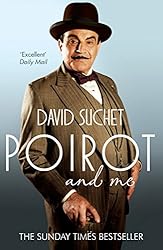
First Chapter, First Paragraph Tuesday: Parker Pyne

Every Tuesday Diane at Bibliophile by the Sea hosts First Chapter, First Paragraph Tuesday Intros, where you can share the first paragraph, or a few, of a book you are reading or thinking about reading soon.
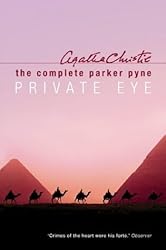
I’ve been looking at some of Agatha Christie’s short stories and wondering which to read first. One of the collections I own is The Complete Parker Pyne: Private Eye. It looks a good place to start.

In the Author’s Foreword Agatha Christie tells how she came to write these stories:

One day, having lunch at a Corner House, I was enraptured by a conversation on statistics going on at a table behind me. I turned my head and caught a vague glimpse of a bald head, glasses and a beaming smile – I caught sight that is, of Mr Parker Pyne. I had never thought about statistics before (and indeed seldom think about them now!) but the enthusiasm with which they were being discussed awakened my interest. I was just considering a new series of short stories and then and there I decided on the general treatment and scope, and in due course enjoyed writing them.

I like the details she gives – the Corner Houses, smarter and grander than tea shops and noted for their art deco style first appeared in 1909 and  remained until 1977. And I love the fact that she was eavesdropping on the conversation going on behind her and the insight this gives into how she got ideas for her stories.

The stories were all written in the 1930s and first appeared in various UK and US magazines. The first story in this collection is The Case of the Middle-Aged Wife and it begins:

Four grunts, an indignant voice asking why nobody could leave a hat alone, a slammed door, and Mr Packington had departed to catch the eight forty-five to the city. Mrs Packington sat on at the breakfast table. Her face was flushed, her lips were pursed, and the only reason she was not crying was that at the last minute anger had taken the place of grief, ‘I won’t stand it,’ said Mrs Packington. ‘I won’t stand it!’ She remained for some moments brooding , and then murmured: ‘The minx. Nasty sly little cat! How can George be such a fool!’

Agatha Christie: Short Stories

Agatha ChristieSo far in reading Agatha Christie’s books I’ve concentrated on reading her full length novels and have only read some of her short stories. As I’ve nearly read all of her novels, although none of those she wrote as Mary Westmacott, I’ll be reading more of her short stories from now on.

So far I’ve read the following short story collections:

  • The Thirteen Problems – Miss Marple stories. It was first published in the UK in 1933, collecting together 13 short stories previously published in various magazines. The first story The Tuesday Night Club introduces the character of Miss Marple.
  • The Hound of Death – 12 stories of unexplained phenomena, in most cases tales of the supernatural rather than detective stories. Of the twelve stories I think The Witness for the Prosecution is the best. Agatha Christie later wrote a play based on this story which has subsequently been adapted for film and television.
  • The Labours of Hercules – 12 short stories featuring Hercule Poirot, first published in 1947. Poirot is thinking of retiring, but before he does he wants to solve 12 more cases and not just any cases. These have to correspond to the Twelve Labours of Hercules, specially selected problems that personally appeal to him.
  • Murder in the Mews – four stories about crimes solved by Hercule Poirot, first published in 1937.
  • The Adventure of the Christmas Pudding and a Selection of Entrées – 6 short stories

I also have the following collections to read:

  • Poirot Investigates – 11 Poirot stories
  • The Golden Ball and Other Stories – 14 stories
  • The Mysterious Mr Quin – 12 stories
  • The Complete Parker Pyne: Private Eye – 14 stories
  • Miss Marple and Mystery – 55 stories

By my reckoning Agatha Christie wrote 157 short stories, published in a number of collections. Wikipedia records that she wrote 153 short stories, published in 14 collections in the UK and in the US. Some stories were published under different names in the US Collections. And some stories appear in more than one collection, which is rather confusing.

So, I’ve compiled a list arranged in a-z order of titles from the list of books on the Official Agatha Christie Site. My list is on my Agatha Christie Short Story Progress Page.

Sad Cypress by Agatha Christie

Sad Cypress, first published in 1940, is a most satisfying mystery, in which Hercule Poirot discovers that almost everyone he talks to is lying. Only the doctor, Peter Lord, believes that Elinor Carlisle did not kill Mary Gerrard, her rival in love, despite the fact that it seems that only Elinor had the motive, the opportunity and the means to poison Mary with morphine hydrochloride. Peter, who is in love with Elinor, appeals to Poirot to prove that she is innocent.

Sad Cypress has a clever and most complicated plot, as is usual in an Agatha Christie book, and it kept me guessing right to the end. Her portrayal of Elinor is excellent – on the surface a calm, almost detached character underneath she is in turmoil, full of repressed passion and unrequited love as it becomes obvious to her that Roddy, her fiancé does not in fact love her and this leads her into actions that seem to point to her guilt.

Then there are the social and cultural themes that always interest me in Agatha Christie’s books. There is the clear distinction between the classes, knowing one’s place in society shown in the relationships between Elinor and Mary, and the almost comic depiction of the two nurses, Nurse O’Brien and Nurse Hopkins, with their gossip over cups of tea. Other themes are the nature of love, and the basis for a happy marriage, the damage caused by family secrets, the ethics of euthanasia, and the difference between thinking about murder and actually committing murder.

This book, if not the best of Agatha Christie’s books, is easily one of my favourites.  I quoted the opening paragraph of Sad Cypress in My Friday Post earlier this month.

The cover photo shown above is my own copy. Details of the latest edition are:

  • Paperback: 288 pages
  • Publisher: HarperCollins (21 May 2015)
  • Language: English
  • ISBN-10: 0008129576
  • ISBN-13: 978-0008129576

This is the first of my books for the 10 Books of Summer 2015 Challenge.

Poirot and Me by David Suchet and Geoffrey Wansell

Prologue

It is a damp, chill Friday morning in November and I am feeling old, very old; so old, indeed, that I am on the brink of death. I have lost two stone in weight, my face is the colour of aged parchment, and my hands are gnarled  like human claws.

I must have watched nearly all, if not all, of David Suchet’s performances as Agatha Christie’s Hercule Poirot. For me he was the perfect Poirot, so it was a given that I would read his autobiography, Poirot and Me, written with the help of his friend Geoffrey Wansell. And it really lives up to its title, as the main subject is David Suchet’s role as Poirot. His first performance as Poirot was in 1988. Over the intervening twenty five years he played the part in every one of the seventy Poirot stories that Agatha Christie wrote, with the exception of a tiny short story called The Lemesurier Inheritance (a story in Poirot’s Early Cases and in The Under Dog).

When I started watching the TV dramas it had been years since I’d read any of Agatha Christie’s books and I wasn’t aware that the early shows were based on her short stories – actually I didn’t even know then that she had written any short stories at all. I’ve read nearly all of her full length novels, but only a few of her short stories so far.

I think Poirot and Me may not appeal to people who are not readers of Agatha Christie’s books as it consists largely of Suchet’s summaries of the stories and how he went about analysing Poirot’s character and how he played the part. He began by compiling a list of Poirot’s characteristics, then considering his voice and his appearance. He made 92 ‘character points’ and his original list is reproduced in the book, along with photos of locations, the cast and crew.

He was most concerned that his portrayal of Poirot should be faithful to the character that Agatha Christie had created. He immersed himself so completely in the character that at times he didn’t know where Poirot ended and he began! Even so, some of the dramatisations are not strictly faithful to the original stories, for various reasons; additional characters are included and some of the plots are expanded versions, especially where the original short stories were slight. Or, for example, as in the case of the collection of short stories that make up The Twelve Labours of Hercules, the stories are so diverse that the screenwriter created an almost entirely new story, though using some of the characters.

At the end of each of the Poirot series, David Suchet didn’t know if any more were in the pipeline and he continued to play other parts in film,  on TV and on the stage. I found this just as interesting as the sections on his role as Poirot and it emphasises his qualities as an actor –  he is a ‘character’ actor, a Shakespearean actor and with the exception of Poirot his roles have been pretty dark and menacing parts. I particularly remember him in Blott on the Landscape, in which he played the malevolent gardener and in The Way We Live Now as the sinister financier Melmotte.

He thinks the charm of the Poirot stories is that

… they reveal a world where manners and morals are quite different from today. There are no overt or unnecessary sex scenes, no alcoholic, haunted detectives in Poirot’s world. He lives in a simpler, some would say more human, era; a lost England, seen through the admiring eyes of this foreigner, this little Belgian detective. For me, that makes the stories all the more appealing, for although the days he lives in seem far away, they are all the more enchanting because of it. (page 64 in the hardback edition)

I think so too – and I think the same charm and appeal can be found in the Miss Marple stories.

David Suchet wrote that when Hercule Poirot died on that late November afternoon in 2012 (as he filmed Curtain) a part of him died, but for me and doubtless for many others, Poirot lives on not just in Agatha Christie’s stories but also in David Suchet’s wonderful performances as his ‘cher ami‘, Hercule Poirot.

  • Hardcover: 320 pages (also available in paperback and on Kindle)
  • Publisher: Headline; 1st edition (7 Nov. 2013)
  • Language: English
  • ISBN-10: 0755364198
  • ISBN-13: 978-0755364190
  • Source: my local library

Three Act Tragedy by Agatha Christie

Three Act Tragedy 001

I’ve been working my way through Agatha Christie’s books over the past few years and I have just a few left to read. Three Act Tragedy is one of them. It was first published in 1935 (as Murder in Three Acts in America).

As the title indicates the book is divided into three acts, or rather parts, First Act – Suspicion, Second Act – Certainty and Third Act – Discovery. It begins as though it were a theatre programme:

Directed by

SIR CHARLES CARTWRIGHT

Assistant Directors
MR SATTERTHWAITE
MISS HERMIONE LYTTON GORE

Clothes by
AMBROSINE LTD

Illumination by
HERCULE POIROT

Summary from the back cover:

Sir Charles Cartwright, the distinguished actor, was giving a party. Around him his guests stood talking and drinking. The Reverend Stephen Babbington sipped his cocktail and pulled a wry face. the chatter continued all around. Suddenly Mr Babbington clutched at his throat and swayed …

The beginning of the drama …

Sir Charles suspects that Mr Babbington was murdered but Hercule Poirot, one of the guests, disagrees and there is nothing to show that his death was by any other than natural causes and besides who could possible have cause to kill him! However, later when Sir Bartholomew Strange, a distinguished Harley Street doctor who was also a guest at Sir Charles’ party, drops dead after sipping a glass of port at another party with some of the original guests, it becomes clear that this is murder by poisoning.

This is one of those cases where Poirot plays a secondary role, preferring to think rather than act and it is Mr Satterthwaite and Sir Charles who investigate the deaths. Mr Satterthwaite is an interesting character – ‘ a  dried-up little pipkin of a man’, ‘ a patron of art and drama, a determined but pleasant snob’ and ‘a man of considerable intelligence and a very shrewd observer of people and things.’ An ideal partner in investigation for Poirot.

(This is Mr Satterthwaite’s first appearance outside a Harley Quin story – I have yet to read the Harley Quin stories.)

As for the other characters, some fade into the background, whilst others like Sir Charles and Hermione Lytton Gore, known affectionately as Egg are in the spotlight. This is one of Agatha Christie’s earlier books and is full of baffling clues, conjuring tricks, clues concealed in conversations, with larger than life personalities, and above all with puzzles to be solved. I really enjoyed it.

In this book Hercule Poirot reveals a little of his history, coming from a large and poor family he had worked hard in the Belgian police force, made a name for himself and an international reputation. He was injured in the First World War and came to England as a refugee, eventually becoming a private inquiry agent. He displays his usual vanity and egotism when talking to Mr Satterthwaite, who had realised that he might have accidentally have drunk the poisoned cocktail, by saying:

‘There is an even more terrible possibility that you have not considered. … It might have been ME.

Towards Zero by Agatha Christie

Towards Zero

Towards Zero, first published in 1944 (my copy is a 1972 impression), is an intricately plotted murder mystery featuring Superintendent Battle, the last of the five novels he appears in. Agatha Christie dedicated this book to Robert Graves, author of I Claudius, who was her neighbour in Devon during the Second World War and the two had become friends. She wrote:

‘Dear Robert, Since you are kind enough to say you like my stories, I venture to dedicate this book to you. All I ask is that you sternly restrain your critical faculties (doubtless sharpened by your recent excesses in that line!) when reading it. This is a story for your pleasure and not a candidate for Mr Graves’ literary pillory!”

It was received well at the time reviewed in the 6 August 1944 issue of The Observer:

 “The new Agatha Christie has a deliciously prolonged and elaborate build-up, urbane and cosy like a good cigar and red leather slippers. Poirot is absent physically, but his influence guides the sensitive inspector past the wiles of the carefully planted house party, and with its tortuous double bluff this might well have been a Poirot case. How gratifying to see Agatha Christie keeping the flag of the old classic who-dun-it so triumphantly flying!”

It begins with a prologue in which a group of lawyers discuss a recent case at the Old Bailey. Mr Treves, a retired lawyer puts forward the idea that murder is not the beginning of a detective story, but the end, that murder is the culmination of causes and events that bring together certain people, converging towards a certain place and time, towards the Zero Hour – ‘towards zero’. The idea presupposes that there is an inevitability – that once events have been set in motion then the outcome is determined.

And in line with this idea, an unnamed person is seen planning a murder:

The time, the place, the victim. … Yes everything planned – everyone’s reaction foretold and allowed for, the good and evil in everybody played upon and brought into harmony with one evil design.

But the story begins with Angus MacWhirter recovering in hospital after a failed attempt at suicide, assured by a nurse that the mere fact of his existence could be of great importance, perhaps even save someone’s life one day. It then moves on to Superintendent Battle whose daughter has confessed to pilfering at school, even though she hadn’t stolen anything. The relevance of this episode is made clear later in the book.

And it is only later in the book that the murder is carried out, giving plenty of time for all the characters to be introduced, defined and their thoughts and relationships explored – Nevile Strange, a sportsman, good looking, wealthy, married to his beautiful second wife, Kay, Audrey Strange, Nevile’s first wife, Thomas Royde, Audrey’s distant cousin returning from Malaya, who hopes to marry her, and Ted Latimer, Kay’s friend who all converge at Gull’s Point, a large country house on a cliff above the River Tern where Lady Tressilian and Mary Aldin, her cousin and companion live.

The murderer could be any of them and as solution after solution is proposed I was completely bamboozled. All the clues are there, but subtly hidden, buried in layer upon layer. As was Superintendent Battle for a while. I like Battle, described as

‘solid and durable, and in some way impressive. Superintendent Battle had never suggested brilliance; he was definitely not a brilliant man, but he had some other quality, difficult to define, that was nevertheless forceful.

And as he also knows Poirot, he is able to apply Poirot’s use of psychology to the case, keeping the suspect talking until the truth slips out.

Towards Zero has to be one of my favourite of Agatha Christie’s books despite a few reservations  – Angus MacWhirter’s role seems superfluous, other than introducing the idea of pre-destination, and Mr Treves’ story of a child killer wasn’t really explained. I was surprised by the ending – not the denouement of the murderer, but the unlikely romance between two of the characters in the very last chapter which seemed just too far removed from reality. But, disregarding these points I really enjoyed this book.