Stacking the Shelves

STSmall

Stacking The Shelves is all about sharing the books you are adding to your shelves. This means you can include ‘real’ and ‘virtual’ books (ie physical and ebooks) you’ve bought, books you’ve borrowed from friends or the library, review books, and gifts.

This is my first entry in Stacking the Shelves. These are last week’s new arrivals:

In the heart of the sea

First ‘real’ books. It was Mother’s Day last Sunday and my son bought me this book, In the Heart of the Sea: the Epic True Story that Inspired Moby Dick by Nathaniel Philbrick – wonderful!

From the back cover:

The sinking of the Nantucket whaleship Essex by an enraged spermwhale far out in the Pacific in November 1820 set in train one of the most dramatic sea stories of all time. Accounts of the unprecedented whale attack inspired Herman Melville’s mighty novel Moby Dick, but In the Heart of the Sea goes beyond these events to describe what happened when the twenty mixed-race crewmen took to three small boats and what, three months later, the whaleship Dauphin, cruising off the coast of South America, discovered when it spotted a tiny boat sailing erratically across an open ocean.

The other books in the photo above are library books:

  • Collins Artist’s Little Book of Inspiration by Hazel Soan – a lovely little book looking at the basics elements of a painting using watercolours, oils and acrylics, with demonstrations and projects to try. I like just looking at the paintings!
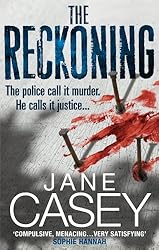
  • The Reckoning by Jane Casey, the second in her Maeve Kerrigan series. I reserved this because I’d enjoyed the first one, The Burning and wanted to read more. This one begins with the murders of two paedophiles.
  • Conan Doyle: the Man who Created Sherlock Holmes by Andrew Lycett. This book was on a display stand and even though it’s a huge, heavy book I fancied reading it. It was probably on display following the  recent TV drama Arthur and George, which I enjoyed. I read Julian Barnes’ book of the same name some years ago, which pre-dates this biography.

When Lovereading offered a review copy of Dacre’s War by Rosemary Goring I didn’t hesitate because I’d loved Rosemary Goring’s earlier novel, After Flodden.

Dacres War

Dacre’s War is set 10 years after the battle of Flodden in the Scottish and English borders, a story of ‘personal and political vengeance’ as Adam Crozier sets out to take revenge on Lord Thomas Dacre, who had ordered the death of his father. It’s due to be published on 14 May 2015.

Lastly, the latest ebook I’ve downloaded is today’s Kindle Daily Deal, Last Man in Tower by Aravind Adiga. A. N. Wilson ‘was absolutely mesmerized by this novel’ and thinks ‘that Aravind Adiga is already, with this, his second book, the most exciting novelist writing in English today.’ 

Last Man in Tower

Once Upon a Time IX

It’s Spring! Carl’s Once Upon A Time IX reading challenge starts today, for the ninth year running, ending on June 21. This encompasses four broad categories: Fairy Tale, Folklore, Fantasy and Mythology, including the seemingly countless sub-genres and blending of genres that fall within this spectrum.

(Art by Kimberly Kincaid. Used with Permission)

As always this challenge has a few fun and very flexible rules:

Rule #1: Have fun.

Rule #2: HAVE FUN.

Rule #3: Don’t keep the fun to yourself, share it with us, please!

Rule #4: Do not be put off by the word ‘challenge’.

While this event retains the word ‘challenge’from its earliest days, the entire goal is to read good books, watch engaging television shows and films, play immersive games and most importantly, visit old friends and make new ones.

There are several ways to participate, starting with

once9journey

This is really as simple as the name implies. It means you are participating, but not committing yourself to any specific number of books. By signing up for The Journey you are agreeing to read at least one book within one of the four categories during March 21st to June 21st period. Just one book. If you choose to read more, fantastic!

So, in my year of relaxed reading I’m sure I can manage to read one book! And if I read more I’ll carry on to Quest the First:


Read at least 5 books that fit somewhere within the Once Upon a Time categories. They might all be fantasy, or folklore, or fairy tales, or mythology’¦or your five books might be a combination from the four genres.

I have several books to choose from:

  • Helen of Sparta by Amalia Carosella’“A new take on an ancient myth, the story of one woman determined to decide her own fate.
  • Shadowland by C M Gray ‘“  historical fantasy set in Dark Ages Britain.
  • Dreamwalker (The Ballad of Sir Benfro) by James Oswald ‘“ fantasy fiction ‘“ Welsh mythology and folklore.
  • A Connecticut Yankee in King Arthur’s Court by Mark Twain ‘“ fantasy fiction in which a Yankee engineer is accidentally transported back in time to the court of King Arthur.
  • Firmin: Adventures of a Metropolitan Lowlife by Sam Savage ‘“ the tale of a literary rat who develops the ability to read.
  • The Children of Hurin by J R R Tolkien ‘“ tales of Middle-earth  from times before The Lord of the Rings, set in the country that lay beyond the Grey Havens in the West.
  • The Wonderful Wizard of Oz by L Frank Baum – I’ve seen the film, but never read the book.

These books are all books I own and so they would all count for my Mount TBR Challenge, which is good, and some fit into the Historical Fiction as that includes historical fantasy.

First Chapter – First Paragraph

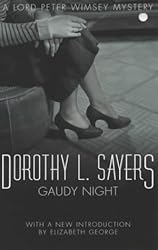
It will be a while before I can write a book review post as I’m in the middle of reading Gaudy Night by Dorothy L Sayers and it’s quite long – and complicated. So in the meantime here is a First Chapter – First Paragraph post.

First chapterEvery Tuesday Diane at Bibliophile by the Sea hosts First Chapter First Paragraph Tuesday Intros, where you can share the first paragraph, or a few, of a book you are reading or thinking about reading soon.

My choice this week is A Trick of the Light by Louise Penny, a book I’ve borrowed from the library.


It begins:

Oh, no no no, thought Clare Morrow as she walked towards the closed doors.

She could see shadows, shapes, like wraiths moving back and forth, back and forth across the frosted glass. Appearing and disappearing. Distorted, but still moving.

Still the dead one lay moaning.

The words had been going through her head all day, appearing and disappearing. A poem, half remembered. Words floating to the surface, then going under. The body of the poem beyond her grasp.

The title of this one caught my eye on the library van’s shelves and reading the opening paragraphs I decided to borrow it – mainly because the poem Clare can’t quite remember is one of my favourites. It’s Not Waving, but Drowning by Stevie Smith and I wondered what relevance it has to this book. There will be a body, I expect.

What do you think? Would you carry on reading?

A Trick of the Light is the 7th in Louise Penny’s Chief Inspector Gamache series and I’m hoping it will stand well on its own as I haven’t read the first six books even though I’ve seen them recommended on other book blogs.

If you’ve read Louise Penny’s books do you think they do stand well on their own – or should they really be read in sequence? Am I missing something by beginning with book 7?

Catching the Eagle by Karen Charlton

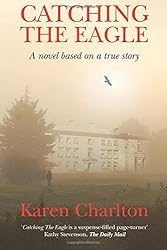
I wanted to read a novel by a local author so I checked the library website for North East writers, where I found Catching the Eagle by Karen Charlton.

Summary from the book cover:

Easter Monday, 1809: Kirkley Hall manor house is mysteriously burgled. When suspicion falls on Jamie Charlton, he and his family face a desperate battle to save him from the gallows.

When 1,157 rent money is stolen from Kirkley Hall, it is the biggest robbery Northumberland has ever known. The owner sends for Stephen Lavender, a principal officer with the Bow Street magistrate’s court in London, to investigate the crime. Suspicion soon falls on impoverished farm labourer, Jamie Charlton, and the unpopular steward, Michael Aynsley.

Jamie Charlton is a loving family man but he is hot-tempered and careless. As the case grows against him, it seems that only his young brother, William, can save him from an impending miscarriage of justice.

But William is struggling with demons of his own–he is falling in love with Jamie’s wife.’Catching the Eagle’, the first novel in the Regency Reivers series, is a fictionalized account of a trial that devastated a family and divided a community.

This is not just by a local author, and set in Northumberland, it is also based on a true story –  that of Karen Charlton’s husband’s ancestors.

I liked the opening of Catching the Eagle beginning with a Prologue, setting the scene as an eagle soared over the Northumberland landscape:

… its huge shadow caressed the ruined walls of crumbling castles and the creaking rotting stumps of ancient gibbets.The eagle plucked unsuspecting prey from the bleak, snow-covered fells and drank from remote rocky waterfalls dripping with golden daggers.

It landed in a tree above a labourer’s cottage where Jamie Charlton lived with his wife Priscilla and their children. I like Karen Charlton’s leisurely descriptive style of writing and found the whole book to be fascinating.  She has written an even-handed account of the robbery and the subsequent trials, so much so that I began to wonder whether Jamie Charlton was innocent or guilty, although you know from the outset that he was transported as a convicted felon to New South Wales. Did he or did he not steal the money? And what will happen to the eagle?

This is the type of historical fiction that I like. The characters come across as real people, with real problems in a real time and place (Northumberland 1809 – 1811). It highlights the social and cultural setting. Jamie was without influence or money behind him up against a judicial system run by people with power who needed to find a culprit. His family suffered along with him as he languished in goal in squalor, where he was caged as he awaited trial – not once, but twice.

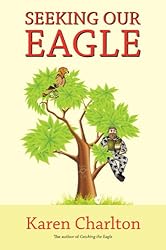
I wondered whether Stephen Lavender, the detective employed by  Nathaniel Ogle, the owner of Kirkley Hall was also a real historical figure. Karen Charlton has also written Seeking Our Eagle, another fascinating book, an account of how she came to write Catching the Eagle whilst researching her husband’s family history.  And yes, Stephen Lavender did exist and he was a detective. He later became the Deputy Chief Constable of Manchester after the formation of the police force by Sir Robert Peel.

Indeed reading Catching the Eagle reminded me of The Suspicions of Samuel Whicher by Kate Summerscale, featuring Detective Inspector Jonathan Whicher of Scotland Yard, the book that won the Samuel Johnson Prize for Non-Fiction in 2008.

Karen Charlton has done her research very well and has written a novel full of intrigue, tension and realism that kept me captivated from start to finish. See her website, Karen Charlton, to read more about Karen and her books.

She has also written The Heiress of Linn Hagh, a spin-off novel from Catching the Eagle, which features Detective Stephen Lavender and his sidekick, Constable Woods. And there are more Detective Lavender Series books on the way!

Catching the Eagle:

  • Paperback: 280 pages
  • Publisher: Famelton Publishing; 1 edition (19 July 2014)
  • ISBN-10: 0992803640
  • ISBN-13: 978-0992803643
  • Product Dimensions: 15.2 x 1.8 x 22.9 cm
  • Source: Library book

Seeking the Eagle:

  • Format: Kindle Edition
  • File Size: 1969 KB
  • Print Length: 166 pages
  • Publisher: Famelton Publishing; 1st edition (7 Aug. 2012)
  • Sold by: Amazon Media EU S.à r.l.
  • Language: English
  • ASIN: B008UZYOR2
  • Source: I bought it

As always I didn’t read either book just for any Reading Challenges, but Catching the Eagle does fit very well into a couple – the 2015  Historical Fiction Reading Challenge and the What’s in a Name Challenge, in the book with an animal in the title category and Seeking Our Eagle into the Nonfiction Reading Challenge.

Three Act Tragedy by Agatha Christie

Three Act Tragedy 001

I’ve been working my way through Agatha Christie’s books over the past few years and I have just a few left to read. Three Act Tragedy is one of them. It was first published in 1935 (as Murder in Three Acts in America).

As the title indicates the book is divided into three acts, or rather parts, First Act – Suspicion, Second Act – Certainty and Third Act – Discovery. It begins as though it were a theatre programme:

Directed by

SIR CHARLES CARTWRIGHT

Assistant Directors
MR SATTERTHWAITE
MISS HERMIONE LYTTON GORE

Clothes by
AMBROSINE LTD

Illumination by
HERCULE POIROT

Summary from the back cover:

Sir Charles Cartwright, the distinguished actor, was giving a party. Around him his guests stood talking and drinking. The Reverend Stephen Babbington sipped his cocktail and pulled a wry face. the chatter continued all around. Suddenly Mr Babbington clutched at his throat and swayed …

The beginning of the drama …

Sir Charles suspects that Mr Babbington was murdered but Hercule Poirot, one of the guests, disagrees and there is nothing to show that his death was by any other than natural causes and besides who could possible have cause to kill him! However, later when Sir Bartholomew Strange, a distinguished Harley Street doctor who was also a guest at Sir Charles’ party, drops dead after sipping a glass of port at another party with some of the original guests, it becomes clear that this is murder by poisoning.

This is one of those cases where Poirot plays a secondary role, preferring to think rather than act and it is Mr Satterthwaite and Sir Charles who investigate the deaths. Mr Satterthwaite is an interesting character – ‘ a  dried-up little pipkin of a man’, ‘ a patron of art and drama, a determined but pleasant snob’ and ‘a man of considerable intelligence and a very shrewd observer of people and things.’ An ideal partner in investigation for Poirot.

(This is Mr Satterthwaite’s first appearance outside a Harley Quin story – I have yet to read the Harley Quin stories.)

As for the other characters, some fade into the background, whilst others like Sir Charles and Hermione Lytton Gore, known affectionately as Egg are in the spotlight. This is one of Agatha Christie’s earlier books and is full of baffling clues, conjuring tricks, clues concealed in conversations, with larger than life personalities, and above all with puzzles to be solved. I really enjoyed it.
In this book Hercule Poirot reveals a little of his history, coming from a large and poor family he had worked hard in the Belgian police force, made a name for himself and an international reputation. He was injured in the First World War and came to England as a refugee, eventually becoming a private inquiry agent. He displays his usual vanity and egotism when talking to Mr Satterthwaite, who had realised that he might have accidentally have drunk the poisoned cocktail, by saying:

‘There is an even more terrible possibility that you have not considered. … It might have been ME.

First Chapter First Paragraph: The Zig Zag Girl

Every Tuesday Diane at Bibliophile by the Sea hosts First Chapter First Paragraph Tuesday Intros, where you can share the first paragraph, or a few, of a book you are reading or thinking about reading soon.

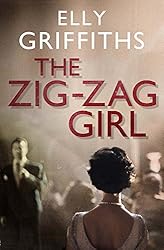
My choice this week is: The Zig Zag Girl by Elly Griffiths, a book I have just finished reading.

It begins:

 ‘Looks as if someone’s sliced her into three,’ said Solomon Carter, the police surgeon chattily. ‘We’re just missing the middle bit.’

I must not be sick, thought Edgar Stephens. That’s what he wants. Stay calm and professional at all times. You’re the policeman, after all.

What do you think? Would you read on?

I did. I’m a squeamish reader and don’t like anything too graphically gory and you might think this opening would put me off. But it didn’t – for one thing, it doesn’t go into detail about how the body got cut into three. Well, yes later down the page there’s mention of ‘clotted blood and smell of decaying flesh‘, but that’s it, it’s all secondhand, no scenes where the murderer is described doing the terrible act, no dwelling on what he/she was doing to the other person.

Blurb from the inside flap:

Brighton, 1950 – a post-war world of rationing, austerity, pea-souper fogs and seedy seaside resorts. When the body of a girl is found, cut into three, DI Edgar Stephens recalls a magic trick that he saw as a boy. The illusion is called the Zig Zag Girl and its inventor, Max Mephisto, is an old friend of his. They served together in the war as part of a shadowy unit called the Magic Men, formed to use stage trickery to confuse the enemy.

Edgar tracks down Max and asks for his help. Max is still on the circuit, touring seaside towns in the company of ventriloquists, sword-swallowers and dancing girls. Max is reluctant to get involved but the changes his mind when the dead girl turns out to be his former stage assistant. Another death follows, again gruesomely staged to resemble a magic trick, the Sword Cabinet.

Edgar and Max become convinced that the answer to the murders lies back in their army days and the antics of the Magic Men.

When Edgar receives a letter warning of another ‘trick’, he knows that they are all in danger. The Wolf Trap is the deadliest illusion of all, but who will be the next victim?

I’ve read some of Elly Griffiths’ Ruth Galloway, forensic archaeologist, crime novels, which I have enjoyed despite wishing they weren’t written in the present tense. So it was with relief that I came to The Zig Zag Girl and found it’s written in the past tense.

I enjoyed it in several ways – for its characters, particularly Edgar Stephens and its setting, recalling the atmosphere of the 1950s and how times were changing. The theatrical elements are fascinating – life on the variety circuit was not all glitz and glamour; and the activities of the  Magic Men unit during the war had of course an immense effect on all their lives. I worked out quite early on who the murderer was – but not why, which only dawned on me at the end of the book.

I don’t know if this is going to be the start of a new series – I’d read more if it is.