Week 4: New to My TBR, hosted by Katie @ Doing Dewey: It’s been a month full of amazing nonfiction books! Which ones have made it onto your TBR? Be sure to link back to the original blogger who posted about that book!
So many books to choose from! Here are a few that appealed to me:
A Woman in Berlin, an anonymous diary of a woman who lived through the Russian occupation of the city
Primo Levi’s memoirs like Survival in Auschwitz and The Reawakening,
Underground in Berlin.
Svetlana Alexievich’s The Unwomanly Face of War is an oral history of the women in the Red Army by Marie Jalowicz Simon
Thanks so much to our hosts, Katie at Doing Dewey, Julie at Julz Reads, Leann at Shelf Aware, and Rennie at What’s Nonfiction! And thanks to everyone who stopped by with comments and recommendations as well!
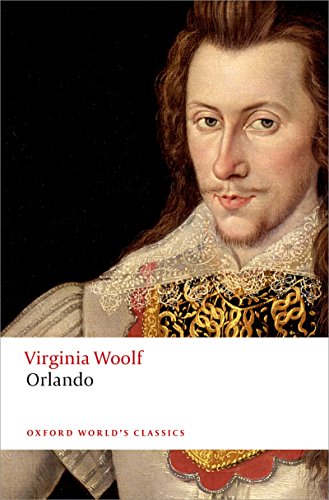
which for me is Orlando by Virginia Woolf. The rules of the Spin are that this is the book for me to read by 30 January, 2021.
Orlando tells the tale of an extraordinary individual who lives through centuries of English history, first as a man, then as a woman; of his/her encounters with queens, kings, novelists, playwrights, and poets, and of his/her struggle to find fame and immortality not through actions, but through the written word. At its heart are the life and works of Woolf’s friend and lover, Vita Sackville-West, and Knole, the historic home of the Sackvilles. But as well as being a love letter to Vita, Orlando mocks the conventions of biography and history, teases the pretensions of contemporary men of letters, and wryly examines sexual double standards.
I hope I get on better with this book than I did with my last Classics Club Spin book, which was Far From the Madding Crowd by Thomas Hardy. I did start reading it, but didn’t get very far – it wasn’t appealing to me at all!
Did you take part in the Classics Spin? What will you be reading?
It’s the final week of Novellas in November and the focus is on classic literature.
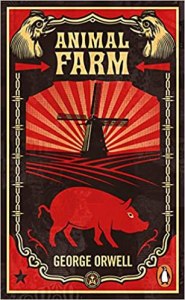
Animal Farm by George Orwell, first published in 1945, is an allegorical novella, of the Russian Revolution and the rise of the Soviet Union. It tells the story of a farm where the animals rebel against the farmer, Mr Jones, and throw him off the land. They hope to create a society where they are all equal, free and happy. Ultimately, the farm ends up in a state that is as bad, if not worse than it was before, under the dictatorship of a pig named Napoleon. It begins as the old boar Major tells the animals about his dream of overthrowing the human race when the produce of their labour would then be their own and he incites them to rebel. In the story that follows the Major is based on Marx, Farmer Jones on the Tsar, the pigs Napoleon and Snowball are based on Stalin and Trotsky respectively. Their revolution began by declaring that all animals are equal and ended with the added phrase but some animals are more equal than others.
This is one of those classics that I knew the story roughly, but had not read the book, until this month. I was surprised, although I shouldn’t have been, at the violence of the deaths in it and the pathos of Boxer’s story. Boxer, a cart horse is described as an enormous beast. He is hardworking, but naive and ignorant, struggling to learn the alphabet, representing the Russian working class who helped oust the Tsar. He is shown as the farm’s most dedicated and loyal worker – convinced that ‘Napoleon is always right‘, but eventually he is betrayed by him.
It is a deceptively easy read that can be read on two levels either as a simple fairy tale style story – initially Animal Farm had a subtitle, A Fairy Story – or as a satire against Stalin. It is thought provoking and moving.
~~~
I’ve read several short classics since I began writing this blog. These are some of my favourites:
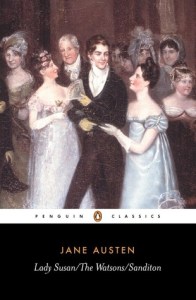
Lady Susan, The Watsons and Sanditon by Jane Austen. Lady Susan is a finished novella, whereas The Watsons and Sanditon are two unfinished fragments. I loved these stories. Told in a series of letters, Lady Susan is the story of an unscrupulous widow who plans to force her daughter into a marriage against her wishes. Lady Susan is an attractive and entertaining and totally wicked character, who nevertheless almost manages to fool people for some of the time at least. She is also trying to captivate her sister-in-law’s brother, whilst still holding on to the affections of a previous lover.
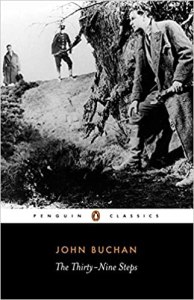
The Thirty Nine Steps by John Buchan, a fast moving action-story, beginning with an international conspiracy, involving anarchists, financiers and German spies. Richard Hannay, having found Scudder, murdered in his London flat, fears for his life and goes on the run, chased by villains in a series of exciting episodes, culminating in the discovery of the location of the ‘thirty-nine steps’. Hannay is a remarkable character, resourceful, and a master of disguise. As well as fleeing for his life he is searching for Scudder’s notebook, which contains clues to the international conspiracy.
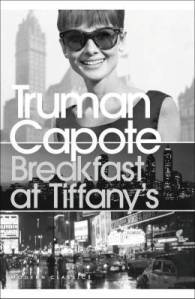
Breakfast at Tiffany’s by Truman Capote, a quick read and very entertaining. The narrator is not named, although Holly Golightly calls him ‘Fred’ after her brother. He’s a writer and at the beginning of the book he is reminiscing about Holly with Joe Bell, who ran a bar around the corner on Lexington Avenue. They hadn’t seen or heard from Holly for over two years. She used to live in the apartment below Fred’s in a brownstone in the East Seventies in New York. Her past is almost as unknown as her present whereabouts. She’s a free spirit, charming and carefree, but craves attention.
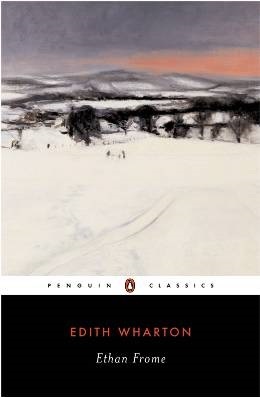
Ethan Fromeby Edith Wharton. Even though Ethan Frome is a tragedy there is light to contrast the darkness, and there is love and hope set against repression and misery. It’s a book where I hoped the ending would be a happy one, although I knew it couldn’t be. Trapped in an unhappy marriage, Ethan’s life had changed when his father died and he had had to give up his studies to work on the farm. His wife Zeena had always been ill and needing help in the house, which was why her cousin Mattie came to live with them. At first it worked out quite well, but Ethan couldn’t shrug off a sense of dread.
It’s time for another Classics Club Spin You create a post that lists twenty books of your choice that remain “to be read” on your Classics Club list. This is your Spin List. You have to read one of these twenty books by the end of the spin period. On Sunday 22 November, the Classics Club will post a number from 1 through 20. I’ve just made it as the result hasn’t been posted yet! The challenge is to read whatever book falls under that numb er on your Spin List by 30th January, 2021.
I have just 7 books left on my list, so I’ve repeated the list twice (minus the 7th book for second repeat).
The Riddle of the Third Mile by Colin Dexter
Little Dorrit by Charles Dickens
Parade’s End by Ford Maddox Ford
The Big Sleep by Raymond Challoner
Love in the Time of Cholera by Gabriel Garcia Marquez
Framley Parsonage by Anthony Trollope
Orlando by Virginia Woolf
The Riddle of the Third Mile by Colin Dexter
Little Dorrit by Charles Dickens
Parade’s End by Ford Maddox Ford
The Big Sleep by Raymond Challoner
Love in the Time of Cholera by Gabriel Garcia Marquez
Framley Parsonage by Anthony Trollope
Orlando by Virginia Woolf
The Riddle of the Third Mile by Colin Dexter
Little Dorrit by Charles Dickens
Parade’s End by Ford Maddox Ford
The Big Sleep by Raymond Challoner
Love in the Time of Cholera by Gabriel Garcia Marquez
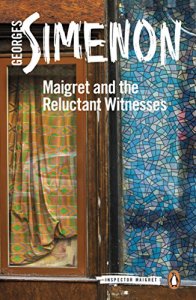
This is the 53rd Inspector Maigret book, originally published in 1955.
It is November and Maigret, nearing retirement, is in a melancholy, nostalgic mood. He has been called out to the home of the Lauchaume family where Léonard, the eldest son has been shot dead. The name Lachaume brings back memories of his childhood in the countryside where the village grocer sold Lachaume Biscuits. But the family is now in dire straits, living in a large house on the Quai de la Gare, Ivry and their biscuit factory is failing. Their house was once an impressive three storey building but is now in a state of decay, cold and damp. The rest of the Lachaume family, his younger brother Armand, Paulette Armand’s wife and his elderly parents, are not only reluctant to talk to the police, they don’t appear to be grieving.
It looks initially that the murder may have been part of a burglary, although only a wallet is missing, but Maigret is suspicious right from the start. His attempts to question the family are held up by their lawyer and also by the Examining Magistrate, Angelot who insists on taking charge of the case. But he makes headway when he visits VéroniqueLachaume, Léonard’s estranged sister and eventually Paulette reluctantly talks to him.
The book as a whole has a nostalgic feel, the sense that the world is changing – the Lachaume family has been left behind. Their business has only been kept afloat by the money from the sons’ wives, but they are still proud and reluctant to face the true facts of their situation. Maigret, too, is beginning to realise that his world is changing. for one thing he is getting older, the new magistrates are the younger generation bringing in new methods and he is aware that he only has two years left before his retirement. However, he solves the case mainly through his own intuition, and so he casts off his melancholy.
I’ve now read several of the Maigret books totally out of order, so now I’ve decided it’s time I read the first book, Pietr the Latvian first published in 1931.
We’re now in Week 3: (Nov. 12 to 16) of Nonfiction November. The topic is – Be The Expert/Ask the Expert/Become the Expert (Rennie @ What’s Nonfiction)
Three ways to join in this week! You can either share three or more books on a single topic that you have read and can recommend (be the expert), you can put the call out for good nonfiction on a specific topic that you have been dying to read (ask the expert), or you can create your own list of books on a topic that you’d like to read (become the expert).
I’ve read a few books on World War 2 and would love to find out more. I have read several novels set during the War, the most recent is V2 by Robert Harris, which has made realise how little I know about it. It is a vast subject and I know there are very many books both fiction and nonfiction about it. My difficulty is where to start!
These are some of the nonfiction books I’ve read/have waiting to be read:
Our Longest Days: a People’s History of the Second World War by the Writers of Mass Observation, which is fascinating.
Wartime Britain 1939 – 1945 by Juliet Gardiner – I’ve only read some of this book.
The Ration Book Diet by Mike Brown, Carol Harris and C J Jackson – social history.
Winston Churchill’s six volume History of the Second World War – these look particularly daunting in the amount of detail involved! I’ve start the first volume.
Band of Brothers by Stephen E Ambrose – I watched the entire HBO series called Band of Brothers. I started to read the book and stalled!
Great Escape Stories by Eric Williams – TBR
How the Girl Guides Won the War by Janie Hampton – TBR
There are so many aspects to the war, so many countries involved, so many battles, people, places, politics, so many events that led up to the war, so many technological details and developments, etc, etc. Any suggestions of where to start will be much appreciated.
 BooksPlease