It’s Tuesday again.Teaser Tuesdays is a weekly bookish meme, hosted by MizB of Should Be Reading.
Share a couple or more sentences from the book you’re currently reading. You also need to share the title of the book that you’re getting your ‘teaser’ from €¦ that way people can have some great book recommendations if they like the teaser you’ve given!
And please avoid spoilers!
Today I’m starting to read Hide & Seek by Ian Rankin and my teaser is from the opening paragraph. It’s from page 187 of the anthology of the first three Rebus books:
He was shrieking now, frantic, his face drained of all colour. She was at the top of the stairs, and he stumbled towards her, grabbing her by the arms, propelling her downstairs, with unfocucced force, so that she feared they would both fall.
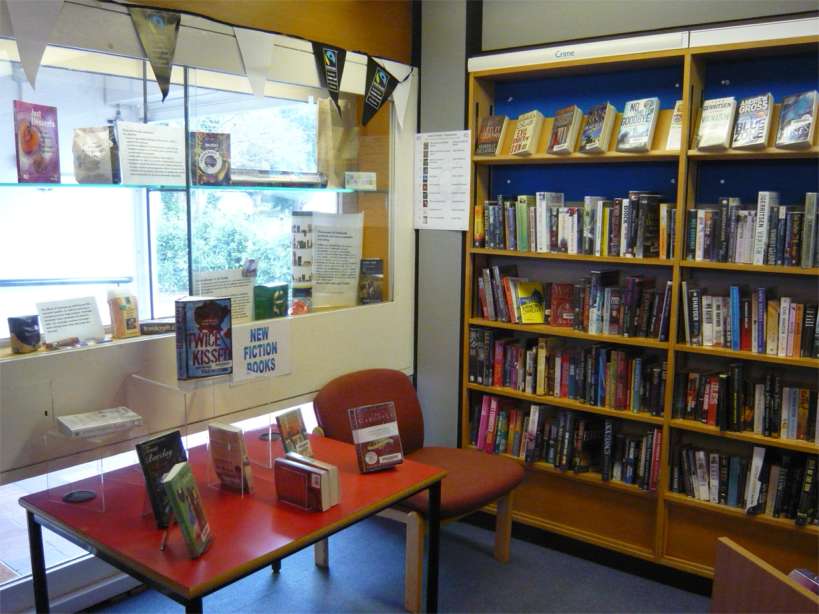
Who, if anyone usually accompanies you to the library? Is it somewhere you go alone? Or is it a regular outing with family or friends? Which do you prefer?
My library visits are either with family or alone. As a child I went with my mother and when I was old enough I started to go by myself. My first full-time job was as a librarian so then I used to bring books home with me. Later I took my son with me and now my husband sometimes come with me.
I have no preference – if I’m with others we split up in the library to browse and meet up when we’ve chosen our books anyway so it really doesn’t make any difference.
It’s been a few weeks since I finished reading Jane Austen: a Life by Claire Tomalin. I listed this book as one I hadn’t reviewed in a Weekly Geeks post – the idea being to spur me on to writing the outstanding reviews and invite questions about the books from other book bloggers.
Dorothy, who sent me the book and who writes Of Books and Bicycles asked Were there things you learned in the book that surprised you? And Eva who writes A Striped Armchair’s questions are – Are you a big Austen fan? Did reading her biography enhance her fiction for you, or take something away? Is Tomalin a relatively objective biographer?
My outstanding impression of the book is how amazingly detailed it is given the fact that few records of her life have survived. It did surprise me a little that Claire Tomalin admits that it was not an easy story to investigate, but explained that Jane Austen wrote no autobiographical notes and if she kept any diaries they did not survive her. Most of her letters to her sister Cassandra were destroyed by Cassandra and a niece destroyed those she had written to one of her brothers. However, 160 letters remain and there is a biographical note of just a few pages written by her brother, Henry after her death. He explained that her life “was not by any means a life of event.” But as Tomalin discovered her life was “full of events, of distress and even trauma, which left marks upon her as permanent as any blacking factory.”
As I’d previously read Carol Shields’s biography of Austen there was really very little I learned reading this book that surprised me – I already knew the outline of her life, that she was considered rather unrefined by her relatives and of her love for Tom Lefroy who eventually married an heiress.
In answer to Eva’s questions I have loved Jane Austen’s books for years – since reading Pride and Prejudice as a young teenager. I’ve also enjoyed and been impressed by Claire Tomalin’s biographies. Reading her biography of Austen has enhanced my reading of her fiction, setting them in the context of her world. Jane Austen was not remote from the events of her day, with brothers in the navy, and England at war with France. Tomalin is a relatively objective biographer although every now and then she voices opinions based on her impressions, such as this one concerning Jane’s lack of vanity and efforts to be concerned with fashion and dress design:
In her letters she may comment on the fact that ladies are wearing fruit on their hats, and that it seems more natural to have flowers growing out of the head, and be precise about the colour she requires for dress material; but the impression we get is that, had she lived two hundred years later, she would have rejoiced in the freedom of an old pair of trousers, with a tweed skirt for church, and one decent dress kept for evening. (pages 112 – 113)
But mainly she sticks to the facts, gleaned from the documentary material and concludes that Jane Austen
… is as elusive as a cloud in the night sky.
She has a way of sending biographers away feeling that as Lord David Cecil put it, she remains “as no doubt she would have wished – not an intimate but an acquaintance. ” Her sharpness and refusal to suffer fools, makes you fearful of intruding, misinterpreting, crassly misreading the evidence. (page 285)
I thoroughly enjoyed reading this book and particularly liked the quotations from Austen’s letters and the details about her family and friends.
I always like maps and thought this map at the front of the book showing Steventon and the Austens’ Hampshire Neighbours was a useful feature – I consulted it regularly. The End Notes are good, giving information on the sources and there is also a helpful index.
 It’s Tuesday again. Teaser Tuesdays is a weekly bookish meme, hosted by MizB of Should Be Reading.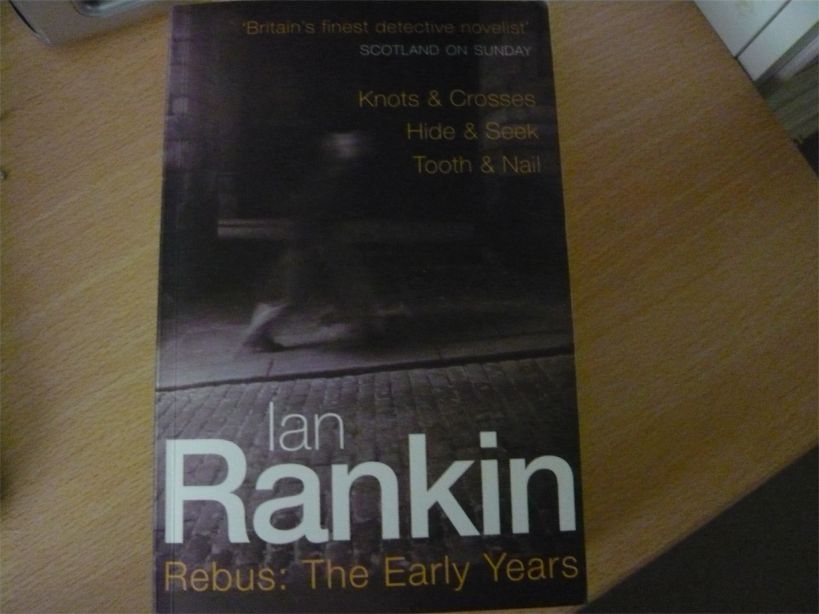



 BooksPlease