The Sunday Salon – After the Victorians

tssbadge1

In my last Sunday Salon post I mentioned I was reading about the 1920s in A N Wilson’s After the Victorians. This week I’ve moved on to the 1930s – today’s chapter is called “Puzzles and Pastorals” and I enjoyed it immensely.

after-the-victoriansI like word puzzles and most days do one or more  Alphapuzzles, also known as Codewords. I also like doing crosswords, although I’m not very good at the cryptic puzzles. The Times Crossword became a regular feature dating from 1930. It soon became competitive with letters to the editor boasting of how quickly the writers could solve the puzzle, culminating in the account of M R James, the Provost of Eton and ghost-story writer who could complete the crossword in the time it took to boil an egg ‘and he hates a hard-boiled egg.’ The editorial crowed about the evidence that ‘the best brains in the country’ were viying with each other to complete the puzzle whilst Britain was lagging behind in solving the unemployment crisis or reviving British Industry.

From crosswords Wilson then moves on to discussing the ‘whodunnit mystery story’, another product involving solving a puzzle. Amongst others, he mentions Ellery Queen, Agatha Christie, and Ronald Knox who wrote six detective stories between 1926 and 1937. The appeal of the mystery genre during the 1930s is not simple to explain as it falls into many different categories – the ‘locked room’ mysteries, books based on deductive reasoning, mysteries that rely more on their settings than on plots and the enclosed world of the country house. Wilson sums up the Thirties in this little paragraph:

The 1930s turn into a murder story on a grand scale. Old scores will be settled. Old injustices avenged, new resentments expressed in murder. Of the dominant figures who cross the pages in the early years – Hitler, Laval, Mussolini, Ribbentrop – very many, like characters in Cluedo were headed for violent ends.

In writers of the 1930s a sense of  ‘Englishness’ developed – such as in the mysteries of John Dickson Carr, ‘Michael Innes’, Somerset Maugham and John Cowper Powys. Reading about these writers makes me want to read their books, particularly the four Wessex novels of Powys – Wolf Solent, A Glastonbury Romance, Maiden Castle, Weymouth Sands and his Autobiography .

Wilson ends this chapter by describing the work of Stanley Spencer, whose return to his childhood village of Cookham, is emblematic of Britain’s retreat into itself after the First World  War. Wilson writes:

British Elegy, and most specifically English Elegy, is the overriding note of serious art and literature for the next twenty years. So much had been lost and destroyed in the war that it is as though the creative intelligences in Britain wanted to recover Eden, not to chart new lands.

I’ve passed the Stanley Spencer Gallery in Cookham many times but I’ve never gone in; I’ve only seen reproductions of his work. Stanley Spencer’s paintings are according to Wilson ‘stylishly executed landscapes of a highly traditional style’. There are religious pictures – the villagers of Cookham experiencing a General Resurrection in Cookham Churchyard, scenes of life and death during the war, and his lowlife paintings of ‘overweight women and randy, bewildered little men like himself.’  Maybe next time I’m in Cookham I’ll stop and have a look for myself.

Wilson concludes that in all this Britain turned its back on the rest of the world and pulled up the shutters:

The troops had come back from the war. The politicians and the businessmen had conned everyone into thinking that life would be different. It wasn’t a land fit for heroes. It was still as unfair and as class-riven and silly as before, simply less rich, and less certain of itself.

There is so much in this book – more than a history of the period, encompassing literature, politics, economics and culture, ranging from ephemera to character sketches and anecdotes. It’s entertaining –  popular history rather than the standard historical account of events.
Knots and Crosses by Ian Rankin:Book Notes

I included Knots and Crosses by Ian Rankin in a Weekly Geeks post on unreviewed books and Deb asked: Is ‘Knots and Crosses’ the first Rebus novel you’ve read? How important is it to you to read such a series in order? Does it matter? The Rebus novels, to me, are as much about Rankin’s development of his character as they are puzzles/crimes to be solved.

Eva asked: Is Knots and Crosses more of a mystery or a thriller?

Knots and Crosses is the first of the Rebus books, but it is not the first one I’ve read. I’ve also watched many of the TV dramas, although I don’t remember this one. I think it is better to read them in the order they were written because the character of Rebus evolves throughout the series. In Knots and Crosses various facts about his past are revealed, which helped me understand events in the later books. And it’s definitely more of a mystery than a thriller.

Briefly it’s about the search for the killer of young girls, set in Edinburgh. Rebus receives anonymous letters containing knotted string and matchstick crosses – a puzzle that is connected with his time in the SAS, that only he can solve. It’s fast paced and I did work out who the killer is before the end of the book, but that only added to my satisfaction.

Knots and Crosses is in an omnibus edition, Rebus: the Early Years, containing the first three Rebus books and a short introduction in which Rankin explains how he came to write the Rebus books:

I wanted to update Dr Jekyll and Mr Hyde to 1980s Edinburgh. My idea was: cop as good guy (Jekyll), villain as bad guy (Hyde). So I wrote Knots and Crosses. I was living in a room in a ground-floor flat in Arden Street, so my hero, John Rebus, had to live across the road. When the book was published, I found to my astonishment that everyone was saying that I’d written a whodunnit, a crime novel. I think I’m still the only crime writer I know who hadn’t a clue about the genre before setting out.

I’m now reading the second Rebus book –  Hide and Seek.

Being a Tourist in London

During last week’s heatwave we made one of our rare visits to London. I can’t remember the last time I went, probably it was over two or three years ago when I attended a course for work. Such visits meant travelling in by train, dashing to the course venue and seeing very little of London. So it was strange to be in London with the whole day devoted to sightseeing.

First we went to the Museum of London – my first time there. Some of its galleries are closed as they are being redeveloped but there was still plenty to see – the history of London up to 1666. The highlights for me were the gallery showing Medieval London AD410-1558, topical for me as I’d just finished reading Company of Liars a novel of the plague by Karen Maitland, and the exhibition of the Great Fire of London 1666. I was also fascinated by the shoes on display – the long-pointed toe, or ‘poulaine’, popular in London in the 1380s, with the toe measuring up to 4 inches long, stuffed with moss or hair. The 16th/17th century jewellry display is just beautiful.

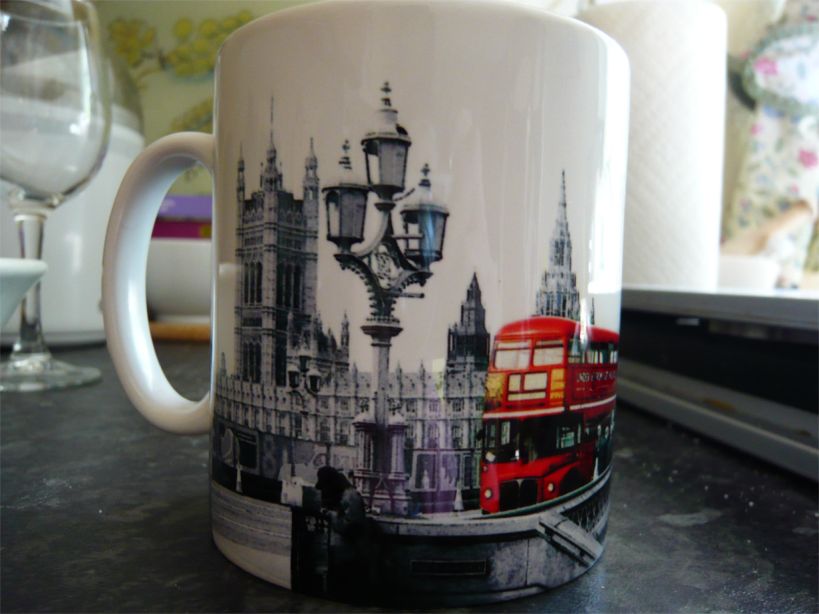
london-mug

museum-highlightsIn the Museum shop I bought a booklet of the Museum Highlights to remind me of what I’d seen, and a mug showing the Houses of Parliament and a red London double-decker bus.

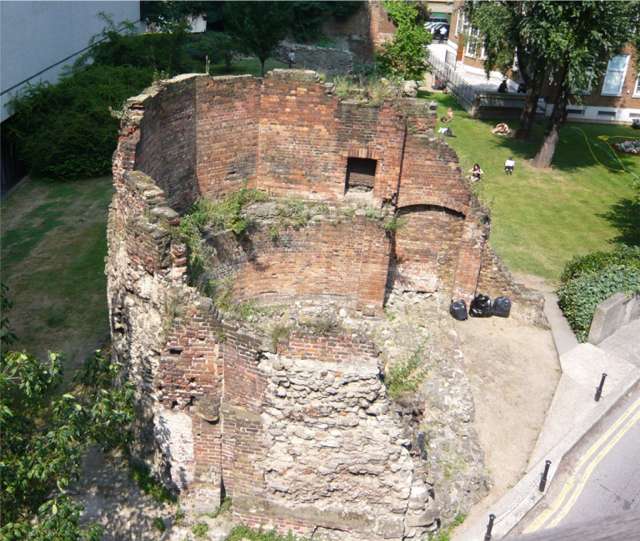
Next up was a walk from the Museum along London Wall to Wren’s Monument. I was delighted to see the remains of the original City Wall outside the Museum, including a thirteenth century tower.

london-remains-of-tower

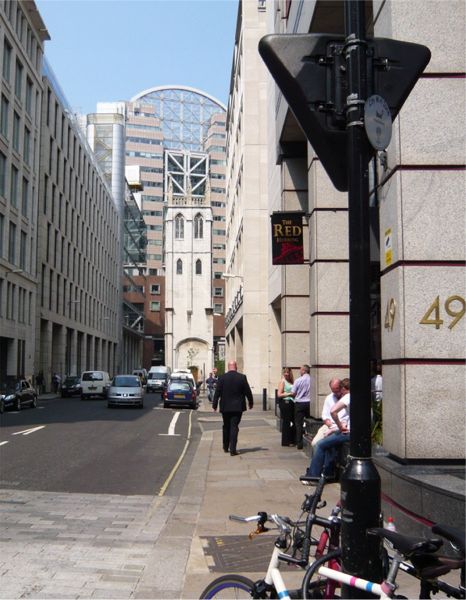
As we were on our way to see Wren’s Monument commemorating the Great Fire of London we didn’t have time to stop and look at anything else, but I took photos of various sights along the way including St Alban’s Church Tower, sandwiched on a traffic island in Wood Street. I didn’t know what it was but thought it looked so incongruous between modern buildings. According to various websites it may date back to AD 930. The rest of the church was destroyed in the Great Fire, subsequently rebuilt by Christopher Wren in 1685, only to be bombed in the Blitz in 1940. The remaining perpendicular tower with its pinnacles is now dwarfed by modern buildings.

st-albans-church-tower-wood-st-city-of-london1

The Royal Exchange (now a luxurious shopping centre) – you can just see the Gherkin in the background.

royal-exchange-city-of-london1

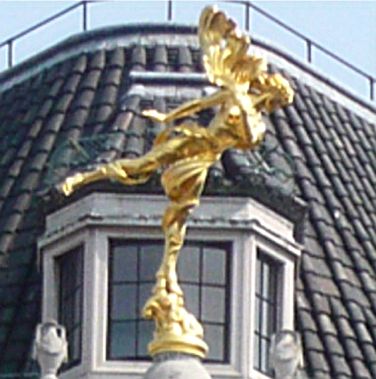
And this golden statue caught my eye

ariel

It’s Ariel, or the Spirit of the Winds, on the Bank of England on Tivoli Corner, by Sir Charles Wheeler.

ariel-statue-bank-of-england1

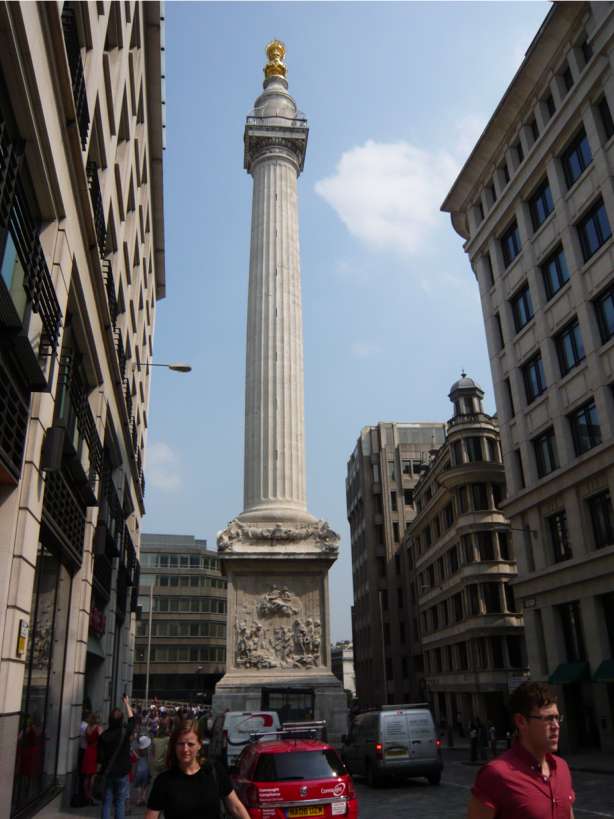
And here is Wren’s Monument, a Doric order column made of Portland stone with a viewing tower. It’s 202 feet tall, which is the distance from the base of the monument to the shop on Pudding Lane where the fire started. I didn’t go up it – my legs wouldn’t take all those stairs but others with me did – maybe I can get one of their photos.

monument

monument1

The photo above is of the viewing tower and if look closely at the enlarged picture (click on it)you can just make out my son and grandson looking down.

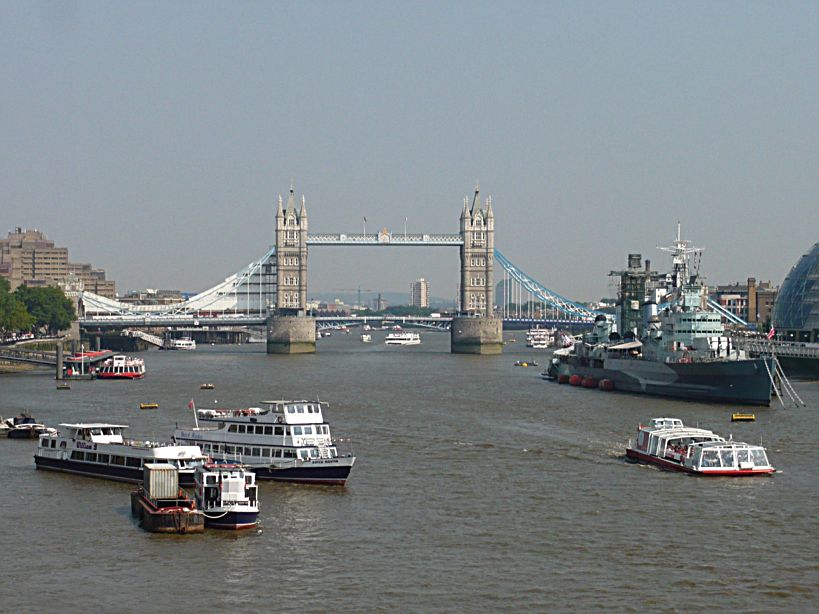
And finally here is Tower Bridge taken from London Bridge.

tower-bridge

Unread – Booking Through Thursday

btt button

An idea Deb got from The Toddled Dredge (via K for Kat). Here’s what she said:

‘So here today I present to you an Unread Books Challenge. Give me the list or take a picture of all the books you have stacked on your bedside table, hidden under the bed or standing in your shelf – the books you have not read, but keep meaning to. The books that begin to weigh on your mind. The books that make you cover your ears in conversation and say, No! Don’t give me another book to read! I can’t finish the ones I have!’ ‘

My first thought was “impossible, I’m not listing all my unread books, way too many!”  My second thought was OK – just the books in piles by the bed. These are there because at some time I thought I’d read them next and then forgot about them when others got added on top. I dragged them out and here is the list, in no particular order:

  • Turbulence by Giles Foden – a book from LibraryThing’s Early Reviewer Program. I have just started this and it promises to be good.
  • The Ode Less Travelled by Stephen Fry – another one I’ve started. It looks excellent but it’s not one to read striaght through – that’s my reason (excuse) for not having finished it.
  • Roma by Steven Saylor – a chunkster that I really want to read.
  • The Tuscan Trilogy by Derek Adie Flower – this was forgotten about at the bottom of a pile – sorry Derek.
  • The House of a Thousand Spirits by Isabel Allende – can’t remember why I haven’t started this one.
  • Resistance by Owen Sheers – I was full of enthusiasm for this when I bought it and since then I’ve never been in quite the right frame of mind to read it. I loved his series on BBC4 recently, A Poet’s Guide to Britain.
  • Stockings and Suspenders: a Quick Flash by Rosemary Hawthorne. This is a history of stockings etc full of fascinating information. Did you know that stockings are 3,000 years old and the first stocking machine was invented by a Nottingham vicar? It’s only a short book – must read it soon.
  • Shoe Addicts Anonymous by Beth Harbison – a library book – chic lit I think.
  • Fleshmarket Close by Ian Rankin – for when I get up to it in his Rebus series.
  • The Naming of the Dead by Ian Rankin – as above. (Both books borrowed from our son).
  • Whitethorn Woods by Maeve Binchy. I have started this and was disappointed it didn’t appeal much.
  • The Chymical Wedding by Lindsay Clarke – started but thought it a bit heavy going so I left it for a while.
  • The Appeal by John Grisham – again forgotten about at the bottom of a pile.
  • The Lollipop Shoes by Joanne Harris – forgotten about it because it was buried at the back of the piles.

This is a good exercise if only to remind me of the books buried by the bed.

My third thought came to me as I passed yet another pile of books on the bookcase on the landing, so instead of listing them here is a photo –

Bookcase Unread Books

I’ve had the Thomas Hardy book a long time now and although I’d started it once I put it to one side whilst I read more of his books and haven’t got back to it yet!

I’m in no danger of running out of books to read – I just need more space for them and time to read them!

Grand Union Canal Boat Trip

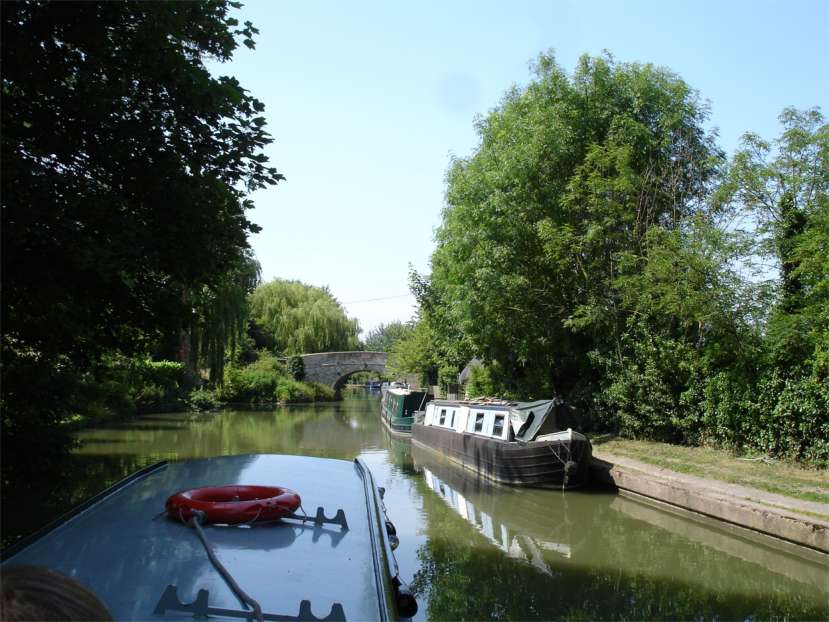
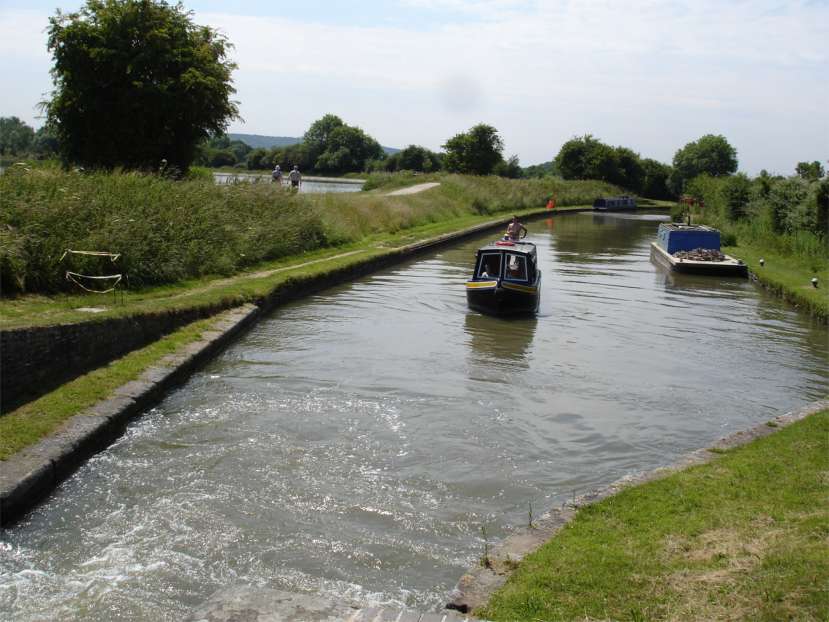
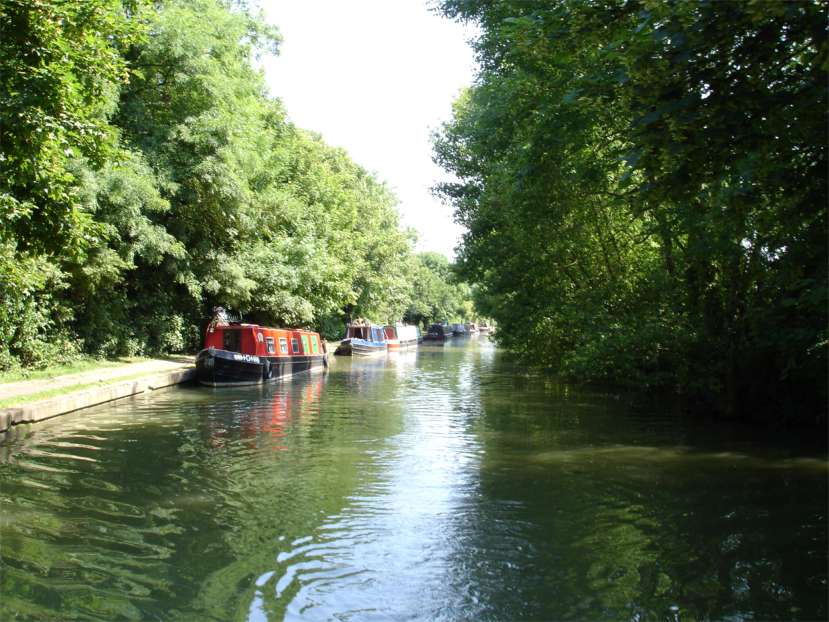
Last week it was D’s birthday and we spent the day with the family on the Grand Union Canal. It was a beautiful, hot summer’s day and we had a great time on a  little (30ft) boat, stopping for lunch at a canal-side pub.

Our boat for the day
The view from our boat


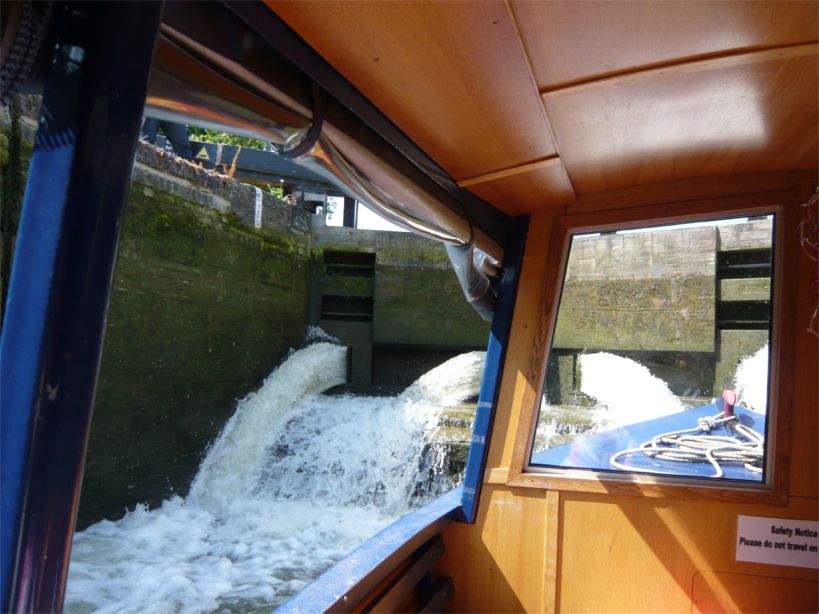
Approaching a lock
Our boat approaching a lock


The view from the boat
Another view from the boat
 
The first lock
We went through several locks - this was the first one
 
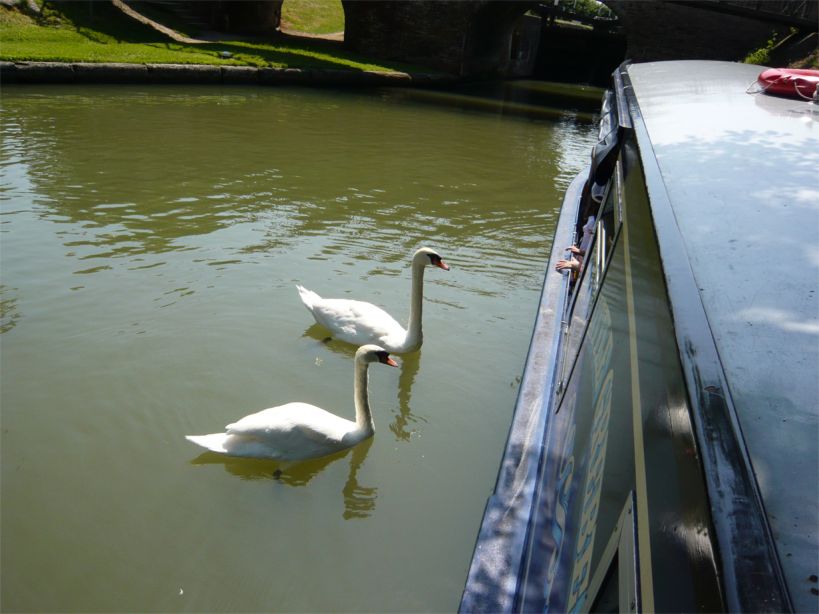
Swans come looking for food
Swans came looking for food


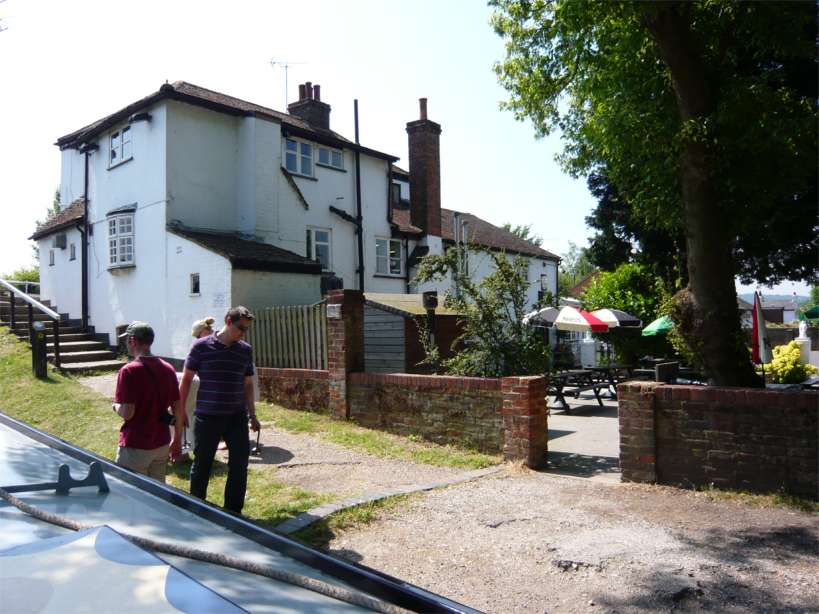
Pub-lunch stop
The pub & garden seen from the boat

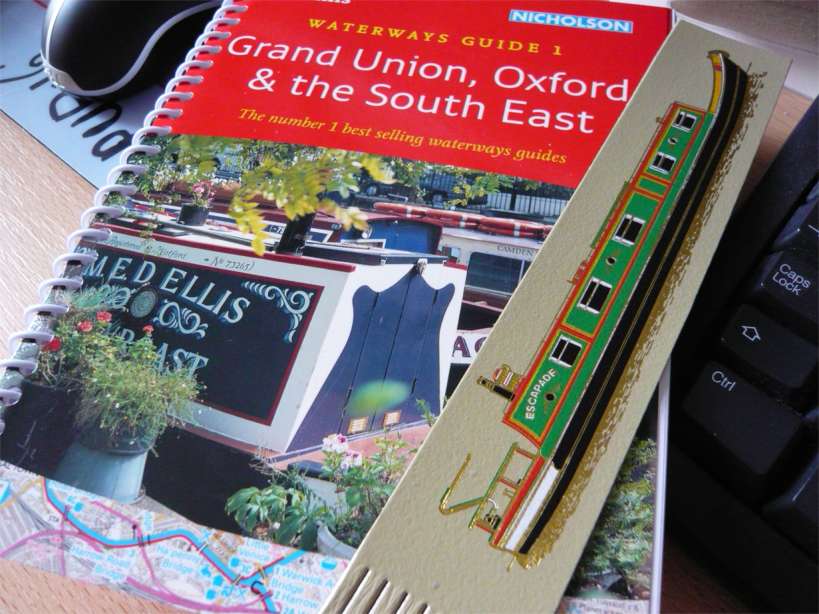
My background reading before the boat trip was from the excellent Waterways Guide 1 – Grand Union, Oxford & the South East published by Collins/Nicholson new edition 2009. And my souvenir from the marina shop is a leather bookmark.

canal-book-bkmk