Dead Man’s Folly by Agatha Christie: Book Review

agatha_christie_rcYears ago I read as many of Agatha Christie’s books as I could find, but I don’t remember ever reading Dead Man’s Folly before. This one features Hercule Poirot and Mrs Ariadne Oliver.  There is of course a murder with a most unlikely victim. It kept me guessing to the end as there is such a misleading tangle of evidence.

Mrs Ariadne Oliver has devised a Murder  Hunt for Sir George Stubbs at the Fete to be held at Nasse House, a big white Georgian house looking out over the river (based on Agatha’s own house Greenway in Devon). She has a feeling that something is wrong and summons Hercule Poirot to join her, ostensibly to present the prizes.

I did find the number of characters a bit bewildering – there are so many, including the bluff Sir George and his exotic and beautiful, if simple wife, Hattie; Miss Brewis (Sir George’s secretary); Mrs Folliat whose ancestors had lived at Nasse House for generations; a Member of Parliament and his wife; an atomic physicist and his wife; an architect; the butler; Lady Stubbs’s cousin; and a couple of girl hitch hikers in shorts who cause Poirot to shut his eyes in pain and reflect

 … that seen from the back, shorts were becoming to very few of the female sex. Why, oh why, must young women array themselves thus? Those scarlet thighs were singularly unattractive!

dead-mans-folly001

The Murder Hunt goes badly wrong when the young Girl Guide, Marlene playing the part of the murder victim, is discovered in the boat house garotted with a piece of clothes line. Just who could possibly have a motive for killing Marlene? And what is the significance of the little white “Folly”, set high in the woods above the river?

The police have no idea and even Poirot is baffled for a while. The chief constable thinks he may have been “a little Belgian wizard in his day – but surely, man, his day’s over. He’s what age?” 

In the end, of course, it is Poirot who makes sense of it all.  I didn’t think this was as good as some of Agatha Christie’s other books, but it was still enjoyable.

To read more reviews of Agatha Christie’s books visit Kerrie’s Agatha Christie Reading Carnival.

Adding to My To-Be-Read Piles

wlwo

Some more books found their way to me last Saturday. In the  morning the postman delivered When the Lights Went Out: Britain in the Seventies by Andy Beckett sent to me courtesy of LibraryThing Early Reviewers Programme.  Actually, the postman  just left it propped up against the wall by the front door and I didn’t find it until about 11am, so anyone could have walked off with it!  This is a whopping book of over 500 pages and it’ll take me ages to read. The Seventies were times of strikes, the three-day week and the Winter of Discontent. My first impressions of this book are that it looks well researched from the number of sources Beckett has used and there’s a chronology that may be useful, but it does look as though it could be more of a political history than I would like.

I went to a booksale on Saturday afternoon. I debated with myself whether I should go or not, after all I don’t need any more books right now, especially considering I’d just got When the Lights Went Out.  But the booksale was in aid of Multiple Sclerosis and other local charities so I felt I ought to go, because if my reading helps other people that’s a plus.

There  were plenty of books to choose from both fiction and non-fiction and I came away with these:

  • The Country Life by Rachel Cusk, the winner of the Somerset Maugham Award 1998. I’d enjoyed her Arlington Park, so I thought this looked good. On the back cover it’s described as being a mixture of P G wodehouse and Jane Austen!
  • Mrs Jordan’s Profession: the story of a great actress and a future King by Claire Tomalin.  The biography of Dora Jordan, a comic actress and the mistress of William IV in late-eighteenth century England. My knowledge of this period is very slight and of the history of the theatre, practically non-existent. I am addicted it seems to Claire Tomalin’s biographies.
  • A Place of Greater Safety by Hilary Mantel. This is yet another massive book – it’s nearly 900 pages long. I do like historical fiction and Hilary Mantel’s writing. From the back cover:

Superbly readable … nothing less than a well-researched but richly idiosyncratic fictional history of the French Revolution …

  • Billy by Pamela Stephenson. This biography by Billy Connolly’s wife was my husband’s choice, but I’ve no doubt I’ll read it one day. Billy is a very funny comedian, although not everyone’s cup of tea. Recently we watched his TV series Journey to the Edge of the World when he travelled through the North West passage from the Atalantic to the Pacific, packed with laughter, information and stories of pioneers, colourful characters and wierd and wonderful scenery.

Teaser Tuesday – The Severed Head

teaser-tuesdayIt’s Tuesday again – the day for posting two or three sentences as teasers from a book you’re currently reading without giving away any spoilers, hosted by Mizb.

Today my teasers are from Iris Murdoch’s A Severed Head.

I needed Georgie, I loved her, I felt I could not possibly, especially now, do without her. Yet I did not quite see myself marrying her.

Martin, who is having an affair with Georgie, is shocked when he discovers that his wife, Antonia, has also been having an affair and is leaving him.

Book Review: Star Gazing by Linda Gillard and a Giveaway!

star-gazing001

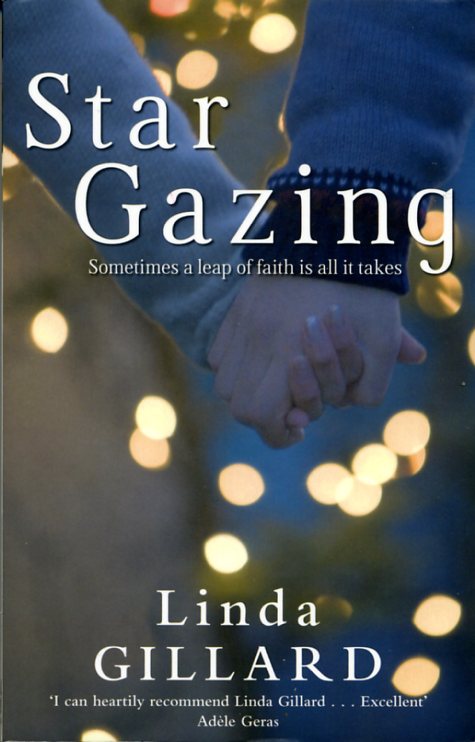
Star Gazing by Linda Gillard was one of the best books I read in April. I have wondered many times how I would cope if I were blind. This book goes some way to describing what it must be like – a world where the other senses are  heightened, where sound is more distinct  and touch and smell of great importance.

Marianne who has been blind from birth, is now widowed and even though she lives with her older sister in Edinburgh she is lonely and angry. Her husband was killed years before in the world’s worst-ever offshore disaster – the Piper Alpha oil rig explosion.  By chance she meets Keir, a solitary Highlander and geophysicist, who also works on the oil rigs, but who spends his time on shore at his house on Skye. Marianne describes his voice as

“… a good dark chocolate, the kind that’s succulent, almost fruity, but with a hint of bitterness. He hit his Highland consonants with the same satisfying ‘click’ that good chocolate makes when you snap it in pieces. (The blind are as fetishistic about voices as the sighted are about appearances, so allow me, if you will to describe this man’s voice as chocolate. Serious chocolate. Green & Black’s, not Cadbury’s.) (page 10)

Despite her misgivings and unwillingness to get involved with another oilman, Marianne trusts Keir when he takes her to Skye to ‘show’ her the stars. Keir is kind and gentle but makes little concession to Marianne’s blindness in contrast to other men she has known.  At times Marianne’s stubborness is quite exasperating, but she is immensely resourceful. One of the most memorable episodes is when Keir has left her on her own at the house on Skye whilst he goes shopping and Marianne, startled by a fall of snow from the roof loses her bearings. Fearful of hypothermia she  struggles desperately through the snow and a frozen pond, before finding the burn that she follows back to safety. I had to hold my breath whilst reading this passage for fear she wouldn’t make it.

The locations in Star Gazing are just beautiful, described so vividly you could almost be there. Marianne falls in love with Keir and with Skye:

I was a fool to think I could resist the island: the scent of daffodils, gorse and primroses; the pitiful bleat of day-old lambs; the symphonic dawn chorus; the knowledge that, a few metres from my muddy, booted feet, grazing in the evening sun (could I actually hear them munching?), were a pair of hares. When they moved away, Keir drew my hand down quickly to the flattened grass where they’d sat, ‘looking like tea-cosies’, and it was warm to the touch. (page 189)

Keir’s comparison between the sights of nature in terms of music is pure genius. This is just one example:

Now if you look to the left of Orion, snapping at his heels you’ll find the brightest star in the sky: Sirius, the Dog Star, Orion’s hunting dog. Sirius is quite close, only eight light years away and it’s forty times more luminous than the sun, so that’s why it’s so bright. Think of … a clarinet, the way it dominates the other instruments of the orchestra. Sirius outshines all the other stars and draws your eye. (page 82)

I loved Star Gazing. It’s not just a love story, it’s also about how we ‘see’ the world, how we interact with other people and how we cope with our disabilities be they physical, emotional or otherwise. The epigraph from William Blake is I think very apt, ‘As a man is, so he sees.’ I liked this so much that I had to find its context:

    1. The tree that moves some to tears of joy
    1. Is in the Eyes of the others only a Green thing
    1. that stands in the way.
    1. Some See Nature all Ridicule & Deformity,
    1. & by these I shall not regulate my proportions;
    1. & Some Scarce see Nature at all.
    1. But to the Eyes of the Man of Imagination,
    1. Nature is Imagination itself.
    1. As a man is, So he Sees.
    As the Eye is formed, such are its Powers.

Linda has kindly sent me a signed copy of Star Gazing as a Giveaway book. Leave a comment on this post telling me why this book interests you for a chance to win it in the draw next Monday.

Musing Monday – The To-Be-Read Pile

monday-musingToday’s MUSING MONDAYS post is about your tbr pile€¦

How many books (roughly) are in your tbr pile? Is this in increasing number or does it stay stable? Do you ever experience tbr anxiety in the face of this pile? (question courtesy of Wendy)

I don’t have a tbr pile. I have piles and piles and a bookcase full of them too. I’ve not counted them and don’t really want to know how many there are, because that would give me tbr anxiety/stress. If I could bear to look I could see from LibraryThing how many I’ve tagged TBR, but not all my books are in LT yet. Anyway, I would rather just know that I’ve got plenty to read to keep me going for a while.

The trouble is that although I read from the piles and the bookcase I keep adding to them, so the piles never really go down.