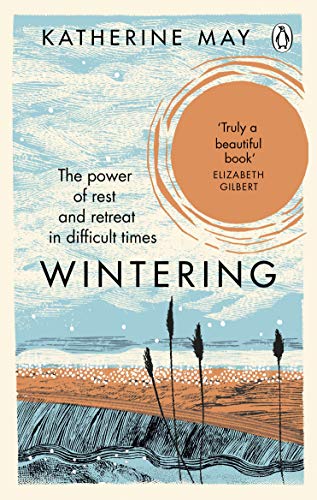
Wintering by Katherine May

Synopsis

Wintering is a poignant and comforting meditation on the fallow periods of life, times when we must retreat to care for and repair ourselves. Katherine May thoughtfully shows us how to come through these times with the wisdom of knowing that, like the seasons, our winters and summers are the ebb and flow of life.

A moving personal narrative interwoven with lessons from literature, mythology and the natural world, May’s story offers instruction on the transformative power of rest and retreat. Illumination emerges from many sources: solstice celebrations and dormice hibernation, C.S. Lewis and Sylvia Plath, swimming in icy waters and sailing arctic seas.

Ultimately, Wintering invites us to change how we relate to our own fallow times. May models an active acceptance of sadness and finds nourishment in deep retreat, joy in the hushed beauty of winter, and encouragement in understanding life as cyclical, not linear. A secular mystic, May forms a guiding philosophy for transforming the hardships that arise before the ushering in of a new season.

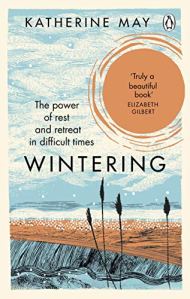
The title and the description interested me, so I wanted to read Wintering: the Power of Rest and Retreat in Difficult Times by Katherine May. I liked the beginning where she defines wintering as

Wintering is a season in the cold. It is a fallow period in life when you’re cut off from the world, feeling rejected, sidelined, blocked from progress, or cast into the role of an outsider. Perhaps it results from an illness; perhaps from a life event such as a bereavement or the birth of a child; perhaps it comes from a humiliation or failure. (page 9)

She then goes on to say that this book is

about learning to recognise the process, engage with it mindfully, and even to cherish it. We may never choose to winter but, we can choose how. (page 12)

This was the start of a period in her life where she felt as though she had fallen through into ‘Somewhere Else’, just as dust shifts down between the floorboards, a lonely and painful place. It was the time when her husband suddenly became very ill during the celebrations for her fortieth birthday and told her he’d vomited. Her reaction was to think:

what a nuisance it was. We’d have to cut the day short and head back home, and then he’d probably have to sleep it off. He was clutching his middle, but that didn’t seem particularly troubling under the circumstances. I wasn’t in any hurry to leave, and it must have shown, because I have a very clear memory of the sudden shock when our friend – one of our oldest ones, known from schooldays – touched me on the shoulder and said, ‘Katherine, I think H is really ill.’ (pages 2-3)

She still didn’t think it was anything really serious. But they went home, he went to bed and two hours later he said he thought he needed to go to hospital. She took him, after leaving her son with neighbours, and went home after midnight when he still hadn’t been taken to a ward. The next morning she returned to find him screaming in agony and suddenly realised she could lose him.

Whilst he was still in hospital she noticed a grumbling pain along the right side of her abdomen which she thought was in sympathy with H’s appendicitis. But about a year later she admitted to her GP that she’d ignored all the major signs of bowel cancer. This shocked me and I was concerned to know more – she’d ignored it for a year! She was referred for urgent tests and signed off sick. Was it cancer? I was worried, but it was only many pages later, she revealed that a nurse eventually told her she ‘held within her a mass of spasms and inflammations, a wonderland of malabsorption.’ This was life-changing as it wouldn’t just go away – it involved a three day diet of low-fibre eating. I felt this was tucked away within information about other topics.

There are so many topics covered that it would be an extremely long post if I went into more detail! It is divided into chapters headed October through to March, covering different topics. But I found it rather disjointed and muddled, moving from one topic to the next and from one occasion to the next, but not in a chronological sequence. It’s a mix of memoir/self-help book, intermingled with her own personal issues, experiences and reminiscences.

She writes a bit about the Danish concept of hygge, which represents cosiness as a kind of mindful practice and homely comfort, but it is more than this as she broadens her scope to include such things as, visits to Iceland and Norway; Halloween, folklore, the starkness of winter, sleep, hibernation, night time waking , SAD, Stonehenge and druids, prayer, Christmas and New Year, pregnancy, wolves, snow, swimming at New Year in the sea at Whitstable, ants, bees, Sylvia Plath’s poem Wintering, robins, and losing her voice and singing, as well as others.

It wasn’t what I’d expected, but overall I enjoyed it, although I think it could really do with an index to guide the reader to the individual topics.

WWW Wednesday: 12 March 2025

WWW Wednesday is run by Taking on a World of Words.

The Three Ws are:

What are you currently reading?
What did you recently finish reading?
What do you think you’ll read next?

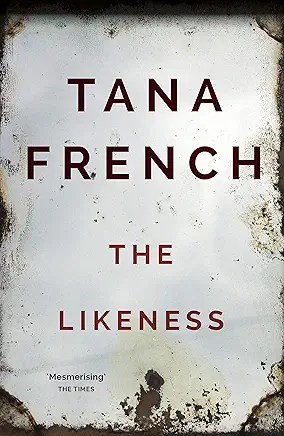
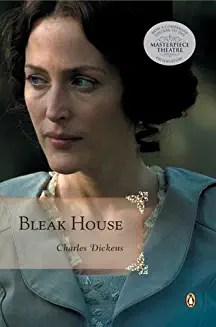
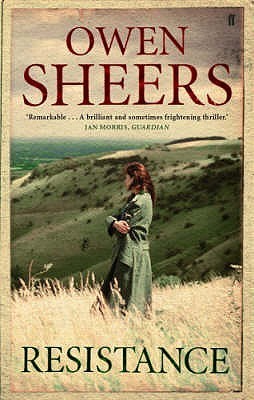
Currently I am reading Resistance by Owen Sheers, The Likeness by Tana French and Bleak House by Charles Dickens. They’re all what I call ‘wordy’ books and are taking me quite a while to read.

Resistance is an alternative history novel by Welsh poet and author Owen Sheers. The plot centres on the inhabitants of the isolated Olchon valley in the Black Mountains of south-east Wales close to Hereford and the border.  It’s set in 1944–45, shortly after the failure of Operation Overlord and a successful German counterinvasion of Great Britain.  It has beautiful descriptions of the Welsh countryside and farming life. I’m enjoying it but finding it slow reading.

The Likeness by Tana French, book 2 of the Dublin Murder Squad. I enjoyed reading the first book In the Woods, in 2014 but I don’t remember the details. No matter it reads well as a standalone. Detective Cassie Maddox is shocked to find out that a murdered girl is her double. At nearly 500 pages this will take me a while to read!

Bleak House by Charles Dickens is another chunkster, over 1000 pages full of description and lots of characters, about the complex and long-drawn out lawsuit of Jarndyce v Jarndyce. I’m only on page 43. I love the beginning – London in the fog.

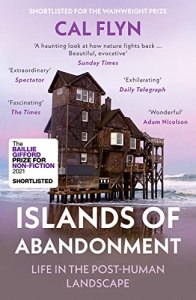
The last book I read was Islands of Abandonment: Life in the post-human landscape by Cal Flyn, a remarkable book, about abandoned places: ghost towns and exclusion zones, no man’s lands and fortress islands – and what happens when nature is allowed to reclaim its place.

I began reading this book in October and have been reading it slowly since then, only finishing it yesterday. It’s not a book to read quickly, but rather one to take your time to take in all the details. It’s fascinating, thoroughly researched and beautifully written.

What will I read next? As I’m currently reading the three novels shown above, which will probably take me until the end of the month and beyond I’m not planning to start any more novels. However, I like to have a nonfiction book on the go to read with my breakfast, so tomorrow I’ll start reading Wintering by Katherine May. It’s described as  ‘a poignant and comforting meditation on the fallow periods of life, times when we must retreat to care for and repair ourselves. Katherine May thoughtfully shows us how to come through these times with the wisdom of knowing that, like the seasons, our winters and summers are the ebb and flow of life.’ (Amazon UK)

Recent Additions: Christmas Presents

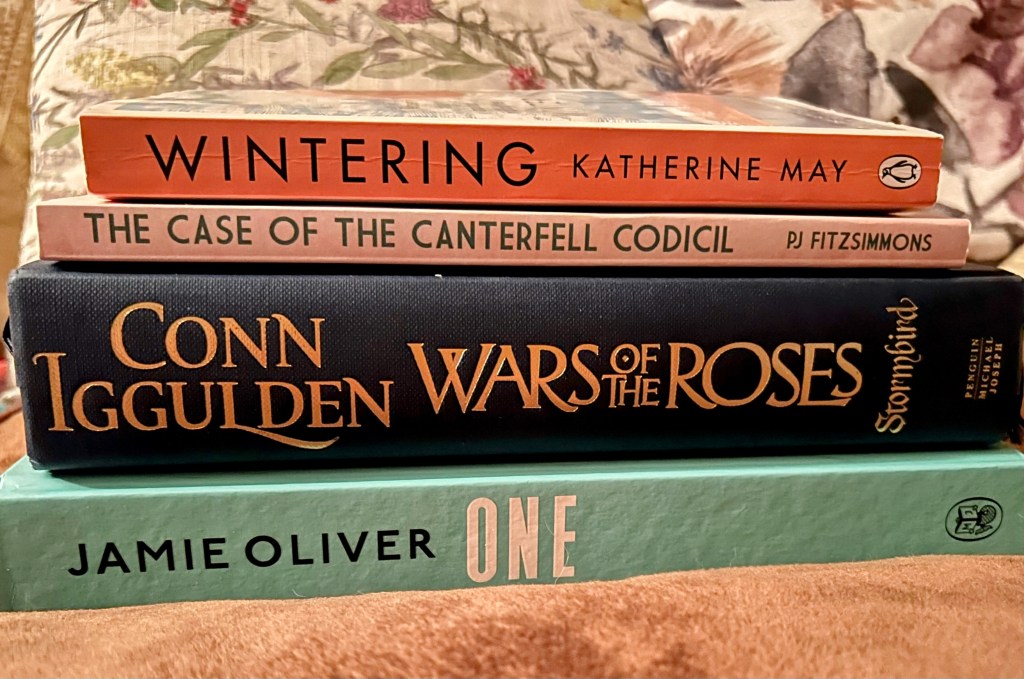
I’ve always loved books and whenever anyone asked me what I’d like for my birthday or Christmas the answer was always ‘books, please’ . So l was delighted this last Christmas to receive four books!

Two of them are books that were on my wish list and the other two were complete surprises.

One: Simple One-Pan Wonders by Jamie Oliver (from my wish list)

I’ve got some of Jamie’s books, and this one looks like a good addition. In his introduction he writes ‘With a twinkle in my eye I want to position this book as one that is absolutely dedicated to the art of minimal washing up – you cook each recipe in just one pan or tray … it’s about making your life easier.’ I like the idea of minimal washing up and will be cooking quite a lot of these recipes.

It has over 120 recipes for tasty, fuss-free and satisfying dishes cooked in just one pan. What’s better: each recipe has just eight ingredients or fewer, meaning minimal prep (and washing up) and offering maximum convenience. With chapters including Veggie Delights, Celebrating Chicken, Frying Pan Pasta, Batch Cooking, Puds & Cakes, it all looks simply delicious.

Wars of the Roses: Stormbird Book One by Conn Iggulden (from my wish list)

Historical fiction has long been a great favourite of mine. I absolutely loved Sharon Penman’s The Sunne in Splendour that made me want to know more about the Wars of the Roses.So, when I found Iggulden had written a trilogy about the civil war I was keen to read it. I’ve read some of Iggulden’s other historical fiction novels and loved them, so I’m looking forward to reading this.

King Henry V – the great Lion of England – is long dead. In 1437, after years of regency, the pious and gentle Henry VI, the Lamb, comes of age and accedes to the English throne. His poor health and frailty of mind render him a weakling king -Henry depends on his closest men, Spymaster Derry Brewer and William de la Pole, Duke of Suffolk, to run his kingdom.

Yet there are those, such as the Plantagenet Richard, Duke of York, who believe England must be led by a strong king if she is to survive. With England’s territories in France under threat, and rumours of revolt at home, fears grow that Henry and his advisers will see the country slide into ruin. With a secret deal struck for Henry to marry a young French noblewoman, Margaret of Anjou, those fears become all too real.

As storm clouds gather over England, King Henry and his supporters find themselves besieged abroad and at home. Who, or what can save the kingdom before it is too late?

The Case of the Canterfell Codicil (Anty Boisjoly Mysteries Book 1) by PJ Fitzsimmons (not on my wish list). This was a complete surprise for me as I don’t know anything about this book, or the author. It’ll be good reading a new-to-me author and I do like locked room mysteries.

1920s gadabout Anty Boisjoly takes on his first case when his Oxford chum is facing the gallows, accused of the murder of his wealthy uncle.


Not one but two locked-room murders later, Boisjoly’s pitting his wits and witticisms against a subversive butler, a senile footman, a single-minded detective-inspector, an errant goat, and the eccentric conventions of the pastoral Sussex countryside to untangle a multi-layered mystery of secret bequests, ancient writs, love triangles, revenge, and a teasing twist in the final paragraph.


The Case of the Canterfell Codicil is a classic, cosy, locked-room mystery with an improbable plot inspired by Agatha Christie and prose in the style of an homage to PG Wodehouse.

Wintering: The power of rest and retreat in difficult times by Katherine May (a surprise, not on my wish list). It’s a memoir covering quite a wide range of topics, not just about winter, or rest and retreat. I’ve seen this book is one people either praise it or criticise it, so I’m keen to know what I think of it.

Wintering is a poignant and comforting meditation on the fallow periods of life, times when we must retreat to care for and repair ourselves. Katherine May thoughtfully shows us how to come through these times with the wisdom of knowing that, like the seasons, our winters and summers are the ebb and flow of life.

A moving personal narrative interwoven with lessons from literature, mythology and the natural world, May’s story offers instruction on the transformative power of rest and retreat. Illumination emerges from many sources: solstice celebrations and dormice hibernation, C.S. Lewis and Sylvia Plath, swimming in icy waters and sailing arctic seas.

Ultimately, Wintering invites us to change how we relate to our own fallow times. May models an active acceptance of sadness and finds nourishment in deep retreat, joy in the hushed beauty of winter, and encouragement in understanding life as cyclical, not linear. A secular mystic, May forms a guiding philosophy for transforming the hardships that arise before the ushering in of a new season.