
Top Five Tuesday: Books with Colours in the Title

Top 5 Tuesday was created by Shanah at Bionic Book Worm, and it is now being hosted by Meeghan at Meeghan Reads. You can see the Top 5 Tuesday topics for the whole of 2025 here

Today the topic is Books with Colours in the Title.
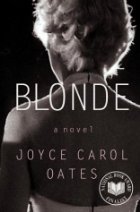
Blonde by Joyce Carol Oates, a work of fiction, not a biography of Marilyn Monroe. I had to keep reminding myself of that as I was reading, because it was so easy to believe in the characters. it’s a tragic story, intense and shocking in parts. It begins with a Prologue – 3 August 1962 with Death hurtling along towards 12305 Fifth Helena Drive, Brentwood, California. It then follows Norma Jeane Baker’s life in chronological sections from The Child 1932 – 1938 to The Afterlife 1959 – 1962. It switches from one narrator to the next, and from third person to first person perspective throughout. It’s brutal, tender and both lyrical and fragmented
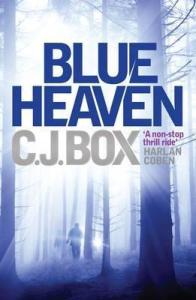
Blue Heaven by C J Box. The action takes place over four days in North Idaho one spring. It’s a story about two children, Annie and William who decide to go fishing without telling their mother, Monica, and witness a murder in the woods. One of the killers sees them and they run for their lives. It’s written in a style that appeals to me – straightforward storytelling, with good descriptions of locality and characters, secondly characters that are both likeable and downright nasty, but not caricatures, and finally the ending was what I hoped, and also dreaded it would be.
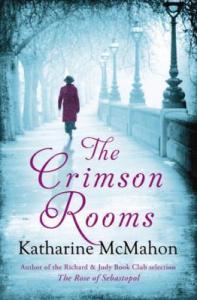
 The Crimson Rooms by Katharine McMahon, set in London in 1924, with Britain still coming to terms with the aftermath of the First World War. Evelyn Gifford, one of the few pioneer female lawyers, takes on the case of Leah Marchant, who wants to get back her children who had been taken into care. She was accused of trying to kidnap her own baby. It’s early days for women to be accepted as lawyers and Evelyn struggles to defend Leah who distrusts her and wants Daniel Breen, Evelyn’s boss to defend her. It clearly shows the prejudice these women had to overcome just to qualify as lawyers, never mind the difficulties of persuading law firms to employ them and clients to accept them.
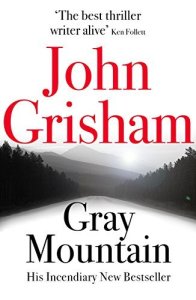
Gray Mountain by John Grisham, a book that puts the big American coal companies under the microscope, companies that are  ruining the environment by strip-mining in the Appalachian mountains. I was amazed to read the details – clear-felling the forests, scalping the earth and then blasting away the mountain tops to get at the coal. All the trees, topsoil and rocks are then dumped into the valleys, wiping out the vegetation, wildlife and streams. Gray Mountain is one of the mountains destroyed in this way.
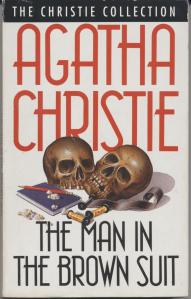
The Man in the Brown Suit by Agatha Christie. The novel is a mix of murder mystery and international crime organised by an arch-villain known as ‘the Colonel’, involving violence (but not graphic) and suspense. Anne Beddingfield saw a man fall to his death on the live rails at Hyde Park tube station. He had a terrified look on his face and turning round Anne sees a man in a brown suit, who quickly becomes The Man in the Brown Suit both to her and the newspapers. A second death follows, this time a young woman, found strangled at Mill House, the home of Sir Eustace Pedler, MP. She was thought to be a foreigner. Anne decides to investigate and the trail takes her on board the Kilmorden Castle sailing to Cape Town. As usual there are a number of suspects and Anne has to work out who she can trust and who to believe

The Man in the Brown Suit by Agatha Christie: Book Review

The Man in the Brown Suit 001Agatha Christie wrote The Man in the Brown Suit whilst on a world tour with Archie Christie, her first husband, in 1922 and it was first published as a serial in The Evening News in 1923 in 50 instalments under the title of Anna the Adventurous. I think that’s an apt title as Anne Beddingfield, one of the two narrators of this book, longs for adventure, enjoying the cinema films of The Perils of Pauline. Agatha Christie, though thought it was ‘as silly a title as I had ever heard‘. But as The Evening News were prepared to pay her £500 for the serial rights she said nothing and bought a Morris Cowley with the proceeds.

She had the idea for the story from Major Belcher, a friend of Archie’s who had invited him to go with him on a grand tour of the British Empire to organise an Empire Exhibition. The Christies dined with Belcher at his house, the Mill House at Dorney and he had urged Agatha to write a detective story about it. He suggested the title The Mystery of the Mill House and wanted her to put him in it.

Agatha sketched the plot whilst she was in South Africa when there was a revolutionary crisis and decided that the book was to be more of a thriller than a detective story, with the heroine as ‘a gay, adventurous, young woman, an orphan, who started out to seek adventure.‘ But she found it hard to make the character she had chosen based on Belcher to come alive, until she hit upon the idea of writing it in the first person and making the Belcher character (Sir Eustace Pedler), Anne’s co-narrator.

I found this information in Agatha Christie’s An Autobiography, but I haven’t added the details she also added that give away who the murderer is (for of course there is a murder) – maybe she thought anyone reading her autobiography would have read all her books.

Anne’s adventure begins when she sees a man fall to his death on the live rails at Hyde Park tube station. He had a terrified look on his face and turning round Anne sees a man in a brown suit, who quickly becomes The Man in the Brown Suit both to her and the newspapers. He announced he was a medical man and that the man was dead, and as he left the station he dropped a piece of paper with some figures and words scrawled on it in pencil, which Anne picked up. A second death follows, this time a young woman is found strangled at Mill House, the home of Sir Eustace Pedler, MP. She was thought to be a foreigner. Anne decides to investigate and the trail takes her on board the Kilmorden Castle sailing to Cape Town.

The action takes place mainly on board ship and in South Africa which Agatha Christie describes so well from her own experiences.  Like Agatha, Anne suffers terribly from sea-sickness; both stayed in their cabins for three days until the ship reached Madeira and like Agatha, Anne just wanted to go ashore and be a parlourmaid. At that point in her life, Agatha had told Archie: ‘I would quite like to be a parlourmaid’. (An Autobiography page 300)

This book features the first appearance of Colonel Race, who appears in three more of Agatha Christie’s books. Anne describes him as ‘one of the strong, silent men of Rhodesia‘ and was very taken with him – ‘easily the best-looking man on board.‘ (page 54)

The novel is a mix of murder mystery and international crime organised by an arch-villain known as ‘the Colonel’, involving violence (but not graphic) and suspense. As usual there are a number of suspects and Anne has to work out who she can trust and who to believe. I found it a bit too drawn out for my liking, too many time lapses and coincidences to convince me of the plot’s credibility, but it held my interest to the end even though I knew the culprit’s identity.

Teaser Tuesday

Teaser Tuesday is a weekly event hosted by MizB of Should be Reading.

I’ve just finished reading Agatha Christie’s The Man in the Brown Suit, which is one of her earliest books. It has a very complicated plot about a diamond robbery, an accidental death at a London tube station and a murder in a remote country mansion. I’ll write about in more detail about in a later post, but for now here is a teaser:

For in each suspicious instance Pagett had been shown as the directing genius. It was true that his personality seemed to lack the assurance and decision that one would suspect from a master criminal – but after all, according to Colonel Race, it was brain-work only that this mysterious leader supplied , and creative genius is often allied to a weak and timorous physical constitution. (page 148)

And the last few sentences in the book show Agatha Christie’s interest in anthropology:

‘Congratulations and love to the latest arrival on Lunatics’ Island. Is his head dolichocephalic or brachycephalic?’

I wasn’t going to stand that from Suzanne. I sent her a reply of one word, economical and to the point:

‘Platycephalic!’ (page 238)