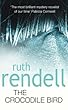
 I posted the opening sentences of The Crocodile Birdlast Friday. It really grabbed my attention and got me wondering what had caused Liza’s world fall apart. The cause is revealed when Eve, Liza’s mother tells her she has to leave home because Eve is liable to be booked for murder in the morning. Liza is nearly seventeen but has been brought up with practically no knowledge of the world outside the little gatehouse to Shrove House, where she has lived in seclusion, never having been on a bus or train or having any contact with other children. As Liza explained, Eve had wanted to protect her:
The world had treated her so badly, it was so awful out there, that I wasn’t to be allowed to go through any of that. I was to be sheltered from the world, hence no school and no visits to town, no meeting other people, other people kept down to a minimum, a totally protected childhood and youth. (page 116)
Liza, however, has a secret lover, Sean and when she leaves home she to goes to live with him in his caravan. She tells him the story of her life in a series of tales each night, just like Scheherazade in One Thousand and One Nights, culminating in how her mother is now on trial for murder. It seems, moreover, that she has killed more than once. Eve’s passion and obsession is for Shrove House, owned by Jonathan Tobias. Eve and Jonathan had grown up together and she had once thought they would marry and Shrove House would be hers. She would do anything to stay there.
This really a psychological study, rather than a straightforward crime fiction novel. It’s written in a simple style matching Liza’s childlike naivety. To some extent, I thought that reduced the tension, although as Liza’s eyes were opened and she realised the meaning of events she had witnessed as a child, the tension mounted. It seemed that she might be following in her mother’s murderous footsteps!
The Crocodile Bird is an easy book to read and one that I enjoyed. The title intrigued me for most of the book, as I wondered where the bird comes into the story. The explanation is as Liza explains to Sean that just as the crocodile bird is able to feed safely from the mouth of a crocodile, so whatever Eve did to others (and she did some terrible things) Liza, like the bird, was always safe with her.
- Paperback: 368 pages
- Publisher: Arrow; New edition edition (29 Sep 1994)
- Language English
- ISBN-10: 0099303787
- ISBN-13: 978-0099303787
- Source: I bought the book
- My Rating: 3.5/5


 J is for
 She is employed by the Coverdales as their housekeeper and in the interests of having their house kept clean and tidy they tried to make her comfortable. But part of the problem was that they looked on her as little more than a machine, not as a person. They meant well, wanting to make other people happy, but they were interferers and things went from bad to worse. Then Eunice met Joan, who was completely unstable, in fact she was insane. Joan is a religious fanatic, a sinner who delights in telling people of her past sins and wanting them to seek God’s forgiveness. Their friendship ends in tragedy.
 is for
 Dave and I listened to this in the car whilst travelling to Northumberland and back. This is an Inspector Wexford mystery – a man taking his dog for a walk discovers a severed hand, which turns out to be part of a skeleton wrapped in a purple sheet. The police have to discover the identity of the victim – and of the body of a second corpse found in a nearby house. Both have been lying undiscovered for at least ten years. I’m not used to listening to books and I did find it a bit difficult to follow. Of course, the sat nav and traffic news kept interrupting which didn’t help, but even so I did get confused. There were too many people and sub-plots. Maybe I should read the book.
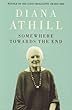 I loved this memoir. Diana Athill comes across as an honest writer, not afraid to say what she thinks, now she is no longer an editor. As the title indicates, she writes about what it is like getting towards the end of her life. At the time of writing she was 89 years old and looking back on her life with few regrets. This is a book I may well buy to re-read at leisure.
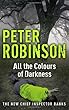 I have mixed feelings about this book, parts of it really interested me, but I could have done without the terrorist attack and involvement of MI5 and MI6. This is only the 2nd Inspector Banks book I’ve read and it’s the 18th in Robinson’s series. I think that doesn’t matter as I had no difficulty in sorting out his relationships and although other cases are referred to this reads OK as a stand-alone book. What I did have difficulty with was believing the spy stuff – one of the victims had been a spook. What I do like is Robinson’s descriptive writing eg:
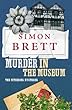 This is the fourth in Simon Brett’s Fethering Mysteries series. It’s set in Bracketts, an Elizabethan house, the former home of Esmond Chadleigh, a celebrated poet during his lifetime. The house is about to be turned into a museum, although not all the Trustees agree. Carole Seddon has been co-opted onto the Board of Trustees and when a skeleton is discovered in the kitchen garden she soon becomes involved in solving the mystery. Then Sheila Cartwright, the bossy domineering former Director of the Trustees is shot, and Carole finds her own life is in danger.
 BooksPlease