Spell the Month in Books – December 2024

Spell the Month in Books is a linkup hosted by Jana on Reviews From the Stacks on the first Saturday of each month. The goal is to spell the current month with the first letter of book titles, excluding articles such as ‘the’ and ‘a’ as needed. That’s all there is to it! Some months there are optional theme challenges, such as “books with an orange cover” or books of a particular genre, but for the most part, any book you want to use is fair game!

The optional theme this month is Christmas or Nonfiction and I’ve chosen the Nonfiction option as I don’t read many Christmas-related books. The descriptions are taken from my posts on the books, where they exist.
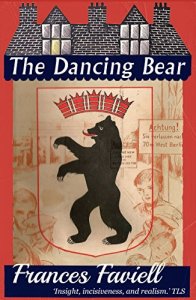
D is for The Dancing Bear by Frances Faviell, the pen name of Olivia Faviell Lucas, painter and author.

After the war, in 1946, she went with her young son, John, to Berlin where Richard Parker, her second husband, had been posted as a senior civil servant in the post-war British Administration. It was here that she befriended the Altmann family, which prompted her first book The Dancing Bear (1954), a memoir of the Occupation seen through the eyes of both occupier and occupied.It covers the years from Autumn 1946 to Autumn 1949, with an Epilogue dated Autumn 1953. Her memoir is mainly about her friendship with the Altmann family – Frau Maria Altmann, her husband, Oskar and her children, Ursula, who works for a group of American service men, Lilli, a ballet dancer and son, Fritz, who was a member of the Hitler Youth and is now involved in the Black Market. Their eldest son. Kurt. is missing in Russia. Berlin had been divided into four sectors by the Allies – Britain, the United States, France and the Soviet Union – and Frances is horrified by the conditions she found. There were deaths from hunger and cold as the winter approached and queues for bread, milk, cigarettes, cinemas, buses and trams.
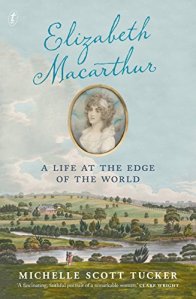
E is for Elizabeth Macarthur: a Life at the Edge of the World by Michelle Scott Tucker

This is an extremely readable biography of a fascinating woman. It’s well researched and provides an insight into the early years of Australia’s colonial history. Elizabeth was born on 14 August 1766 in Devon, England and she married John Macarthur in October 1788. In June 1789 they sailed with their first child, Edward, to New South Wales where John joined his regiment, the New South Wales Corps, in the recently established colony of New South Wales.

For sixty years, Elizabeth ran the family farm in Parramatta, west of Sydney town – on her own during her husband’s long absences abroad, when she was responsible for the care of their valuable merino flocks, as well as the Camden Park estate and the direction of its convict labourers. By the time Macarthur came back from his second absence, he was overwhelmed by mental illness, and they spent the last few years of his life apart. He died in 1834. The house and gardens of her farm, aptly named ‘Elizabeth Farm’ is now an ‘access all areas’ museum. In 1850, she died in her daughter and son-in-law’s house at Watson’s Bay outside Sydney, overlooking the Pacific Ocean.
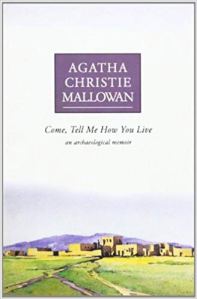
C is for Come Tell Me How You Live by Agatha Christie Mallowan

Agatha Christie had visited the Middle East in 1929 travelling on the Orient Express to Istanbul and then on to Damascus and Baghdad. She visited the excavations at Ur and returned there the following spring where she met archaeologist Max Mallowan – by the end of the summer they had decided to marry, which they did on 11 September 1930.

It’s her memoir in answer to her friends’ questions about what life was like when she accompanied Max on his excavations in Syria and Iraq in the 1930s. The emphasis in the book is on the everyday life on a dig and Agatha took an active part, helping to catalogue, label and clean the items they found as well as taking photographs and developing them. She also found time to spend on writing her books. So, although she gives a detailed account of how they worked, how they employed workmen for the excavations and servants who looked after Max and his team of archaeologists, there is not much about what they found.

She described the local people in her Epilogue as people, who know how to laugh and how to enjoy life, who are idle and gay, and who have dignity, good manners, and a great sense of humour, she also recorded their disputes: ‘Quarrelling is, in any case, almost continuous.‘ And ‘Syria is full of fiercely fanatical sects of all kinds, all willing to cut each other’s throats for the good cause! 

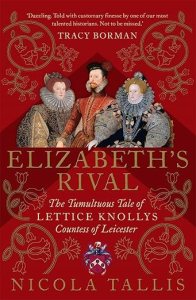
E is for Elizabeth’s Rival: The Tumultuous Tale of Lettice Knollys, Countess of Leicester by Nicola Tallis – I haven’t read this yet, it’s one of my TBRs.

Cousin to Elizabeth I – and very likely also Henry VIII’s illegitimate granddaughter – Lettice Knollys had a life of dizzying highs and pitiful lows. Darling of the court, entangled in a love triangle with Robert Dudley and Elizabeth I, banished from court, plagued by scandals of affairs and murder, embroiled in treason, Lettice would go on to lose a husband and beloved son to the executioner’s axe. Living to the astonishing age of ninety-one, Lettice’s tale gives us a remarkable, personal lens on to the grand sweep of the Tudor Age, with those closest to her often at the heart of the events that defined it.

In the first ever biography of this extraordinary woman, Nicola Tallis’s dramatic narrative takes us through those events, including the religious turmoil, plots and intrigues of Mary, Queen of Scots, attempted coups, and bloody Irish conflicts, among others. Surviving well into the reign of Charles I, Lettice truly was the last of the great Elizabethans. (Amazon UK)
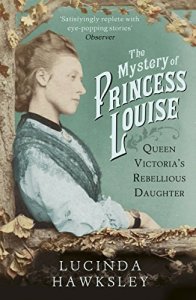
M is for The Mystery of Princess Louise by Lucinda Hawksley.

Princess Louise was Victoria’s sixth child – her fourth daughter, born on 18th March 1848. It was an agonising and terrifying birth in a year of revolution and rebellion, a time when royal families throughout Europe were being deposed and in Britain the working classes were agitating for higher pay, better working conditions and more legal rights. There is so much detail about her life in this book, packed with intrigues, scandals and secrets.

She had a difficult childhood, disliked and bullied by her mother and she often rebelled against the restrictions of life as a princess. She had an unhappy marriage to John Campbell, the Marquess of Lorne, later the 9th Duke of Argyll, a homosexual, and went with him to Canada in 1882 when he was appointed as Governor-General. Her relationship with Canada became a love-hate one, but began and ended with Canadian adoration.

The scandals arose about whether she had had an illegitimate child and her long term love affair with the sculptor Joseph Boehm. The mystery is still unresolved as Louise’s files in the Royal Archives are closed and her husband’s family archives are inaccessible.
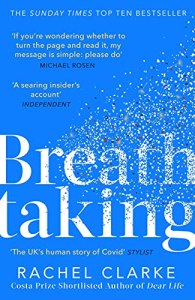
B is for Breathtaking by Rachel Clarke, a palliative care doctor.

Her book recounts her experiences during the first four months of 2020, when she worked on the Covid-19 wards in the Oxford University Hospitals system. Taken from her diary that she kept at the time it has an immediacy as she records her insomnia, her fears for her family and also the tremendous resilience, courage and empathy that she and the rest of the hospital staff had. Although it is a grim account, it is also uplifting to know the care they took of their patients and the attentiveness to their patients’ needs despite the fact that many of the staff were not trained in intensive care and had never dealt with anything like this before. Breathtaking records the compassion and kindness of numerous people, and pays tribute to both NHS staff and volunteers in dealing with such a distressing and immensely horrific situation.
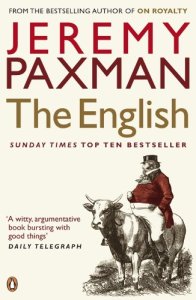
E is for The English: a Portrait of a People by Jeremy Paxman

I like Paxman’s style of writing, I could almost hear him speaking as I read. He’s a person who has grown on me over the years and  lately I’ve enjoyed his TV documentaries too. It’s always been entertaining to watch his interviews, even if I didn’t agree with his views – or his aggressive approach. It’s toned down in this book, but every now and then his acerbic nature comes across. He writes about food, sport, football hooligans, language, individualism, education, religion, ‘John Bull’, cities and the countryside – the English idyllic village, class structure and social tone, attitudes to women, business and trade to name but a few topics. It’s well researched and very readable, with a bibliography listing all the books he mentions plus others that presumably he has used. It seems there really is no such thing as ‘the English’ – we’re a mixture of all sorts, or as Paxman puts it, The English are a mongrel race‘. (page 59)

R is for The Riviera Set by Mary S Lovell

This is the story of a house and those who peopled it between the years 1930 and 1960. In 1930 Maxine Elliott, an American, commissioned the architect Barry Dierks to build  the Chateau de l’Horizon on the land she had bought on a narrow stretch of rocks with a small promontory between Cannes and Juan-les-Pins. This is the part of the book I enjoyed the most, first of all about Maxine herself, then the description of the construction of the Chateaux and the years that Maxine owned it and lived there. Maxine really came into her own there as a superb hostess. Regular visitors included Winston Churchill, Cole Porter, Noel Coward, Somerset Maugham among many others – famous actors and actresses as well as members of the aristocracy and politicians. 

The Duke and Duchess of Windsor, who lived nearby before the Second World War, were also visitors. The picture painted of them is not flattering – and there was much talk about how to address Wallis and whether the women should curtsy to her. By the time the War approached Maxine had lost her sparkle, suffering from ill health and she died in March 1940.

The Chateau was bought by Aly Khan, the Aga Khan’s heir presumptive at the time. There is quite a lot about his time there, his womanising, his marriage to Rita Hayworth and the social scene of the post-war period up to 1960. It is a fascinating and entertaining book about a pampered, luxurious and decadent world.

The next link up will be on January 4, 2025 when the theme will be: New; this could be new-to-you books, new additions to your TBR list, recently published books, or something else that you connect with the word ‘New’.

Spell the Month in Books June 2024

Spell the Month in Books is a linkup hosted by Jana on Reviews From the Stacks on the first Saturday of each month. The goal is to spell the current month with the first letter of book titles, excluding articles such as ‘the’ and ‘a’ as needed. That’s all there is to it! Some months there are optional theme challenges, such as “books with an orange cover” or books of a particular genre, but for the most part, any book you want to use is fair game!

This month’s theme is History. I don’t think that the books you choose have to be books that you’ve read, but where possible I like to do that, or at least choose books that I want to read and and this month I’ve managed to find enough nonfiction books about different aspects of history that I have read with titles beginning with each of the letters to spell JUNE.

J is for Jane Austen at Home by Lucy Worsley

I think it was a foregone conclusion that I would really enjoy historian Lucy Worsley’s Jane Austen at Home. I have loved Jane Austen’s books for many years, going back to when I was about 12 and read Pride and Prejudice for the first time. I’d previously read Carol Shields’s biography Jane Austen and Claire Tomalin’s Jane Austen: a Life so there was really very little I learned reading Jane Austen at Home that surprised me or that I hadn’t known before.

I suppose what was new to me was the emphasis on what home life was like during the period of Jane’s life and seeing photos of the houses and places that she had lived or stayed in as a visitor. And I think I gained a better understanding of the social history of Georgian England and of Jane’s wider family connections and what her family and friends thought of her both as a person and as an author.

Jane Austen at Home is both very readable and very detailed, which is not an easy thing to achieve. There is an extensive section at the end of the book, listing sources, a bibliography, notes on the text and an index. There are two sections of colour plates.

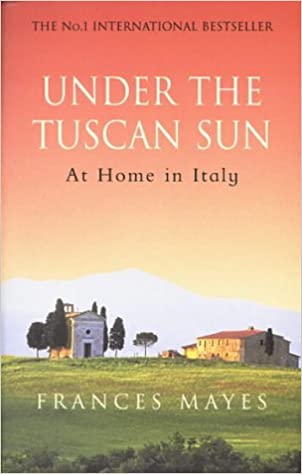
U is for Under the Tuscan Sun by Frances Mayes

In this book the author describes how she bought and renovated an abandoned villa. It’s full of the pleasures of living in Tuscany – the sun, the food, the wine and the local people. It makes me want to do the same! It’s nothing like the film they made of it – the book is much better. Bella Tuscany is the follow up book with more details about the restoration of the villa and its garden, plus recipes.

I read this book before I began blogging, so no review. And I no longer have my copy, which just shows the dangers of recycling books as I’d love to re-read it!

N is for Nagasaki: Life After Nuclear War by Susan Southard

The facts are horrendous – on August 9th 1945, two days after the atomic bombing of Hiroshima, a five-ton plutonium bomb was dropped on the small coastal town of Nagasaki. The effects were cataclysmic.

This must be one of the most devastatingly sad and depressing books I’ve read and yet also one of the most uplifting, detailing the dropping of the bomb, which killed 74,000 people and injured another 75,000. As the subtitle indicates this book is not just about the events of 9 August 1945 but it follows the lives of five of the survivors from then to the present day. And it is their accounts which make this such an emotive and uplifting book, as it shows their bravery, how they survived, and how they were eventually able to tell others about their experiences. Along with all the facts about the after effects of the bombing, the destruction, and radiation, it exposes the true horror of atomic warfare, making it an impressive and most compelling account of pain, fear, bravery and compassion.

E is for Elizabeth Macarthur: A Life at the Edge of the World by Michelle Scott Tucker

This is an excellent biography because it is thorough, well researched and it provides an insight into the early years of Australia’s colonial history. It is an extremely readable biography of a fascinating woman. Elizabeth was born on 14 August 1766 in Devon, England and she married John Macarthur in October 1788. In June 1789 they sailed with their first child, Edward, initially on the Neptune, and then on the convict ship Scarborough to New South Wales where John joined his regiment, the New South Wales Corps, in the recently established colony of New South Wales.

For sixty years, Elizabeth ran the family farm in Parramatta, west of Sydney town – on her own during her husband’s long absences abroad, four years during her husband’s first absence, and nine years during the second, when she was responsible for the care of their valuable merino flocks, as well as the Camden Park estate and the direction of its convict labourers.

The book is packed with detail about the landscape, the indigenous population, the disputes between various sections of the colony, about farming and the establishment of the wool industry, not forgetting the details of the Macarthur family members, illnesses, and the position of the women within the community.

The next link up will be on July 6, 2024 when the optional theme will be Stars/Sky

Elizabeth Macarthur by Michelle Scott Tucker

In 1788 a young gentlewoman raised in the vicarage of an English village married a handsome, haughty and penniless army officer. In any Austen novel that would be the end of the story, but for the real-life woman who became an Australian farming entrepreneur, it was just the beginning.

John Macarthur took credit for establishing the Australian wool industry and would feature on the two-dollar note, but it was practical Elizabeth who managed their holdings—while dealing with the results of John’s manias: duels, quarrels, court cases, a military coup, long absences overseas, grandiose construction projects and, finally, his descent into certified insanity.

Michelle Scott Tucker shines a light on an often-overlooked aspect of Australia’s history in this fascinating story of a remarkable woman.

My thoughts

Two years ago I read A Room Made of Leaves by Kate Grenville, historical fiction telling the story of Elizabeth and John Macarthur, who settled in Australia at the end of the eighteenth century, which made me keen to find out more about them. In particular it was the epigraph ‘ Believe not too quickly‘, which is a quotation from one of Elizabeth’s letters, that highlighted for me that A Room Made of Leaves is a work of fiction. And then I came across Michelle Scott Tucker’s biography: Elizabeth Macarthur: A Life at the Edge of the World and I was delighted to see that Kate Grenville references this book as the standard biography in her Acknowledgements. So I bought a copy.

Elizabeth was born on 14 August 1766 in Devon, England and she married John Macarthur in October 1788. In June 1789 they sailed with their first child, Edward, initially on the Neptune, and then on the convict ship Scarborough to New South Wales where John joined his regiment, the New South Wales Corps, in the recently established colony of New South Wales. They went on to have four more sons, James (1793-1794), John (1794-1831), James (1798-1867) and William (1800-1882), and three daughters, Elizabeth (1792-1842), Mary (Mrs Bowman, b.1795) and Emmeline (b.1808).

For sixty years, Elizabeth ran the family farm in Parramatta, west of Sydney town – on her own during her husband’s long absences abroad, four years during her husband’s first absence, and nine years during the second, when she was responsible for the care of their valuable merino flocks, as well as the Camden Park estate and the direction of its convict labourers. By the time Macarthur came back from that second absence, he was overwhelmed by mental illness, and they spent the last few years of his life apart. He died in 1834. The house and gardens of her farm, aptly named ‘Elizabeth Farm’ is now an ‘access all areas’ museum. In 1850, she died in her daughter and son-in-law’s house at Watson’s Bay outside Sydney, overlooking the Pacific Ocean.

I was interested to see how the biography differed from Kate Grenville’s novel. Both interpret the facts, based on Elizabeth Macarthur’s letters, journals and official documents of the early years of the New South Wales colony, trying to explain what happened and why, dependent on the available evidence. However, fiction is more flexible than a biography and can fill in the gaps where the documentary evidence is lacking. And Kate Grenville has used her storytelling imagination in filling in the gaps in the records, in particular about her relationship with William Dawes, an astronomer with the Corps, who was mapping the night sky. He had an observatory near Elizabeth’s farm and it was there that she attempted to learn from him about astronomy. However, in A Room Made of Leaves, Kate Grenville embellishes the basic facts, whilst exploring what it could have been that made Elizabeth ‘blush at my error‘, as she described it in a letter to her friend, Bridget, claiming she had mistaken her abilities and she ended her astronomical studies. Michelle Scott Tucker comments that the evening visits to Dawes’ observatory were open to misinterpretation, whereas Kate Grenville’s version is much more explicit as she imagines what might have happened. Her book, whilst it is based on history is fiction, as she makes clear in her Author’s Note at the end of the book.

I have only just skimmed the surface of this book – there is so much more detail about the landscape, the indigenous population, the disputes between various sections of the colony, about farming and the establishment of the wool industry, not forgetting the details of the Macarthur family members, illnesses, and the position of the women within the community – Elizabeth wasn’t the only colonial woman who was responsible for her family farm. She was resourceful, a good farm manager and business woman, was respected within the colony, and was loved by her family. There are a number of reasons I recommend this book. There is a ‘Select Bibliography’ which looks comprehensive to me, copious notes citing sources and a family tree. It is thorough, well researched and It provides an insight into the early years of Australia’s colonial history and it is an extremely readable biography of a fascinating woman.

Nonfiction November: Week 2 Book Pairings

Week 2: (November 8-12) – Book Pairing with Katie at Doing DeweyThis week, pair up a nonfiction book with a fiction title. It can be a “If you loved this book, read this!” or just two titles that you think would go well together. Maybe it’s a historical novel and you’d like to get the real history by reading a nonfiction version of the story. 

Earlier this year I read the novel A Room Made of Leaves by Kate Grenville and I’m pairing it with Elizabeth Macarthur: A Life at the Edge by Michelle Scott Tucker, which I haven’t read yet.

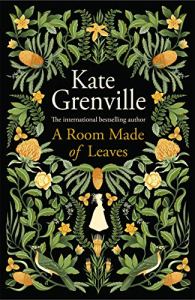
Kate Grenville is one of my favourite authors, so I was very keen to read A Room Made of Leaves. It’s historical fiction telling the story of the Macarthurs, Elizabeth and John Macarthur, who settled in Australia at the end of the eighteenth century. It’s based on the real lives of the Macarthurs using letters, journals and official documents of the early years of the New South Wales colony. Her writing suits me – historical fiction, with good descriptive writing setting the scenes vividly in their locations. I find her books difficult to put down and they stay in my mind long after I’ve finished reading. This one is no exception.

Whenever I read historical fiction I always want to know how much is fact and how much is fiction, how accurate it is. And so this novel intrigued me because Kate Grenville’s book begins with an editor’s note about ‘the ‘incredible discovery of Elizabeth Macarthur’s secret memoirs’ in a tin box containing old papers, revealing the real person behind the few letters she wrote home to her family and friends and a lot of ‘dull correspondence with her adult children’. Was this true, I wondered. So I turned to the back of the book to read Grenville’s Author’s Note and in that she clarifies that this is not history and, although the extracts from Elizabeth’s letters are from the letters of the real Elizabeth Macarthur, she has ‘taken some liberties in order to shape this work of fiction’. The old documents were Grenville’s ‘inspiration and guide’. In other words you have to bear in mind the epigraph, an actual quotation from one of Elizabeth’s letters: Believe not too quickly, a reminder that this is fiction.

It made me want to know more about the Macarthurs, and what was indeed their history, so I was delighted to find out that Kate Grenville references Michelle Scott Tucker’s biography: Elizabeth Macarthur: A Life at the Edge of the World as the standard biography in her Acknowledgements and I was even more delighted to see that it’s available as a ebook. So it is now in my Kindle and I’m keen to read it as soon as possible. I want to see what Michelle Scott Tucker has made of the same historical sources – history, after all, is an interpretation of the facts from the records, trying to explain what happened and why, dependent on available evidence. Fiction is more flexible and can fill in the gaps where the documentary evidence is lacking.