Top Five Tuesday: Books with Colours in the Title

Top 5 Tuesday was created by Shanah at Bionic Book Worm, and it is now being hosted by Meeghan at Meeghan Reads. You can see the Top 5 Tuesday topics for the whole of 2025 here

Today the topic is Books with Colours in the Title.
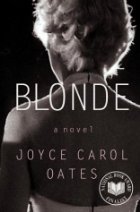
Blonde by Joyce Carol Oates, a work of fiction, not a biography of Marilyn Monroe. I had to keep reminding myself of that as I was reading, because it was so easy to believe in the characters. it’s a tragic story, intense and shocking in parts. It begins with a Prologue – 3 August 1962 with Death hurtling along towards 12305 Fifth Helena Drive, Brentwood, California. It then follows Norma Jeane Baker’s life in chronological sections from The Child 1932 – 1938 to The Afterlife 1959 – 1962. It switches from one narrator to the next, and from third person to first person perspective throughout. It’s brutal, tender and both lyrical and fragmented
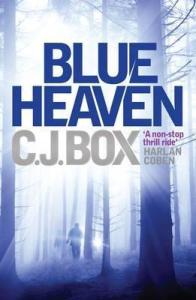
Blue Heaven by C J Box. The action takes place over four days in North Idaho one spring. It’s a story about two children, Annie and William who decide to go fishing without telling their mother, Monica, and witness a murder in the woods. One of the killers sees them and they run for their lives. It’s written in a style that appeals to me – straightforward storytelling, with good descriptions of locality and characters, secondly characters that are both likeable and downright nasty, but not caricatures, and finally the ending was what I hoped, and also dreaded it would be.
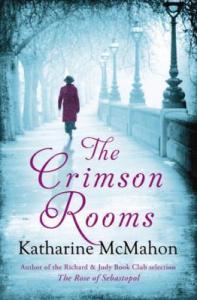
 The Crimson Rooms by Katharine McMahon, set in London in 1924, with Britain still coming to terms with the aftermath of the First World War. Evelyn Gifford, one of the few pioneer female lawyers, takes on the case of Leah Marchant, who wants to get back her children who had been taken into care. She was accused of trying to kidnap her own baby. It’s early days for women to be accepted as lawyers and Evelyn struggles to defend Leah who distrusts her and wants Daniel Breen, Evelyn’s boss to defend her. It clearly shows the prejudice these women had to overcome just to qualify as lawyers, never mind the difficulties of persuading law firms to employ them and clients to accept them.
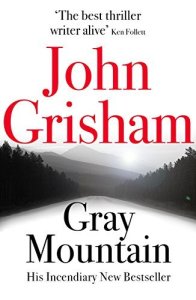
Gray Mountain by John Grisham, a book that puts the big American coal companies under the microscope, companies that are  ruining the environment by strip-mining in the Appalachian mountains. I was amazed to read the details – clear-felling the forests, scalping the earth and then blasting away the mountain tops to get at the coal. All the trees, topsoil and rocks are then dumped into the valleys, wiping out the vegetation, wildlife and streams. Gray Mountain is one of the mountains destroyed in this way.
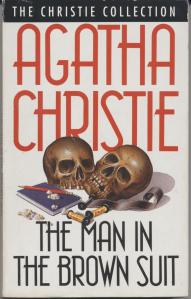
The Man in the Brown Suit by Agatha Christie. The novel is a mix of murder mystery and international crime organised by an arch-villain known as ‘the Colonel’, involving violence (but not graphic) and suspense. Anne Beddingfield saw a man fall to his death on the live rails at Hyde Park tube station. He had a terrified look on his face and turning round Anne sees a man in a brown suit, who quickly becomes The Man in the Brown Suit both to her and the newspapers. A second death follows, this time a young woman, found strangled at Mill House, the home of Sir Eustace Pedler, MP. She was thought to be a foreigner. Anne decides to investigate and the trail takes her on board the Kilmorden Castle sailing to Cape Town. As usual there are a number of suspects and Anne has to work out who she can trust and who to believe

Crime Fiction Alphabet: K is for The Crimson Rooms by Katharine McMahon

Kerrie at Mysteries in Paradise hosts the Crime Fiction Alphabet each week. It has now reached the letter K and my choice is Katharine McMahon’s book The Crimson Rooms.

I bought The Crimson Rooms a couple of years ago because I’d enjoyed reading Katharine McMahon’s The Rose of Sebastopol, which I read in 2008. It’s been sitting with the other to-be-reads on my bookshelves since then and I hadn’t realised that this is not only historical fiction, but also historical crime fiction.

It’s set in London in 1924, with Britain still coming to terms with the aftermath of the First World War. Evelyn Gifford, one of the few pioneer female lawyers, lives at home with her mother, aunt and grandmother, still mourning the death of her brother James in the trenches. Evelyn is woken in the early hours one morning to find Meredith and her child, Edmund, aged 6 on the doorstep, claiming that Edmund is James’s son. Evelyn and the other women are thrown into confusion as Meredith upsets their memories of James.

Meanwhile Evelyn carries on with her work, taking on the case of Leah Marchant, who wants to get back her children who had been taken into care. She was accused of trying to kidnap her own baby. It’s early days for women to be accepted as lawyers and Evelyn struggles to defend Leah who distrusts her and wants Daniel Breen, Evelyn’s boss to defend her.

She is also involved in defending Stephen Wheeler, an old schoolfriend of Daniel’s. Stephen is accused of murdering Stella, his young wife of a fortnight. It’s obvious to Evelyn and Daniel that Stephen is innocent, but at first he refuses to talk and defend himself. After a humiliating experience in court, barrister Nicholas Thorne offers to help Evelyn much to her dislike. But she finds herself drawn to him and wonders how much she can trust him.

I was thoroughly engrossed in this book. It was not just the court cases, I was fascinated by the account of early women lawyers, represented by Evelyn, the central character. It clearly shows the prejudice these women had to overcome just to qualify as lawyers, never mind the difficulties of persuading law firms to employ them and clients to accept them. Katherine McMahon has included a Chronology of Women in Law from 1875 to 1950 at the back of the book and an analysis of why it took so long for women to be accepted. Evelyn is based on Carrie Morrison, who was the first British woman to be become a solicitor.

It’s not just about crime and the court cases, it’s also a novel about the way people’s lives were affected by the War, how men were unable to resume their old lives, some damaged by shell-shock and the horrors they had taken part in, or witnessed during the war. Women, too, had their lives completely changed, so many had their marriage prospects destroyed, and were replaced by work, becoming career women.

Katherine McMahon has done extensive research of the period but it all sits easily within the narrative. It’s beautifully written, full of imagery that creates a vivid picture of the setting and the characters. For example, she describes the moon:

… an extraordinary crescent moon which had, in the last few minutes, risen above the river, with the old moon burdening its lap like a fat round cushion.

and I like this description of one of the characters as she walked from the garden towards the house,

… the trailing hem of her robe a pool of ivory, her hair a swathe of black silk. (page 207)

Katharine McMahon’s other books are:

  • The Alchemist’s Daughter
  • A Way through the Woods
  • Footsteps
  • Confinement
  • After Mary
  • The Season of Light

More details are on her website.