My Week in Books: 11 November 2015

This Week in Books is a weekly round-up hosted by Lypsyy Lost & Found, about what I’ve been reading Now, Then & Next. A similar meme,  WWW Wednesday is run by Taking on a World of Words.

Now: Currently I’m reading two books: Even Dogs in the Wild by Ian Rankin. I’d like to finish this today.
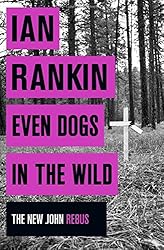
BlurbHands in his pockets, Rebus turned to face Cafferty.
They were old men now, similar builds, similar backgrounds. Sat together in a pub, the casual onlooker might mistake them for pals who’d known one another since school.
But their history told a different story.

Retirement doesn’t suit John Rebus. He wasn’t made for hobbies, holidays or home improvements. Being a cop is in his blood.

So when DI Siobhan Clarke asks for his help on a case, Rebus doesn’t need long to consider his options.

Clarke’s been investigating the death of a senior lawyer whose body was found along with a threatening note. On the other side of Edinburgh, Big Ger Cafferty – Rebus’s long-time nemesis – has received an identical note and a bullet through his window.

Now it’s up to Clarke and Rebus to connect the dots and stop a killer.

Meanwhile, DI Malcolm Fox joins forces with a covert team from Glasgow who are tailing a notorious crime family. There’s something they want, and they’ll stop at nothing to get it.

It’s a game of dog eat dog – in the city, as in the wild.

I’m also reading  Mrs Jordan’s Profession: the Story of a Great Actress and a King by Claire Tomalin, which I’ve been reading very slowly for a few weeks now. I hope to finish it soon. I’m up to 1812/13 when Dora and Prince William have parted and Dora is trying to come to terms with her new situation and pick up the pieces of her life. It’s very moving.

Blurb: Acclaimed as the greatest comic actress of her day, Dora Jordan lived a quite different role off-stage as lover to Prince William, third son of George III. Unmarried, the pair lived in a villa on the Thames and had ten children together until William, under pressure from royal advisers, abandoned her. The story of how Dora moved between the worlds of the eighteenth-century theatre and happy domesticity, of her fights for her family and her career makes a classic story of royal perfidy and female courage.

Then: I recently finished A Fear of Dark Water by Craig Russell. This is the sixth Jan Fabel book, but can be read as a stand-alone. Russell is now one of my favourite authors. This book is so good I raced through it.
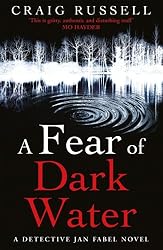
Blurb: Just as a major environmental summit is about to start in Hamburg, a massive storm hits the city. When the flood waters recede, a headless torso is found washed up.

Initially, Jan Fabel of the Murder Commission fears it may be another victim of a serial rapist and murderer who stalks his victims through internet social network sites, then dumps their bodies in waterways around the city.

But the truth of the situation is far more complex and even more sinister. Fabel’s investigations lead him to a secretive environmental Doomsday cult called ‘Pharos’, the brainchild of a reclusive, crippled billionaire, Dominik Korn.

Fabel’s skills as a policeman are tested to their utmost as he finds himself drawn into an unfamiliar, high tech world of cyberspace, where anyone can be anybody or anything they want. And he quickly realises that he is no longer the hunter, but the hunted.

I’ll write more about this book in a later post.

Next: always tentative choices as when the time comes I may choose other books, but right now I’m thinking of reading Nagasaki: Life after Nuclear War by Susan Southard, a book that follows the lives of five teenage survivors of the atomic bombing of the civilian population of Nagasak from 1945 to the present day Southard. She  unveils the lives they have led, their injuries in the annihilation of the bomb, the dozens of radiation-related cancers and illnesses they have suffered, and the humiliating and frightening choices about marriage they were forced into as a result of their fears of the genetic diseases that may be passed through their families for generations to come.

And as I like to have both a non-fiction and a fiction book on the go together I may read A Pale View of the Hills by Kazuo Ishiguro, which has post-war life in Japan as its backdrop to a story of memory, suicide, and psychological trauma.

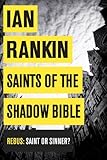
Saints of the Shadow Bible by Ian Rankin

I finished reading the latest Rebus book, Saints of the Shadow Bible a few days ago and have been wondering what to write about it that would do it justice. Ian Rankin is one of my favourite authors and his Rebus books never fail to impress me both with their ingenuity and the quality of their plots and characterisations – Saints of the Shadow Bible is no exception. In fact, I think it’s one of the best – a realistic and completely baffling mystery.

Rebus is now back on the force, the rules on retirement age having changed, but as a Detective Sergeant, not a DI and Siobhan Clarke is his boss. It begins with the discovery of a crashed car, on the face of it just a straight forward road traffic accident but it soon develops into a complex, multi-layered case, linking back to one of Rebus’s early cases on the force as a young Detective Constable. A case that with the changes in the double jeopardy law in Scotland can be reopened.

Rebus has always been an outsider, not one to play completely by the rules but his past gets put under scrutiny when Inspector Malcolm Fox investigates that case from the 1980s. There are suspicions that Rebus and his colleagues, who called themselves ‘The Saints of the Shadow Bible’ were involved in covering up a crime, allowing a murderer to go free.

The ‘Shadow Bible’ was a copy of Scots Criminal Law, a big black book

‘with a leather cover and brass screws. And we all spat on it and rubbed it in until it was dry. I thought it was a kind of oath, but it wasn’t – we were saying the rules could go to hell, because we knew we were better. We were the ones in the field …

The evidence was tainted, interviews hadn’t been conducted properly. How was Rebus involved, was he a Saint, and just how much did he know as a very junior member of the team?

The interaction between Rebus and Fox is one of the joys of this book as unlike Rebus, Fox does play by the rules. Ah, but does he? Beneath his controlled exterior Fox is just as much a loose cannon as Rebus, he’s not a team player either and it is fascinating to see how Rebus gets under his skin and reveals Fox’s true nature. For Rebus and Fox it’s the job that matters, but can they trust each other?

I wonder, though, just how much I would have enjoyed it if this was the first Rebus book I’d read. I have a feeling that I wouldn’t. There are characters who were in earlier books and references to previous cases which would have been lost on me otherwise. The first Rebus book I read was Set in Darkness (the 11th book) and whilst I had no difficulty in following who was who and their relationships I realised then that I had to read the books in order to fully understand the background and how the characters had evolved. I felt they were real people and I wanted to know more about them. I then went back to the beginning (Knots and Crosses) and read them in sequence, right up to the present day.

It’s all been an exhilarating and most enjoyable journey and I have a sneaking suspicion that this may indeed be the end – who knows? Only Ian Rankin and he isn’t telling, but he’s off on a year’s sabbatical in February and by then Rebus will almost be due a second retirement.

New Rebus book out in November

Ian Rankin has announced the title of his new Rebus novel – Saints of the Shadow Bible, with Rebus back on the force.

It had to happen …

Malcolm Fox is investigating an old case from 30 years ago – one that Rebus worked on in a team that called itself ‘The Saints’ and swore a bond on something called a ‘Shadow Bible’.

We’ll have to wait until 7 November to find out if Rebus was a ‘Saint or a Sinner’.

November’s Crime Fiction Pick of the Month

I read seven books in November. Six were fiction, five of those being crime fiction and two were non-fiction* – two memoirs. I read two of the books on my new Kindle Fire.

  1. Murder by Yew by Suzanne Young (Kindle)
  2. The Whispers of Nemesis by Anne Zouroudi (from TBR books) (Kindle)
  3. The Warden by Anthony Trollope
  4. Standing in Another Man’s Grave by Ian Rankin
  5. Adventures of a One-Breasted Woman* by Susan Cummings (review copy)
  6. At Bertram’s Hotel by Agatha Christie
  7. Full Tilt: Dunkirk to Delhi by Bicycle* by Dervla Murphy

My Crime Fiction Pick of the Month is Standing in Another Man’s Grave by Ian Rankin. I wrote about the opening of the book in this post.

Summary from Amazon:

It’s twenty-five years since John Rebus appeared on the scene, and five years since he retired. But 2012 sees his return in STANDING IN ANOTHER MAN’S GRAVE. Not only is Rebus as stubborn and anarchic as ever, but he finds himself in trouble with Rankin’s latest creation, Malcolm Fox of Edinburgh’s internal affairs unit. Added to which, Rebus may be about to derail the career of his ex-colleague Siobhan Clarke, while himself being permanently derailed by mob boss and old adversary Big Ger Cafferty. But all Rebus wants to do is discover the truth about a series of seemingly unconnected disappearances stretching back to the millennium. The problem being, no one else wants to go there – and that includes Rebus’s fellow officers. Not that any of that is going to stop Rebus. Not even when his own life and the careers of those around him are on the line.

My view:

I’ve read all of the other Rebus books and the Fox books and so was very keen to read this latest book from Ian Rankin. I liked it – I liked it a lot. It was like meeting up again with an old acquaintance. Rebus is older and fatter but he hasn’t really changed. He still likes working best on his own, taking risks, and having a few too many drinks and a smoke. He can’t keep away from police work and is currently working for SCRU – the Serious Crime Review Unit, a Cold Case unit of retired police officers (like the TV series New Tricks).  Nina Hazlitt contacts SCRU (I like the acronym) about her daughter Sally who has been missing since 1999, convinced that it linked up with the disappearance of other young women, all in the vicinity of the A9. Rebus then links it with the current case of Annette McKie, aged 15, who has recently gone missing after getting off a bus at a petrol station in Pitlochry, also on the A9.

Rebus manages to assist in the current investigations, thanks to Siobhan Clark, who is now a Detective Inspector, although he is not a serving policeman. This involves him in travelling up and down the A9 and surrounding areas. The hardback copy of the book has coloured endpapers illustrating OS maps of the area, although if you want to follow the routes closely  it’s best to use another map as well:

I  was engrossed in the book and liked the way Rankin included characters from earlier books, such as Big Ger Caffety and in particular Malcolm Fox. Rebus does not like Fox, describing seeing him, ‘sliming his way around HQ‘ and he tells Siobhan not ‘to hang sound those scumbags.’ Fox, meanwhile, has got his eye on Rebus and the dislike is mutual, as he tells Siobhan:

John Rebus should be extinct, Clarke. Somehow the Ice Age came and went and left him still swimming while the rest of us evolved. (page 85)

I liked Fox in The Complaints and The Impossible Dead, but in this book he comes over as a changed character, vindictive and out to get Rebus. The contrast between the two characters is strong, with Fox twenty years younger, a stone and a half lighter, with a smarter appearance, looking as though he ‘could have been middle management in a plastic company of Inland Revenue.’ They meet in the police cafeteria where Fox has a banana and a glass of water, whereas Rebus has a bottle of Irn Bru and a caramel wafer, belching as he drinks, and looking a good deal scruffier. (page 73)

I don’t want to give away the plot, and will just say that I think the ending lets the rest of the book down. The identity of the killer came as a surprise to me and I thought that Rebus had maybe gone too far in acting on his own initiative, so risky! I had to re-read the book just to make sure I hadn’t missed something. Having said that, I was delighted with Standing in another Man’s Grave. I wondered, along with Rebus himself, how he would fit in with the changes:

‘The job’s changed, Siobhan.  Everything’s … ‘ He struggled to find the words. ‘It’s like with Christine Esson. Ninety percent of what she does is beyond me. The way she thinks is beyond me. (page 188)

At the beginning of the book, Rebus is considering applying  to rejoin the police force, as the retirement had recently been changed, so that those of his vintage are eligible. Whether he does, or not, is left open at the end. But I suspect that he will and that he and Fox will finally cross swords. I hope the next book will not be too long in coming.

See what others have chosen as the Pick of the Month for November.

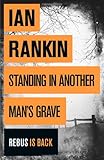
Standing in Another Man’s Grave by Ian Rankin

Yesterday I received Ian Rankin’s new book, Standing in Another Man’s Grave and it’s looking good.

It begins:

He’d made sure he wasn’t standing too near the open grave.

Closed ranks of other mourners between him and it. The pall-bearers had been called forward by number rather than name – six of them starting with the deceased ‘s son. Rain wasn’t quite falling yet, but it had scheduled an appointment.

The deceased is a retired policeman. The unnamed man, standing at the funeral had known him. He was desperate for a cigarette. After the coffin is lowered into the grave one of the mourners approaches him with a nod of recognition:

‘John’, he said.

‘Tommy’, Rebus replied, with another nod.

Rebus is back!

With the rain now falling he heads for his car, turns on the car’s CD player and Jackie Leven’s voice emerges singing about standing in another man’s grave. Except he isn’t – the track is called ‘Another Man’s Rain’.

I paused and decided to look for the track. Here it is:

I’m trying to read this book slowly, but the plot and Rebus is gradually pulling me in. I just have to keep turning the pages. So, it’s back to the book now.

Fro more Book Beginnings on Friday see Gilion’s blog Rose City Reader.

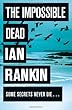
The Impossible Dead by Ian Rankin: a Book Review

The Impossible Dead, Ian Rankin’s second book featuring Inspector Malcolm Fox is very readable, with a nicely complicated plot, and good characterisation. Fox is still in the Complaints, now officially called Professional Ethics and Standards, but it soon becomes apparent that really he wants to be in CID. I’m not sure what to make of Fox. He’s:

… diligent and scrupulous, never a shirker. He had put in the hours, been commended for his error-free paperwork and ability to lead a team: no egos and no heroes. He hadn’t been unhappy. He had learned much and kept out of trouble. If a problem  arose, he either dealt with it or ensured it was moved elsewhere. (page 105)

And yet, he’s another loner, working best on his own, not letting on to his boss what he is working on, disregarding procedure and getting involved in cases outside his remit. He doesn’t drink because he’s an alcoholic, his marriage failed and his relationship with his sister leaves a lot to be desired (although it does improve in this book). Fox’s family life intrudes into his work and gives insight into his background and his relationship with his father and sister. He’s a complex character and I began to think that maybe he’s turning into Rebus.

Detective Constable Paul Carter has been found guilty of misconduct and Fox and his team are called to investigate whether his colleagues have covered up for him. When Paul’s uncle, Alan, a retired policeman, is found dead Fox is convinced it was murder and not suicide and begins his own independent investigations, despite being told it’s a CID case. He oversteps his remit too by investigating a cold case. When his investigations reveal links back to 1985, a time of turmoil when Scottish militants were intent on a split between Scotland and the rest of the UK, he discovers new evidence concerning the unsolved murder of one of the activists at that time.

In the second half of the book the pace and tension increase as Fox delves deeper and puts his own life in danger. I found it quite easy to see who the culprits were because their identity was signalled, but nevertheless it was a satisfying conclusion to the book.

  • Hardcover: 384 pages
  • Publisher: Orion (13 Oct 2011)
  • Language English
  • ISBN-10: 0752889532
  • ISBN-13: 978-0752889535
  • Source: I bought it
  • My Rating 3.5/5