After the Armistice Ball by Catriona McPherson

After the Armistice Ball is the first book in the Dandy Gilver series. I’ve read a couple of the later books in the series and had to read this one in order to find out how Dandy (short for Dandelion) first became an amateur detective, or Society Sleuth, as she is called on the book cover.

It all began when there is an alleged theft of Lena Duffy’s jewels at Daisy Esslemont’s annual Armistice Ball in 1922 and Daisy asks Dandy to find out what really happened. Dandy is a bored wife, whose husband, Hugh is the ‘hunting, shooting and fishing’ type. The theft of the jewels is rapidly pushed to the sidelines after the death of Lena’s daughter, Cara in a lonely beach cottage in Galloway. Accompanied by Cara’s jilted fiancé, Alec Osborne, Dandy is faced with the puzzle of Cara’s death. Was she killed, or did she commit suicide? She had died in a fire, whilst on her own in the cottage – why was the cottage always kept so hot, so hot that the coal that was supposed to last all winter had been finished in one week?

The setting in the 1920s is convincing, the sense of dislocation after the First World War, the class divide and the contrast between the idle rich and the poor. The locations are beautifully described, and the characters are lively and come to life, particularly Dandy, although Hugh does seem to be a cardboard cut-out, but the book dragged in the middle as Dandy and Alec went over and over, and over the events and theorised about what had happened and why.

I too puzzled over the mystery and I did find the ending rather confusing, so much so that I had to re-read parts of the book to sort out what I thought had happened. I’m still not sure, but I think I know. Having said all that, I did enjoy the book, and apart from the middle section I raced through it and that’s probably where I missed some salient points.

My Rating: 3/5

I borrowed the book from my local library

Wondrous Words Wednesday

Wondrous Words Wednesday is a weekly meme where we share new (to us) words that we’ve encountered in our reading. It is hosted by Kathy, over at BermudaOnion’s Weblog.

My words this week come from After the Armistice Ball by Catriona McPherson, set in 1922.

  • jounced – ‘Alec increased the speed again as we passed the sign for Reivers Rest and we jounced over the close-cropped turf faster and faster until the car rounded the last of the gorse into the open and skidded to a slithering halt.

I could tell from the context what ‘jounced’ means, but it’s a word I’ve not come across before. Looking it up I found it does mean just what it sounds like – ‘to jounce is to move or cause to move with bumps and jolts’ (from The Free Dictionary).

I like the Wikipedia definition of jounce – ‘in physics, jounce or snap is the fourth derivative of the position vector with respect to time, with the first, second, and third derivatives being velocity, acceleration, and jerk, respectively; in other words, the jounce is the rate of change of the jerk with respect to time.’ As I said, just what I thought it was!

  • Thawpit – ‘I should begin calmly but ready to dissolve into tears if the occasion arose and a corner of my handkerchief was soaked in Thawpit to help with the dissolving.’

I had no idea what Thawpit was – and amazingly discovered that it was a a stain remover, a solvent that containing carbon tetrachloride. It’s no longer available, presumably because of the danger of sniffing it etc. No wonder Dandy Gilver (the amateur sleuth in the book) ‘succumbed to a fit of weeping’ when she ‘dabbed her eyes’ with the Thawpit soaked hankie.

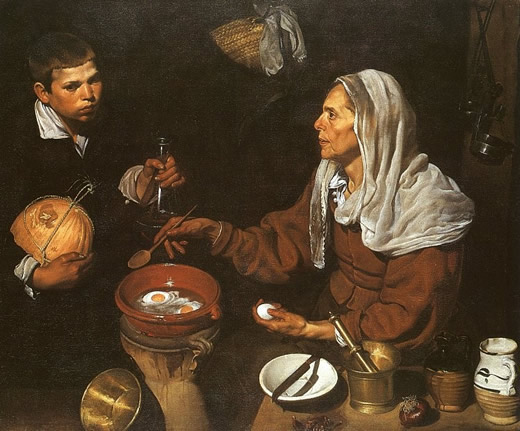
  • chafing-dish – ‘I trigger no obvious trip-wire en route from my bedroom to the ground floor, but every morning Pallister appears with a chafing-dish just as I’m sitting.’ He then cooked Dandy’s eggs.
An old woman poaching eggs in a glazed earthenware chafing dish over charcoal

A chafing-dish is a new term to me. Wikipedia explains that it is ‘a kind of portable grate raised on a tripod, originally heated with charcoal in a brazier, and used for foods that require gentle cooking, away from the fierce heat of direct flames.’


The Burry Man’s Day by Catriona McPherson

This is the second in Catriona McPherson’s Dandy Gilver series.

Synopsis (taken from the back cover):

August 1923, and as the village of Queensferry prepares for the annual Ferry Fair and the walk of the Burry Man, feelings are running high. Between his pagan greenery, his lucky pennies and the nips of whisky he is treated to wherever he goes, the Burry Man has something to offend everyone wherever he goes whether minister, priest or temperance pamphleteer. And then at the Fair, in full view of everyone – including Dandy Gilver, present at the festivities to hand out prizes he drops down dead.

It looks as though the Burry Man has been poisoned – but if so, then the list of suspects must include everyone in the town with a bottle of whisky in the house, and, here in Queensferry, that means just about everyone …

Part of my interest in The Burry Man’s Day is that it is set in South Queensferry, on the south shore of the Firth of Forth, now part of the city of Edinburgh, formerly in the County of Linlithgowshire. I’ve been there once. It’s close to the Forth Road Railway Bridge:

Forth Road Railway Bridge

I haven’t seen the Burry Man’s Parade, which features strongly in this book; it must be a strange sight.

The book has a rather slow start, but it’s one I enjoyed for all its historical detail about the place, its traditions and the people. It has a great sense of place, with a map of Queensferry at the beginning of the book which helps you follow the action. I wasn’t very taken with Dandy Gilver. I liked her more in a later book in the series. In this book she comes across as a busy-body, albeit kind-hearted, and a snob, but then that’s probably just a reflection of the class structure of the times. She’s married to Hugh, who seems to spend his life hunting and shooting and managing his large estate at Gilverton in Perthshire. Dandy doesn’t have much in common with him, being rather bored by life at Gilverton and Hugh doesn’t feature much in this book.

This is Dandy’s second investigation and I suppose if I read the first book, After the Armistice Ball, I might understand her relation with Hugh and with Alec Osborne, her co-investigator. That’s one of the drawbacks of reading a series out of order.

There’s a lot more to this mystery than the death of Robert Dudgeon, who been the Burry Man for 25 years. He’d been extremely reluctant to take the part this year and the question  why was that remained unanswered for the majority of the book. I had an idea about the reason, but only guessed part of it. It’s a convoluted tale and the motive for the murder is buried deep in the descriptions of the characters and their histories. It’s a book you need to concentrate on, and at some points I did have difficulty in sorting out some of the minor characters. Other than that I think it’s a very good book, although maybe a bit too long.

  • My Rating 4/5
  • Author’s website: http://www.dandygilver.com/author.htm – where you can read an extract from this book
  • Paperback: 336 pages
  • Publisher: Robinson Publishing (30 Aug 2007)
  • Language English
  • ISBN-10: 1845295927
  • ISBN-13: 978-1845295929
  • Source: Library book

Dandy Gilver and the Proper Treatment of Bloodstains by Catriona McPherson

I hadn’t come across any of Catriona McPherson’s books until the publishers emailed me about her latest book – Dandy Gilver and an Unsuitable Day for a Murder, which is coming out in the spring and they kindly sent me the fifth in the Dandy Gilver series – Dandy Gilver and the Proper Treatment of Bloodstains. Given that it has the sort of title and jacket cover that normally make me avoid a book, I was pleasantly surprised to find that I really enjoyed this book. It just goes to show not to judge a book by its cover.

It’s set in Edinburgh in 1926, when Dandy (short for Dandelion Dahlia!), a wealthy aristocrat who is also an amateur sleuth, receives a letter from Lollie Balfour asking for help as she is convinced that her husband is going to kill her. The only way Dandy can investigate is for her to go undercover as lady’s maid to Lollie. She manages to pass as a  lady’s maid (albeit an inexperienced one) with the other household servants, who with just one exception, all have stories of how horrible Mr Balfour is. And then he is found dead in his bedroom, a locked room, stabbed with ‘a long, bone-handled knife, lodged to its hilt and standing straight up out of his neck, pooled all round with blood that was almost black.’

There are plenty of suspects for his murder, including Lollie herself, and Dandy has to work out who is telling the truth. I had my suspicions quite early on but hadn’t quite foreseen the actual outcome or culprit. Even though I didn’t get it right I was on the right lines, which is pleasing and in any case I wouldn’t have liked it to be too easy to work out the puzzle.

Along with a good plot, the characters are all well defined and distinct and although at one point I thought the amount of description of the miners’ strike was just that bit too detailed, it has a great sense of time and place reflecting the mood of the 1920s during the general strike. And now I do know the proper treatment for bloodstains.

  • Hardback: 291 pages
  • Publisher:Thomas Dunne Books (2009)
  • Language English
  • ISBN-13: 978-0312654184
  • Source: the publishers

My rating 4.5/5

I wonder how I’ve managed to be totally unaware of Catriona McPherson‘s books up to now. She is a Scottish writer who now lives in Northern California. I’ll certainly read more of her books in future.