Grab your current read. Let the book fall open to a random page. Share with us two (2) ‘teaser’ sentences from that page.
Currently I’m in the middle of The Girl on the Landing by Paul Torday – today’s Teaser is three sentences from pages 67 – 68:
The sensation of being watched was now so powerful that I could scarcely prevent myself from breaking into a run. A prickle of sweat broke out on my forehead. All of a sudden I was seized by a feeling of horror as if something from outside had come into the world.
The search for a house is still on! House hunting has been top of our priorities this last week, so much so that I’ve been neglecting this blog. If only it was as easy to find a house as it is to find books, but as we were looking around the area where Barter Books is, it would have been impossible not to come away without buying any.
Barter Books is a beautiful secondhand bookshop, one of the largest in the country. It’s in what used to be a Victorian railway station on the main road into Alnwick in Northumberland and I’d love to live nearby (there are houses for sale, one is very near!) . There are shelves and shelves of books to browse. I restricted myself both in time spent there, otherwise I would have been there all day, and in the number of books I bought – just two hardbacks of the Collected Works of Agatha Christie comprising Why Didn’t They Ask Evans?, The ABC Murders, Death on the Nile and They Do It With Mirrors and a paperback copy of Margaret Atwood’s The Robber Bride.
Then one day whilst in Wooler having lunch in Breeze, which is a lovely giftshop, art gallery and coffee shop I just happened to notice that they were also selling secondhand books and I bought an excellent hardback copy of Dracula by Bram Stoker. Wooler is a small market town at the edge of the Cheviots set in the most beautiful countryside and we would like to live there. The Wooler Community website describes it as the “natural gateway to Glendale and Northumberland National Park”. Bamburgh with its impressive castle is not far away.
Bamburgh Castle
I really shouldn’t be buying any more books at all as we don’t have any more space to keep them in the house we live in now and one of the requirements for a new house is that there has to be space for all our books – a separate room would be ideal but failing that enough wallspace to take all the bookcases. Even with that in mind I still bought two more books in one of the motorway service stations on the way north. I keep reading about how good Steig Larsson’s books are so when I saw The Girl with the Dragon Tattoo and The Girl Who Played with Fire in the “Buy 1 Get 1 Half Price” books I bought them.
Grab your current read. Let the book fall open to a random page. Share with us two (2) ‘teaser’ sentences from that page.
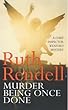
My teaser today is three sentences from page 18 of Murder Being Once Done by Ruth Rendell:
Just as he was beginning to feel that he had had about enough of this as flesh and blood could stand, he came upon the Montford vault. It was the size of a small cottage and much nastier in reality than in the photograph. The cameraman had not been able to capture the mouldy smell that breathed out of the half-open door or render the peculiarly unpleasant effect of sour green moss creeping across the warrior’s face and the paws of the dead lions.
I volunteered to write a post as part of Kerrie’s Celebrating Agatha Christie blog tour and then thought “whatever am I going to write about?”. I’ve read a lot of Agatha Christie’s books in fact I first started reading the Agatha Christie books as a young teenager. I loved them and read as many as I could find in the library. Years later I picked one up that I didn’t remember reading and realised she’d written far more than those featuring Poirot and Miss Marple and not only crime fiction, she wrote plays, poems and also novels under the name of Mary Westmacott.
I didn’t know much about her as a person beyond the facts that she was born in Torquay, had married Archie Christie then mysteriously gone missing for eleven days in 1926, been divorced and subsequently married Max Mallowan, an archaeologist after she met him when visiting the excavations at Ur. So, I thought I’d find out a bit more. Apparently she was a very private person who shunned publicity.
I began to look on the internet for information. On the BBC’s website I was thrilled to find a couple of audio interviews she made. In one, recorded in 1955, she talks about why she started writing and how she went about it. I’ve been watching the TV programmes, Agatha Christie’s Marple which differ quite a lot from the books and had wondered what she would have thought about that. This interview gives me a clue: she said that she adapted her own books because she didn’t care very much what happened when other people tried to turn her books into plays, so in the end she had to do it herself! In the other, recorded in 1962, she talks to an audience about her surprise and excitement at the age of 72, at a party for the tenth anniversary of The Mousetrap. She really was excited and said “don’t let anybody tell you nothing exciting happens to you when you’re old, because it does. It’s just as nice to be 72 as it is to be young.” Wonderful.
There is, of course, the Agatha Christie website, her own autobiography (which I haven’t read but would love to do so) and other sources available. I always associated her with Greenway, the house in Devon on the River Dart (now owned by the National Trust) but I found out that she had lived for a while in Wallingford, had died there and was buried at Cholsey, a little village nearby. I wondered why Wallingford and why wasn’t she buried in Torquay. Well, Wallingford is just down the road from where I live – down a few roads actually – so we drove there to see if we could find the answers. First we went to the parish chuch at Cholsey to see her grave. The Church of St Mary is a beautiful Norman church dating back to 1150, standing on its own at the end of the village.
St Mary’s Church Cholsey
Agatha Christie’s grave is behind the church in the north-west corner, almost on its own.
Agatha Christie’s GraveThe Headstone
If you click on the picture it enlarges and you can see the inscription. The lines from Spenser’s The Fairie Queen inscribed on it are rather faint. They read:
Sleepe after toyle, port after stormie seas,
Ease after war, death after life, does greatly please.
We then went to Wallingford to see where she lived. Whilst there we had lunch in a little coffee shop and had a look round the town. There is a secondhand bookshop, Toby English, which of course I had to visit too.
Toby English Antiquarian and Secondhand Bookshop
And inside I found (and bought) The Life and Crimes of Agatha Christie by Charles Osborne. A lucky find! So far I’ve only dipped into it but it looks a mine of information. Osborne examines everything Agatha Christie published, not only the crime novels, but also her non-fiction, stories for children, poetry and plays, films based on her works and the six novels she published as Mary Westmacott.
Here is the house she lived in at Wallingford – Winterbrook House.
Winterbrook House
It’s on quite a busy road just a few minutes away from the town centre, but I suppose when she was living there, there wasn’t so much traffic. I don’t know exactly when she bought Winterbrook House but I found a photograph (reproduced in The Life and Crimes of Agatha Christie) taken in 1950 of her writing at her desk at the house. Also in that book Osborne writes that one of her pleasures was buying houses and furnishing them. At one time she actually owned eight houses. However, by 1971 she and Max were dividing their time between just three houses – Winterbrook House, Greenway and a house in Chelsea.
Wallingford is an old market town – its charter was granted in 1155 – next to the River Thames. I found an article in thisisOxfordshire about the town’s links with Agatha Christie. A local resident Mrs Billing is quoted:
I remember walking along the bank of the Thames with my grandmother when I was a child and seeing Agatha Christie in her garden, across the river. My grandmother told me not to look at her. Basically, we were told not to stare. She was allowed to live a very normal life.
As I walked around Wallingford I thought I could understand why Agatha Christie lived the last few years of her life here. It’s a lovely old market town and even now in 2009 it still has an old-fashioned Englishness about it. Here are some photos:
Town PlanSt Mary’s Street, Wallingford
Market Square showing the Town Hall, Wallingford
Theatre in the old Corn Exchange, Wallingford
The Thames at Wallingford
And why was she buried at Cholsey? The Life and Crimes of Agatha Christie provided the answer: it was the site she had chosen herself ten years before her death. In his memoirs (quoted in The Life and Crimes of Agatha Christie, page 321) Max Malloran wrote:
As I came to the last few pages of these memoirs my beloved Agatha died, peacefully and gently, as I wheeled her out in her chair after luncheon to the drawing-room. She had been failing for some time and death came as a merciful release, though it has left me with a feeling of emptiness after forty-five years of a loving and merry companionship. Few men know what it is to live in harmony beside an imaginative, creative mind which inspires life with zest. To me, the greatest consolation has been the recognition, which has come from many hundreds of letters, that admiration was blended in equal measure with love – a love and happiness which Agatha radiated both in her person and in her books.
Requiescat.
What more can I add? – thank you Agatha Christie for many hours of happy reading.
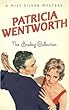
I’m not sure if Patricia Wentworth’s Miss Silver books can really be considered as “forgotten books”, especially as I found The Brading Collection on the library shelves. At any rate I wasn’t familiar with her books so I thought maybe it would fit the bill.
I knew nothing about Patricia Wentworth, except the little that was stated in the book itself. She was born in India in 1878 and wrote dozens of best-selling mysteries being recognised as one of the “mistresses of classic crime.” She died in 1961 and was as popular in the 1940s as Agatha Christie and Dorothy L Sayers. Miss Silver “was her finest creation”.
In The Brading Collection a worried Lewis Brading asks Miss Silver for help. He is obsessed by a feeling that something is going on behind his back, that whilst he is asleep someone is entering the annex to Warne House where he keeps his collection of jewellery, most of which has some connection with crime. Miss Silver, who has been compared by some to Miss Marple, is a former governess, now a private investigator takes a dislike to him and refuses to take on his case. However when, a fortnight later, he is shot she helps the police to discover his murderer.
As you would expect there are several suspects and the sequence of events leading up to the murder are carefully scrutinised by Miss Silver, described as a
… dowdy little governess out of a family out of a family photograph … her hair very neat, her oldfashioned hat a little crooked, her hands in their black thread gloves folded primly upon a shabby bag with a tarnished clasp.
Behind her appearance, however, she has
… an intelligence which commanded respect … an integrity, a kindness, a sort of benign authority.
It all hinges on the timing of events, when people visited Lewis in the annex, whether the door was locked and who had a key. The suspects include Lewis’s secretary, James Moberley, reluctantly working for him under threat of exposure as a criminal, and his cousin and heir Charles Forrest, suspected by Stacy his ex-wife of stealing the Brading family necklace to fund the conversion of his family home into flats. Then there are Myra Constantine, who looks like a toad, ugly and venomous with flashing black eyes and her daughters, Milly and Hester, insignificant and bullied by her mother. Why does Hester enter the annex late at night? Is Lilias Gray, Charles’s cousin a reliable witness? It all builds up to a climax with a dramatic ending, involving a car chase, reminding me of cops and robbers films, as the culprit drives off in a police car, chased by the furious Inspector Crisp.
All in all this is a satisfying book, with believable characters and plenty of surprises, although I had worked out who did before the denouement. I’m glad I found Patricia Wentworth and as there is a long list of her books there are plenty more to read.

 Currently I’m in the middle of The Girl on the Landing by Paul Torday – today’s Teaser is three sentences from pages 67 – 68:



 BooksPlease