Top Ten Tuesday is a weekly meme created by The Broke and the Bookish and now hosted by Jana at That Artsy Reader Girl. For the rules see her blog.
The topic this week is Books I Meant to Read in 2023 but Didn’t. I have an enormous pile of books I’d love to read this year.
These are just ten of them, books I was so keen to read when I first got them, but for one reason or another I just never got round to actually reading them. And simply saying that I will read a book this year almost guarantees that I won’t. They’re listed in no particular order, because if I try to prioritise them that would be fatal:
Strangers on a Train by Patricia Highsmith – Guy Haines and Charles Anthony Bruno meet on a train. Bruno manipulates Guy into swapping murders with him. “Some people are better off dead,” Bruno remarks, “like your wife and my father, for instance.”
Recalled to Life by Reginald Hill – Set in 1963, Dalziel and Pascoe re-investigate a crime of passion in one of England’s great houses, an open-and-shut case. But thirty years later, when the convicted nanny is freed, then spirited off to America before she can talk, Dalzeil wonders did the wrong aristocrat hang?
How Green Was My Valley by Richard Llewellyn – a story of life in a mining community in rural South Wales as Huw Morgan is preparing to leave the valley where he had grown up. He tells of life before the First World War.
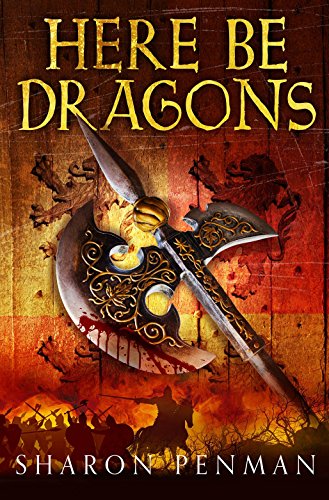
Here Be Dragons by Sharon Penman – set in 13th century Wales this is the story of Llewelyn, the Prince of North Wales, and his rise to power and fame and his love for Joanna, the illegitimate daughter of King John.
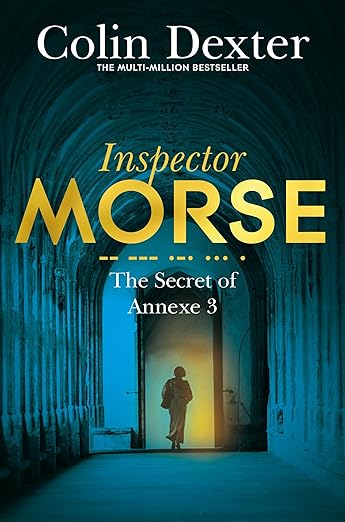
The Secret of Annexe 3by Colin Dexter – Much too early on New Year’s Day, a grumpy Inspector Morse is summoned to investigate a murder at the Haworth Hotel. The victim is still wearing the Rastafarian costume that won him first prize at the hotel’s New Year’s Eve party; his female companion and the other guests in the annexe have vanished. It’s a mystery that’s a stretch even for Morse. But with pit-bull fervor he grabs the truth by the throat and shakes loose the bizarre secrets of a cold-blooded crime of passion. . . .
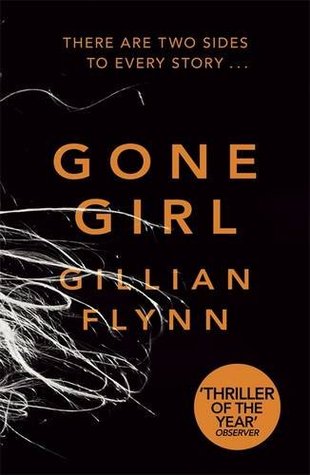
Gone Girl by Gillian Flynn – on the day of Nick and Amy’s fifth wedding anniversary, Amy suddenly disappears. The police suspect Nick. Amy’s friends reveal that she was afraid of him, that she kept secrets from him. He swears it isn’t true.
Birthright by Nora Roberts – a novel about an archaeological dig when five-thousand-year-old human bones are found, this has a sense of death and misfortune combined with a mystery about the archaeologist Callie Dunbrook’s past.
Earth and Heavenby Sue Gee – In the aftermath of the First World War, a young painter Walter Cox and the wood-engraver Sarah Lewis meet at the Slade, then set up home and a studio together. With their newfound happiness, and the birth of Meredith, then Geoffrey, the grief of war recedes. But children are unpredictable and have their own inner lives: events on a summer afternoon change everything …
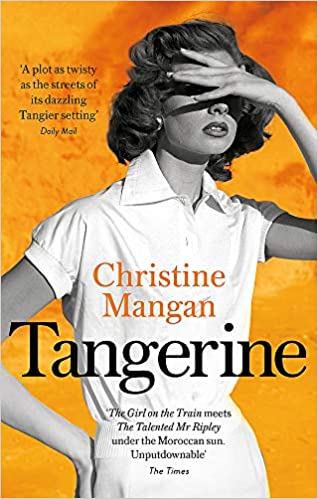
Tangerine by Christine Mangan – Set in Morocco in the 1950s, this is described as a psychological literary thrillerand the perfect read for fans of Daphne du Maurier and Patricia Highsmith. The last person Alice Shipley expected to see since arriving in Tangier with her new husband was Lucy Mason. After the horrific accident at Bennington, the two friends – once inseparable roommates – haven’t spoken in over a year. But Lucy is standing there, trying to make things right.
When Christ and His Saints Slept by Sharon Penman – the first book in the Eleanor of Aquitaine trilogy. Historical fiction about Stephen and his cousin, the Empress Maude, and the long fight to win the English throne.
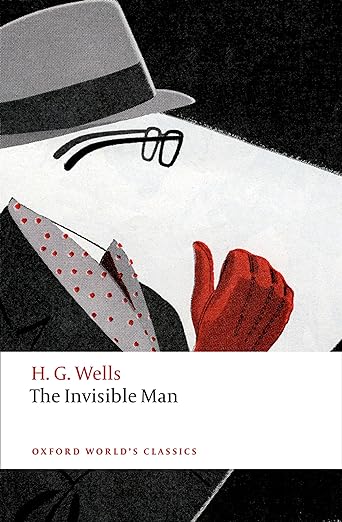
which for me is The Invisible Man by H G Wells. The rules of the Spin are that this is the book for me to read by 3rd March 2024
Synopsis from Amazon
‘The man’s become inhuman … He has cut himself off from his kind. His blood be upon his own head.’
One night in the depths of winter, a bizarre and sinister stranger wrapped in bandages and eccentric clothing arrives in a remote English village. His peculiar, secretive activities in the room he rents spook the locals. Speculation about his identity becomes horror and disbelief when the villagers discover that, beneath his disguise, he is invisible.
Griffin, as the man is called, is an embittered scientist who is determined to exploit his extraordinary gifts, developed in the course of brutal self-experimentation, in order to conduct a Reign of Terror on the sleepy inhabitants of England. As the police close in on him, he becomes ever more desperate and violent.
In this pioneering novella, subtitled ‘A Grotesque Romance’, Wells combines comedy, both farcical and satirical, and tragedy – to superbly unsettling effect. Since its publication in 1897, The Invisible Man has haunted not only popular culture (in particular cinema) but also the greatest and most experimental novels of the twentieth century.
I was hoping I’d get one of the shorter books on my list – this one is just that at 192 pages. I’m looking forward to reading it.
Did you take part in the Classics Spin? What will you be reading?
Every Friday Book Beginnings on Friday is hosted by Gillion at Rose City Readerwhere you can share the first sentence (or so) of the book you are reading. You can also share from a book you want to highlight just because it caught your fancy.
I’m featuring The Hog’s Back Mystery by Freeman Wills Crofts one of the books I’m currently reading. I’ve read about half of it and am enjoying it although it is a bit repetitive. It’s a “GoldenAge” mystery, first published in 1933.
Book Beginning:
‘Ursula! I am glad to see you!’ Julia Earle moved forward to the carriage door to greet the tall, well dressed woman who stepped down on the platform of the tiny station of Ash in Surrey.
Also every Friday there is The Friday 56, hosted by Freda at Freda’s Voice, but she is taking a break and Anne at My Head if Full of Books has taken on hosting duties in her absence. You grab a book and turn to page 56 (or 56% of an eBook), find one or more interesting sentences (no spoilers), and post them.
Page 56:
‘Well,’ said Sheaf, with a keen glance,what does it look like to you?’ ‘
This was the sort of question which on principle French never answered. He was certainly not to give an opinion until he had had time to think over the facts and come to a reasoned conclusion.
Description from Goodreads:
Dr James Earle and his wife live in comfortable seclusion near the Hog’s Back, a ridge in the North Downs in the beautiful Surrey countryside. When Dr Earle disappears from his cottage, Inspector French is called in to investigate. At first he suspects a simple domestic intrigue – and begins to uncover a web of romantic entanglements beneath the couple’s peaceful rural life.
The case soon takes a more complex turn. Other people vanish mysteriously, one of Dr Earle’s house guests among them. What is the explanation for the disappearances? If the missing people have been murdered, what can be the motive? This fiendishly complicated puzzle is one that only Inspector French can solve.
~~~
What do you think, does it appeal to you? What are you currently reading?
The What’s In A Name Challenge is being hosted again for 2024 by Andrea at Carolina Book Nook. The challenge runs from 1st January to 31st December 2024. You can sign up at any time but can only count books you read between those dates. Read a book in any format (hard copy, ebook, audio) with a title that fits into each category.
The categories with my provisional choices are:
Double Letters The Secret Lives of Bees by Sue Monk Kidd
An NFL Team Giant’s Bread by Agatha Christie
A natural disaster The Year of the Flood by Margaret Atwood
A virtue Brave New World by Aldous Huxley
A shape Square Haunting: Five Women, Freedom and London Between the Wars by Francesca Ward
Before next Sunday, 21 January 2024 create a post that lists twenty books of your choice that remain “to be read” on your Classics Club list. On that day the Classics Club will post a number from 1 through 20. The challenge is to read whatever book falls under that number on your Spin List by 3rd March, 2024.
Here’s my list:
Sense and Sensibility by Jane Austen
In Cold Blood by Truman Capote
The Case of the Gilded Fly by Edmund Crispin
The Stars Look Down by A J Cronin
Dombey and Son by Charles Dickens
Nicholas Nickleby by Charles Dickens
The Lost World by Arthur Conan Doyle
The Black Tulip by Alexandre Dumas
The Birds and other short stories by Daphne du Maurier
Top Ten Tuesday is a weekly meme created by The Broke and the Bookish and now hosted by Jana at That Artsy Reader Girl. For the rules see her blog.
The topic this week is Most Anticipated Books Releasing in the First Half of 2024. The first three books are proof copies from NetGalley. The rest are books on my Wishlist.
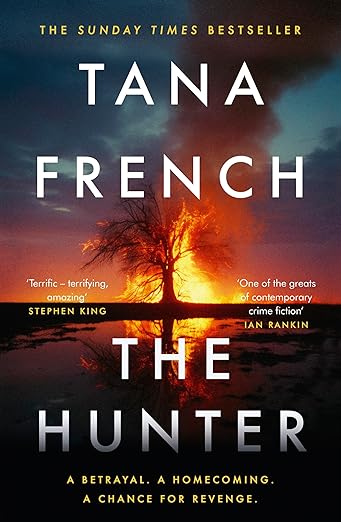
It’s a blazing summer when two men arrive in the village. They’re coming for gold. What they bring is trouble. Cal Hooper was a Chicago detective, till he moved to the West of Ireland looking for peace. He’s found it, more or less – in his relationship with local woman Lena, and the bond he’s formed with half-wild teenager Trey. So when two men turn up with a money-making scheme to find gold in the townland, Cal gets ready to do whatever it takes to protect Trey. Because one of the men is no stranger: he’s Trey’s father. But Trey doesn’t want protecting. What she wants is revenge.
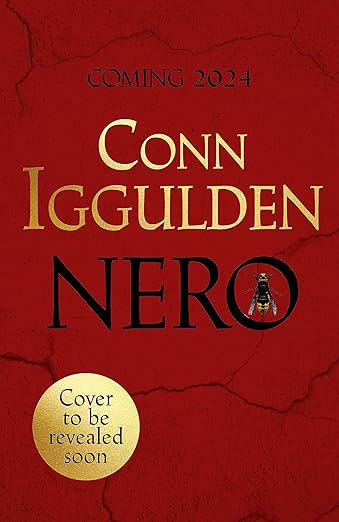
ANCIENT ROME, AD 37 It begins with a man’s hand curled around another’s throat. Emperor Tiberius first dispatches a traitor. Then his whole family.Next all his friends. It is as if he never existed.
THIS IS ROMAN JUSTICE. Into this fevered forum, a child is born. His mother is Agrippina, granddaughter of Emperor Augustus. But their imperial blood is no protection. The closer you are to the heart of the empire, the closer you are to power, intrigue, and danger. She faces soldiers, senators, rivals, silver-tongued pretenders, each vying for position. One mistake risks exile, incarceration, execution. Or, worst of all, the loss of her infant son. For Agrippina knows that opportunity waits, even in your darkest moments. Her son is everything. She can make this boy, shape him into Rome itself – the one all must kneel before.
In this new thriller set on Camino Island, popular bookseller Bruce Cable tells Mercer Mann an irresistible tale that might be her next novel. A giant resort developer is using its political muscle and deep pockets to claim ownership of a deserted island between Florida and Georgia. Only the last living inhabitant of the island, Lovely Jackson, stands in its way. What the developer doesn’t know is that the island has a remarkable history, and locals believe it is cursed . . . and the past is never the past . . .
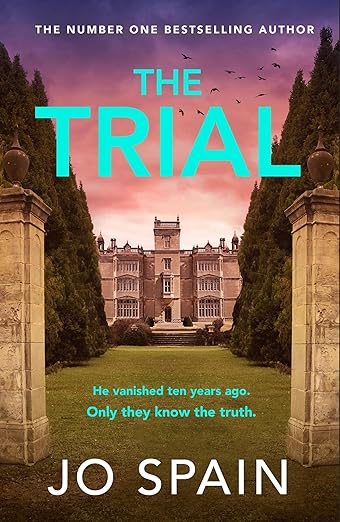
2014, Dublin: at St Edmunds, an elite college on the outskirts of the city, twenty-year-old medical student Theo gets up one morning, leaving behind his sleeping girlfriend, Dani, and his studies – never to be seen again. With too many unanswered questions, Dani simply can’t accept Theo’s disappearance and reports him missing, even though no one else seems concerned, including Theo’s father.
Ten years later, Dani returns to the college as a history professor. With her mother suffering from severe dementia, and her past at St Edmunds still haunting her, she’s trying for a new start. But not all is as it seems behind the cloistered college walls – meanwhile, Dani is hiding secrets of her own.
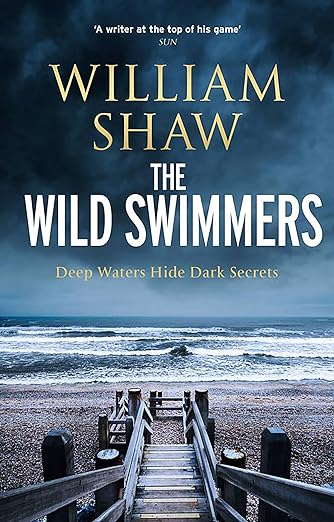
The Wild Swimmers (DS Alexandra Cupidi Book 5): by William Shaw – 23 May 2024
In the latest instalment of the D S Cupidi series low tide reveals a mysterious crime.
The body of a local woman is found washed up on the Folkstone shoreline. Cupidi must find the missing link between a group of wild swimmers, an online dating profile and a slippery killer who feels remarkably close to home.
In the latest instalment of the D S Cupidi series low tide reveals a mysterious crime. The body of a local woman is found washed up on the Folkstone shoreline. Cupidi must find the missing link between a group of wild swimmers, an online dating profile and a slippery killer who feels remarkably close to home.
Natalka and Edwin, whom we met in The Postscript Murders, are running a detective agency in Shoreham, Sussex. Despite a steady stream of minor cases, Natalka is frustrated, longing for a big juicy case such as murder to come the agency’s way. Natalka is now living with dreamer, Benedict. But her Ukrainian mother Valentyna has joined them from her war-torn country and three’s a crowd. It’s annoying to have Valentyna in the tiny flat, cooking borscht and cleaning things that are already clean. To add to Natalka’s irritation, Benedict and her mother get on brilliantly.
Then a murder case turns up. Local writer, Melody Chambers, is found dead and her family are convinced it is murder. Edwin, a big fan of the obit pages, thinks there’s a link to the writer of Melody’s obituary who pre-deceased his subject. The trail leads Benedict and Edwin to a slightly sinister writers’ retreat. When another writer is found dead, Edwin thinks that the clue lies in the words. Seeking professional help, the amateur investigators turn to their friend, detective Harbinder Kaur, to find that they have stumbled on a plot that is stranger than fiction.
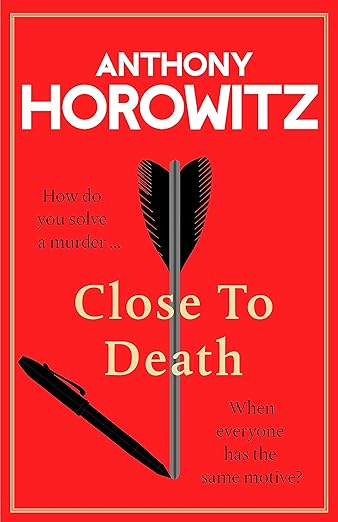
Richmond Upon Thames is one of the most desirable areas to live in London. And Riverview Close – a quiet, gated community – seems to offer its inhabitants the perfect life.
At least it does until Giles Kenworthy moves in with his wife and noisy children, his four gas-guzzling cars, his loud parties and his plans for a new swimming pool in his garden. His neighbours all have a reason to hate him and are soon up in arms.
When Kenworthy is shot dead with a crossbow bolt through his neck, all of them come under suspicion and his murder opens the door to lies, deception and further death. The police are baffled. Reluctantly, they call in former Detective Daniel Hawthorne. But even he is faced with a seemingly impossible puzzle. How do you solve a murder when everyone has the same motive?
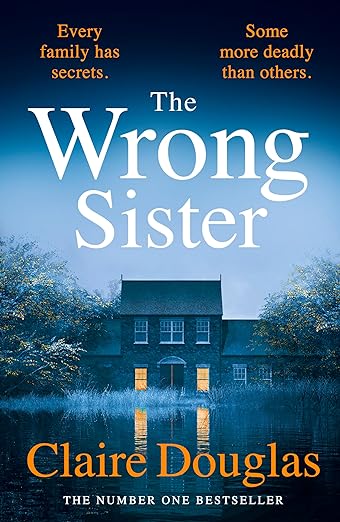
Eliza has lived two lives – one before she fell into an obsessive teenage friendship with Eric and Maggie, and the one after it was destroyed in a single afternoon. To Eliza, Eric and Maggie were irreplaceable, so she hasn’t. Instead, drifting through life alone, she spends every morning diving into her memories as she swims in Hampstead Ponds, her guilt never far below the surface.
Twenty years might have passed, yet Eliza still can’t help searching for Maggie everywhere. Then one day she spots a woman who looks just like her. Eliza has spent half her life wondering what really happened that afternoon and if Maggie’s back, will it help her finally get answers?
Tasha and her husband Aaron are having a much-needed week away in Venice. With their two young children being cared for back home by Tasha’s older sister Alice, it’s the perfect opportunity for them to reconnect as a couple. Until they start to feel they’re being followed. Then Tasha receives a phonecall to say Alice and her husband Kyle have been attacked. Alice is in intensive care, and Kyle has died. The twins are, miraculously, safe.They rush home to be with their daughters, to support Alice, and to help with the police investigation.
But in the middle of it all a note arrives, addressed to Tasha: It was supposed to be you. What soon emerges are secrets buried far deeper than any of this family realise. Everyone has a history. But how far would you go to protect those you love?
Her name is Sandy. You might know her as the loving wife of Detective Superintendent Roy Grace. But there’s more to her than meets the eye. A woman with a dubious past, a complicated present and an uncertain future. Then she was gone.
Her disappearance caused a nationwide search. Even the best detective on the force couldn’t find her. They thought she was dead. Where did she go? Why did she run? What would cause a woman to leave her whole life behind and simply vanish?













 BooksPlease