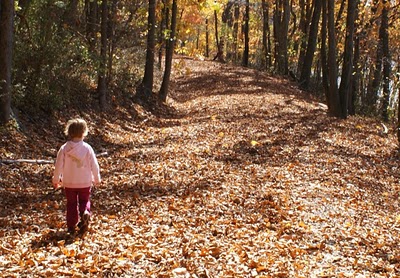
Microfiction Monday – The Girl in the Pink Anorak

The woods whispered my name. As the leaves rustled beneath my feet, I walked on; I had to see who was there. How I wish I hadn’t!

Microfiction means the shortest of short stories. Think Aesop’s fables, comic strips, or even jokes: complete stories that can be told in under a minute. For this game, the limit is a tweetable 140 characters or fewer. Microfiction Monday is hosted by Susan at Stony River.

Sunday Salon – Sunday Selection

Recently the weekend is the time when I’ve just finished a book and am deciding what to read next. This weekend is no exception. Yesterday I finished Mary Webb’s Gone to Earth, a book I first read as a young teenager. This is a dramatic romantic tragedy, first written in 1917. It tells the story of Hazel Woodus and her marriage to Edward Marston, the gentle, local church minister. Hazel is an innocent, a child of nature, wild and shy and a protector of all wounded and persecuted things. She becomes the prey of John Reddin, the squire of Undern who is obsessed by her. I’ll write more about it in a later post.

Because I enjoyed Gone to Earth so much it’s hard to find a suitable book to read next.  I have started All Bones and Lies by Anne Fine, which is the choice for my local book club. But so far I’m not sure if I want to finish it. It’s about Colin and his mother, who could complain for Britain. He has a twin sister who is estranged from her mother, making up a unhappy family who don’t get on. It’s about old age and the problems of carers and  up to now I’m not finding it at all uplifting. It paints a sad picture of the frustrations of old age and the problems of everyday life. I’ll give it a few more pages before deciding whether to finish it or not.

Other than that book, I have several library books I could read next.

  • The Beacon by Susan Hill – a short book (154 pages), examining truth, mental health and memory. Maybe that’s not right for me today as it sounds like another family with problems.
  • Missing Link by Joyce Holms – a new author for me, this book is a murder mystery a case for the detective duo Fizz and Buchanan. This one looks promising.
  • The Missing by Andrew O’Hagan – about people who disappear from society, a merging of social history and memoir. Described on the back cover as ‘elegantly written, affecting and intelligent.’

I’ll also look at some of my own books, to reduce the growing pile of to-be-read books. I started A S Byatt’s The Children’s Book a while ago. I think I’ll start that one again, or maybe look at Margaret Atwood’s The Robber Bride, or a shorter book such as The Highest Tide by Jim Lynch.

Although writing posts like this does help a bit to clarify my thoughts, sometimes I just can’t decide what to read next and today is one of those days.

Teaser Tuesday – Solar by Ian McEwan

Teaser Tuesdays is a weekly bookish meme, hosted by MizB of Should Be ReadingShare a couple or more sentences from the book you’re currently reading.

I started to read Solar by Ian McEwan on Saturday. I’ve borrowed it from the library and on Saturday I discovered I couldn’t renew it because someone had reserved it. It’s due back tomorrow and I really wanted to read it.  So I stopped reading Gone to Earth and Agatha Christie’s Autobiography (my current books) to concentrate solely on Solar.

I think it’s a strange juxtaposition of the story of a scientist, Michael Beard, a Nobel Prize winning physicist whose fifth marriage has failed, set against a scientific background. I love it when McEwan writes sentences such as this on page 8:

Then her absence hung in the summer dusk like garden bonfire smoke, an erotic charge of invisible particulates that caused him to remain in position for many pointless minutes. He was not actually mad, he kept telling himself, but he thought he was getting a taste, a bitter sip.

And I also am full of admiration for his detailed description of Beard sitting opposite a stranger in a train, both eating salt and vinegar crisps from the same packet:

Inevitably the second crisp was less piquant, less surprising, less penetrating than the first and it was precisely this shortfall, this sensual disappointment, that prompted the need, familiar to drug addicts, to increase the dose. He would eat two crisps at once. (page 123)

But he loses me somewhat with sentences like this:

Without the ‘entexting’ tools the scientists used – the single-photon luminometer, the flow cytometer, immunofluorescence, and so on – the gene could not be said to exist. (page 131)

As I haven’t finished this book yet it’s too soon to decide what I think of it, but so far I’m liking it, despite those words I have only a vague idea about their meanings. Parts of it actually made me laugh out loud, at the morbid humour, but I wonder if it could have done without the science and stood just as well as a story about an ageing, womanising, narcissistic, overweight and food-obsessed man.
Weekly Geeks – The books you’ve waited too long to read

This weekend, Weekly Geeks host EH asks about books we have waited too long to read.

Is there a book that has been hanging around your reading pile for far too long before you got to it. A book that probably got packed away until you accidentally got to it or a book that you read a few pages in and never got back to.

There are quite a few books over the last few years that I have started to read and not finished. I don’t mean the ones that I don’t intend to finish. Rather these are books I would like to read all the way through but have not so far got round to it. They are mainly non-fiction and the reason I’ve not finished them is usually that they take more time to read than fiction and so I slot other books in between reading sessions and sometimes just don’t get back to the non-fiction.

These are some of them – all books I do intend to finish:

  1. Thomas Hardy: The Time-Torn Man by Claire Tomalin – I stopped reading this partway in as I decided I needed to read more of Hardy’s own books before going further. I’ve read a few more of his books, but have never got back to this biography.
  2. A Long Walk to Freedom: The Autobiography of Nelson Mandela – I must have read about half of this book before I stopped. It was so long ago that I can’t remember why I didn’t finish it.
  3. A Dead Language by Peter Rushforth – this one is fiction. I loved Pinkerton’s Sister by Rushforth. I found A Dead Language hard-going, but I will get back to it one day. The downside is that I’ll have to start it again as I’ve forgotten who all the characters are.
  4. 1599: a Year in the Life of William Shakespeare by James Shapiro – I can’t remember any specific reason I haven’t finished this book.
  5. Body Parts: Essays on Life Writing by Hermione Lee. I’ve thoroughly enjoyed each essay that I’ve read so far. As the essays are self-contained there is no problem in reading it in instalments.

Teaser Tuesdays – Gone To Earth

Teaser Tuesdays is a weekly bookish meme, hosted by MizB of Should Be ReadingShare a couple or more sentences from the book you’re currently reading.

I’m currently reading Gone To Earth by Mary Webb. It’s an old book, originally published in 1917. My copy, a sturdy hardback, belonged to my mother and was published in 1935 and has an introduction by John Buchan (who was Lord Tweedsmuir, politician and author – his most famous book being The Thirty Nine Steps, a spy thriller). His introduction is masterly. He describes what he likes about the book, sets the scene, and discusses Mary Webb’s style of writing:

The style as in all Mary Webb’s books, is impregnated with poetry, rising sometimes to the tenuous delicacy of music, but never sinking to ‘poetic prose’. There are moments when it seems to me superheated, when her passion for metaphor makes the writing too high-pitched and strained. But no one of our day has a greater power of evoking natural magic. (page 9)

And here is a passage from the opening chapter of the book:

Between the larch boles and under the thickets of honeysuckle and blackberry came a tawny silent form, wearing with the calm dignity of woodland creatures a beauty of eye and limb, a brilliance of tint, that few women could have worn without self-conciousness. Clear-eyed, lithe, it stood for a moment in the full sunlight – a year-old fox, round headed and velvet-footed. Then it slid into the shadows. (page 11)

Gone To Earth is still in print, in a paperback edition published by Virago Press Ltd in 1992, with a longer introduction by Erika Duncan, including biographical details of Mary Webb’s tragic life.

Sunday Salon – Book Connections

The Sunday Salon is the place to meet and blog about the books we’re reading.

This morning I read some more from Agatha Christie’s book An Autobiography. It’s now 1917 and Agatha is working in a hospital dispensary in Torquay and also studying to take her Apothecaries Hall examination so she could dispense for a medical officer or a chemist. As part of her training she had instruction from a proper commercial chemist – a Mr P, one of the principal pharmacists in Torquay. She described him as

… a rather funny-looking little man, very roundabout and robin redbreast looking, with a nice pink face. There was a general air of childish satisfaction about him. (page 261)

He once showed her a piece of deadly curare that he carried around with him in his pocket. Curare once it has entered the bloodstream paralyses and kills you. He said he carried it in his pocket because it made him feel powerful. Agatha often wondered about him afterwards. In spite of his cherubic appearance she thought he was possibly a dangerous man and years later used her memory in writing The Pale Horse.

I then picked up H R F Keating’s book A Detective at Death’s Door and started reading it, whilst drinking a cup of coffee. I had intended reading one of my own books but this library book was closer to hand than any of my own books. In this book Superintendent Harriet Martens is just recovering from a nearly fatal dose of aconitine. Her husband, John recognised the symptoms from reading their description in an imaginary Agatha Christie book, Twisted Wolfsbane – aconitine is also known as wolfsbane.  Then a few pages later I came across this coincidence – Harriet quoted the passage in Agatha Christie’s An Autobiography about the chemist carrying round a piece of curare – the same passage I’d read half an hour or so earlier.