The Classics Club Spin Result

The spin number in The Classics Club Spin is number …

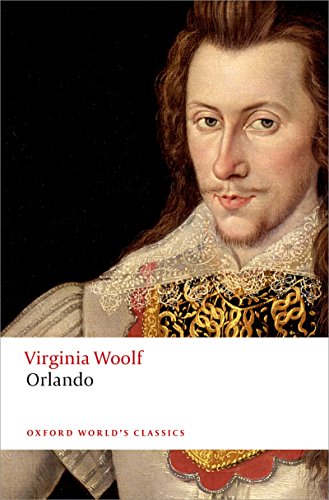
which for me is Orlando by Virginia Woolf. The rules of the Spin are that this is the book for me to read by 30 January, 2021.

Orlando tells the tale of an extraordinary individual who lives through centuries of English history, first as a man, then as a woman; of his/her encounters with queens, kings, novelists, playwrights, and poets, and of his/her struggle to find fame and immortality not through actions, but through the written word. At its heart are the life and works of Woolf’s friend and lover, Vita Sackville-West, and Knole, the historic home of the Sackvilles. But as well as being a love letter to Vita, Orlando mocks the conventions of biography and history, teases the pretensions of contemporary men of letters, and wryly examines sexual double standards.

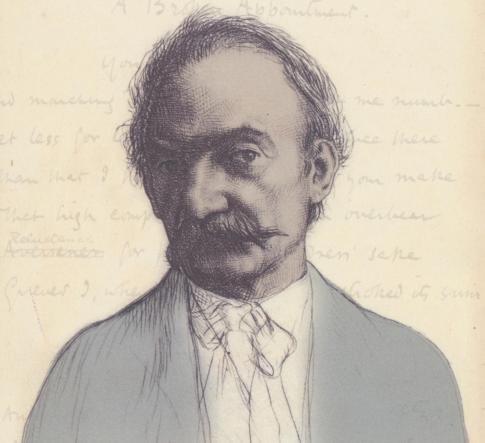
I hope I get on better with this book than I did with my last Classics Club Spin book, which was Far From the Madding Crowd by Thomas Hardy. I did start reading it, but didn’t get very far – it wasn’t appealing to me at all!

Did you take part in the Classics Spin? What will you be reading?

The Classics Club Spin Result

Classics Club

The spin number in The Classics Club Spin was announced yesterday. It’s number …

18

which for me is Far from the Madding Crowd by Thomas Hardy. The rules of the Spin are that this is the book for me to read by 30 September, 2020.

My last Spin result was The Return of the Native, which I loved. So I am delighted this time to get another of Hardy’s books to read.

Independent and spirited Bathsheba Everdene has come to Weatherbury to take up her position as a farmer on the largest estate in the area. Her bold presence draws three very different suitors: the gentleman-farmer Boldwood, soldier-seducer Sergeant Troy and the devoted shepherd Gabriel Oak. Each, in contrasting ways, unsettles her decisions and complicates her life, and tragedy ensues, threatening the stability of the whole community. The first of his works set in the fictional county of Wessex, Hardy’s novel of swift passion and slow courtship is imbued with his evocative descriptions of rural life and landscapes, and with unflinching honesty about sexual relationships.  (Goodreads)

Did you take part in the Classics Spin? What will you be reading?

Classics Club Spin

What is the spin?

It’s easy. At your blog, before next Sunday 9th August 2020, create a post that lists twenty books of your choice that remain “to be read” on your Classics Club list.

This is your Spin List. You have to read one of these twenty books by the end of the spin period. On Sunday 9th August, the Classics Club will post a number from 1 through 20. The challenge is to read whatever book falls under that number on your Spin List by 30th September, 2020.

I have just 7 books left on my list, so I’ve repeated the list twice (minus the 7th book for second repeat).

  1. 8, 15 The Riddle of the Third Mile by Colin Dexter
  2. 9, 16 Little Dorrit by Charles Dickens
  3. 10, 17 Parade’s End by Ford Maddox Ford
  4. 11, 18 Far from the Madding Crowd by Thomas Hardy
  5. 12, 19 Love in the Time of Cholera by Gabriel Garcia Marquez
  6. 13, 20 Framley Parsonage by Anthony Trollope
  7. 14 Orlando by Virginia Woolf

I really don’t mind which book is chosen!

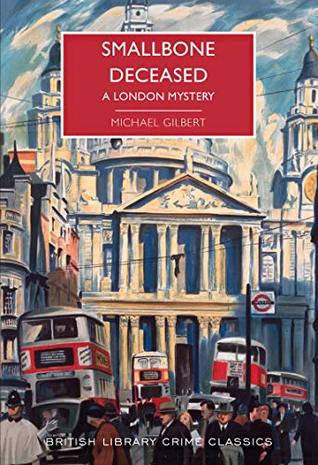
Smallbone Deceased by Michael Gilbert

Rating: 4 out of 4.

Smallbone Deceased by Michael Gilbert, first published in 1950, was his fourth Inspector Hazelrigg novel. It’s the first one I’ve read, although I have read two of his other books. There is an excellent introduction by Martin Edwards, which gives details of Gilbert’s career as a a solicitor and as a mystery writer. He wrote 30 novels and 185 short stories, as well as work for radio, television and stage.

As the title tells you Smallbone is dead. He was one of the trustees of the Ichabod Stokes Trust together with Abel Horniman, the senior partner of a London law firm, Horniman, Birley and Craine. After the recent death of Abel, whilst looking for the deeds relating to the Trust, Marcus Smallbone’s body was discovered in the Trust’s deed box, a large, hermetically sealed box.

Inspector Hazelrigg runs the police investigation. It’s obviously an inside job and with the help of Henry Bohun, a newcomer to the firm, the police investigate each of the suspects until by process of elimination the culprit is identified. Of course it’s not that straight forward, as each person’s motive, opportunity and alibi is considered and there are a number of red herrings that did baffle me a little. There is rather too much detail about the finances of the firm for my liking, but apart from that the book moves along swiftly.

The setting in the solicitors’ office after the end of the Second World War is well done and reflects the differences between the male professionals and the female admin staff with their intrigues, rivalries and flirtations. I think Bohun is the most interesting character, although they are all individually distinguishable. Bohun is not just new to the firm, but also a newly qualified solicitor. He has para-insomnia and never gets a full night’s sleep, averaging about ninety minutes a night. It doesn’t make him feel tired, but means he has lots of time to help Inspector Hazelrigg and still carry out his job, as well as doing a good deal of reading, walking the streets and even working as a night watchman. It’s written with a light touch and a sense of humour and I enjoyed it very much.

Now, I’d like to read more of Gilbert’s work, maybe starting with some of his short stories as Bohun appeared in nine short stories and also in a six-part radio thriller and Hazelrigg featured in nineteen short stories as well as in six novels.

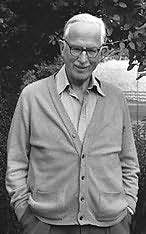
Michael Gilbert

Michael Gilbert (1912-2006) wrote thrillers, police procedurals and espionage novels that rank among the highest and most varied achievements of British crime writing in the second half of the twentieth century. A founding member of the Crime Writers’ Association, Gilbert was for many years partner in a London law firm and drew on his knowledge of the law in writing his most acclaimed novel. For more information about Michael Gilbert see this article by Martin Edwards.

Format: Kindle Edition
File Size: 5145 KB
Print Length: 236 pages
Page Numbers Source ISBN: 0755119193
Publisher: British Library Publishing (22 Jan. 2019)
Source: I bought it

The Return of the Native by Thomas Hardy

Blurb from Amazon:

First published serially between January and December of 1878 in the sensationalistic monthly London magazine “Belgravia”, Thomas Hardy’s “The Return of the Native” is the author’s sixth published novel. Set in Egdon Heath, an area of Thomas Hardy’s fictionalized Wessex known for the thorny evergreen shrubs, called furze or gorse, which are cut there by its residents for fuel.

When the story begins, on Guy Fawkes Night, we find Diggory Venn, a merchant of the red mineral called reddle which farmers use to mark their sheep, giving aid to Thomasin Yeobright, whom he is in love with but has unsuccessfully wooed over the preceding two years. Diggory is helping Thomasin, who is in distress having left town with Damon Wildeve under the false promise of matrimony, return home to her aunt, Mrs. Yeobright. Damon has rebuffed Thomasin in favor of the beautiful young Eustacia Vye.

However when Mrs. Yeobright’s son Clym, a successful diamond merchant, returns from Paris, Eustacia loses interest in Damon, seeing a relationship with Clym as an opportunity to escape the Heath in favor of a more glamorous and exciting locale. A classically modern novel, “The Return of the Native” presents a world of people struggling between their unfulfilled desires and the expectations of society. 

My thoughts:

Thomas Hardy is one of my favourite authors and I throughly enjoyed The Return of the Native, which I think is one of his best books. I loved the setting on Eldon Heath, which is based on the small heath by Hardy’s childhood home, but is much larger. The ancient round barrows named Rainbarrows, and Rushy Pond, which lie immediately behind Hardy’s childhood home, form the centre of the fictional heath. Hardy’s description of it is detailed, poetically lyrical and beautiful. 

It’s a dramatic and tragic love story. It has a large cast of characters, with lovers who change their affections throughout the novel and it’s full of intrigue with striking moonlit scenes, disputes, heated quarrels and misunderstandings, along with rustic characters and traditional celebrations, for example Guy Fawkes night, May Day and a Mummers’ play at Christmas.

It was first published in 1878 in three volumes with revisions at later dates. The revision I read was published in 1912. Hardy’s Preface establishes that the events described took place between 1840 and 1850. ‘Egdon Heath’ is a combination of various heaths that were later ploughed or planted to woodland. He liked to think of it as the ‘heath of that traditionary King of Wessex – Lear’. The Return of the Native is a complex novel, shocking to its contemporary public because of its depiction of passionate and illicit sexual relationships (tame by today’s standards).

It begins with a description of Egdon Heath, a sombre isolated place, loved by some and hated by others, some regarding it as a prison. Along the ancient highway that crossed the heath the solitary figure of an old man sees a cart ahead of him in the long dry road. Both the driver, who walked beside it, and the cart, were completely red – he was a reddleman, who supplied  farmers with redding for their sheep. He plays an important part in the novel, appearing at significant times and places to great effect on the course of events. 

It’s not a book to read quickly and it transported me back to a time that ceased to exist before I was born, where time moved more slowly, ruled by the seasons and the weather, and with a clearly defined social hierarchy. And yet, I was surprised to find that youngsters were scribbling graffiti on ‘every gatepost and barn’s doors’, writing ‘some bad word or other’ so that a woman can hardly pass for shame some time.’ Learning to write and sending children to school was blamed:

’Ah, there’s too much of that sending to school these days! It only does harm. … If they’d never been taught how to write they wouldn’t have been able to scribble such villainy. Their fathers couldn’t do it, and the country was all the better for it.’ (Page 108)8

Quite simply – I loved it. It’s a love story full of depth, atmosphere and passion, but also of tragedy  and a mix of darkness and light.