Sunday Salon – Remember Me by Melvyn Bragg

remember-meI know that some people read one book at a time whereas others, like me,  have more on the go at once. Currently I’m reading two books, which is unusual for me. The two I’m reading are both long and detailed, one fiction, the other non-fiction,  and I thought it would be better if I didn’t get distracted by reading other books.

The non-fiction is A N Wilson’s After the Victorians, which I can just pick up and read without losing the thread. But the novel demands more concentrated reading. It is Remember Me by Melvyn Bragg, a fourth book about Joe Richardson. I read the earlier books a few years ago and waited with anticipation to read this one. Remember Me is fiction, but is based on Melvyn Bragg’s own life. I have to keep reminding myself it is fiction – the disclaimer at the front says that the characters are fictitious and any resemblance to real persons, living or dead, is purely coincidental. And Joe, recounting the story of his dead wife’s life to his daughter says

But fiction can be dangerous, especially when read as fact. (page 378)

It is a powerful novel, telling such a sad story, reflecting on Joe and Natasha’s lives together, their joys and despair, their depression and dashed hopes but I do wonder how much is fiction and how much is autobiographical. Memory and the limitations of memory are highlighted in the novel. Joe tells his daughter

There is no possibility and no point in trying to remember “everything” about Natasha; nor is strictly remembering the way of it for me. It is too fragmented, too unreliable, unshaped, a landscape without definition of final meaning, undermined by shames, veiled by guilt. Your mother has to be fiction and yet she  has to be attached to some of my recollections which rise up from the sea bed like monsters, or erupt into an unready mind like volcanoes or are frustratingly near yet ungraspable as they are today in Paris, in this cafe, with spring aching to be born, but the leaves  still furled, hidden in the bough. (page 262)

And again

Memory changes all the time and is dependent not so much on past certainties stored securely but on present challenges: memory fortifies the day, it regroups continuously to accommodate the moment. So my memories of your mother change as I write. (page 415)

Is this therapeutic? Joe thinks not and so does Melvyn Bragg, as reported in this interview in the Sunday Times last year. I’ll write more about the book when I’ve finished it and have let it settle more in my mind, it’s so full of anguish and longing.

As I near the end of the book, I’m wondering what to read next. Maybe it’s time for some Jane Austen – I’ve been meaning to re-read Pride and Prejudice for a while now or it may be Lady Susan/The Watsons/Sanditon.tssbadge1 On the other hand I have the first three of Ian Rankin’s Rebus books, a compilation volume (borrowed from my son) to read, or an Agatha Christie mystery and the choices from my To-Be-Read piles are seemingly endless! It’s almost as pleasurable choosing as it is reading.

Sunday Salon

tssbadge1

It’s been a good week for reading. I finished:

It has taken me weeks to read Sue Roe’s book, as I took it slowly, savouring the detail. Whereas both Ferney and We Have Always Lived in the Castle  are the type of books that demand to be read and it was impossible to read them slowly.

I’ve started reading three very different books:

I’ve only just started each one, but in their different genres they all promise well. I won’t be finishing them all this week as Melvyn Bragg’s book is 551 pages and A N Wilson’s is 624 pages!

The Sunday Salon – Choosing Books

tssbadge1Currently I’m at the beginning of a few books. That is because I’ve just finished reading Tangled Roots by Sue Guiney and have started more before deciding which one to read next. Usually I have more than one book on the go but I’m thinking of restricting myself to just two at once.

I’ve been reading Sue Roe’s The Private Lives of the Impressionists for several weeks now, taking it slowly. I’m about half-way into it now and I ‘d really like to finish it more quickly so I’ll be spending more time reading that in the next day or two.

Tangled Roots is such a sad book I think I need something more cheerful for a while but so far I haven’t quite found the right one. I received An Elegy for Easterly by Petina Gappah from LibraryThing Early Reviewers. This is a book of short stories set in Zimbabwe under Robert Mugabe’s regime and there is not a lot of joy so far in the first three stories I’ve read. They are stories of struggle, hardship and endurance, written beautifully and as the title indicates read like a lament for the Zimbabwe that no longer exists. I think I’ll restrict myself to reading one or two of these stories at a time – short stories are meant to be savoured  not gobbled down.

Poetry too is something I can’t read too much of in one sitting. I’ve dipped into Poems of Thomas Hardy, selected and introduced by Claire Tomalin and these seem to be quite melancholy – not quite right for my mood right now.

Another book that isn’t meant to be read through in one sitting is Troublesome Words by Bill Bryson. I am fascinated by words and how they fit together and all the problems in using them. So yesterday this book caught my eye as I was passing the bookshelf. Some of it makes me laugh –

 hear! hear! is the exclamation of parliamentarians, not here, here!

It’s full of helpful information – when I can’t remember whether it should be ‘a hotel’ or ‘an hotel’ for example. (It all depends upon whether the ‘h’ is silent or not).

I seem to be attracted to books to dip into as I’ve also started Not the End of the World by Kate Atkinson, another book of short stories. Funny, amusing and inventive.

However, I really want to read a full length novel and so I thought I’d try a Barbara Vine book, never having read one before, although I’ve watched most of the TV adaptations. My library had The Birthday Present so I had a look at that this morning. The opening sentences are promising:

Thirty three is the age we shall all be when we meet in heaven because Christ was thirty three when he died. It’s an interesting idea. One can’t help thinking that the people who invent these things chose it because it’s an ideal age, no longer one’s first youth but not aging either.

But then I read the blurb and a novel “set amidst an age of IRA bombings, the first Gulf War and sleazy politics” doesn’t appeal much today. So I’ve put that to one side for the time being.

dead-mans-folly001Next Dead Man’s Folly by Agatha Christie. I started this last week and stopped so I could finish Tangled Roots (which was getting a bit oppressive). This, despite the reference to death in the title and being a murder mystery is much lighter in tone and I’m enjoying it immensely. Poirot has been enlisted by Mrs Oliver, the detective writer, to go down to Nassecombe House in Devon because she thinks there’s something wrong. And naturally she’s right. I do enjoy Agatha Christie’s books! So I’m going to read this one and finish the others later.

The Sunday Salon – Reading Report

tssbadge1As the first quarter of the year is now over (where did it go?) I thought I’d look at the state of my reading over the last three months. Given my obstinate urges not to read books I’d planned to read I’d decided at the end of last year not to join any challenges apart from What’s In a Name 2?, which I’d enjoyed very much last year. So of course I then signed up for Support Your Local Library Reading Challenge, the Chunkster Challenge and the Agatha Christie Reading Challenge.

Challenge Progress January – March

  • What’s In a Name 2?

The Challenge is to read one book from each of 6 different categories between January 1, 2009 and December 31, 2009. So far I’ve read 3 books from 2 of the categories. Not too bad – at this rate I’m on target to complete the challenge.

  • Support Your Local Library Reading Challenge 

The Challenge is to read 25 library books by 31 December 2009. I have absolutely no problems with this Challenge and am well on target with 10 books read so far. They don’t have to be on any particular subject, have particular features in the title, or be in any specific genre. They just have to be library books. This suits me down to the ground as I can pick whatever takes my fancy whenever I go to the library.

  • Chunkster Challenge

I joined this in an attempt to read some books that I’ve owned for a while and not read yet. A Chunkster book is 450 pages or more long and I signed up to the Too Big To Ignore Anymore section – that is books you already own on your to-be-read list.

You have to decide which ones to read in advance and stick to that. I’m no good at that and haven’t read a single one of them yet. Why do I suddenly have an aversion to reading books that I really do want to read just because I’ve put them in a list? Looking at my list today they all look enticing, so why haven’t I even picked up one of them?

  • The Agatha Christie Reading Challenge

I’m doing much better with this one, mainly I think because when I go to the library there are always quite a few Christie books to choose from. But on looking more closely I find that the Challenge as described by Kerrie is to read them in the order they were written – at least that’s what she is doing.  I’ve read three so far, not in the order they were written because that would mean trying to buy them or find them at the library. I’m trying to cut down on the number of books I buy and I’m too impatient to wait for library reservations to materialise. So I’m reading them as I find them.

General Progress

Of course I’ve read other books apart from the ones in these Reading Challenges. They’re all listed with links to posts where I’ve written about them on the Books Read tab at the top of the page. So far this year I’ve read 26 books, most of them have been really good reads. A lot of them have been spontaneous choices either from the library, bookshops, presents or my own shelves.

My “Plan” for Reading over the next three months is not to plan what I read, not to bother if the books I choose fit into any of the Challenge categories, but each time I finish one book to read whatever takes my fancy next.

What I’m Reading Today

So far today I’ve read a few pages from Sue Roe’s book The Private Lives of the Impressionists. I wish it had more illustrations, because I want to see all the paintings she mentions. This morning I read about Manet’s paintings of Berthe Morisot in 1872/3. His wife Suzanne was  tolerant of his womanizing and put up with his love of other women. He painted Berthe (who was also a painter) in seductive poses, searching for the

 sensation élémentaire, the sensation de vivre which Valéry elsewhere equated with the frisson of being in love.

Sunday Salon – this week’s books

Once more my current reading bears very little resemblance to the Currently Reading Section on the sidebar. This is partly because my reading this week has been rather different from usual as I’ve been reading mainly children’s books – out loud to the grandchildren.

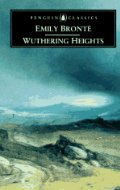
wutheringBut I did manage to squeeze in Emily Bronte’s Wuthering Heights, which I first read many years ago. I was a bit wary about re-reading it in case I was disappointed by it now, but I needn’t have worried as it’s even better than I remembered it. It’s the writing that enthralled me. Parts of it were like reading it for the first time and parts were just so familiar, I think I must have read some sections many times over.  My over-riding memory of the story was of Lockwood spending the night in Catherine Earnshaw’s bedroom and his dream in which he heard a rattle on the window panes. When he opened the window his fingers closed

on the fingers of a little, ice-cold hand! The intense horror of the nightmare came over me: I tried to draw back my arm, but the hand clung to it, and a most melancholy voice sobbed, “Let me in – let me in!” “Who are you?” I asked, struggling, meanwhile to disengage myself.

… Terror made me cruel; and finding it useless to attempt shaking the creature off, I pulled its wrist on the broken pane, and rubbed it to and fro till the blood ran down and soaked the bedclothes: still it wailed, “Let me in!” and maintained its tenacious gripe, almost maddening me with fear.

This still sends shivers down my spine.

I had forgotten that a large part of the book covers the story of Catherine’s daughter, Cathy and Heathcliff’s son, Linton, but I found that just as gripping as the beginning of the book. Linton Heathcliff is the most exasperating, weak character so easily controlled and manipulated by his father’s brutal cruelty. I was impressed by the way Emily Bronte managed to make me feel sorry for such an unsympathetic character as Heathcliff, full of bitterness and driven to gain revenge for Catherine’s betrayal even whilst his love for her never diminished, bordering on insanity. Even though she was so self-centred and rejected him, years after her death he was still obsessed and haunted by her:

I cannot look down to this floor, but her features are shaped in the flags! In every cloud, in every tree- filling the air at night, and caught by glimpses in every object by day – I am surrounded by her image! The most ordinary faces of men and women – my own features – mock me with a resemblance. The entire world is a dreadful collection of memoranda that she did exist, and that I have lost her!

The Sunday Salon – Reading to a Deadline

tssbadge1I’m in the middle of a few books, as always, but one book is having to take preference over the others because it’s a library book, due back next Tuesday and I won’t be able to renew it. Well, I could take it back late and pay an overdue fine, but I hate to do that.

The book is The Gargoyle by Andrew Davidson. I wrote a bit about this book in yesterday’s post on Library Loot, where I said that after a few pages I nearly gave up on it because of the graphic descriptions of burning skin and flesh, but that it had got better when the unnamed narrator met Marianne Engel, a wild and compelling sculptress of gargoyles and she starts to tell him tales of the time when they were once lovers in medieval Germany.

The book alternates between recounting their present day life and Marianne Engel’s stories of their past life. The good things I do like about this book are the many references to Dante’s Inferno, which I still haven’t read, the religious references and what life was like in medieval Germany.

gargoyleBut there are annoying things about the book that maybe wouldn’t be so annoying if I could read it more slowly. This is a book with stories within stories – the stories Marianne Engel tells are good, but there are too many of them. When she says “Would you like to hear a story?” I think no, not another one. If I was able to take more time I’d put the book down after reading one of these before going on with the book. As I don’t have that time I find myself reading impatiently, wanting to get on with the main story. For another thing I don’t like reading lots of lists of things – the list of food Marianne brings him to eat for example made me slide my eyes over the page – in the middle of this list the narrator even inserts this in brackets “(just checking to see if you’re still reading)”.  I was  – just.

The pages are suitably black-edged. It looks charred as though it had been burned and because I’m the first person to read the book they’re still stuck together and I have to gently prise them open. They make a crackling noise and slow down my reading – not good for reading to a deadline.

I think the main problems though are that I normally read several books at a time moving from one to the other – it’s a bit like watching different programmes on TV – in several installments. I’m not used to reading only one book. And of course, that terrible feeling of time running out is reminding me of revising for  exams, or of having to finish a report for work. It does really take the enjoyment element away from reading until it starts to feel like a chore.