Sunday Salon – Crime Fiction

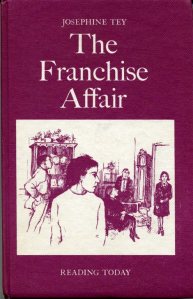
Since May, in an attempt to catch up with reading books I already own, I’ve been avoiding buying any more books. If you don’t count the secondhand copy of The Franchise Affair by Josephine Tey that I bought for 20p off the trolley at the hospital I stuck it out until last weekend when I  gave in and bought three books.

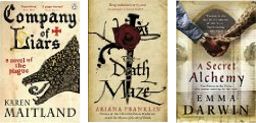
Well, I went in Waterstones for a coffee and so I had to browse the books. It would be a sad day if I ever come away from a bookshop without even wanting to buy one book, but that just doesn’t happen. This time there were plenty I could have bought but I restricted myself to three. I didn’t pick them for their covers but when I realised they are practically the same colours I thought there’s obviously a theme here. They’re all historical mystery/crime fiction and two of them are books that have been on my wishlist for a while.
covers-col

The first two books have been on my wishlist for ages.

I have started to read Company of Liars, which is set in 1348 at the time of the Plague. Nine strangers brought together on Midsummer’s Day (which is today!) travel together through England trying to escape the plague. The group includes Camelot, the relic- seller, a one-armed story teller, a strange, silent child and a painter and his pregnant wife. They each have a secret and it’s not just danger from the plague that threatens them.

The Death Maze (published in the USA as The Serpent’s Tale) is Ariana Franklin’s second book featuring the Italian doctor, Adelia Aguilar. Set in the 12th century Henry II is on the throne and when his mistress Rosamund Clifford dies a painful death by poisoning, his wife, Eleanor of Aquitaine, is the main suspect. Henry sends for Adelia to investigate.

The third book, A Secret Alchemy by Emma Darwin, attracted me because it’s about the Princes in the Tower, believed to have been killed by their uncle Richard III in 1483. I’m sure there are many books on this subject; I’ve read just two – a novel, The Daughter of Time by Josephine Tey and a non-fiction book The Princes in the Tower by Alison Weir – both of which are extremely good. I was also drawn to this book by the author’s name – Emma writes a blog which I’ve been reading recently – This Itch of Writing.
franchise-affair001

Tey’s The Daughter of Time is probably the best historical mystery novel I’ve read so I’m hoping The Franchise Affair will be just as compelling reading as The Daughter of Time.  This one is crime fiction in which a lawyer defends two women accuse of kidnapping and is based on the real life 18th century case of Elizabeth Canning. Our local hospital has been a good source of secondhand books for me recently – there are trolleys of books for sale in all the waiting areas – and the waits have been long!

And to round off, my current Agatha Christie book is The Thirteen Problems, a satisfying collection of stories of unsolved mysteries, featuring Miss Marple. The first stories are told at Miss Marple’s house on Tuesday evenings after dinner and then the setting moves to Colonel and Mrs Bantry’s house (who feature in The Body in the Library) where a slightly different group of guests including Miss Marple, entertain each other with tales of mystery and murder.

Sunday Salon – In which I Ramble on about Books

tssbadge1Yesterday I finished reading Jane Austen: a Life by Claire Tomalin. I’m going to write more about it in a separate post because today the sun is shining and soon I’m going out for the morning.

There are many books written about Jane Austen – thousands of volumes and tens of thousands of articles so why a write any more? But Claire Tomalin’s biographies are always excellent and this one is no exception. She writes that Jane Austen

is as elusive as a cloud in the night sky.

jane-austen-tomalinAnd yet she has written such a clear account, quoting from original sources – letters and diaries, that I now know so much more about Jane Austen than I did before. Inevitably it has made me keen to re-read her novels as soon as possible.

But that won’t be today, or tomorrow as I’m still reading those two mammoth books shown in the sidebar – When the Lights Went Out and After the Victorians. I read a little from these most days, and of the two I’m enjoying After the Victorians more. Yesterday I read about the power of the press, in particular of Lord Northcliffe over the Government in the run up to the First World War. He was both loved and loathed. Rudyard Kipling, writing for his cousin Stanley Baldwin when Leader of the opposition, likened the power of the press to “that of a harlot”.

Kipling is a fascinating character and by one of those strange coincidences that often happen his name cropped up again this morning when I was reading Geranium Cat’s post on his story Thy Servant the Dog. This then prompted me to pick up and read a couple of Kipling’s Just So Stories – How the Whale Got His Throat and How The Camel Got His Hump. I like his poem with that one – If we haven’t enough to do-oo-oo We get the hump, although I can’t go along completely with this verse

The cure for this ill is not to sit still,

Or frowst with a book by the fire;

But to take a large hoe and a shovel also,

And dig till you gently perspire.

I did the digging yesterday and much prefer sitting and reading a book!

Finally just a word or two about Angels and Demons by Dan Brown. I’m re-reading this after watching the film last Wednesday. I first read it years ago and had forgotten the detail so I enjoyed the film without that annoying thought “that’s not how it is in the book!”  But my husband had only finished reading it the day before so he knew that’s not how it is in the book!  I’ve given up expecting or even wanting films of the book to be the same as the book.

Sunday Salon

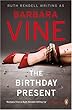
tssbadge1Today I started reading The Birthday Present by Barbara Vine. but I’m not sure that I really want to finish it. Maybe I’ve read too much crime fiction recently because this one just seems rather silly.

Ivor Tesham, MP decides to give his married girl friend a birthday present, one with a difference.  He arranges to have her “kidnapped” and delivered to him bound and gagged. Not my idea of fun and I nearly stopped reading at that point, but thought I’d go on a bit longer with it before giving up. I can’t say any of the characters are likeable, in fact they’re rather more stereotypes than real people – a sleazy politician, a plain single woman with no hope of romance, a beautiful young woman with no morals stuck in a boring marriage etc. And despite Ivor’s fears that he’s going to be found out and his name splashed across the newspapers ruining his chances of a dazzling political career it’s sadly lacking in tension.

Much more interesting are my current non-fiction reads:

after-the-victoriansAfter the Victorians by A N Wilson. This is not an academic study of the period 1900 – 1952 and Wilson interjects history with his own opinions and it’s full of references to art and literature as well as being an account of the political events of the times:

 … artists … hold up mirrors to what is going on in societies, they take soundings of a society’s cohesion, moral wellbeing, strength or lack of it. That is why totalitarian regimes persecute poets and composers with just as much rigour as they do to silencing overtly political opposition. Stalin and Hitler both had violently strong views about art and music. (p.156)

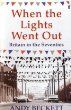
When the Lights Went Out by Andy Beckett. I’m enjoying this much more than I expected when-the-lights-went-outand surprising myself by wanting to read about the politics of the 1970s. But again this book is not solely a political history and there are plenty of personal touches. Beckett had interviewed many of the personalities and his accounts are compelling reading. Here he is on meeting Ted Heath:

Heath came slowly into the room, supported by a walking stick and another of his staff. His clothes – a baggy cream short-sleeved shirt with half the buttons undone, and the casual grey chinos – came as a small shock after watching hours of his pinstriped and uncomfortable early seventies political broadcasts. But his face was much the same: small determined eyes, the proud dagger nose, big plump cheeks barely lined despite his lingering yactsman’s tan – a usefully aspirational political signal back in the pre-easy Jet Britain of his premiership. (p. 28)

Part of its attraction is that it reminds me of many things I’d forgotten  – like the three-day week, the Winter of Discontent, and the TV programmes The Good Life and Fawlty Towers.

Sunday Salon – Review Books

tssbadge1I have had a number of books now from LibraryThing’s Early turbulence001Reviewers Programme, including  The Spare Room, which I wrote about recently, so I wasn’t expecting to get any more for a while. But yesterday I received an uncorrected proof copy of  Turbulence: a Novel of the Atmosphere by Giles Foden. Almost unbelievably, I received this only two days after receiving an email from LibraryThing that it was on its way!

Earlier in the week Maggie Dana asked if I would like a copy of her new book Beachcombing and that came one day last week as well. I have finished reading Beachcombing – more about that soon. I like getting review books, but I wish I could space them out at longer intervals – at the moment they’ve been like buses – none for ages and then several turn up at once.

I’m still reading another review book – When the Lights Went Out (see the sidebar) and I also have a few books I received months ago that I haven’t read yet. I did start them when they arrived but either because I was in the middle of other books, or because they didn’t match my expectations from their descriptions, I haven’t finished them. Or it could just have been that I wasn’t in the right frame of mind at the time to appreciate them.

Turbulence, on first glance, looks as though it’s one I’m going to enjoy, even though it’s a little different from the books I usually read. I requested it based on the description on LibraryThing, because I thought it looked interesting – about D-day and predicting the weather:

The D-day landings: the fate of 2.5 million men, 3000 landing craft and the entire future of Europe depends on the right weather conditions on the English Channel on a single day. A team of Allied scientists is charged with agreeing on an accurate forecast five days in advance. But is it even possible to predict the weather so far ahead? And what is the relationship between predictability and turbulence, one of the last great mysteries of modern physics? Wallace Ryman has devised a system that comprehends all of this — but he is a reclusive pacifist who stubbornly refuses to divulge his secrets. Mark Latchford, a young maths prodigy from the Met Office, is sent to Scotland to discover Ryman’s system and apply it to the Normandy landings. But turbulence proves more elusive than anyone could have imagined and events, like the weather, begin to spiral out of control.

I just hope it won’t be too technical; I’ve already read a few words I’ve never come across before – “nacelle”: a cover for an engine and “katabatic” defined in the book as a “gravity-fed wind”. But the language is also poetic and reflective, so I have great hopes for this book.

Sunday Salon

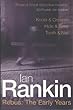
tssbadge1It’s the May Bank Holiday weekend and for once the sun is shining, but rain is forecast for tomorrow, so it’s not really a day for spending much time reading – the garden is calling. But I’m currently well into Ian Rankin’s first Rebus book – Knots and Crosses – and I would love to finish it today. I think I know who the murderer is.

I’m reading it in the omnibus edition which contains the first three Rebus books so I’ve got Hide and Seek and Tooth and Nail to read after Knots and Crosses.

In Knots and Crosses one we learn about Rebus’s life before the police force when he was in the army, about his brother, Michael and about his ex-wife Rhona and his daughter Samantha. Rebus receives cryptic anonymous letters containing pieces of string tied in a knot and matchstick crosses. It’s all a play on words – knots/noughts and crosses and acrostic puzzles added in too.

So far I think I’ve worked it out, now I’m off to see if I’m right.

Sunday Salon

Today I’ve been reading Agatha Christie’s The Body in the Library. I’ve been reading it carefully, concentrating on the characters and trying to work out who killed Ruby and deposited her body in the Bantrys’ library at Gossington Hall. I’ve got up to the point where Miss Marple has decided she knows who the murderer is, but has not let on, because she says there’s a long way to go yet and there are a great many things that are quite obscure. She must be a most frustrating friend – Mrs Bantry is desperate to know who it is because everyone is saying it must be Colonel Bantry because the body was found in their house.

body-in-the-library

I have no idea who the murderer is – all the likely suspects have alibis for the time that the murder was committed, so either I’ve missed someone, or the timing is wrong, or something! The only thing to do is to read on and find out. I dislike it when it turns out that a new person is the murderer. I feel cheated, having spent time working it all out, so I hope this isn’t one of those books!