Today’s reading:
I finished reading Pardonable Lies by Jacqueline Winspear this morning. I’ve read a couple of the Maisie Dobbs mystery books before and this one is very good. Set in 1930 Maisie is asked by Sir Cecil Lawton to prove that his son, Ralph really did die in 1917 during the First World War. Sir Cecil’s wife, who had recently died, had been convinced that Ralph was still alive and on her deathbed made him promise to search for their son. This takes Maisie on a traumatic and dangerous trip to France – to the battlefields where she had been a nurse. Knowing she is going to France her old friend from Girton, Priscilla whose brother,  Patrick died in France asks her to find out where he is buried. Maisie’s investigations reveal a number of photographs and a journal written in code leading her to to discover what actually did happen in 1917. She then has to decide whether telling the truth is the right thing to do. Parallel with her investigations in France, Maisie is also involved in discovering the truth about a young girl accused of murdering her ‘uncle’.
I like the Maisie Dobbs books. They’re easy to read, but not simple, the plots are nicely complicated and Maisie’s own story is seamlessly interwoven with the mystery. They give a good overall impression of the period, describing what people were wearing, the contrast between the rich and the poor and the all-pervading poisonous London smog. The horror of the War is still strong, people still grieving for friends and relations killed or missing, visiting the battlefields and working to improve life for the soldiers who had returned home injured, and for the homeless children forced into life on the streets. Maisie is an example of a working girl who has moved out of her ‘class’, driving an MG and supporting herself independently.
With the description of a police woman in the first chapter I wondered when women were first employed in the police force. The Metropolitan Police Service’s website provided the answer – in 1914 Margaret Damer Dawson, an anti-white slavery campaigner, and Nina Boyle, a militant suffragette journalist founded the Women Police Service and by 1923 – 30, women police were fully attested and given limited powers of arrest. I also found it interesting that later in the book Maisie and Billy see
one of the new female recruits to criminal investigation disguised as a passer-by
and the undercover police using
a new police wireless radio … invented at the request of the chief of police down in Brighton. Scotland Yard have been testing it for about a month now – it looks as if it might come in handy today. (page 310)
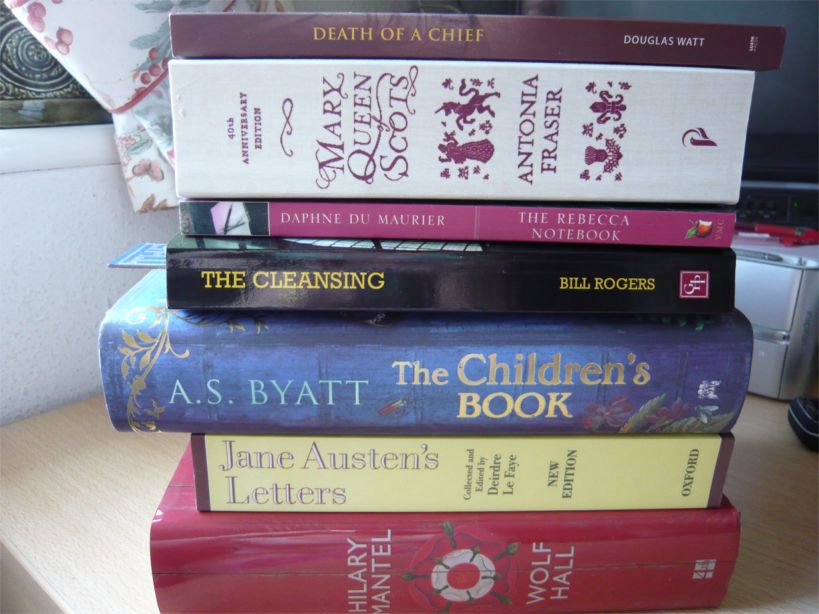
I have the latest book in the series, Among the Mad on loan from the library, so I can continue reading about Maisie Dobbs very soon. But maybe I should read the earlier books first. Now I want to get back to Wolf Hall by Hilary Mantel, even though I’m tempted to read another crime fiction – Murder Being Once Done by Ruth Rendell – which I borrowed from the library yesterday. As usual I have too many books clamouring to be read and I haven’t done the ironing or any de-cluttering ready for moving house!




 BooksPlease