H is for Hardy

Thomas Hardy 001 (2018_05_20 15_18_26 UTC)

Thomas Hardy is one of my favourite authors. He was born in 1840 at Upper Bockhampton near Dorchester. What I love most about Hardy’s books are his lyrical descriptions of nature and the countryside and all his books show his great love and knowledge of the countryside in all its aspects. They also show his almost pagan sense of fate and the struggle between man and an omnipotent and indifferent fate. Hardy was a pessimist – man’s fate is inevitable, affected by chance and coincidence. It cannot be changed, only accepted with dignity. This is illustrated in his poem – Hap, written in 1866:

If but some vengeful god would call to me

From up the sky, and laugh: ‘œThou suffering thing,

Know that thy sorrow is my ecstasy,

That thy love’s loss is my hate’s profiting!’

Then would I bear, and clench myself, and die,      

Steeled by the sense of ire unmerited;

Half-eased, too, that a Powerfuller than I

Had willed and meted me the tears I shed.

But not so. How arrives it joy lies slain,

And why unblooms the best hope ever sown?

‘”Crass Casualty obstructs the sun and rain,

And dicing Time for gladness casts a moan’¦.

These purblind Doomsters had as readily strown

Blisses about my pilgrimage as pain

The first book by Thomas Hardy that I read was The Trumpet Major – I think it was in the second year at secondary school. I remember very little about it, except that it was set during the Napoleonic Wars and I wasn’t too impressed. Then I read The Mayor of Casterbridge for A level GCE and thought it was wonderful.

Hardy Casterbridge

I still have my copy, with passages underlined and notes at the tops of pages – all in pencil.It’s full title is The Life and Death of the Mayor of Casterbridge: A Story of a Man of Character. It tells the tragic tale of Michael Henchard, a man of violent passions, proud, impulsive with a great need for love. It opens dramatically as he sells his wife and child to a sailor at a fair. By his own hard work over the years he eventually became the rich and respected Mayor of Casterbridge. But then the re-appearance of his wife and her daughter sets off a train of events finally bringing Henchard to ruin and degradation.

Because I enjoyed The Mayor over the years I’ve read more of Hardy’s books, including Tess of the D’Urbervilles and Jude the Obscure, both dramatic tragedies. In Jude Hardy attacked the Church and the marriage state, which received a mixed reception at the time – the Bishop of Wakefield burned his copy of the book and W H Smith withdrew it from their circulating library, but the public bought 20,000 copies, whether or not due to the scandal it aroused.  These books were considered masterpieces by some and scandalous by others.

Of the two I prefer Jude to Tess and having re-read them both more recently I still feel the same, but now I’m less impatient with the way Hardy presents Tess as a helpless victim than I had been before.  She is an innocent, raped by Angel Clare, the man she loves and Hardy highlights the hypocrisy of the times in condemning the ‘fallen woman’.

In Thomas Hardy, the Time-Torn Man Claire Tomalin writes not only about his life but also how he became a writer, poet and novelist. I began reading this book a few years ago and every now and then think I really must finish it. I stopped, as usual, overtaken by the desire to read other books- including more by Hardy himself.

The Thomas Hardy Society is an excellent source of information on the man and his works.

This is an ABC Wednesday post for the letter H.

ABC Wednesday – B is for Robert Browning

I first read some of Robert Browning’s poems in a little book that belonged to my father. It’s a very little book, but it was enough to interest me. Later at school I studied some of his poems and was given The Poems of Robert Browning as a prize:

Browning was born in Camberwell in 1812, the son of a Bank of England clerk. His poems were influenced by Shelley and his first published poem Pauline eventually attracted Wordsworth’s attention. In 1846 he married Elizabeth Barrett and they spent most of their lives together in Italy, until Eabeth’s death in 1861. He died in Venice in 1889 and is buried in Westminster Abbey.

I suppose his most famous poem is Home Thoughts from Abroad:

Oh, to be in England
Now that April ‘s there,
And whoever wakes in England
Sees, some morning, unaware,
That the lowest boughs and the brushwood sheaf
Round the elm-tree bole are in tiny leaf,
While the chaffinch sings on the orchard bough
In England’”now!

And after April, when May follows,
And the whitethroat builds, and all the swallows!
Hark, where my blossom’d pear-tree in the hedge
Leans to the field and scatters on the clover
Blossoms and dewdrops’”at the bent spray’s edge’”
That ‘s the wise thrush; he sings each song twice over,
Lest you should think he never could recapture
The first fine careless rapture!
And though the fields look rough with hoary dew,
All will be gay when noontide wakes anew
The buttercups, the little children’s dower
‘”Far brighter than this gaudy melon-flower!

But the poem that I first aroused my interest in my father’s little book is Porphyria’s Lover, which begins:

The rain set early in to-night,
The sullen wind was soon awake,
It tore the elm-tops down for spite,
And did its worst to vex the lake:
I listen’d with heart fit to break.
When glided in Porphyria; straight
She shut the cold out and the storm,
And kneel’d and made the cheerless grate
Blaze up, and all the cottage warm;
Which done, she rose, and from her form
Withdrew the dripping cloak and shawl,
And laid her soil’d gloves by, untied
Her hat and let the damp hair fall,
And, last, she sat down by my side
And call’d me. When no voice replied,
She put my arm about her waist,
And made her smooth white shoulder bare,
And all her yellow hair displaced,
And, stooping, made my cheek lie there,
And spread, o’er all, her yellow hair,
Murmuring how she loved me’”she
Too weak, for all her heart’s endeavour,
To set its struggling passion free
From pride, and vainer ties dissever,
And give herself to me for ever.

Her lover, however, though happy and proud knowing she loved him, took her hair and wound it round her throat and strangled her. He then sat with her, her head upon his shoulder all night long:

‘And yet God has not said a word.’

This may have been the first dramatic murder scene I read.  This article in Wikipedia analyses the poem.

It contrasts with this poem, which is another favourite of mine, Pippa’s Song (from the poem Pippa Passes: A Drama):

The year’s at the spring,
And day’s at the morn;
Morning’s at seven;
The hill-side’s dew-pearl’d;
The lark’s on the wing;
The snail’s on the thorn;
God’s in His heaven’”
All’s right with the world!

I haven’t read a biography of Robert Browning, but Margaret Forster has written an excellent one about Elizabeth Barrett Browning which tells of how the two met and eloped and their subsequent lives together. She has also written a novel, Lady’s Maid a fictionalised account of Elizabeth’s maid and her involvement in the couple’s lives. Another novel of interest is Flush, by Virginia Woolf, the story of Elizabeth’s spaniel.

See more B’s at ABC Wednesday.

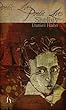
Poetic Lives:Shelley by Daniel Hahn

I didn’t know much about Shelley before I read Poetic Lives: Shelley by Daniel Hahn. This biography gives brief details of Percy Bysshe Shelley’s short but extraordinary life, from his birth in 1792 to his early death in 1822, shortly before his thirtieth birthday.

The opening paragraph caught my immediate attention in pointing out that Shelley was not that far away from the present day. Although he was born during the reign of mad King George III when there were struggles for independence in Europe – the French Revolution and then Napoleon’s rise to power, his granddaughter saw the sinking of the Titanic, the First World War and the Great Depression.

Shelley was an unhappy child, an unconventional teenager, an atheist and a radical reformer. He was expelled from Oxford University before he could complete his degree and was at odds with his father. He eloped with the daughter of a coffee-shop owner in 1811 but after three years the marriage was over when he met Mary Godwin. He was constantly in poor health and for much of the rest of his life they lived a nomadic existence travelling around Italy and France.

Hahn also quotes extracts from Shelley’s poems and prose. He also uses various sources such as Shelley’s friend Thomas Hogg, who wrote his Life of Shelley in 1857, Shelley’s cousin Tom Medwin who published a memoir of Shelley and a two-volume Life of Percy Bysshe Shelley in 1847 and another friend, Edward Trelawney who wrote Recollections of the Last Days of Shelley and Byron in 1858.

I found parts of the book moving, Shelley’s  reaction to John Keats’s death for example and the events of his own death, but on the whole it is a prosaic account of Shelley’s life. Hahn’s repetitive use of the word “would” was irritating. It has interested me enough to want to read more about Shelley and his poems. I have started reading  Ann Wroe’s book Being Shelley: the Poet’s Search for Himself, which promises to be a much fuller account and also more about him as a poet. More about that book another time.

I received Poetic Lives:Shelley from the publishers via LibraryThing’s Early Reviewers’ Programme.

April

We came back home yesterday from another visit to our son in Scotland where the weather was beautiful – blue skies and sunshine. So different from here in the south-east of England, where apparently it rained all weekend. Scotland has its own particular beauty but for me April in England is the place to be. As we travelled home the scenery changed becoming softer and greener and then on coming into home territory the hedgerows were full of blossom and it reminded me of Robert Browning’s poem Home Thoughts From Abroad  ( he wrote it in Italy):

Oh to be in England
Now that April’s there,
And whoever wakes in England
Sees, some morning, unaware,
That the lowest boughs and the brushwood sheaf
Round the elm-tree bole are in tiny leaf,
While the chaffinch sings on the orchard bough
In England – now!
 
And after April, when May follows,
And the whitethroat builds, and all the swallows!
Hark, where my blossomed pear-tree in the hedge
Leans to the field and scatters on the clover
Blossoms and dewdrops – at the bent spray’s edge-
That’s the wise thrush; he sings each song twice over,
Lest you should think he never could recapture
The first fine careless rapture!
And though the fields look rough with hoary dew,
All will be gay when noontide wakes anew
The buttercups, the little children’s dower
– Far brighter than this gaudy melon-flower!

Robert Frost

The Celebrate the Author Challenge is designed to “celebrate” author birthdays. My author for March is Robert Frost who was born on 26 March 1874 in San Francisco. He moved to Lawrence, Massachusetts and apart from three years when he lived in England, he spent the rest of his life in New England.

I have a small collection of Frost’s poems. It’s illustrated by American, English and French painters of the nineteenth and twentieth centuries. There is a short introduction, which states, ‘The simple language, the vernacular style and the near-whimsy of some of the earlier poems tend to mask the fact that Frost’s poetry is deeper and tougher than it seems.’


Before I read any of this collection I knew just a few of his poems, such as The Road Not Taken, which ends:

I shall be telling this with a sigh
Somewhere ages and ages hence:
Two roads diverged in a wood, and I –
I took the one less travelled by,
And that made all the difference.


To me this poem is about the choices we have to make in life. You look as far ahead as you can, trying to see what lies ahead if you make a certain choice, but you can’t know how things will turn out. There’s no way of changing back to the other choice once you’ve decided – the choice you make changes things forever.

I also like Stopping By Woods on a Snowy Evening:

Whose woods these are I think I know.
His house is in the village though;
He will not see me stopping here
To watch his woods fill up with snow.

This is seemingly such a simple poem with its easy rhyming scheme. The repetition of the rhyme in the final verse is hypnotic:

The woods are lovely, dark and deep,
But I have promises to keep,
And miles to go before I sleep,
And miles to go before I sleep.

There is a mystery as well – who is the traveller? His horse knows there is something different, if not odd about the wood. It’s a silent and somewhat spooky place on the ‘darkest night of the year’. There is a sense of loneliness and isolation of the traveller, where is he going and what has he promised?

Frost’s poems are not all about rural idylls; Out, Out is a powerful poem that tells of the brutal realities of life. The title refers to the brevity of life from Macbeth: ‘Out, out, brief candle! Life’s but a walking shadow, a poor player that struts and frets his hour upon the stage and then is heard no more.’ So there’s a hint right from the start that this is a tragic story. The scene is set – a noisy buzz saw against the backdrop of mountains in Vermont snarling and rattling, impersonal making dust as the wood is sawn. A young boy is cutting the wood, looking forward to his supper when he cuts his hand. It was as if the saw was alive as it

Leaped out of his hand, or seemed to leap –
He must have given the hand. However it was,
Neither refused the meeting. But the hand!

The poem reflects the callousness of the family towards life, but also the practicalities of getting on with life as the boy dies:

No one believed. They listened at his heart.
Little – less – nothing! – and that ended it.
No more to build on there. And they, since they
Were not the dead, turned to their affairs.

The boy’s hysteria and sorrow comes over through the rhythm and structure of the poem, with lines varying between 10 and 11 syllables creating an uneasy tension. It seems the tragedy could have been avoided, as the boy’s work could have ended half an hour earlier, adding to the pathos and highlighting the fragility of life.

I still haven’t read all the poems in this little book. I find that I have to read just one or two at a time, and then come back to them. The beauty of poetry is the way that so much meaning is condensed into such few words.


3rd Annual Brigid in Cyberspace Poetry Reading

I found this on Table Talk’s blog.

WHAT: A Bloggers (Silent) Poetry Reading
WHEN: Anytime February 2, 2008
WHERE: Your blog
WHY: To celebrate the Feast of Brigid, aka Groundhog Day
HOW: Select a poem you like – by a favorite poet or one of your own – to post February 2nd.

See here for more details.

Not knowing what Groundhog Day is I looked it up on Wikipedia. If a groundhog (also known as a ground squirrel, woodchuck or marmot) emerges from its burrow on February 2 and doesn’t see its shadow it’s a sign that winter is ending, but if it does see its shadow that’s a sign that winter is still here and the groundhog goes back to its burrow.Winter then comntinues for 6 more weeks.

No sign of a groundhog here today (or any other day) but there are signs that winter is ending in this part of Britain, if not further north where there have been severe snow storms. I thought this poem is a reminder to slow down and enjoy life.

Leisure

What is this life if, full of care,
We have no time to stand and stare.

No time to stand beneath the boughs
And stare as long as sheep or cows.

No time to see, when woods we pass,
Where squirrels hide their nuts in grass.

No time to see, in broad daylight,
Streams full of stars like skies at night.

No time to turn at Beauty’s glance,
And watch her feet, how they can dance.

No time to wait till her mouth can
Enrich that smile her eyes began.
A poor life this if full of care,
We have no time to stand and stare.

W.H. Davies (1871 – 1940) was a Welsh poet, known as ‘The People’s Poet’ and a ‘Super-Tramp’. See Welsh Heroes for more information.