Sunday Selection: Sisters

One of my aims this year is to reduce my massive backlog of unread books, hence the reason for joining the Mount TBR Reading Challenge.  I’m not doing too badly as so far I’ve read 19, but it’s still only a drop in the ocean. In June I wrote about some of the books I’ve owned for more than a year and today I’m looking at some more the books on the list – in some cases I’ve had these books for several years! It’s about time I read at least one of these sometime soon. I don’t like to plan too far ahead what I’m going to read but I like to have some titles in mind.

When I looked through my books I realised that I was picking out books about SISTERS:

First up for consideration are two non fiction books (the blurbs are extracts from Amazon/Goodreads):

The Sisters Who Would Be Queen: The tragedy of Mary, Katherine and Lady Jane Grey by Leanda de Lisle – this is the story of the tumultuous lives of Lady Jane Grey, known as the ‘Nine-Day Queen’ and her sisters. I’ve had this book for 3 years. I was full of enthusiasm when I first bought it because I’d been reading novels about the Tudor period and thought I’d balance them with non fiction.
Lady Jane Grey is an iconic figure in English history. Misremembered as the ‘Nine Days Queen’, she has been mythologized as a child-woman destroyed on the altar of political expediency. Exploding the many myths of Lady Jane’s life and casting fresh light onto Elizabeth’s reign, acclaimed historian Leanda de Lisle brings the tumultuous world of the Grey sisters to life, at a time when a royal marriage could gain you a kingdom or cost you everything.

The Mitfords: Letters Between Six Sisters by Charlotte Mosley – a selection of unpublished letters between the Mitford sisters – Nancy, Pamela, Diana, Unity, Jessica and Deborah. I’ve had this book for 5 years! I think two of the reasons I’ve not read it before now is that it is so long – over 800 pages and it’s in a very small font.
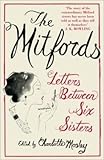
Carefree, revelatory and intimate, this selection of unpublished letters between the six legendary Mitford sisters, compiled by Diana Mitford’s daughter-in-law, is alive with wit, passion and heartbreak. The letters chronicle the social quirks and political upheavals of the twentieth century but also chart the stormy, enduring relationships between the uniquely gifted ‘and collectively notorious Mitford sisters’. 

And then some novels featuring sisters:

Bunner Sisters by Edith Wharton. I’ve not had this one for that long – just since last November. I down loaded it on my Kindle because it’s a free book and I thought maybe I should try another book by Edith Wharton, having failed to finish The House of Mirth. At the time I was not in the mood for it.

In the days when New York’s traffic moved at the pace of the drooping horse-car, when society applauded Christine Nilsson at the Academy of Music and basked in the sunsets of the Hudson River School on the walls of the National Academy of Design, an inconspicuous shop with a single show-window was intimately and favourably known to the feminine population of the quarter bordering on Stuyvesant Square. It was a very small shop, in a shabby basement, in a side-street already doomed to decline; its fame was so purely local that the customers on whom its existence depended were almost congenitally aware of the exact range of “goods” to be found at Bunner Sisters’.

Her Fearful Symmetry by Audrey Niffeneger – I’m not sure how long I’ve had this book, but it’s about three years. I’m not sure I’ll like it as I wasn’t keen on The Time Traveler’s Wife, but it was the time travelling aspect that irritated me with that book – the constant switching backwards and forwards in time. This one looks a bit different.
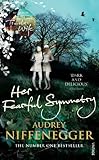
Set in and around Highgate Cemetery in London. Julia and Valentina are semi-normal American teenagers with an abnormally intense attachment to one another. The girls move to their aunt’s flat, which borders Highgate Cemetery in London and as the girls become embroiled in the fraying lives of their aunt’s neighbors, they also discover that much is still alive in Highgate, including–perhaps–their aunt, who can’t seem to leave her old apartment and life behind.

Rise and Shine by Anna Quindlen, a book I’ve had for six years! I bought it because I’d enjoyed Blessings a satisfying but sad novel about an abandoned baby. 

A novel about two sisters, the true meaning of success, and the qualities in life that matter most. It’s an otherwise ordinary Monday when Meghan Fitzmaurice’s perfect life hits a wall. A household name as the host of Rise and Shine, the country’s highest-rated morning talk show, Meghan cuts to a commercial break but not before she mutters two forbidden words into her open mike. 

In an instant, it’s the end of an era, not only for Meghan, who is unaccustomed to dealing with adversity, but also for her younger sister, Bridget, a social worker in the Bronx who has always lived in Meghan’s long shadow.

I’ve nearly finished reading Third Girl by Agatha Christie, also one of my to-be-read books, so now all I have to do is decide which book to read next. At the moment I’m leaning towards Her Fearful Symmetry, despite my misgivings about The Time Traveler’s Wife.
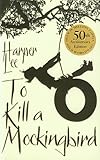
To Kill a Mockingbird by Harper Lee

 I often find with well-known books that all the world seems to love that they don’t live up to the hype, but To Kill a Mockingbird certainly does! It’s a wonderful book!

It was first published in 1960 and is set in the Deep South of  America in the 1930s. To Kill a Mockingbird is narrated by Scout (Jean Louise Finch) as she looks back as an adult to the Depression, the years when with her older brother, Jem, and their friend, Dill, she witnessed the trial of Tom Robinson, a black man accused of raping a white girl. Scout’s father, Atticus, a lawyer defends Tom. It’s also the story of Boo Radley, their neighbour, a man who is never seen, who is said to only come out at night. The children are scared of him, people said he was ‘a malevolent phantom‘, but their curiosity makes them fascinated by the idea of getting him to come out.

It’s the story seen through the eyes of a child, but narrated by an adult. And it’s told as a series of episodes in the fictional town of Maycomb, revealing the hypocrisy, prejudice and social injustice of the times. I was immediately drawn into Scout’s world, seeing Maycomb and its inhabitants through her eyes.

Maycomb was an old town, but it was a tired old town when I first knew it. In rainy weather the streets turned to red slop; grass grew on the sidewalks, the court-house sagged in the square. Somehow, it was hotter then; a black dog suffered on a summer’s day; bony mules hitched to Hoover carts flicked flies in the sweltering shade of live oaks on the square. Men’s stiff collars wilted by nine in the morning. Ladies bathed before noon, after their three o’clock naps, and by nightfall were like soft tea-cakes with frostings of sweat and sweet talcum. (page 5)

Scout is a feisty character, always prepared to stand up for what she thinks is right, but Atticus, who also stands for justice and the moral and ethical ideal, has to reign her in sometimes. The book is full of strong characters and for me the outstanding scenes are those when Atticus sat reading outside the jail to stop the lynch mob attacking Tom and the trial itself at the court-house. It is all so vivid I believed I was right there with them.

There is so much to think about reading this book and I could write page after page! But here are a few quotations that particularly struck me:

‘First of all,’ he [Atticus] said, ‘if you can learn a simple trick, Scout, you’ll get along better with all kinds of folks. You never really understand a person until you consider things from his point of view -‘

‘Sir?’

‘- until you climb into his skin and walk around in it.’ (page 33)

and

 Shoot all the bluejays you want, if you can hit ’em, but remember it’s a sin to kill a mockingbird.

… Mockingbirds don’t do one thing, but make music for us to enjoy. they don’t eat up people’s gardens, don’t nest in corncribs, they don’t do one thing but sing their hearts out for us. That’s why it’s a sin to kill a mockingbird. (pages 99 – 100)

and

‘People in their right minds never take pride in their talents,’ said Miss Maudie. (page 109)

and

People generally see what they look for, and hear what they listen for … (page 192)

On equality:

We know all men are not created equal in the sense some people would have us believe – some people are smarter than others, some people have more opportunity because they’re born with it, some men make more money than others, some ladies make better cakes than others – some people are born gifted beyond the normal scope of most men.

But there is one way in this country in which all men are created equal – there is one human institution that makes a pauper the equal of a Rockefeller, the stupid man the equal of any college president. That institution, gentlemen, is the court. (page 226)

The sticking point, however, is that a court is no better than the people sitting on the jury …

July's Books

July was a bumper reading month for me, as I finished reading 11 books and I’ve written about 8 of them (those in blue font link to my posts on the books). (And I’ve actually been able to spend some time gardening – when it hasn’t been too hot – or too wet!!!)

  1. Falling Angels by Tracy Chevalier (from TBR books) Historical Fiction
  2. Searching for The Secret River by Kate Grenville (library book) Non Fiction
  3. The Drowning by Camilla Lackberg Crime Fiction
  4. Tamburlaine Must Die by Louise Welsh (from TBR books) Historical/Crime Fiction
  5. The Lost Symbol by Dan Brown
  6. The Bookman’s Tale by Charlie Lovett Historical/Crime Fiction
  7. To Kill a Mockingbird by Harper Lee (from TBR books)
  8. The Sense of an Ending by Julian Barnes (from TBR books)
  9. The Red Coffin by Sam Eastland (from TBR books) Historical/Crime Fiction
  10. Agatha Christie: an English Mystery by Laura Thompson (library book) Non Fiction
  11. The Case of the Howling Dog by Erle Stanley Gardner (from TBR books) Crime Fiction

It’s been a good month as I’ve read 6 books from my huge pile of unread books, bringing my total of TBRs up to 20 for the year so far. I’m aiming to read as many of my own unread books as I can this year.

There are also 2 non fiction books – shown underlined – a total of 8 for the year so far. I always intend reading more non fiction but usually get sidetracked by the fiction. It generally takes me longer to read non fiction than fiction, so to read 2 in one month is good for me.

Four of the books I read are historical fiction and this means I’ve nearly reached my target of 15 books for the year.

I think the best book I’ve read this month has to be To Kill a Mockingbird by Harper Lee. I loved it and hope to write more about it soon.

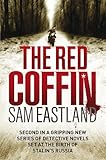
Crime fiction is currently making up about half of my reading and this month I’ve read 5. Each month Kerrie at Mysteries in Paradise hosts a post linking to bloggers’ Crime Fiction Picks of the Month.  My Pick this month is The Red Coffin by Sam Eastland.

 Synopsis

It is 1939. The world stands on the brink of Armageddon. In the Soviet Union, years of revolution, fear and persecution have left the country unprepared to face the onslaught of Nazi Germany. For the coming battles, Stalin has placed his hopes on a 30-ton steel monster, known to its inventors as the T-34 tank, and, the ‘Red Coffin’ to those men who will soon be using it. But the design is not yet complete. And when Colonel Nagorski, the weapon’s secretive and eccentric architect, is found murdered, Stalin sends for Pekkala, his most trusted investigator. Stalin is convinced that a sinister group calling itself the White Guild, made up of former soldiers of the Tsar, intend to bring about a German invasion before the Red Coffin is ready. While Soviet engineers struggle to complete the design of the tank, Pekkala must track down the White Guild and expose their plans to propel Germany and Russia into conflict.

My view:

I haven’t read Sam Eastland’s first book, Eye of the Red Tsar, about Inspector Pekkala but I had no difficulty in understanding the background to the novel – it works well as a stand-alone. It’s a fast paced plot with flashbacks to Pekkala’s earlier life as an investigator for the Tsar. He is now an investigator for Stalin, charged with discovering the murderer of Colonel Nagorski. A nicely complicated plot, mixed in with historical facts, but as I know very little Russian history I can’t comment on its accuracy – some interesting information about the Tsarina and Rasputin, and Stalin doesn’t come across as the character I thought he was though. I enjoyed it and it kept me guessing until the end.

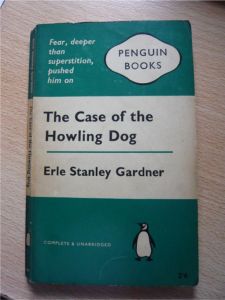
The Case of the Howling Dog by Erle Stanley Gardner

In January I read The Case of the Curious Bride also by Gardner and was rather disappointed because I found it far-fetched and at times was at a complete loss to understand what  Perry Mason was doing and why. I wondered whether to bother reading any more of the Perry Mason books. But I had enjoyed the TV series very much years ago and I still had one more of the books to read. So, the other day I began reading The Case of the Howling Dog and was relieved when I realised that it is much better than the Curious Bride case!

The Case of the Howling Dog

Synopsis from the back cover:

A dog howled by night in the quiet of Milpas Drive, and drove Arthur Cartright crazy with terror. He begged lawyer Perry Mason to bring a warrant against its owner, who, he said, had taught the dog to howl in order to drive him mad. According to superstition the howling meant a death in the neighbourhood, and Cartright appeared to believe it.

But Mason believed that a deeper fear than superstition was impelling his client and when both the dog and its owner were killed he took up the challenge and set himself to find the murderer.

My view:

The Case of the Howling Dog was first published in 1934, the fourth Perry Mason book and inevitably it is dated, but interesting because of that. I couldn’t really see my way through all the intricacies of this case but I thought it was very entertaining and well done, and I hadn’t foreseen the twist at the end. It’s fast-paced, with just the right balance of description and dialogue.

Mason is quickly established as a lawyer who doesn’t like routine:

I want excitement. I wan to work on matters of life and death, where minutes count. I want the bizarre and the unusual. (page 21)

So at first he’s not really interested in Cartright’s problem and thinks the man is crazy. But it soon becomes obvious that there is more to the case than making a will and taking out a warrant against the dog’s owner. In fact it becomes a complicated and complex murder mystery, and involves Mason getting dangerously close to breaking the law himself; as Paul Drake, the tall detective with drooping shoulders, warns him more than once he’s skating on thin ice. Mason insists that everything he does is within his rights and he is representing a client who is entitled to a fair trial. The Deputy Attorney, Claude Drumm thought the prosecution was certain of a verdict, but he hadn’t reckoned with Mason’s tactics.

Della Street was also doubtful that Perry was doing the right thing

‘Perry Mason,’ she said. ‘I worship you. You’ve got more brains and more ability than any other man I know. You’ve done things that have been simply marvellous, and now you’re doing something that is just plain, downright injustice. (pages 114-5)

But he insists what he is doing is his duty:

It’s the function of the lawyer for the defence to see the facts in favour of the defendant are presented to the jury in the strongest possible light. …

That’s my sworn duty. That’s all I’m supposed to do. (page 115)

And at the end that is just what he does do and after the trial Della views him through starry eyes!

The Sense of an Ending by Julian Barnes

When Julian Barnes’s The Sense of an Ending first came out in 2011 I was initially interested in reading it, then was put off by a few critical reviews of it (something along the lines of it being about schoolboy-adolescent behaviour) and thought I’d look at it in the library before deciding whether or not to read it.  A year ago I saw it in a secondhand book shop (Barter Books) and bought it, after a quick glance told me it wasn’t just about adolescents, but I left it languishing on my bookshelves until the other day when I suddenly felt the urge to read it, I don’t know why! It seemed the right time.

Well, I really liked it (so much for reading reviews – it’s better to make up your own mind). It’s about memory and the effect of time, about ageing, about the nature of history and literature, about nostalgia and the question of responsibility.

It’s not a long book – just 150 pages – and I read it in two sittings. But its length belies its complexity and it’s actually quite a puzzle, because the narrator Tony knows that his memory is unreliable, that he can’t be sure of the actual events of his life. The best he can do is to be true to the impressions of those events that have remained with him. As he says at the beginning of the book:

… what you end up remembering isn’t always the same as what you have witnessed. (page 3)

Later on he realises that:

… as the witnesses to your life diminish there is less corroboration, and therefore less certainty, as to what you are or have been. (page 59)

The first part of the book is about Tony and his friends at school. There were three of them initially, then Adrian joined their clique. All of them were pretentious, but Adrian was rather different – he pushed them ‘to believe in the application of thought to life, in the notion that principles should guide actions.‘ (page 9)

Gradually, after they finished school and went their various ways through university, their contact with each other became less frequent. Tony’s relationship with his girlfriend, Veronica ends but he is less than happy when Adrian and Veronica began to see each other. Soon after Tony learns that Adrian committed suicide. Years later, after Tony has retired, he is shocked when he receives a letter telling him that Veronica’s mother has left him £500 and Adrian’s diary. However, Veronica has possession of the diary and refuses to hand it over to Tony, stating that she was not ready to part with it yet. The rest of the book concerns Tony’s efforts to get the diary and to work out what actually happened to Adrian.

Of course, it is not straight- forward as Tony meets with the brick wall that his memory has put between him and Veronica. And for the reader this poses a problem, because we see events through Tony’s words, what he says he did and thought, and what he thought about other people and their actions. He wants to know why Adrian committed suicide, what happened between him and Veronica, and how come her mother had Adrian’s diary. His memories are suspect and he knows it and it does not help him (or the reader) that Veronica is so unhelpful and tells him he ‘just doesn’t get it … You never did and you never will‘.

Just what did happen is never stated explicitly and the reader is left to puzzle it out with just a few clues. I’m not sure I got the whole picture, but I enjoyed trying to unravel the mystery. In the end I think it illustrates the nature of memory rather than being concerned about what actually happened, because as Adrian says:

History is that certainty produced at the point where the imperfections of memory meet the inadequacies of documentation. (page 17)

Tamburlaine Must Die by Louise Welsh

It was a treat to read Tamburlaine Must Die, a short book that I read in a day. I can’t remember when I last read a book in a day!

Sometimes novellas, such as this is with just 140 pages, can seem lacking, needing more depth of character or plot, leaving me feeling that it should really have been a full length novel, or an even shorter story. But Tamburlaine Must Die has an immediacy, that drew me in to the late Elizabethan world.

I wrote about the opening paragraph and synopsis on Tuesday and almost immediately after I began to read the book. Written in the first person and set in May 1593, it’s a tense, dramatic story of the last days of Christopher Marlowe, playwright, poet and spy. Accused of heresy and atheism, his death is a mystery, although conjecture and rumours abound. Louise Welsh has used several sources in writing this novella, but as she writes in the Author’s Note:

History has bequeathed us a tantalising framework of facts – the Elizabethans were as prolific as the Stasi when it came to official documents. Yet the facts can’t tell us the full tale and historian’s theories on Marlowe’s death are ultimately well informed, meticulously researched speculation.

We know that Marlowe dies in a house in Deptford. We know the date of his death and the three men present. We know the nature of the wound that killed him. Everything else is educated guesswork, or in this author’s case, a fiction.

Tamburlaine Must Die conveys the claustrophobic atmosphere of danger surrounding Marlowe; who can he trust, and who is behind the pseudonym of ‘Tamburlaine’, who posted a libellous handbill referencing Marlowe’s plays? He is very aware that death is just around the corner:

A dagger can find its way into a belly or a back before the victim spies it. I thought I felt the prickle of surveillance on my shoulders. And though I knew it was most likely the effect of my own blood running faster in my veins, I made my way from the crush of people, trying to keep note of who was around me, checking  if any faces lingered in the thinning crowd. (page 31)

As well as Marlowe, Louise Welsh throws in Dr Dee and Thomas Walsingham, Marlowe’s patron and refers to Walter Raleigh too. In such a brief book she has managed to convey the political and the seedy underworld of the Elizabethan period, the dishonesty and love of intrigue, the dangers of the plague and the threat of war. Has much changed since then, I wonder.